Design style
Minimalist interior design
Airy layouts, matte finishes, calm monochrome palettes.
Minimalist interior design keeps only what a room needs and gives the remaining pieces space around them. Empty wall and bare floor are treated as part of the design, not as gaps waiting to be filled.
Finishes are matte and quiet: flat or limewashed walls, pale wood, linen, unpolished stone. Colour stays inside one narrow family, often white through warm grey.
The effect is calm rather than sparse. A well-made minimalist room feels generous because each object was chosen and placed with care. This is why the look is sometimes described as quiet luxury.
3 designs free each month. No card required.
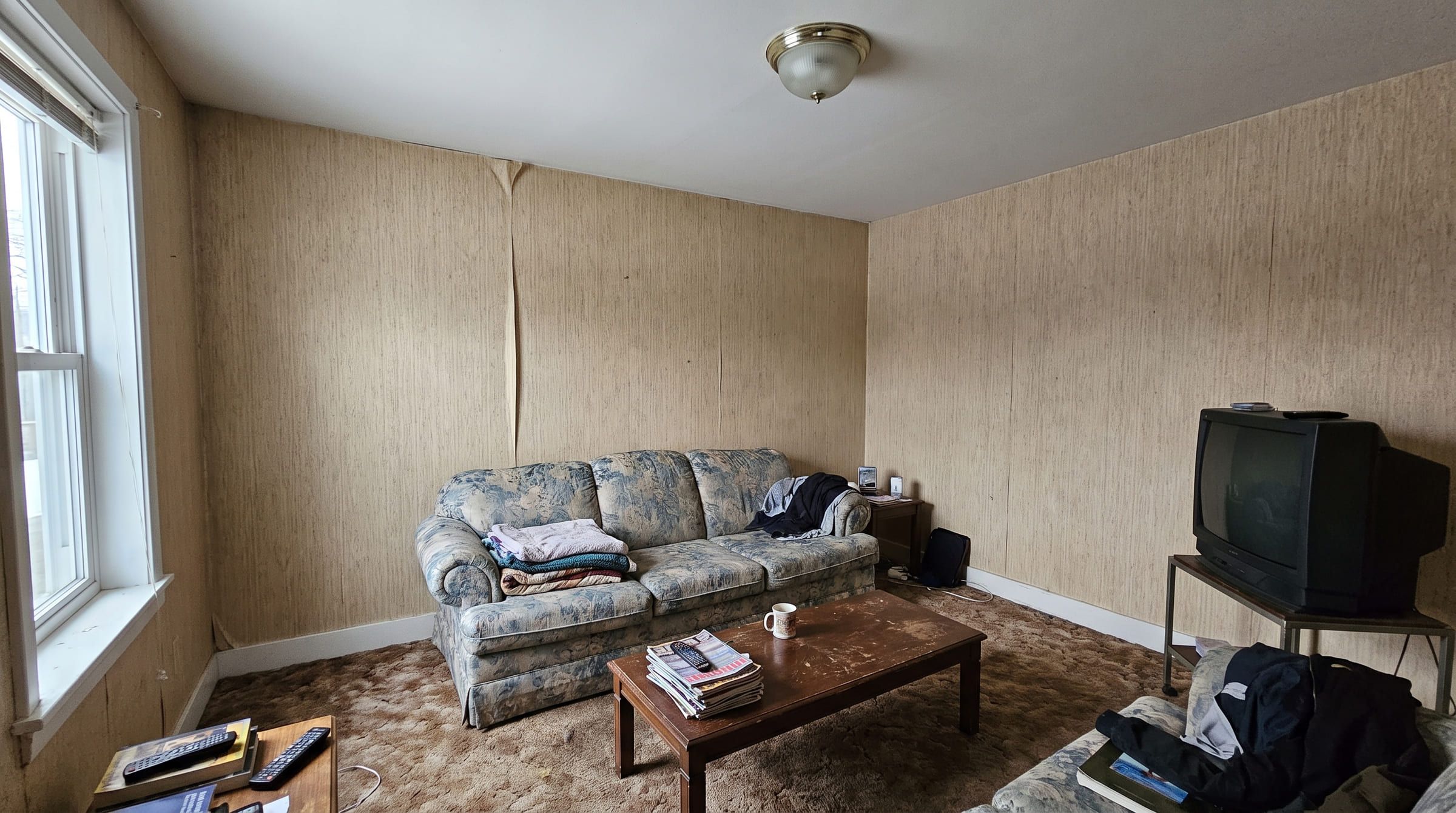
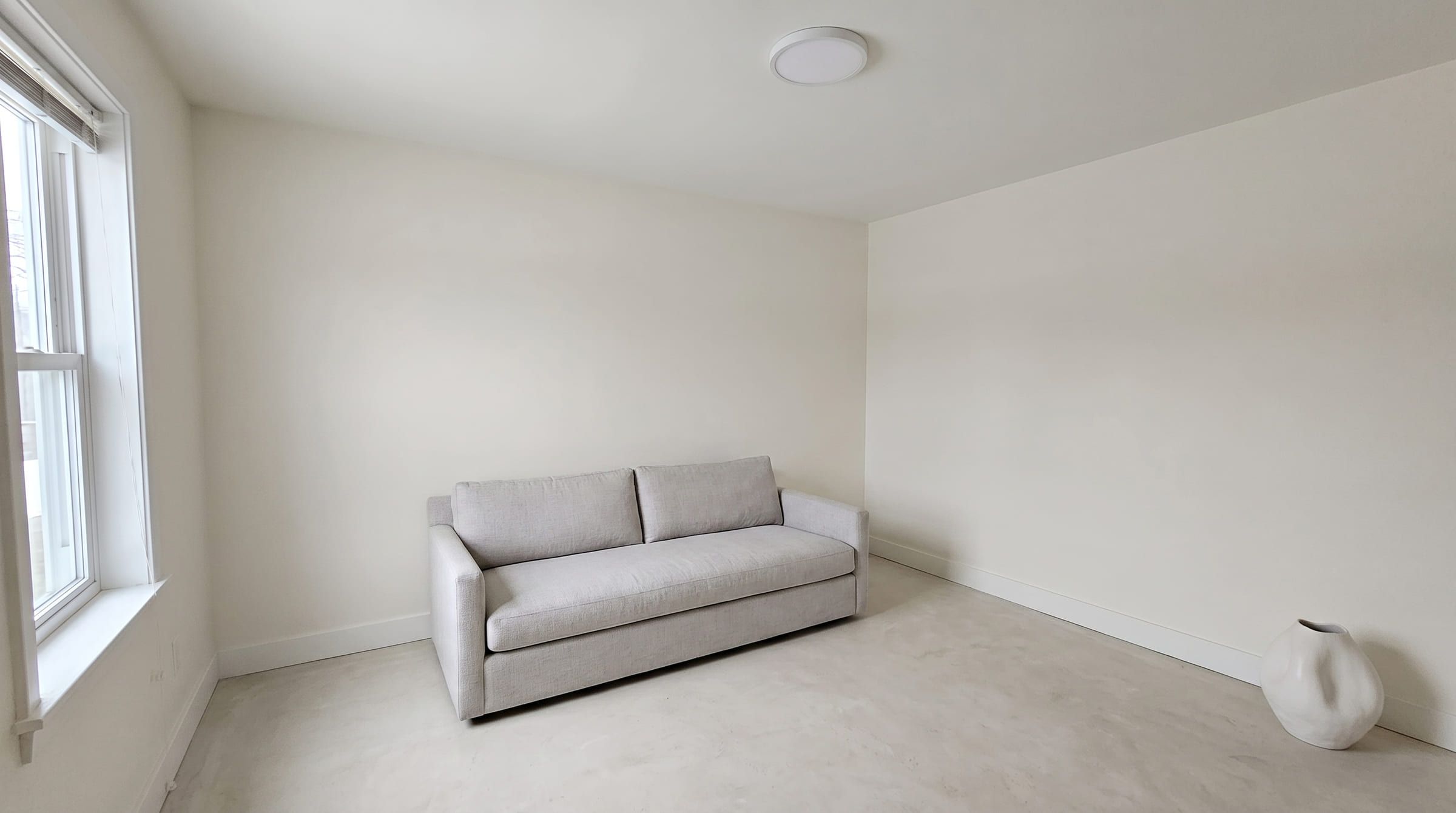
Drag to compare. The same living room photo, restyled in Minimalist with remyhomeai's AI model.
What defines the minimalist look?
Negative space is the main ingredient. The gap between two pieces matters as much as the pieces themselves. Visual noise is removed: storage is hidden, cables are out of sight, small decor is absent.
Lines are clean, but softer and less shiny than in a modern room. The material count is low. A whole room may use three materials: plaster, oak and linen.
Quality replaces quantity. One solid oak table or one thick wool rug carries more weight than a dozen accessories. Visitors notice the craft because there is nothing else to look at.
Materials and finishes
Everything is matte. Walls are flat or eggshell paint, limewash or microcement. Stone is honed rather than polished. Wood is oiled or soaped rather than lacquered.
The woods are pale: white oak, ash and birch plywood. Textiles are linen, cotton canvas, undyed wool and boucle. Ceramics are unglazed or in a single soft glaze.
High gloss, mirror finishes, chrome and printed pattern are left out. Hardware disappears too. Cabinets are push-to-open, and where a handle is needed it is a plain recessed pull in the same tone as the door.
Colour palette
A minimalist palette is monochrome in the strict sense: one hue in several values. Warm white, bone, oat, putty and soft grey make up the range. A single deep tone, usually charcoal or black, may appear in very small amounts: a lamp base or a picture frame.
Within remyhomeai, Warm Minimal, Slate & Sand, Misty Morning, Japandi Calm and Calm Neutrals all stay inside one family and suit this style.
Texture does the job that colour contrast does elsewhere. Rough linen against smooth plaster against the grain of oak gives the eye something to hold without raising the volume.
Lighting
Most of the light is indirect or concealed. Cove lighting washes the ceiling, recessed downlights have narrow trims, LED strips hide under floating shelves and vanities. A single rice paper globe is the one pendant that fits.
Daylight is the primary source. Windows carry sheer linen or nothing at all. Walls are pale to bounce the light deeper into the room.
Where a fixture is visible it is a solitary sculptural piece: a plaster wall sconce or an arc floor lamp in matte white. Bulbs are warm and every circuit dims.
Furniture and layout
There are fewer pieces and they are larger. One deep low sofa in oatmeal linen replaces a sofa and two armchairs. A solid oak bench replaces a row of chairs. The bed is a platform with no headboard or a low upholstered one.
Storage is built in and painted to match the wall so it reads as architecture. Vanities float. A round plaster or travertine side table is the typical accent, and a single stem in a ceramic vase is the typical object on it.
Circulation is generous. Surfaces are mostly bare. Furniture sits where it is used, not pushed against every wall, and everything that is not in use lives behind a door.
Common mistakes
Mistaking empty for designed. A bare room with cheap furniture is not minimalist, it is unfinished. The style depends on the quality of the few pieces that remain.
Making it clinical. All-white walls, cool LED bulbs and polished tile produce a waiting room. Warm white paint, one wood and warm bulbs bring it back.
Forgetting where things will go. Minimalism needs more storage than other styles, not less. Without a cupboard for the remote, the chargers and the post, the surfaces fill up in a week.
Shrinking the furniture to save space. Small pieces make a room look fussy. One large sofa reads calmer than two small ones.
What changes in your photo
With Minimalist selected, remyhomeai removes most of what sits on surfaces and simplifies what remains. Wall positions, window and door openings, the ceiling and the viewpoint of the shot are kept because the tool edits your real photo rather than drawing a new room. The floor is replaced with pale wide oak boards, microcement or a plain light tile unless you lock it.
Furniture drops in count and rises in simplicity. A bulky sectional becomes a low linen sofa. Side tables and lamps merge into one or two pieces. Patterned textiles turn plain. Shiny finishes go matte and a gallery wall becomes one artwork or none. Overhead lighting shifts to recessed points or a single paper pendant. Name a radiator cover, built-in shelving or any other feature in the keep field if you want it left alone. The tool cannot add storage behind walls that do not exist, so a very full room may still look full.
Minimalist style questions
Is minimalist the same as Scandinavian?
They overlap but differ. Scandinavian adds cosy textiles, plants, candles and visible wood grain to make a home feel lived in. Minimalist reduces further and accepts a cooler, emptier result. A Scandinavian room always has a throw on the sofa. A minimalist room may not have the throw.
Does minimalist mean everything has to be white?
No. The rule is one colour family, not one colour. Warm greys, oat, putty and even a deep charcoal room can be minimalist as long as the values stay close and the material count stays low.
Is minimalist design practical for a family home?
Yes, if the storage is planned. Floor-to-ceiling cupboards, a bench with a lid and drawers under the bed hide the daily mess. Without them the style fails within days, whatever the furniture looks like.
What is Japandi and how does it relate?
Japandi blends Japanese restraint with Scandinavian warmth: low furniture, dark and pale wood together, paper light, muted earth tones. It is a warmer branch of minimalism. The Japandi Calm palette in remyhomeai gives that direction.
The other six styles, on the same room
- ModernSleek lines, glass + metal accents, dramatic lighting.
- ContemporarySoft curves, layered lighting, warm neutrals with contrast.
- IndustrialRaw textures, concrete + steel, loft-style openness.
- ScandinavianLight woods, cozy textiles, soft greens and whites.
- TraditionalSymmetry, paneled details, rich fabrics and warm metals.
- EclecticPlayful mix of art, texture, and bold curated accents.
From the blog
- ChatGPT for interior design: prompts that work and where it failsChatGPT writes a good brief, palette and shopping list. For room images it tends to redraw your room. Eight prompts to paste, plus when to switch tools.
- How to redecorate a room: decide before you buy anythingDecide what stays, pick a style before a product, test three directions on a photo of your real room, then buy in order. A sequence with fewer returns.
- Modern vs contemporary vs minimalist, on the same living roomModern is a movement, contemporary is what is current, minimalist is a rule about how much you own. See all three, plus Scandinavian, on one living room photo.