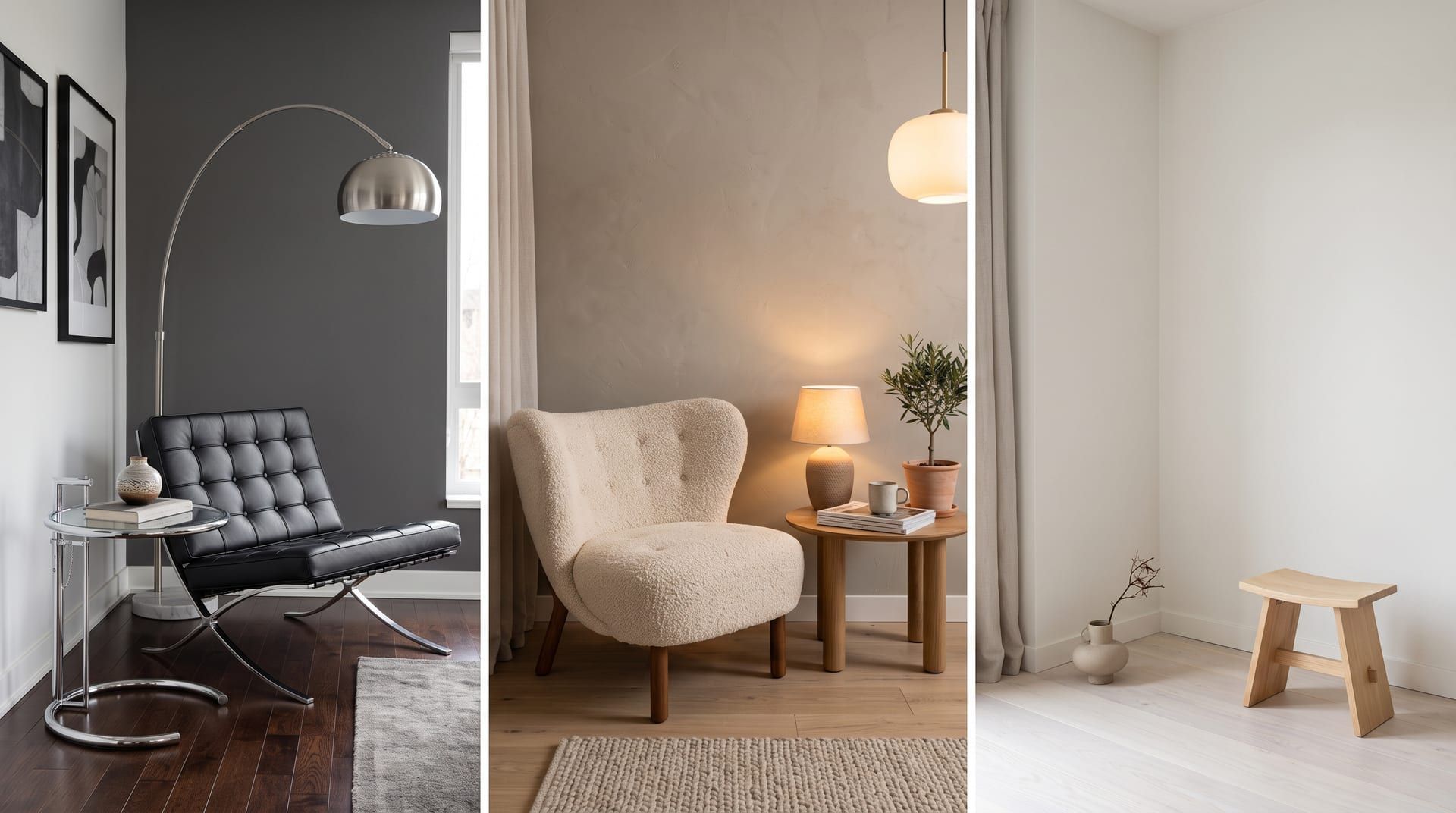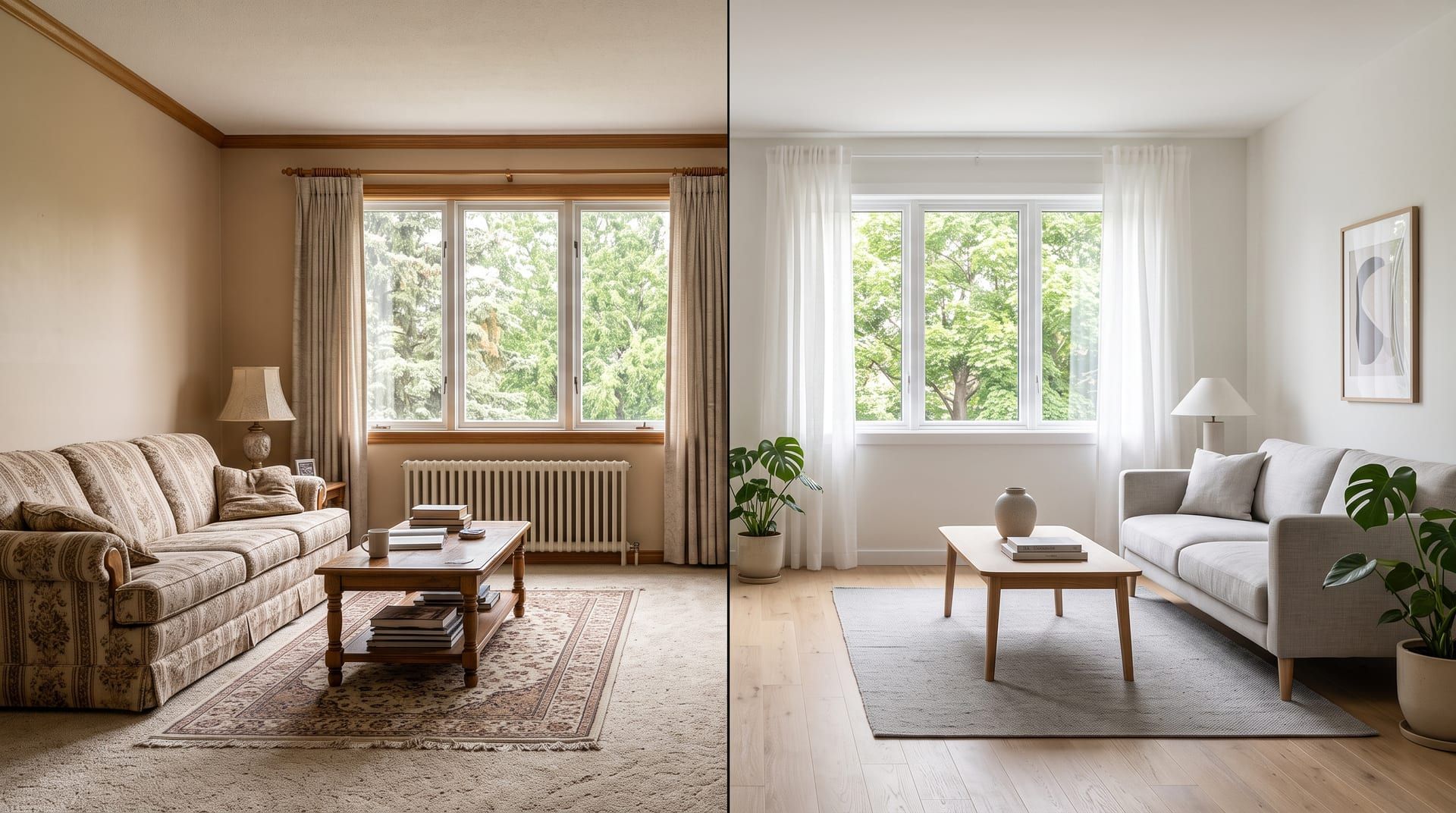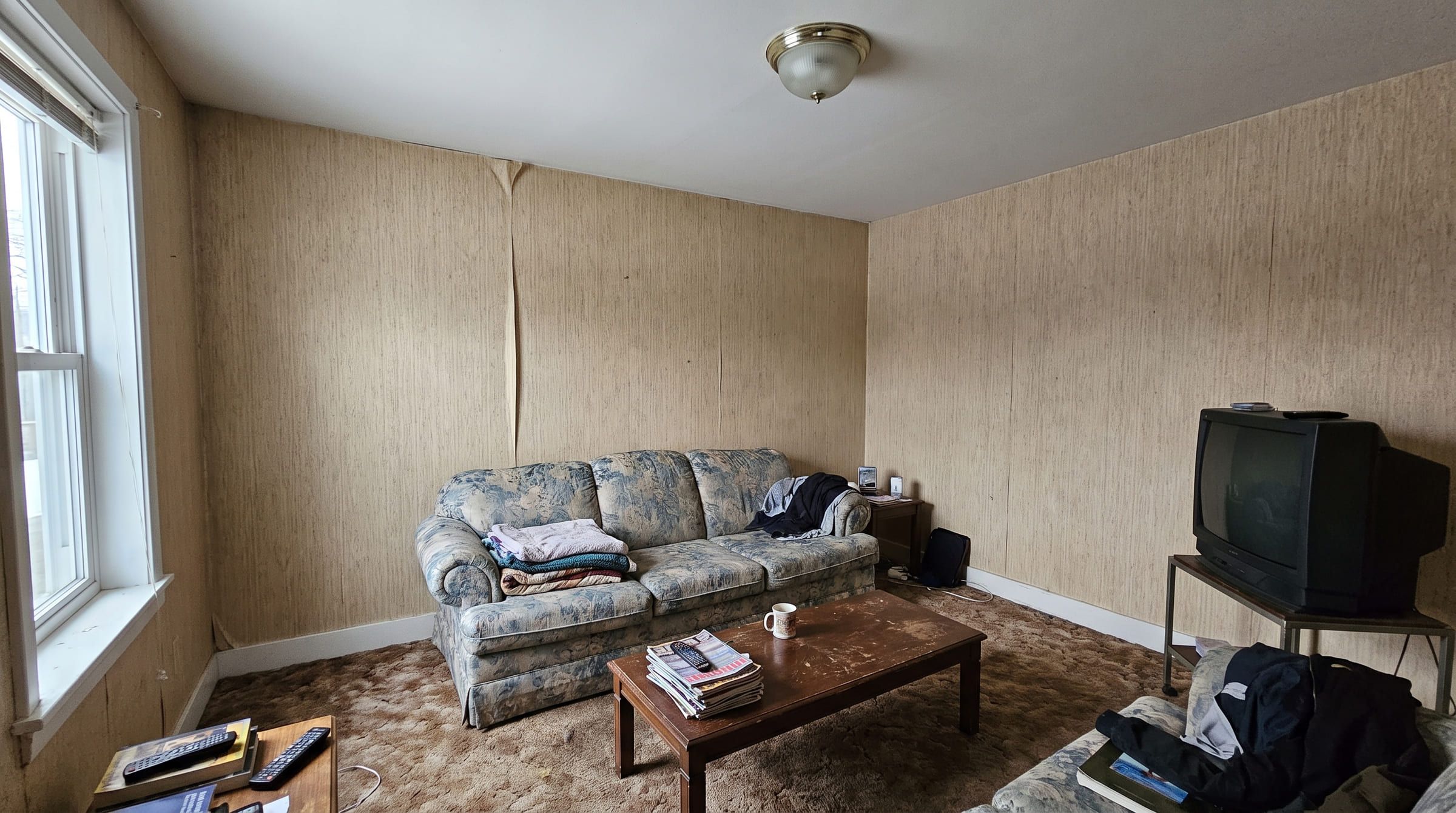
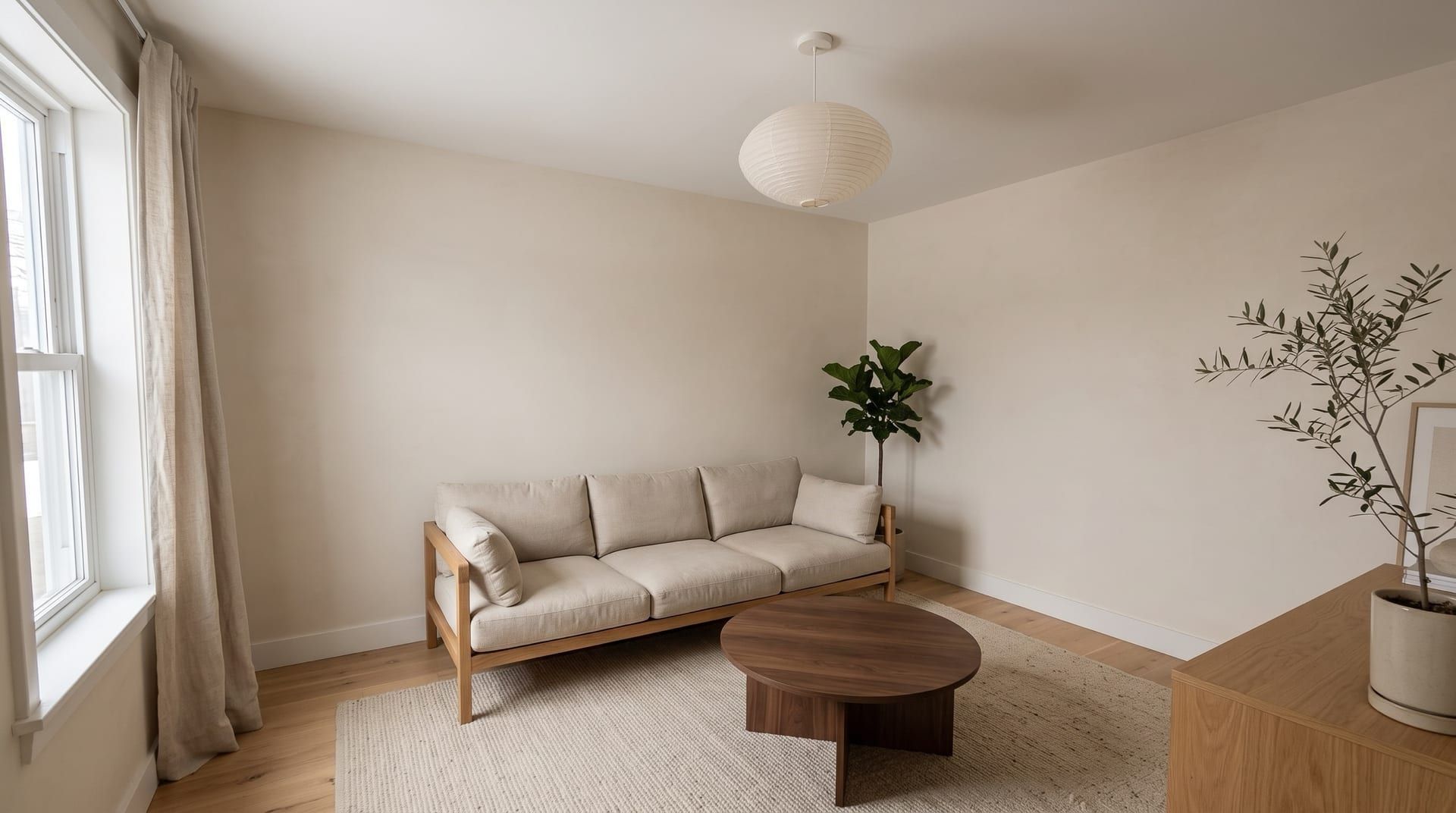
Japandi is a calm interior style that combines Japanese restraint with Scandinavian comfort. You get it with few objects, low furniture with simple lines, natural materials such as oak, linen, paper and clay, and a warm neutral palette with one dark accent. The slider above shows one cluttered living room before and after a Japandi makeover. Below: how Japandi differs from Scandinavian and wabi-sabi, then the materials, palette and furniture, room by room.
What is Japandi?
Japandi takes two traditions that already share a lot. Both value craft, natural materials and rooms without clutter. Japanese interiors bring low furniture, a sense of empty space, dark wood, paper screens and handmade ceramics. Scandinavian interiors bring warmth: soft textiles, pale wood and a focus on comfort and daily use.
The result is a room that feels sparse but not cold. A Japandi room has fewer things than a Scandinavian one, and the things it has are warmer and softer than in a strict minimalist room.
Japandi vs Scandinavian vs wabi-sabi
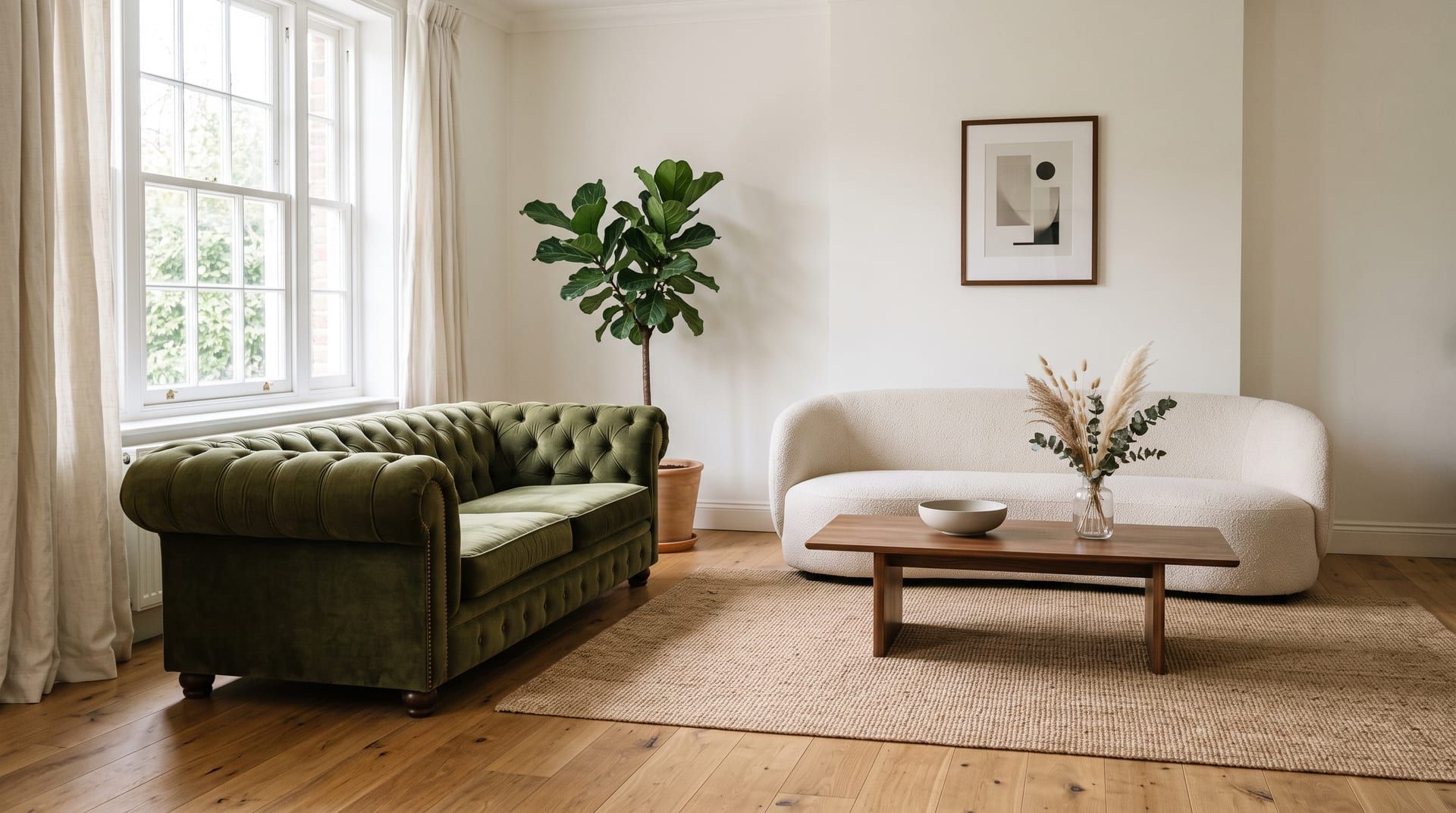
The three styles are often confused. Below, the sample living room appears in Japandi and in Scandinavian. Wabi-sabi is described in the table.
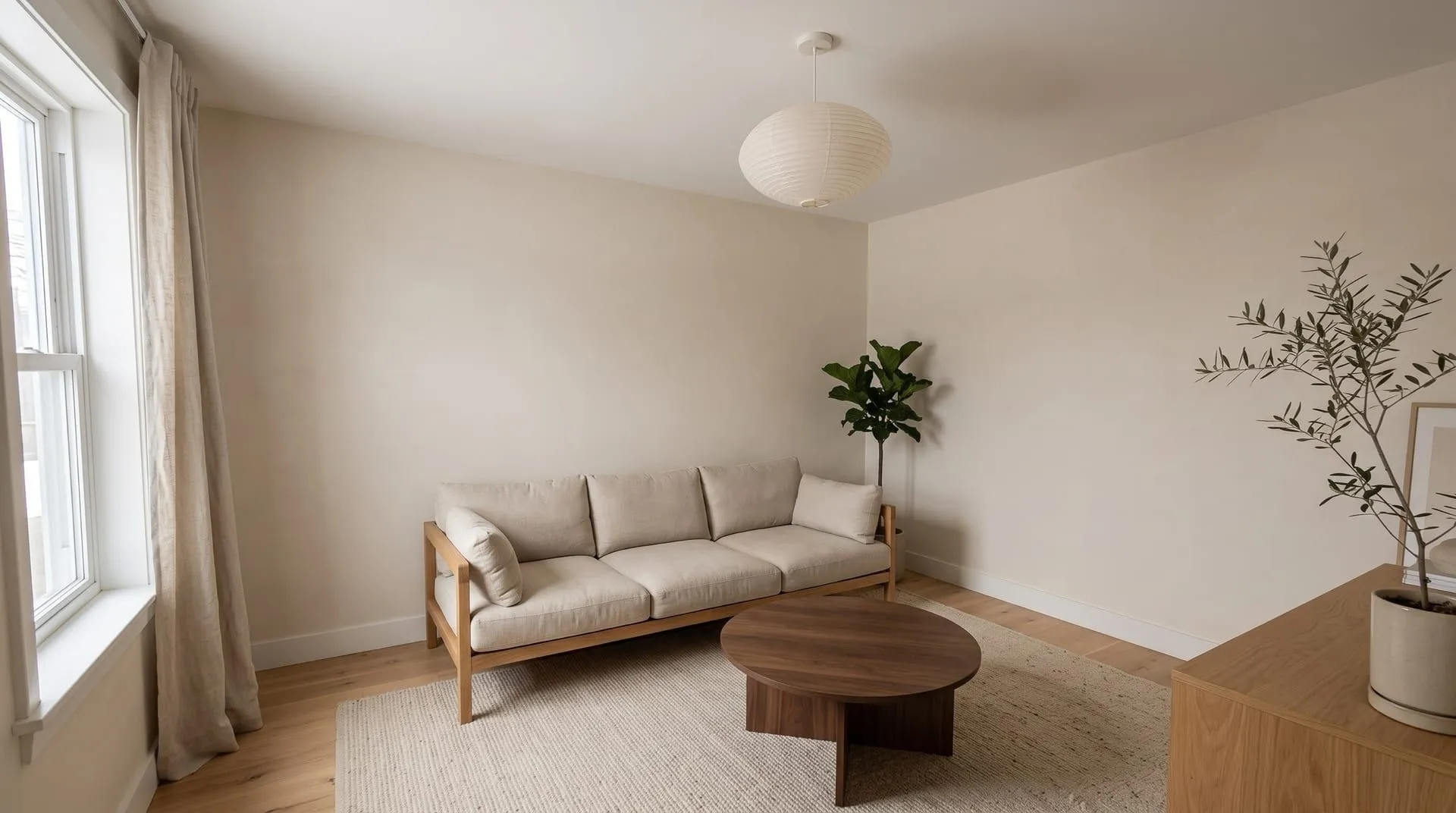 Scandinavian style with the Japandi Calm palette and a Japandi note. Generated with remyhomeai’s AI model from one sample photo.
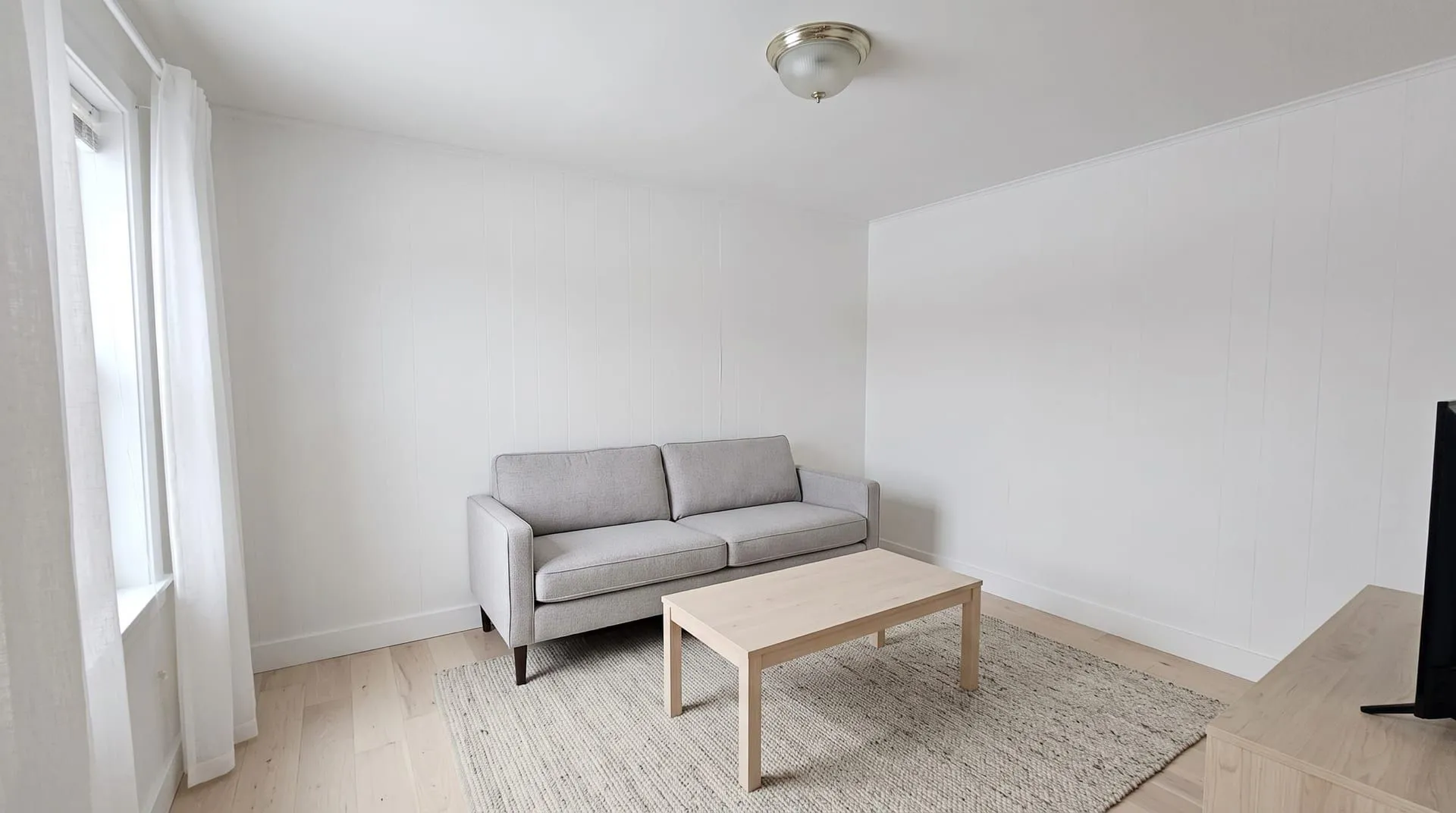 Scandinavian. Generated with remyhomeai’s AI model from one sample photo.
| Japandi | Scandinavian | Wabi-sabi | |
|---|---|---|---|
| Idea | Calm, useful, nothing extra | Bright, cosy, practical | Beauty in imperfection and age |
| Palette | Oat, taupe, stone, one dark accent | White, pale grey, soft pastels | Clay, earth, ash, muted browns |
| Wood | Mix of light oak and dark wood | Pale birch, ash, light oak | Weathered, reclaimed, uneven |
| Furniture | Low, simple lines, visible joinery | Light, rounded, practical | Low, rough, handmade |
| Textiles | Linen, cotton, little pattern | Wool, sheepskin, some pattern | Raw linen, rumpled, undyed |
| Walls | Warm white or limewash | White | Rough plaster, limewash |
| Not for you if | You like many objects on show | You want a dark, moody room | You want crisp, new surfaces |
Wabi-sabi is a philosophy more than a style. It values the cracked bowl and the worn table. In a room it looks darker and rougher than Japandi. Scandinavian is the brightest of the three, with more white and more pattern.
The Japandi palette
Start with a warm neutral base. Pure white looks cold next to oak and linen. Choose an off-white with a little yellow or red in it, or a pale greige.
- Base (most of the room): oat, warm white, sand.
- Second colour: taupe, stone, mushroom, or a muted sage.
- Accent: one dark tone, such as espresso wood, charcoal or black. Use it in a few places: a table, a lamp base, picture frames.
The 60-30-10 colour rule fits Japandi well. The free colour palette from photo tool pulls a palette out of any Japandi image you like, so you can match the paint.
Materials that make it Japandi
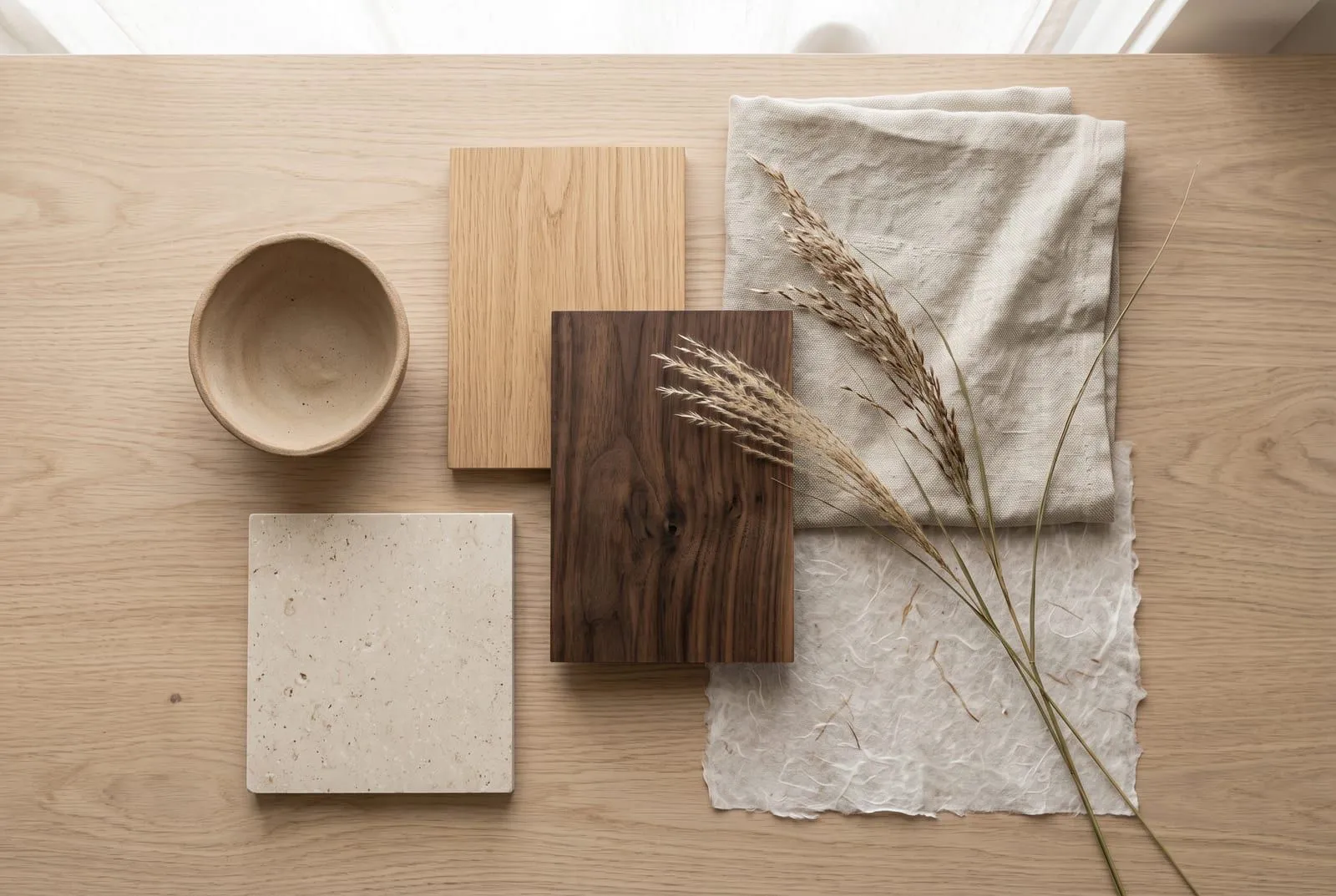 An illustration for this article.
| Material | Where to use it | Avoid |
|---|---|---|
| Light oak or ash | Floors, shelves, sofa frames | Orange or glossy finishes |
| Dark wood (walnut, smoked oak, stained ash) | One table, a bench, frames | Too much dark wood, which makes the room heavy |
| Linen and cotton | Sofa covers, curtains, bedding | Shiny synthetics, busy prints |
| Paper | Pendant lamps, screens | Bright plastic shades |
| Clay and stoneware | Vases, bowls, lamp bases | Glossy, bright glazes |
| Limewash or matte paint | Walls | High gloss on walls |
| Plants | One large plant or a branch in a vase | Many small pots |
Texture replaces colour in a Japandi room. A rough linen next to smooth oak, a matte clay vase on a wood shelf. If the room feels flat, add texture before you add colour.
Furniture: low, simple, honest
- Low profile. A sofa with a low back, a low coffee table, a platform bed. Low furniture leaves more wall empty, and empty wall is part of the look.
- Visible structure. Exposed legs and joinery, not skirted bases.
- Fewer, better pieces. A Japandi room has what it needs and little else. Hide everything else in closed storage.
- Rounded edges. A round or soft-cornered table softens the straight lines.
Japandi room by room
Living room
A low sofa in linen, a solid wood coffee table, one paper or linen pendant, closed storage for the TV and books, and one large plant. Keep shelves half empty.
Bedroom
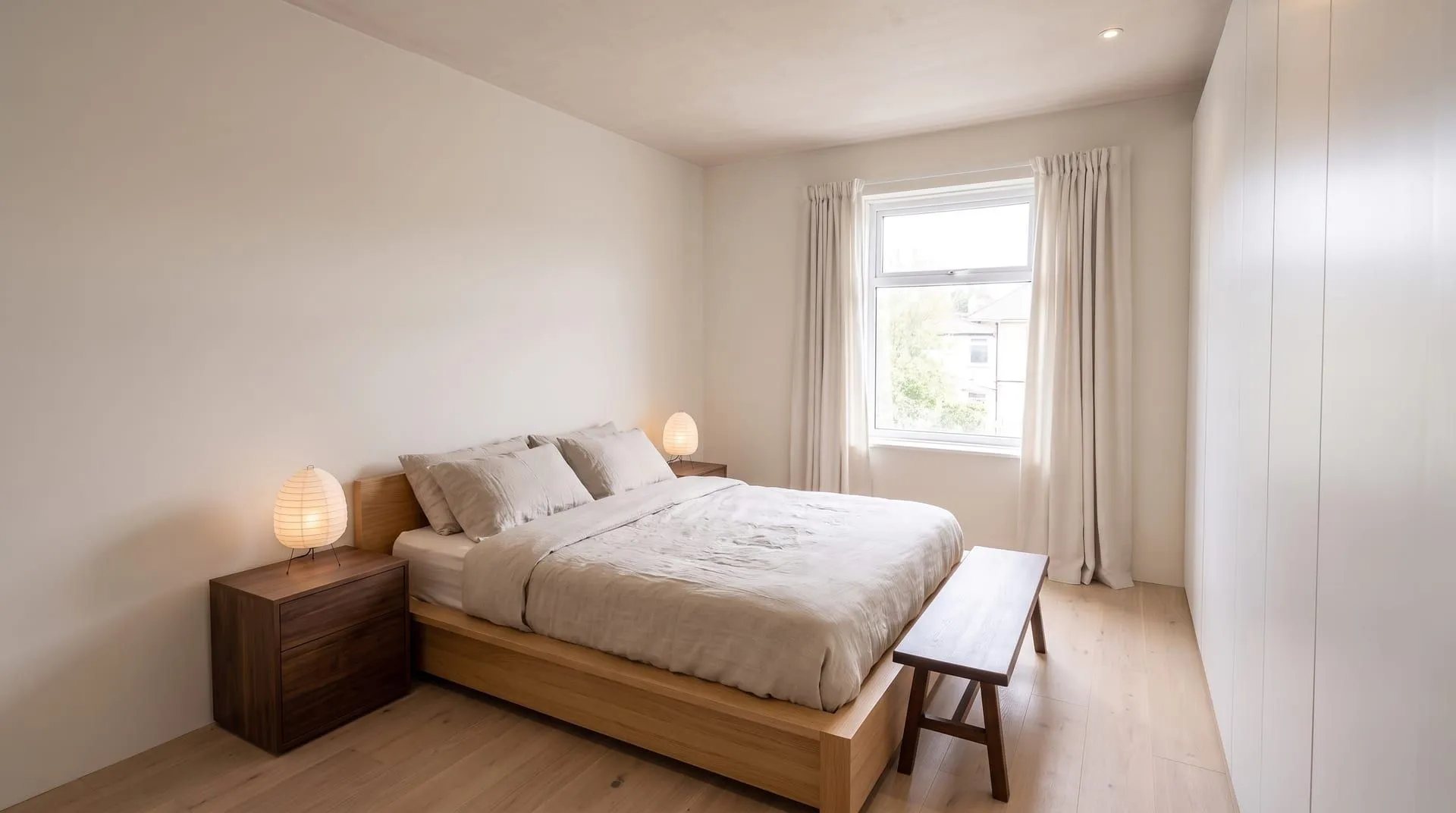 A Japandi bedroom. Generated with remyhomeai’s AI model from one of our sample redesigns.
A low platform bed, linen bedding in two neutral tones, two small bedside tables, warm low light. Keep the wall behind the bed empty or hang one piece of art. The bedroom page shows the room type in other styles.
Dining area
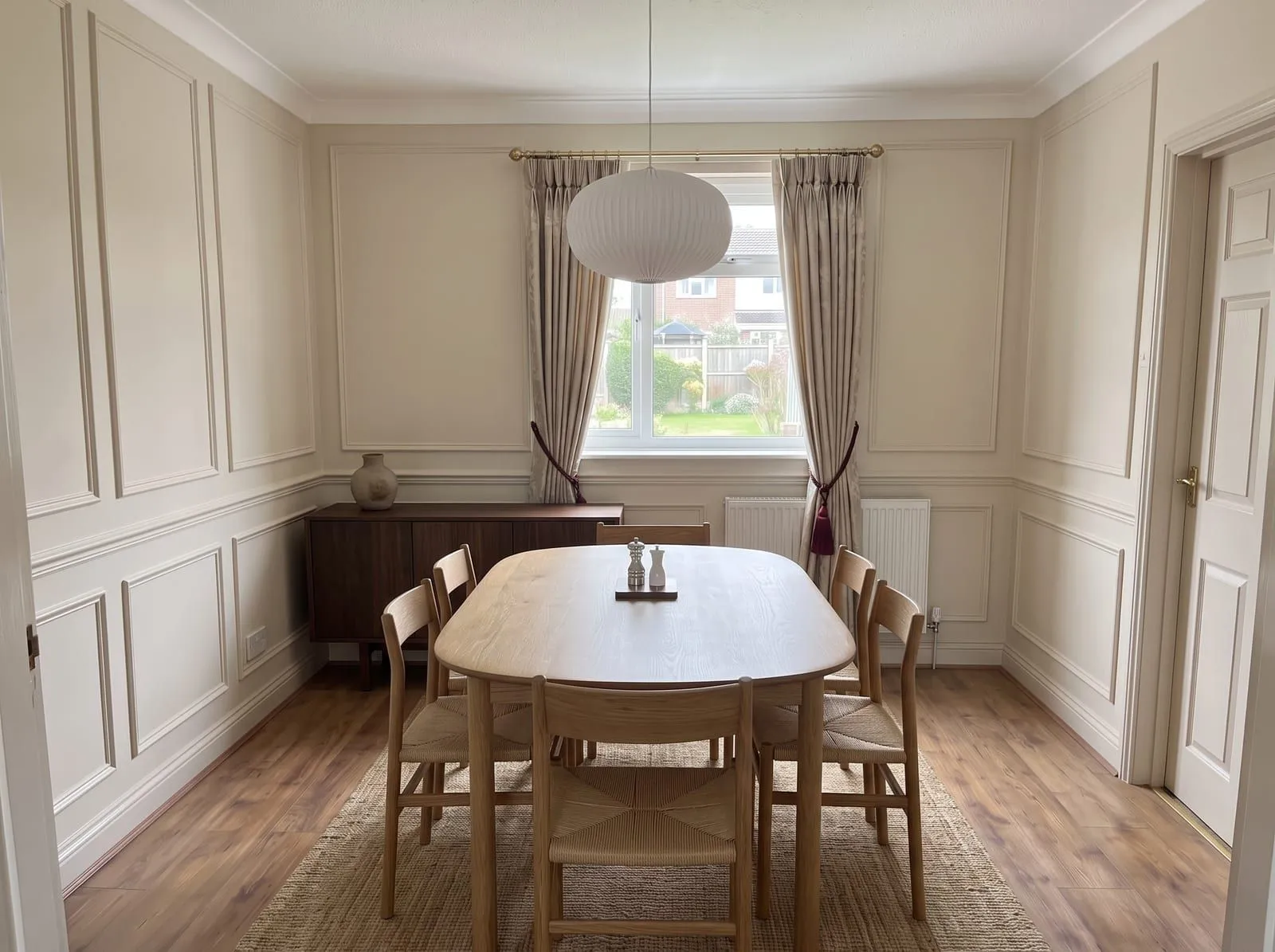 A Japandi dining room. Generated with remyhomeai’s AI model from one of our sample redesigns.
A solid wood table, simple chairs (a mix of wood and woven seats works), one pendant low over the table. Nothing on the table but a bowl or a vase.
Where Japandi goes wrong
- Too cold. Grey walls, white floors and no wood make a room that is minimalist, not Japandi. Add warm wood and linen.
- Too themed. Bonsai, fans, calligraphy and lanterns together turn a style into a costume. One Japanese reference is enough.
- Too empty for real life. A family room still needs storage, a place for shoes and a lamp to read by. Plan closed storage first, then empty the surfaces.
- One flat beige. Without a dark accent and texture, the room looks unfinished.
How to test Japandi on your own room
Japandi is easy to picture and hard to judge until you see it with your own floor and window. remyhomeai has no Japandi style preset, but you can reach the look with the controls it has:
- Upload a photo of your furnished room and pick the room type.
- Choose the Scandinavian style, or minimalist for a barer result.
- Choose the “Japandi Calm” palette (oat, taupe and espresso).
- In the “Anything specific?” notes field, type a short brief, for example: “Japandi: low oak furniture, paper pendant, linen, one dark walnut accent”.
- Tick the keep controls for the floor, doors or windows if you want those left as they are.
The living room renders in this article follow these steps. Treat the result as a brief. Then shop for pieces that match it. Not sure Japandi is your style? The interior design style quiz gives a starting point.
What remyhomeai does not do
- It has no Japandi style preset. The palette and the note do that work.
- It restyles a furnished room. For an empty room, use a tool built for staging.
- It does not source the furniture in the picture. You pick the sofa and the lamp.
- It has no shopping links.
Try it on your own room. See your room in a new style with 3 free designs at signup, no card required.