Design style
Scandinavian interior design
Light woods, cozy textiles, soft greens and whites.
Scandinavian interior design is the Nordic approach to a home: pale wood, white walls, soft textiles and simple functional furniture. It was shaped by long dark winters, so it works hard to capture daylight and to feel warm.
The style is pared back but not bare. Wool throws, sheepskins, candles and plants make it feel lived in. This cosy quality is often called hygge.
Colours are gentle: white, pale grey, muted green, dusty blue and the honey tone of birch and ash. Nothing in the room shouts.
3 designs free each month. No card required.
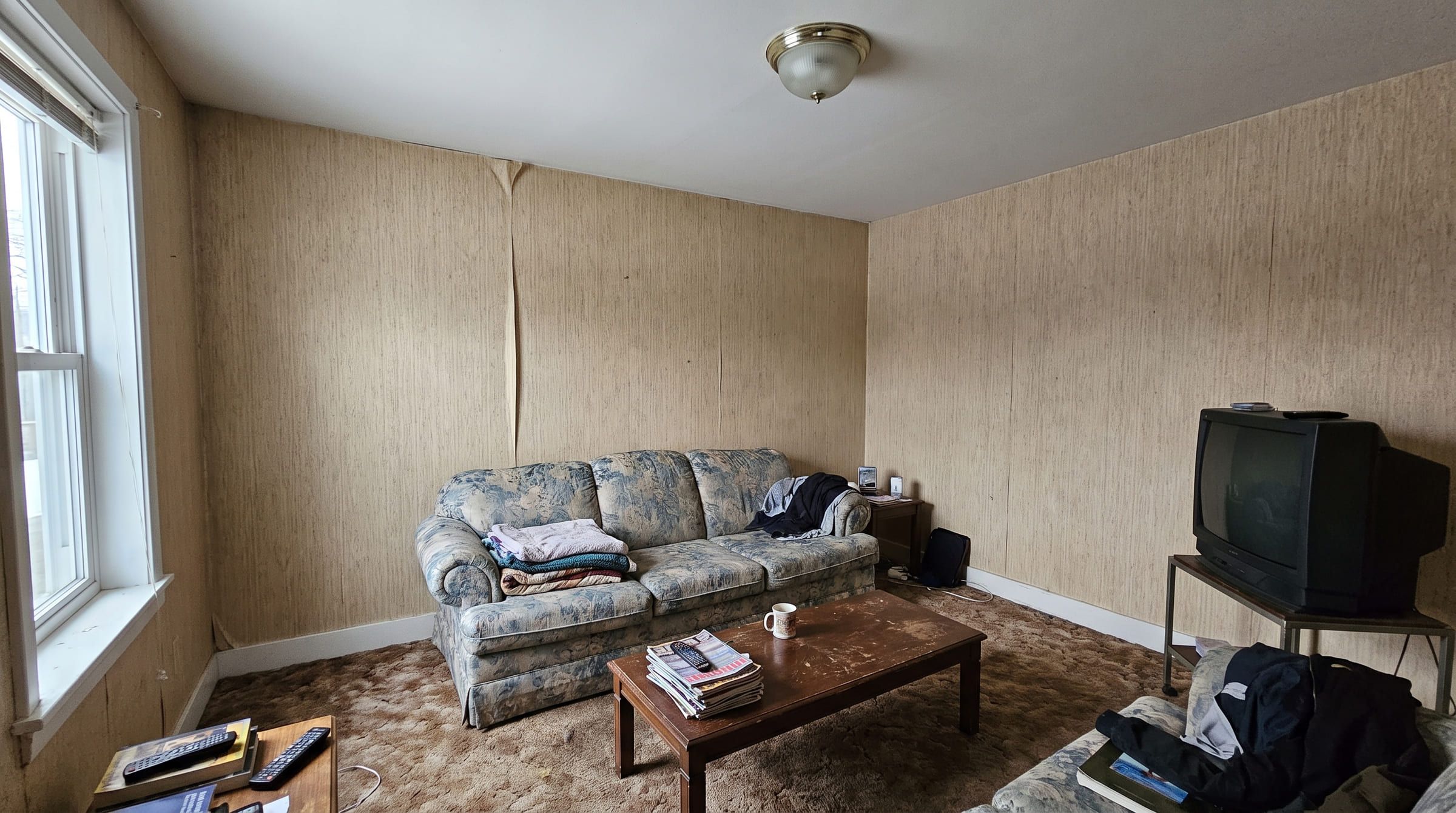
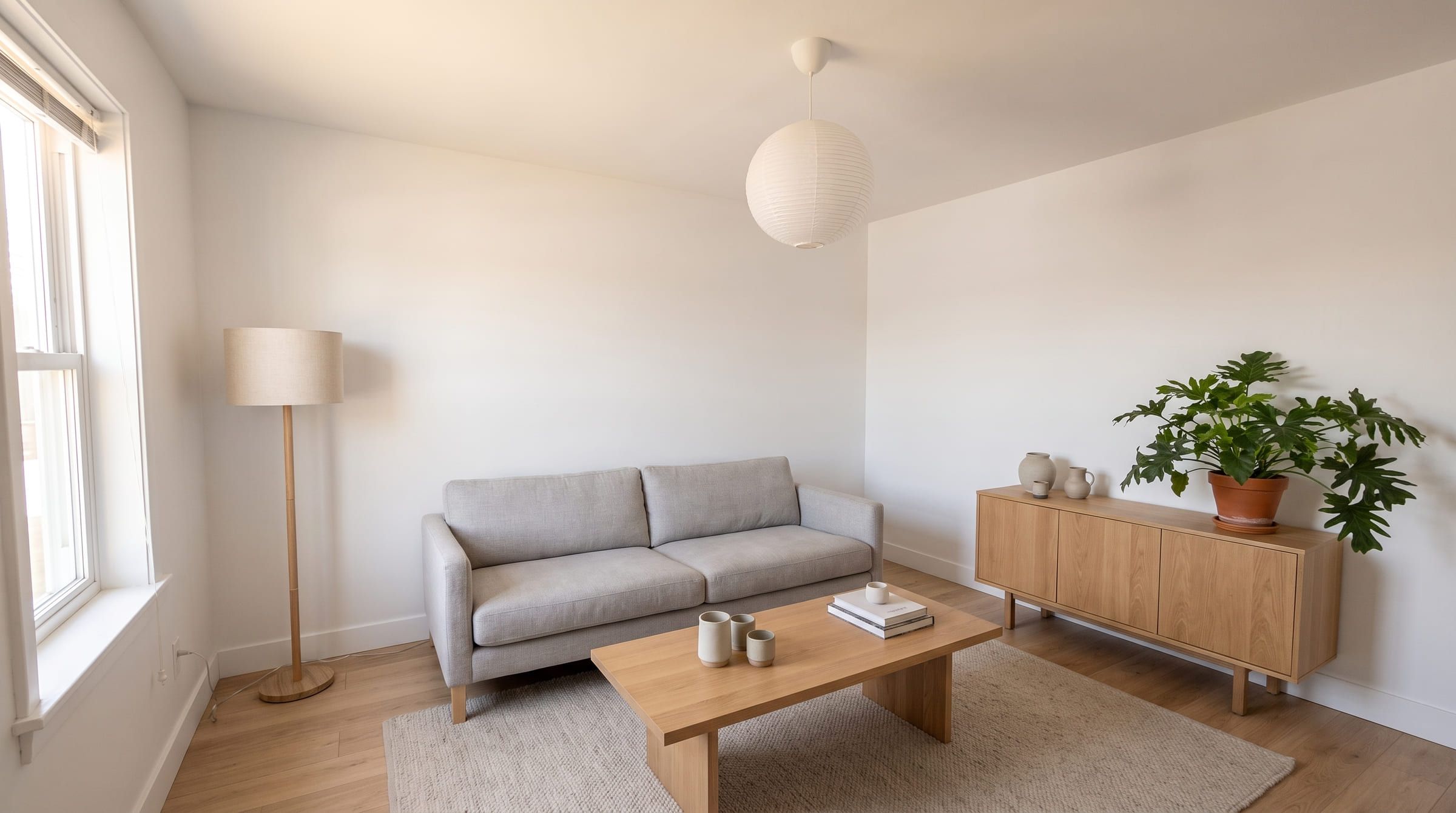
Drag to compare. The same living room photo, restyled in Scandinavian with remyhomeai's AI model.
What defines the Scandinavian look?
Function comes first. Each piece is useful, well-made and simple in form. There is no decoration that does not also do a job, with the exception of plants and candles.
Light is the second priority. Walls are white or near-white, floors are pale, windows are left mostly undressed. The room is arranged to catch every hour of daylight.
Nature comes indoors. Wood grain stays visible, plants sit on sills and shelves, rugs are jute or wool. Then a cosy layer goes on top: textiles, candles, soft lamps. That layer is what separates Scandinavian from minimalist.
Materials and finishes
The woods are pale: birch, ash, beech and white oak, often soaped or whitewashed to keep them light. Painted wood in white or soft grey is common on chairs and cabinets.
Textiles are the warm layer. Chunky knit wool throws, felt cushions, linen curtains, cotton bedding, a sheepskin over a chair, a flat-weave or jute rug on the floor. Leather is natural tan and left to age.
Walls are matte white paint, sometimes white-painted brick. Ceramics have soft glazes in grey, green or cream. Dark exotic hardwoods, high gloss and chrome are rare because they fight the lightness.
Colour palette
White is the base. Soft greys, sage and moss green, powder blue, blush and mustard arrive in small doses through textiles and ceramics. Black is used thinly: a lamp, a chair leg, a picture frame.
Sage & Cream, Nordic Light, Earthy Green, Misty Morning and Forest Retreat are the remyhomeai palettes that fit this style.
The main warm colour in the room is the wood itself. Paint stays pale so the honey tone of birch and ash can read as colour.
Lighting
Many small warm sources replace one bright overhead. Table lamps, floor lamps with linen shades, candles and string lights create pools of light. The pendant is paper, opal glass or a simple white dome, and layered paper shades are a Nordic classic.
Daylight is stretched as far as it will go. Curtains are sheer or absent. A mirror across from the window doubles the light. White walls act as reflectors.
Bulbs are warm and dimmable. In the evening the room is lit low and from the sides, which is where the hygge feeling comes from.
Furniture and layout
A light oak sideboard with tapered legs is the archetype. Around it sit a birch dining table with a plain apron, spindle-back or Y-back dining chairs, and a low sofa in grey or oatmeal wool on wooden legs. A rocking chair with a sheepskin is a typical corner piece.
Storage is open shelving in pale wood, a peg rail in the hallway and a wooden bench with a lid. Rugs are layered: a sheepskin over a wool flat-weave.
The floor is kept mostly clear. A reading corner is placed beside the window. Furniture is light enough to move so the room can change with the season or the number of guests.
Common mistakes
All white and no warmth. White walls, white floor and white furniture with no wood or wool is a clinic, not a Nordic home.
Furnishing the whole room from flat-pack. The style values craft. One solid wood piece, even a small one, anchors the rest.
Over-decorating with slogans and prints sold as Scandi. Real Nordic rooms have very few objects, and the ones they have are useful.
Blocking the light. Heavy curtains, dark rugs and tall furniture in front of the window cancel the one thing the style is built around.
What changes in your photo
Scandinavian in remyhomeai brightens your photo. The structure does not move. Walls, windows, doors, the ceiling and the angle of the shot are kept, because the tool edits the actual image you upload. Walls usually become white or very pale. The floor turns to light ash or whitewashed oak boards unless you tick the floor box to keep your own.
Dark furniture is swapped for pale-wood pieces on tapered legs. The sofa becomes low grey or oatmeal wool. Heavy drapes become sheer linen or disappear. Textiles arrive: a knit throw, a sheepskin, a jute rug. Lighting changes to a paper pendant and warm table lamps, and a plant or two appears. Features such as a tiled stove or a built-in bookcase can be kept by naming them in the keep field. The tool cannot add a window where there is none, so a room with little daylight will look brighter but not sunlit.
Scandinavian style questions
Does Scandinavian work in a dark room?
Yes. The style was developed for places with little winter daylight. White walls, pale floors, a mirror opposite the window and several warm lamps make a dim room feel brighter than most approaches do.
Is Scandinavian the same as minimalist?
No. Both are simple and pale, but Scandinavian adds the cosy layer: wool, sheepskin, candles, plants and visible wood grain. Minimalist removes that layer and accepts a cooler result.
Which woods are Scandinavian?
Birch, ash, beech, pale oak and pine, usually left light with soap, oil or a white wash. Walnut and dark stains are used sparingly, if at all.
Can I use colour in a Scandinavian room?
Yes, in muted tones and small amounts. Sage, dusty blue, mustard and blush work in cushions, throws, ceramics and a single painted chair. Keep the walls pale so the colour reads against them.
The other six styles, on the same room
- ModernSleek lines, glass + metal accents, dramatic lighting.
- MinimalistAiry layouts, matte finishes, calm monochrome palettes.
- ContemporarySoft curves, layered lighting, warm neutrals with contrast.
- IndustrialRaw textures, concrete + steel, loft-style openness.
- TraditionalSymmetry, paneled details, rich fabrics and warm metals.
- EclecticPlayful mix of art, texture, and bold curated accents.
From the blog
- Modern vs contemporary vs minimalist, on the same living roomModern is a movement, contemporary is what is current, minimalist is a rule about how much you own. See all three, plus Scandinavian, on one living room photo.
- Why many AI room designers hand you someone else's roomMany AI room tools treat your photo as inspiration and generate a new room. How to tell which kind you have, and why it matters before you buy anything.