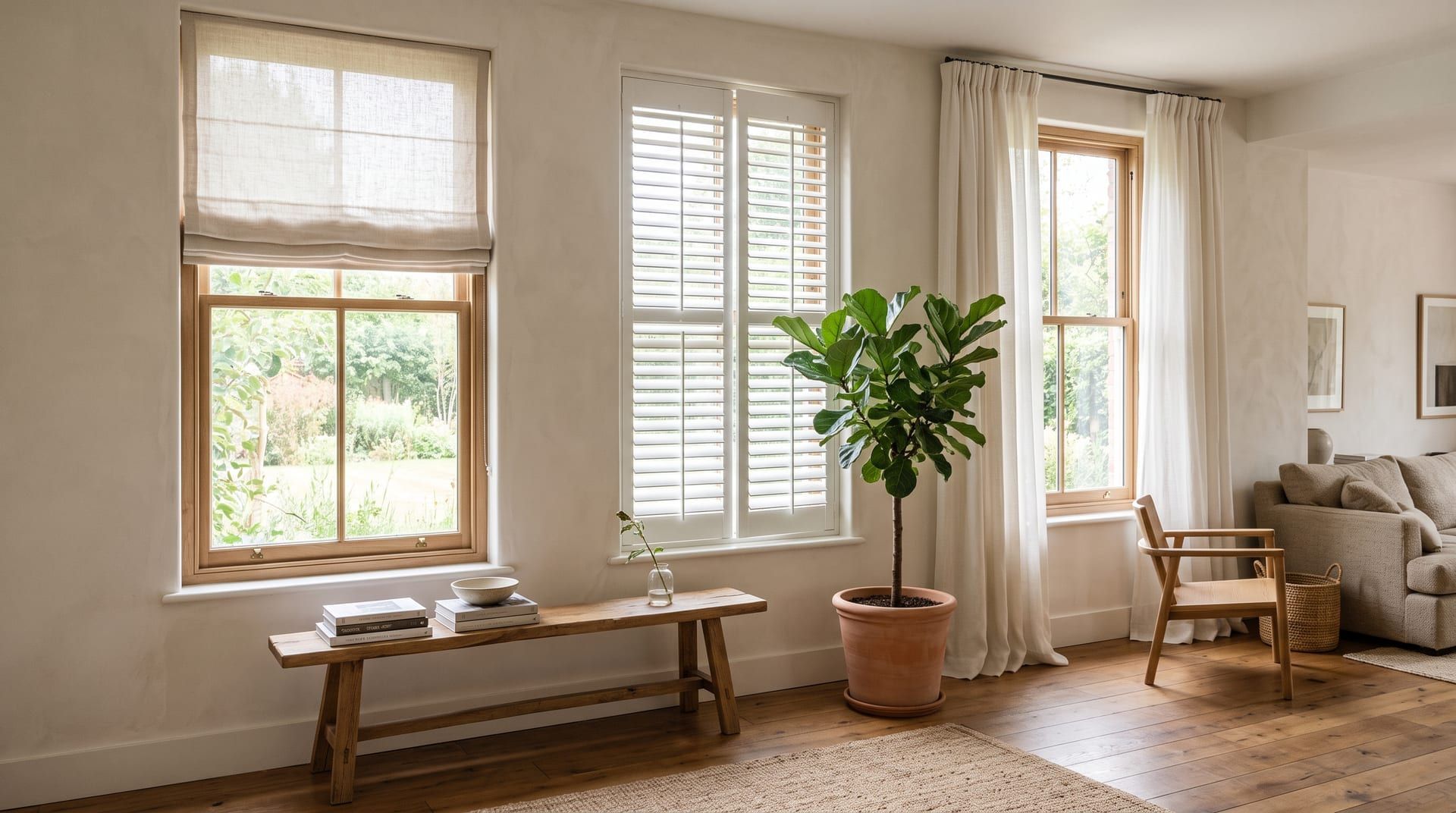
Choose curtains for softness, blackout and warmth, blinds for precise light control, shades for a clean look on small or busy windows, and plantation shutters for a durable, built-in finish that lasts the life of the house. Many rooms work best with two layers: a shade or blind at the glass and curtains framing it.
Below, one bedroom window is dressed six ways. The room, the light and the camera do not change. Only the window treatment does.
What is the difference between curtains, blinds, shades and shutters?
The names get mixed up in shops, so here is what each one means in this guide.
- Curtains (and drapes) are fabric panels that hang from a rod or track and slide sideways. Drapes are usually heavier and lined.
- Blinds are made of hard slats on cords or tapes. Venetian blinds have horizontal slats. Vertical blinds have vertical vanes. You can tilt the slats or raise the whole blind.
- Shades are one continuous piece of soft material. Roller shades roll onto a tube. Roman shades fold up in pleats. Cellular (honeycomb) shades stack up in air pockets.
- Shutters are rigid panels hinged to the window frame. Plantation shutters have wide louvres that tilt.
Curtains
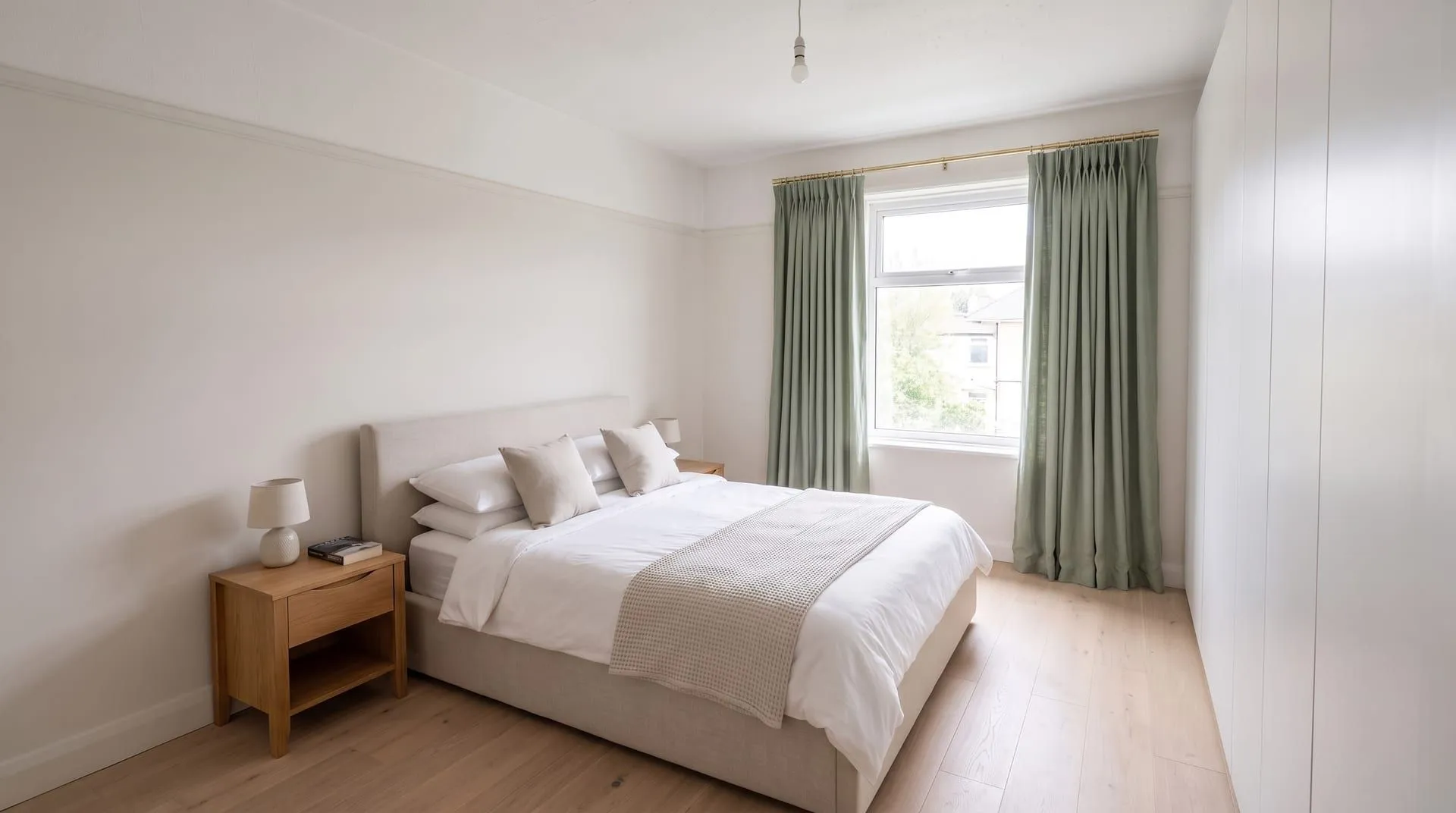 Pinch-pleat linen curtains on a high, wide rod. Generated with remyhomeai’s AI model from one sample photo.
Curtains are the softest option. They add colour and texture, absorb sound and make a room feel finished. Lined or blackout curtains block the most light of any option here, and heavy curtains reduce heat loss through the glass at night. Hung high and wide, as in the image above, they make the window look taller and larger.
Where curtains fall short
Curtains need wall space at both sides to stack back, and they reach the floor, so they do not suit a window behind a radiator, a desk or a kitchen sink. Fabric collects dust and needs washing or dry cleaning. Unlined curtains give little privacy at night with the lights on. Sizing also matters more than people expect: a rod too low or panels too narrow makes the window look small. The curtain size calculator gives the rod width and panel drop for your window.
Roman shades
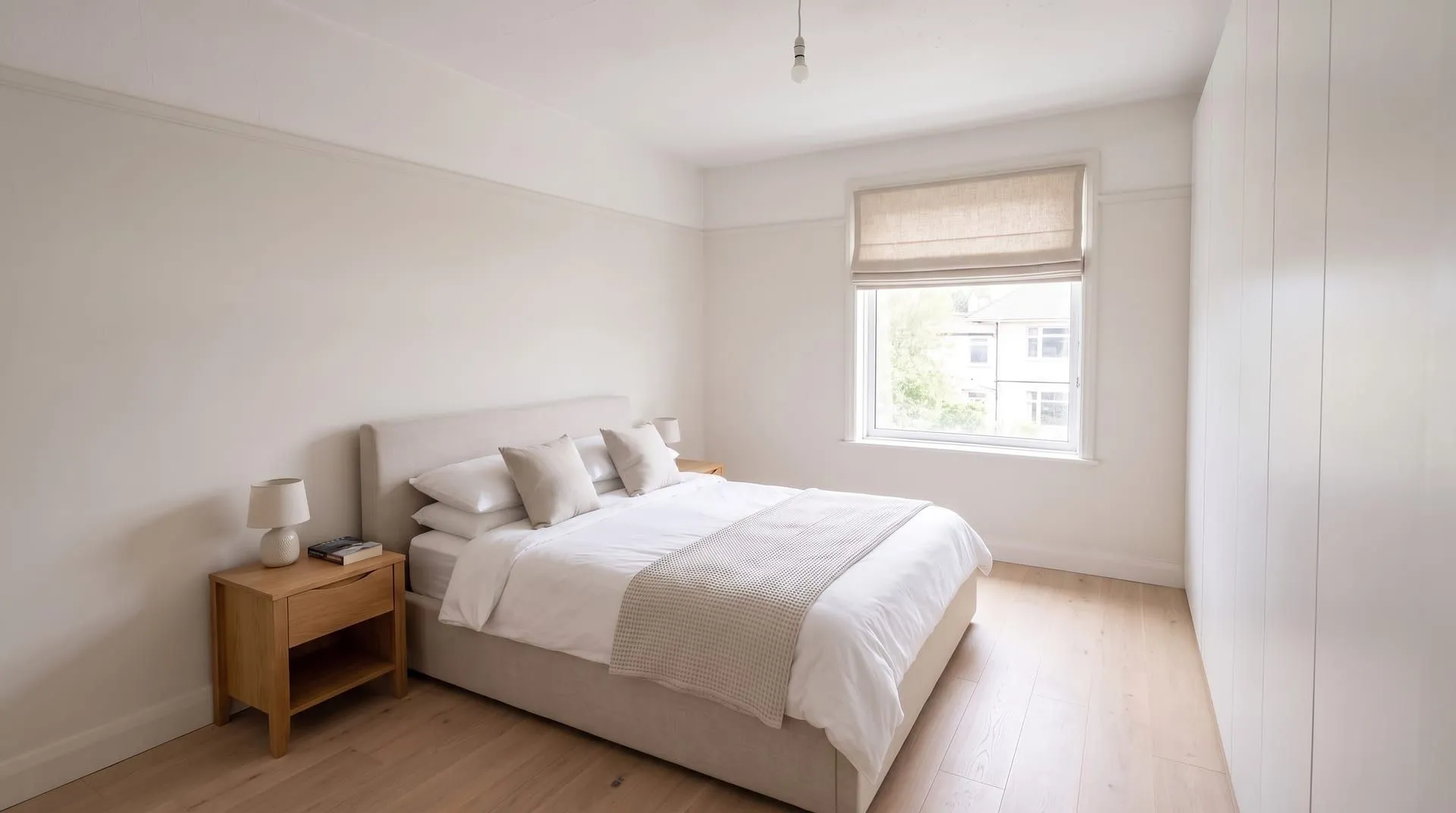 A flat-fold linen roman shade. Generated with remyhomeai’s AI model from one sample photo.
A roman shade is one piece of fabric that folds up in neat pleats. It has the softness of a curtain without the width. It suits small windows, windows over a sink or a bed, and any room where curtains would crowd the wall. Lined versions darken a bedroom well.
Where roman shades fall short
They are slower to raise than a roller, and the folded fabric always covers the top of the glass, so the window looks shorter and lets in less light. Fabric shades are hard to wash. Custom roman shades are among the more expensive soft options. Inside-mounted shades also leave small light gaps at the sides.
Roller shades
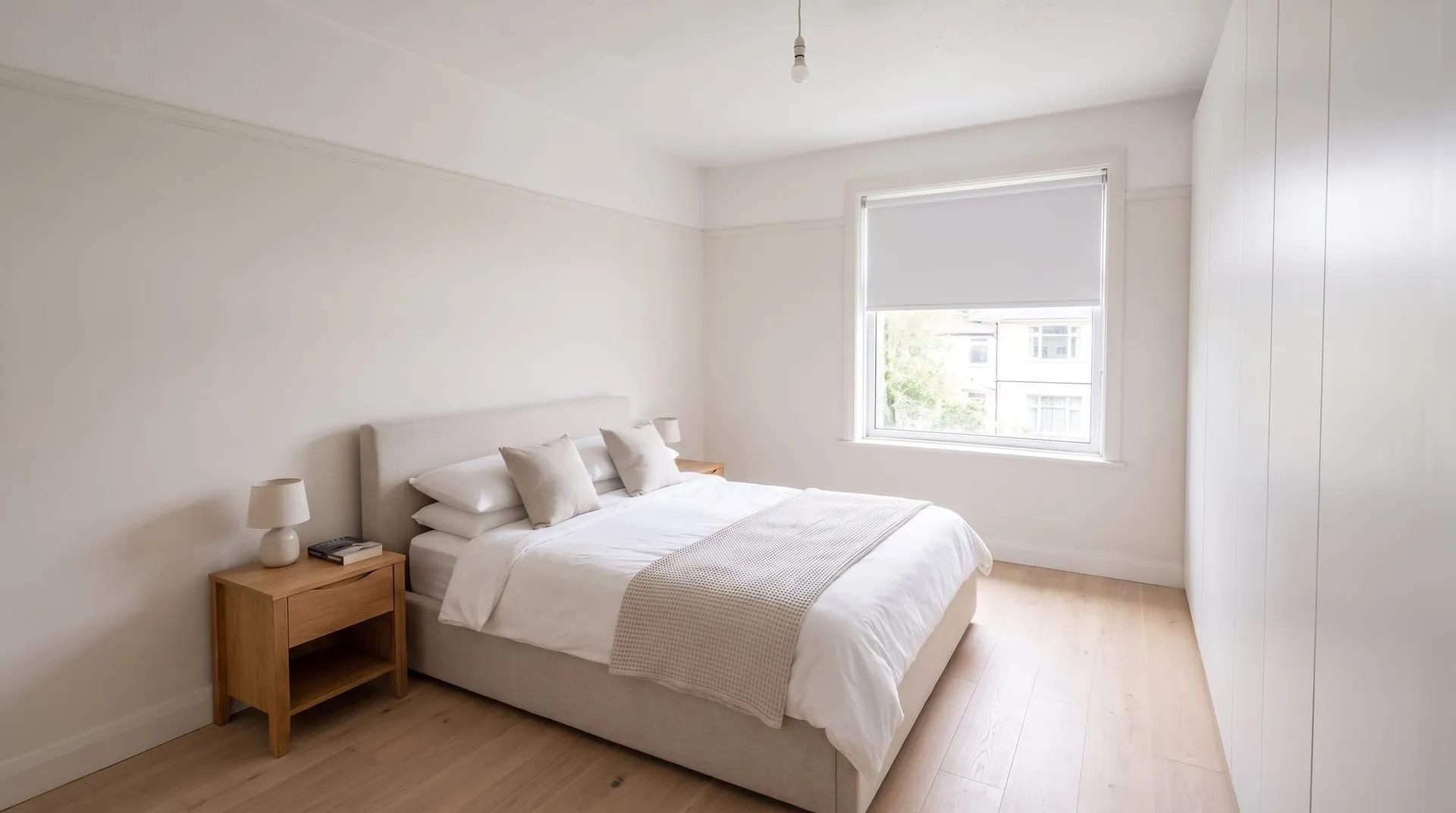 A white fabric roller shade. Generated with remyhomeai’s AI model from one sample photo.
A roller shade is the simplest option. It disappears into a slim tube when it is up, it is cheap, and it comes in fabrics from sheer to full blackout. Solar screen fabrics cut glare and heat while keeping the view. In the UK the same product is called a roller blind.
Where roller shades fall short
Plain rollers look utilitarian on their own. They give one setting at a time: up, down or part way. Light leaks at the edges of an inside mount. Cheap mechanisms wear out, and a long roller can sag or roll unevenly. Most people add curtains in a living room or bedroom for warmth.
Venetian blinds
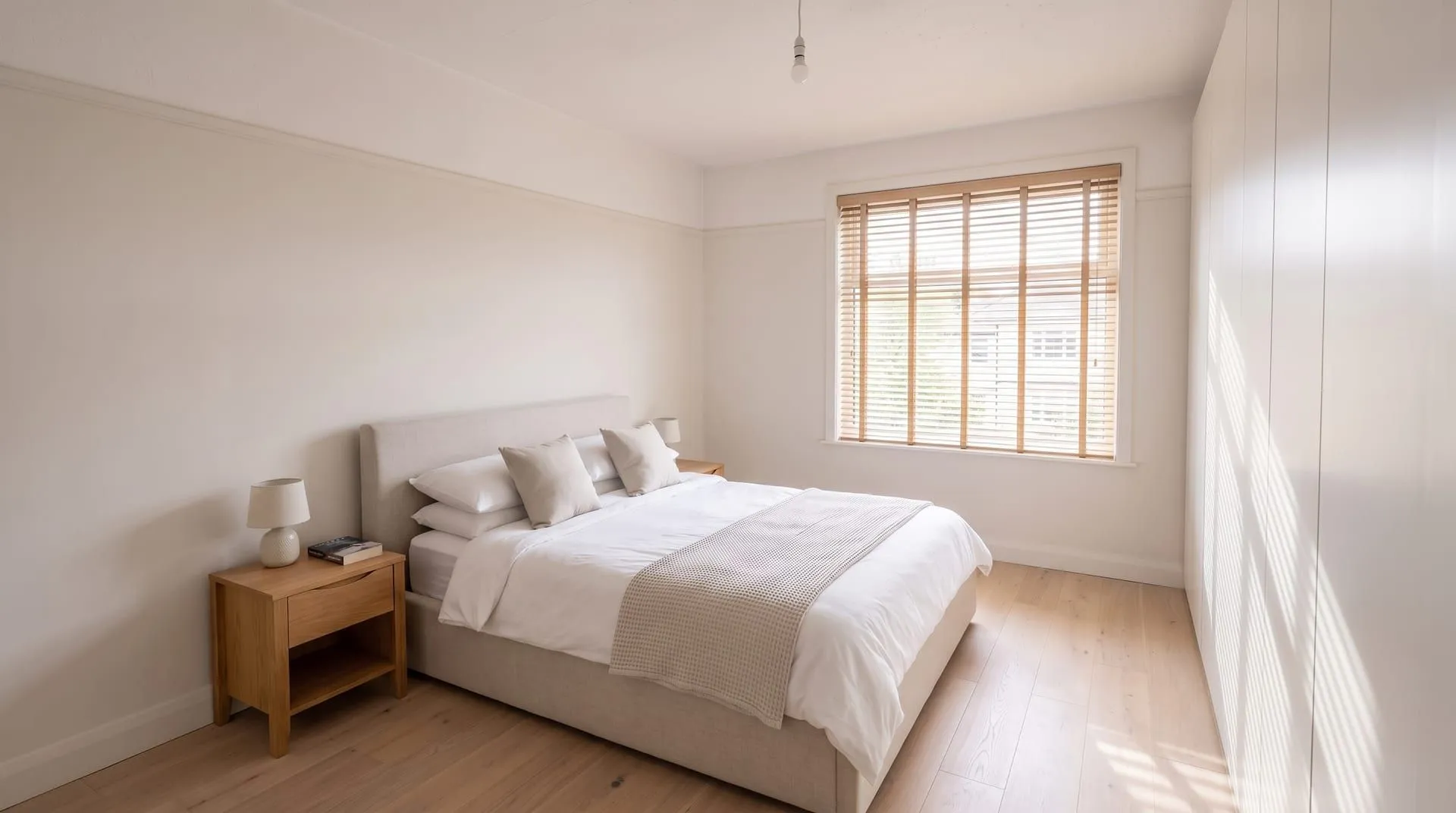 Wooden venetian blinds with 50 mm slats. Generated with remyhomeai’s AI model from one sample photo.
Venetian blinds give the finest control of light. Tilt the slats up and you get daylight and privacy at once. Tilt them flat and you see out. Wood and faux wood suit living rooms and bedrooms. Aluminium and faux wood suit kitchens and bathrooms, because they take moisture better than real wood.
Where venetian blinds fall short
Every slat collects dust, and cleaning them is slow. Light leaks between the slats even when closed, so they are poor for blackout. Real wood can warp in humid rooms. Cords are a hazard for small children: choose cordless or motorised versions in a child’s room. Raised, a wooden blind forms a deep stack at the top of the window.
Plantation shutters
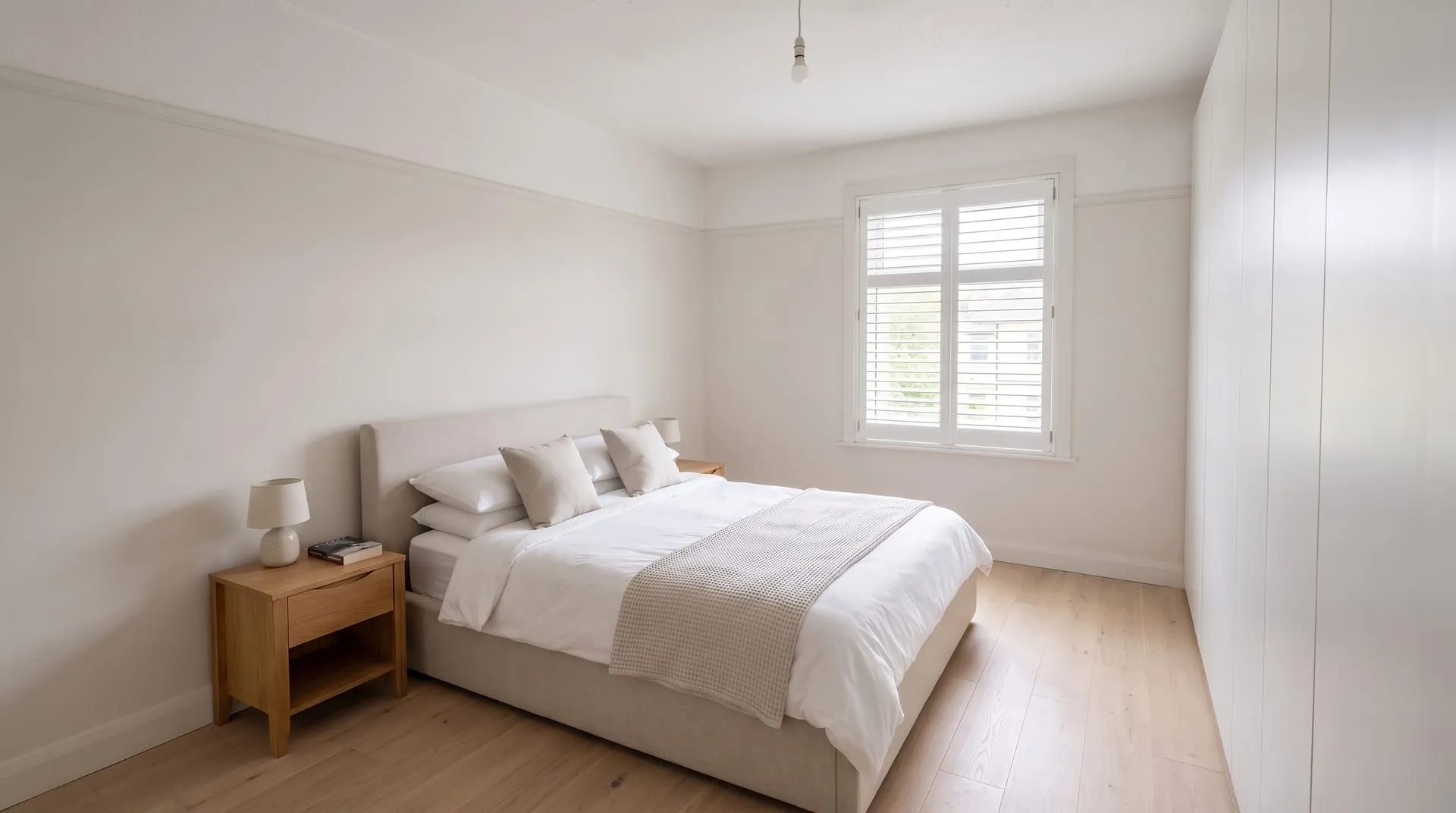 White plantation shutters with a mid rail. Generated with remyhomeai’s AI model from one sample photo.
Plantation shutters are fitted furniture for the window. They are made to measure, last for decades and stay with the house. Like blinds, the louvres tilt for light and privacy. The mid rail lets you open the bottom and top separately. Faux wood and vinyl versions suit bathrooms.
Where plantation shutters fall short
They cost the most up front and take weeks to make. Even fully open, the panels and frame block some light and part of the view. Hinged panels need space to swing, so check door handles and window cranks. They are fixed, so they are a poor choice for renters or for anyone who changes a room often.
Layered: a shade plus curtains
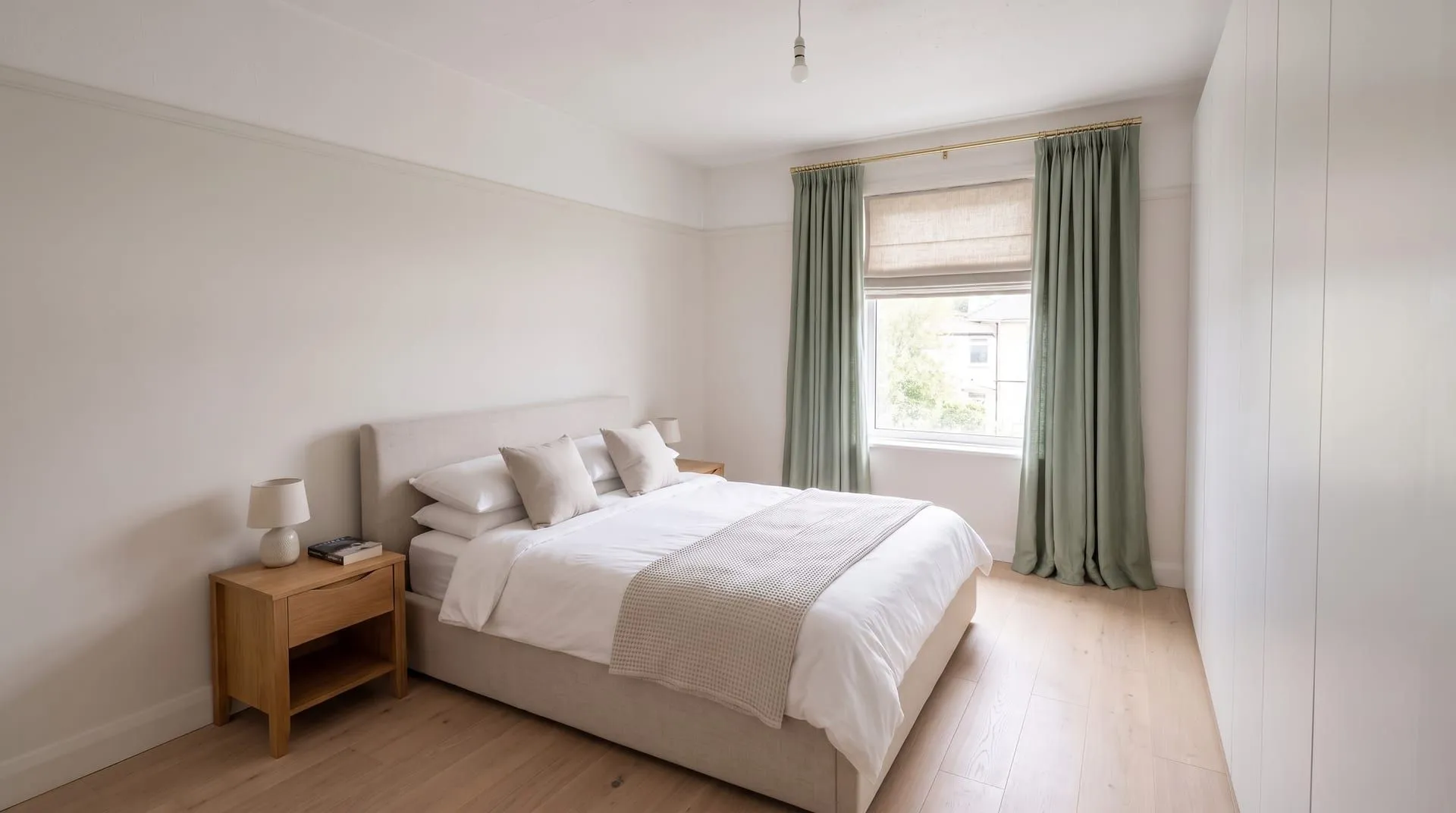 A roman shade layered under curtains. Generated with remyhomeai’s AI model from one sample photo.
Layering combines the strengths. The shade or blind handles light and privacy at the glass. The curtains add softness, cover the light gaps at the sides and add insulation. This is the most common choice for bedrooms that need real darkness. It also lets you change the look later by swapping only the curtains.
The trade-off is cost and clutter. Two layers cost more than one, and on a small window they can feel heavy.
Window treatments compared
| Curtains | Roman shades | Roller shades | Venetian blinds | Plantation shutters | |
|---|---|---|---|---|---|
| Light control | Open or closed | Up or down | Up or down | Tilt plus up or down | Tilt plus open |
| Blackout | Best (lined) | Good (lined) | Good (blackout fabric) | Poor | Fair |
| Privacy with view | Sheers only | Poor | Fair (solar screen) | Good | Good |
| Insulation | Good | Fair | Fair | Poor | Good |
| Cleaning | Wash or dry clean | Hard | Easy wipe | Slow, slat by slat | Easy dusting |
| Wall space needed | Yes | No | No | No | Swing space |
| Lifespan | Medium | Medium | Short to medium | Medium | Longest |
| Rough cost | Low to high | Mid to high | Lowest | Low to mid | Highest |
What do they cost?
Prices vary with size, material and whether the product is custom. As of October 2026, rough planning bands are:
- Blinds: about $55 to $170 per window, installed, for a standard window (Angi).
- Roller shades: about $25 to $350 per shade, by size and quality (HomeAdvisor).
- Roman shades: custom roman shades average about $900 per window (HomeAdvisor). Ready-made sizes cost far less.
- Plantation shutters: about $70 to $350 per window, with an average near $220 (This Old House). Real wood costs more than vinyl or composite.
Curtains have the widest spread: ready-made panels cost little, while custom lined drapes on a track can cost more than shutters. Black Friday week is a good time to buy stock sizes of curtains, rollers and blinds. Custom shades and shutters are less often discounted.
Which one for which room?
| Room | First choice | Why |
|---|---|---|
| Bedroom | Blackout shade plus curtains | Darkness, with softness and no edge gaps |
| Living room | Curtains, or curtains over sheers | Softness, sound absorption, style |
| Kitchen | Roller shade or faux wood blind | Moisture, splashes, no fabric near the hob |
| Bathroom | Faux wood shutters or a vinyl blind | Humidity, privacy with light |
| Home office | Solar roller or venetian blind | Glare control on screens |
| Child’s room | Cordless blackout shade plus curtains | Safety and sleep |
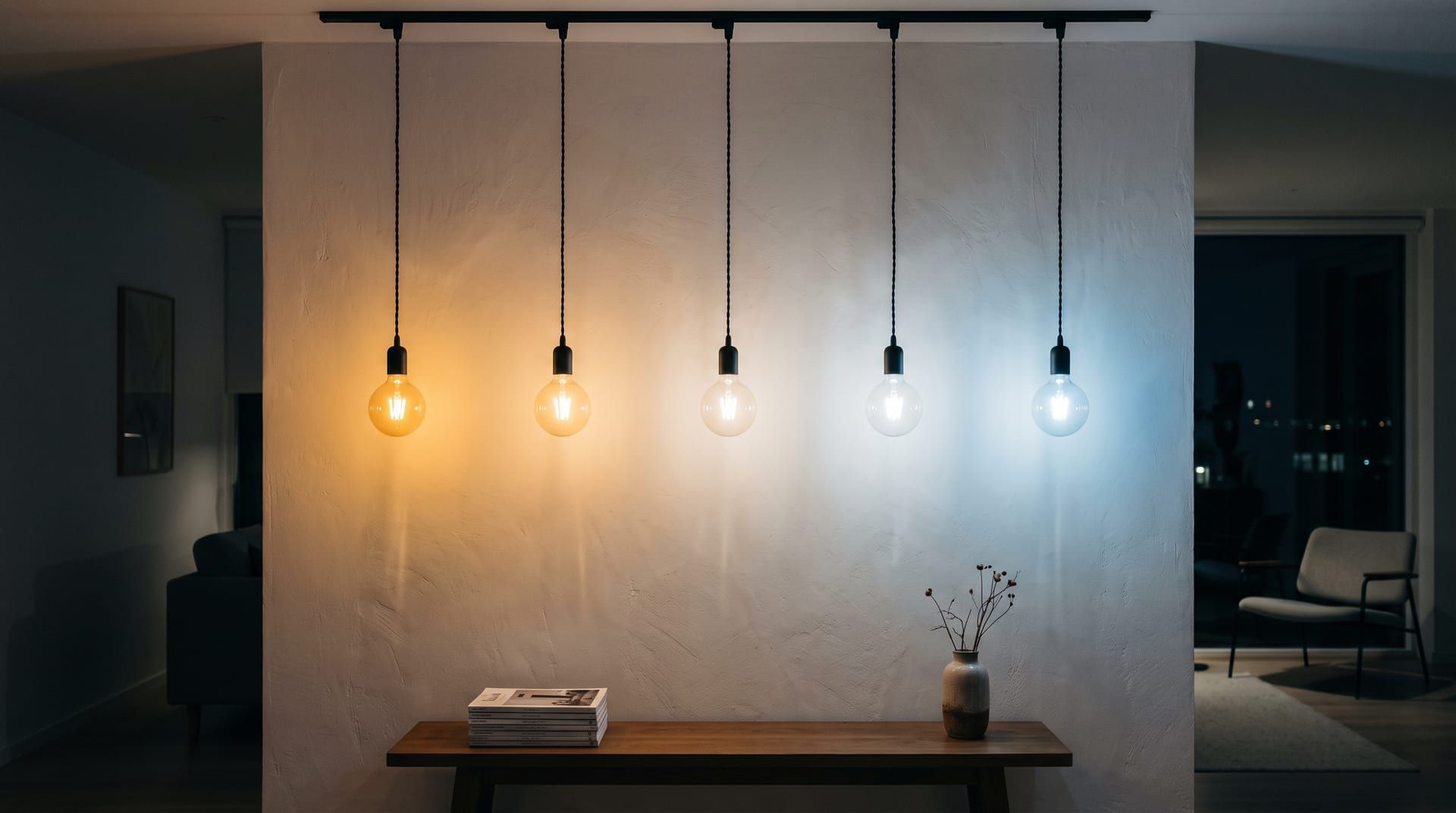
Style matters as well. A Scandinavian room suits linen roman shades or sheer curtains. A traditional room suits lined pinch-pleat drapes or shutters. A modern room suits roller shades or a slim track with wave curtains. Bulb colour also changes how fabric looks at night; the guide to warm white and cool white light shows how.
See the window in context first
A window treatment changes the whole room, not only the glass. remyhomeai restyles a photo of your furnished room in one of 7 styles and 39 colour palettes, so you can see a direction on your own room before you buy fabric. Tick “floor” and “walls” in the keep controls so those stay as they are and only the furnishings and textiles change. It does not let you pick a specific curtain, shade or product, and it does not measure the window. Use it to choose the look, then measure and order.
Sources
- Angi: blinds installation cost
- HomeAdvisor: window treatment cost
- This Old House: plantation shutter cost
Try it on your own room. See your room in a new style with 3 free designs at signup, no card required.