Use flat paint on ceilings and on walls with dents or patches, eggshell on most living room, bedroom and hallway walls, and satin where walls get touched, splashed or scrubbed: kitchens, bathrooms, kids’ rooms and busy halls. The trade is simple. More sheen means a tougher, more washable wall, but it also shows every flaw in the plaster and every lap of the roller.
This guide shows the three finishes on the same wall of the same room, explains the sheen scale, and ends with a room-by-room chart.
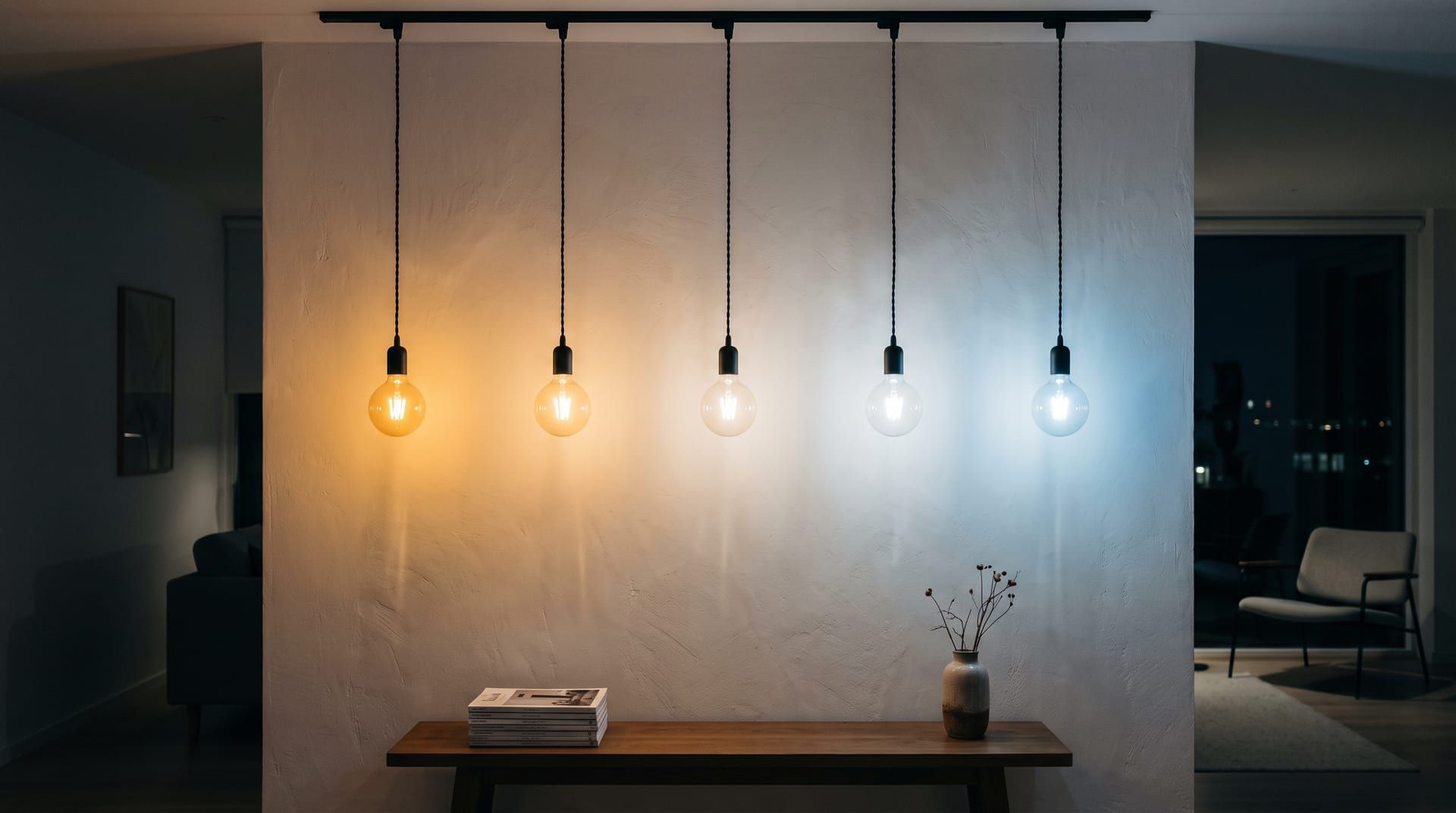
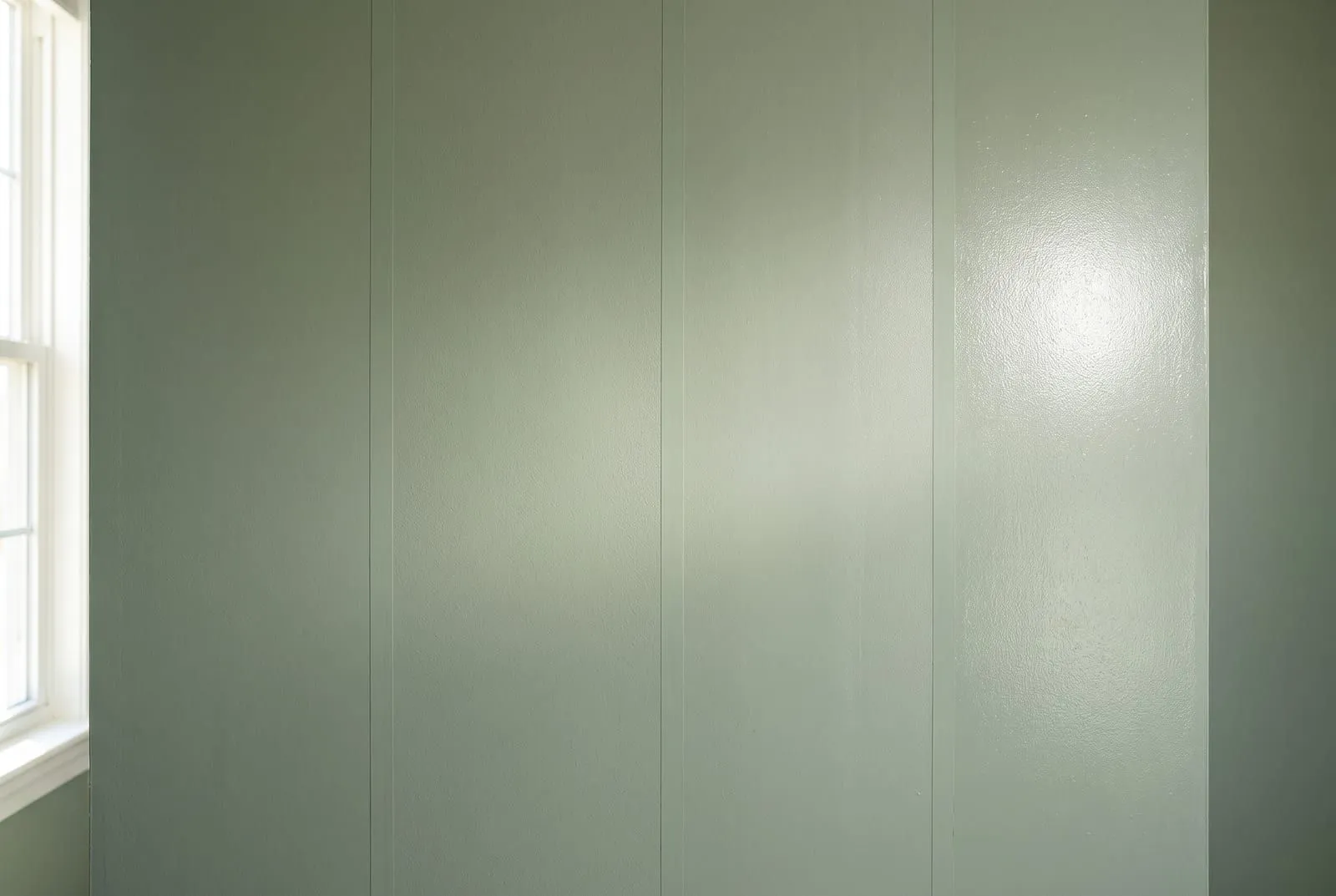 Four sheens of one colour under raking light, from flat on the left to semi-gloss on the right. An illustration for this article.
What is paint sheen?
Sheen is how much light a dry paint film reflects. A flat film is rough at a microscopic level, so it scatters light in all directions. A glossy film is smooth, so it bounces light back like a mirror. Paint makers control this with the ratio of pigment to binder. More binder gives a smoother, harder, shinier film.
Most brands use the same order, from least to most shine:
- Flat
- Matte (a step between flat and eggshell at many brands)
- Eggshell
- Satin
- Semi-gloss
- Gloss
The names are not standard. One brand’s eggshell can look like another brand’s satin. Always paint a large sample on the real wall and look at it in the morning and at night before you buy the full amount.
Flat, eggshell and satin compared
| Flat | Eggshell | Satin | |
|---|---|---|---|
| Look | No shine, soft and chalky | Faint glow at an angle | Visible pearly sheen |
| Hides wall flaws | Best | Good | Fair |
| Wipes clean | Poor | Good | Very good |
| Stands up to scrubbing | Poor | Fair | Good |
| Touch-ups blend | Best | Good | Often show |
| Shows roller marks | Least | Some | Most |
| Best rooms | Ceilings, adult bedrooms, formal rooms | Living rooms, bedrooms, halls | Kitchens, bathrooms, kids’ rooms, busy halls |
Flat: the finish that hides flaws
Flat paint absorbs light instead of reflecting it. Dents, old nail holes and patched drywall almost disappear. Colour looks rich and even, which is why designers like flat for deep colours and old houses with wavy plaster.
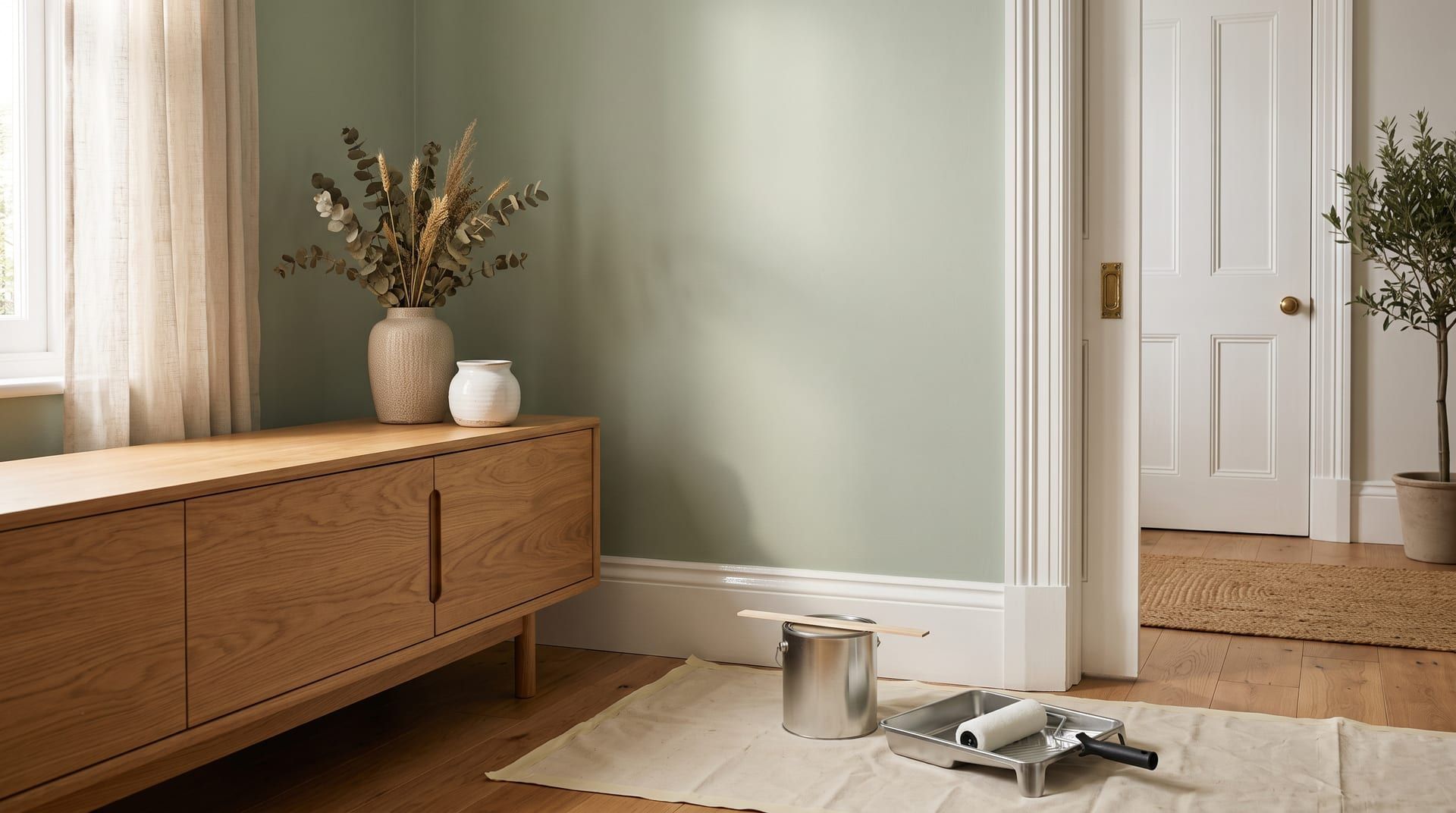
The living room below is one photo with the walls in a flat sage green. The sun falls on the wall, but there is no glare.
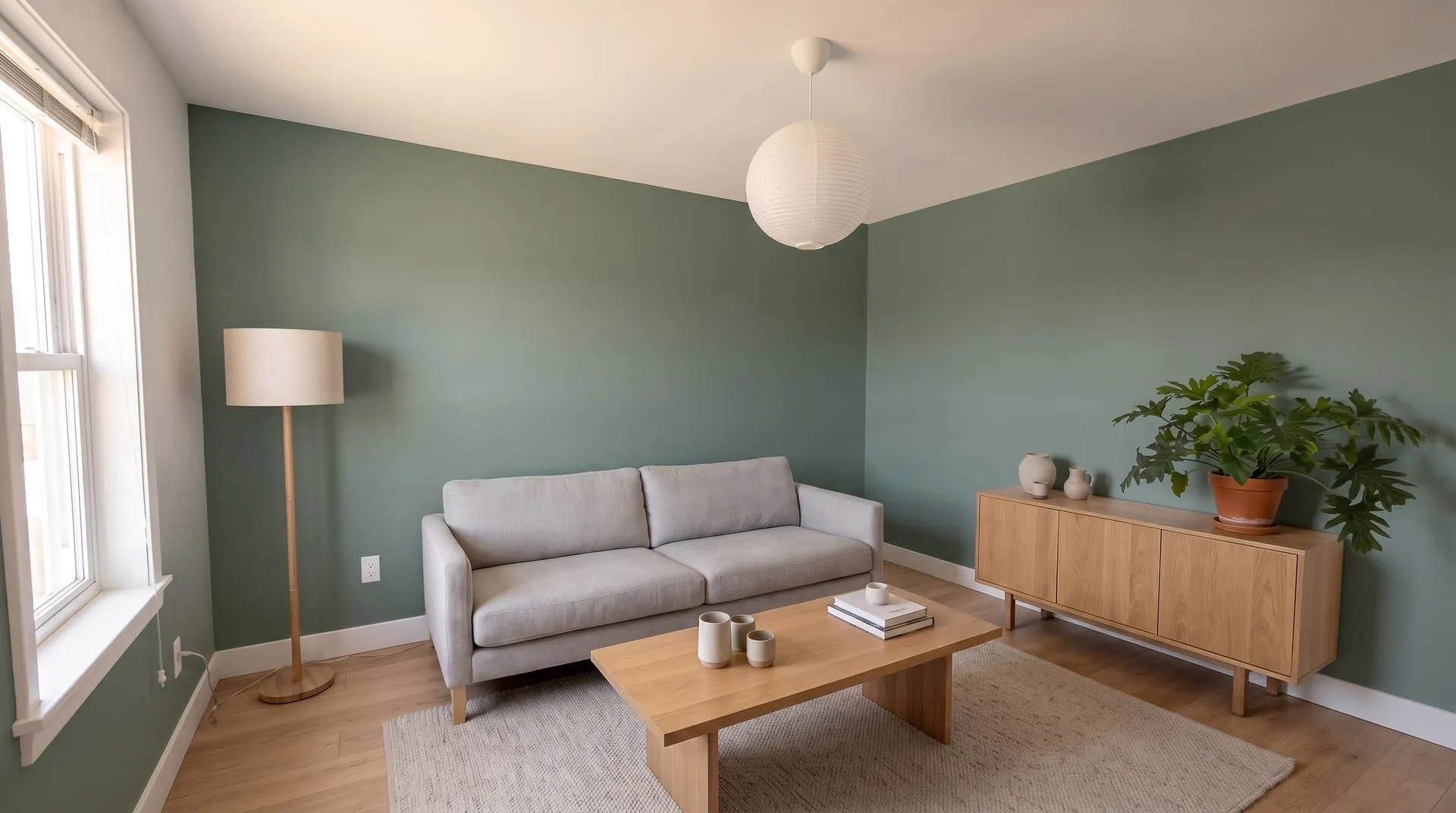 Flat finish. Generated with remyhomeai’s AI model from one sample photo.
Flat also touches up well. Dab a scuff with leftover paint and the patch usually blends in, because there is no sheen to mismatch.
Where flat falls short
Flat paint marks easily. A bag, a shoulder or a hand leaves a grey smudge. Scrub that smudge and the film can burnish: the rubbed patch turns slightly shiny and looks worse than the mark. Flat also holds moisture and grease, so it is a poor choice in kitchens and bathrooms. Some brands sell “scrubbable” flat and matte lines that clean better. They are worth a look for a busy room where you still want a dull finish.
Eggshell: the safe default for most walls
Eggshell has a low sheen, close to the surface of an egg. Head-on, it looks almost flat. At an angle, near a window, it shows a soft glow. That small amount of binder makes the film much easier to wipe than flat.
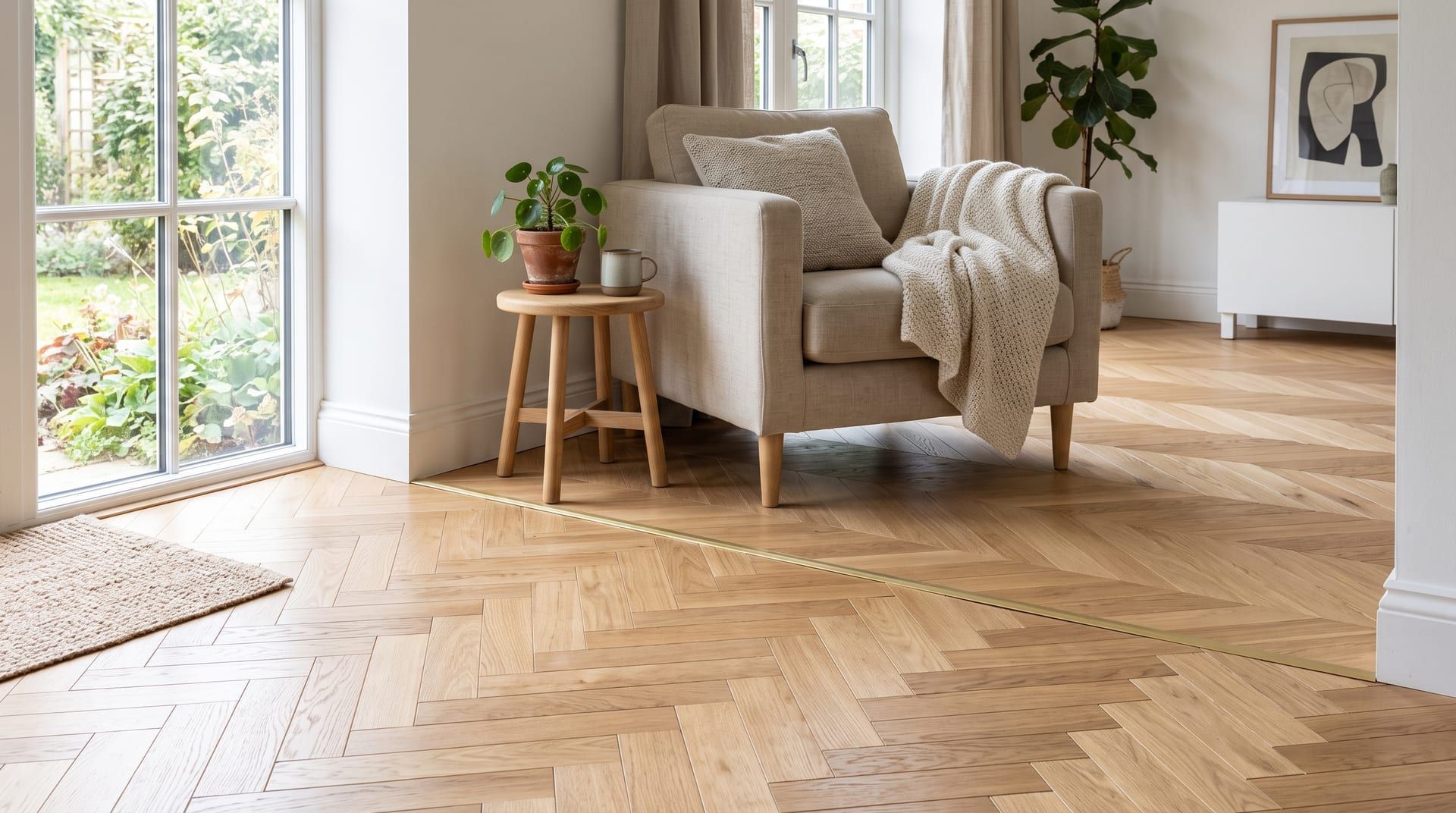
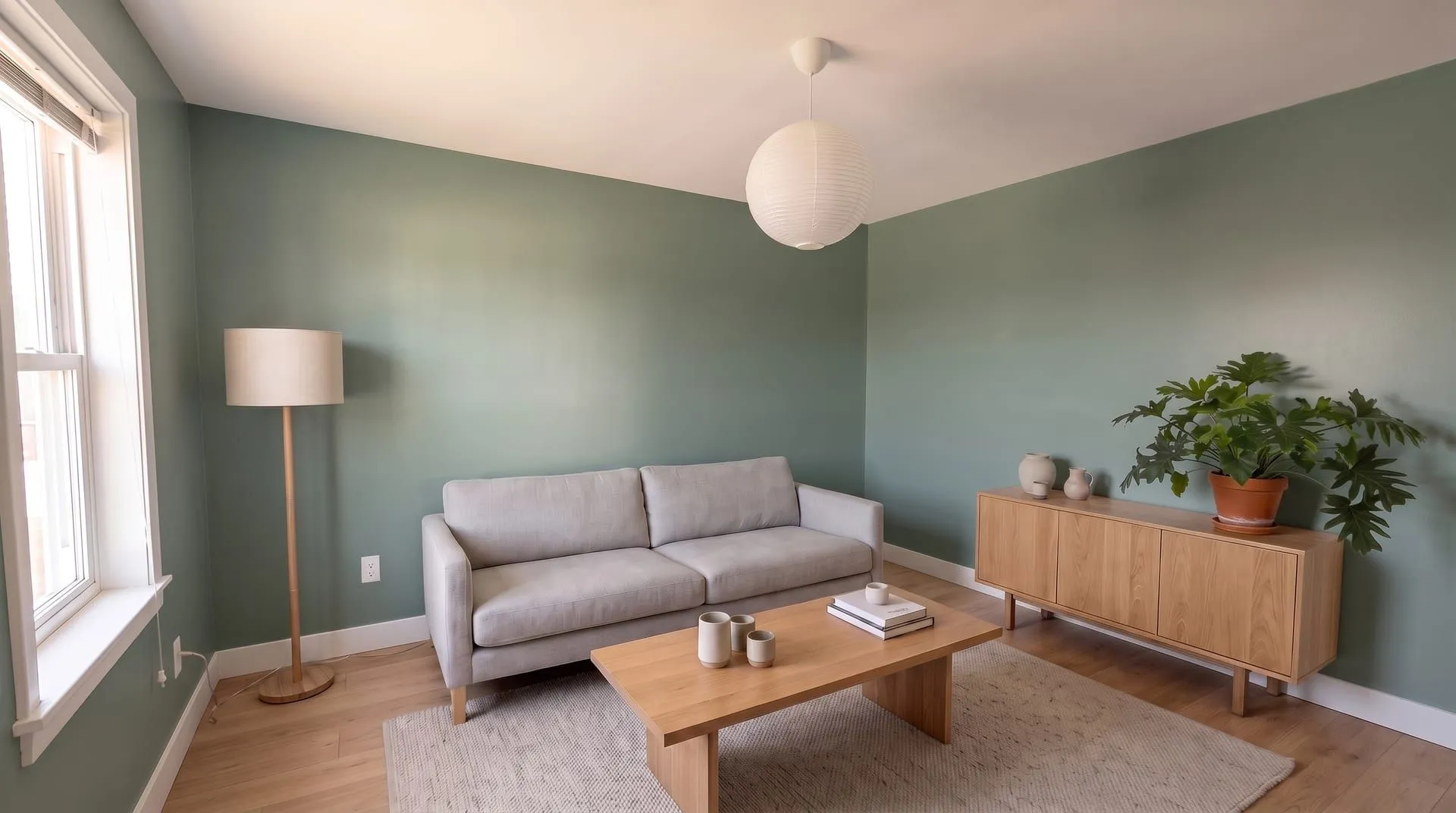 Eggshell finish. Generated with remyhomeai’s AI model from one sample photo.
Compare the wall near the window with the flat version. The colour is the same. The difference is subtle in a photo and clearer in a real room, where you move past the wall and the light changes. That subtlety is the point: eggshell keeps the calm look of flat and adds washability.
Eggshell suits living rooms, dining rooms, bedrooms and hallways in a quiet home. If you are not sure, choose eggshell.
Where eggshell falls short
It shows more flaws than flat. A wall with patches, cracks or uneven skim coats can look blotchy, because the patched areas reflect light differently. It is also not tough enough for a wall that gets scrubbed every week. And a touch-up can flash: the new patch dries with a slightly different sheen from the wall around it, so repaint corner to corner when you can.
Satin: the tough, washable finish
Satin has a clear pearly sheen. It resists moisture, takes regular scrubbing and lets you wipe off fingerprints, food and crayon. That makes it the standard for kitchens, bathrooms, laundry rooms, kids’ rooms and the hallway walls where everyone drags a hand.
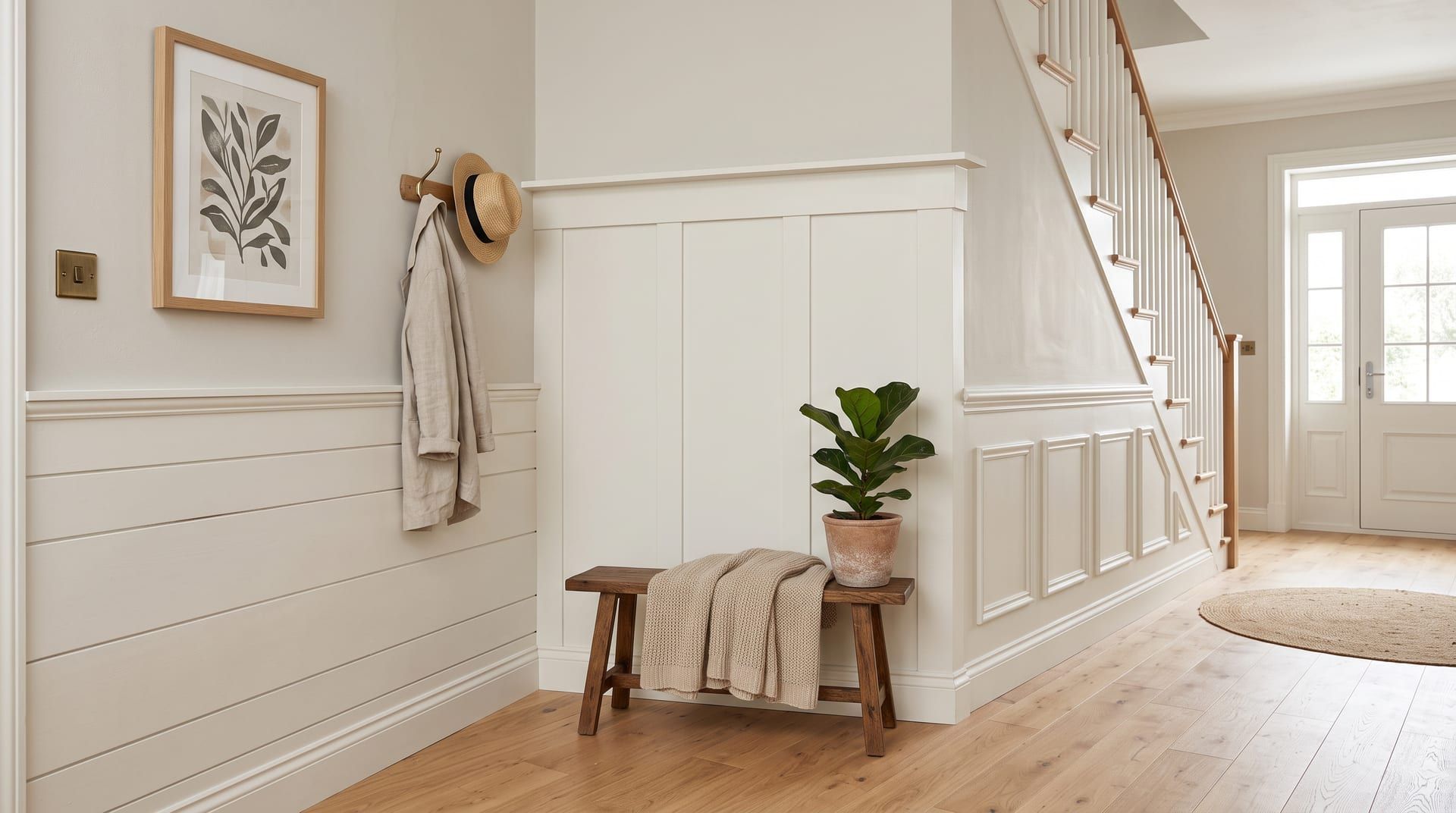
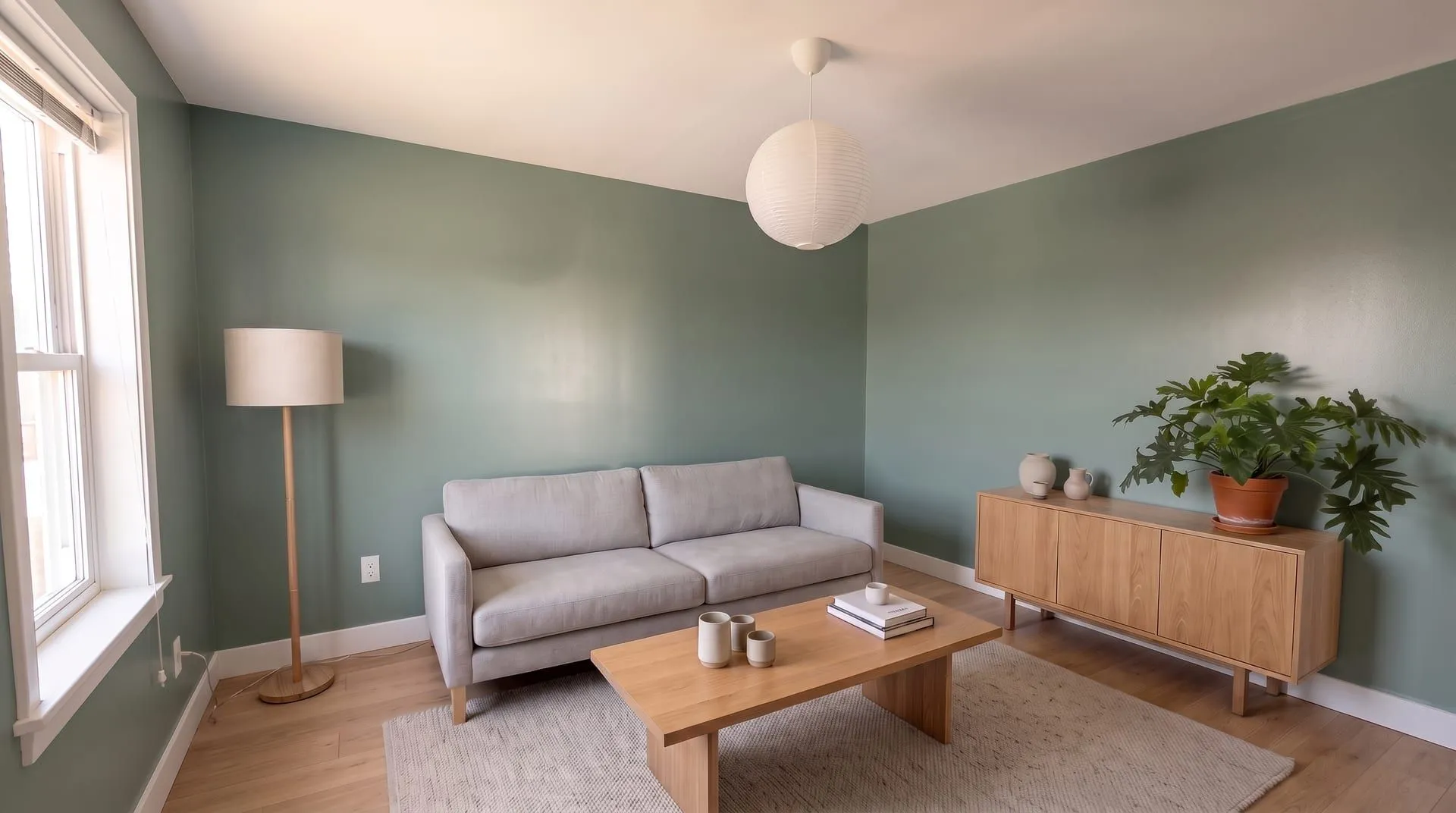 Satin finish. Note the highlight across the back wall. Generated with remyhomeai’s AI model from one sample photo.
On the back wall, satin picks up a soft band of light. In a small or dim room, this can make the room feel a little brighter. In a large sunlit room, it can read as shiny.
Where satin falls short
Satin shows everything under it. Bumps, patches and drywall seams stand out, especially when light rakes across the wall from a window or a wall light. It also shows application faults: roller laps, brush marks at the edges and patchy coats. Touch-ups rarely blend. Satin rewards a careful painter and a well-prepared wall. On a rough old wall, eggshell or a scrubbable matte is often the better compromise.
How does each finish handle scuffs and cleaning?
This is where the choice usually gets made. The close-up below shows the same light greige wall in two finishes after the same treatment: scuffs, then a scrub with a damp sponge.
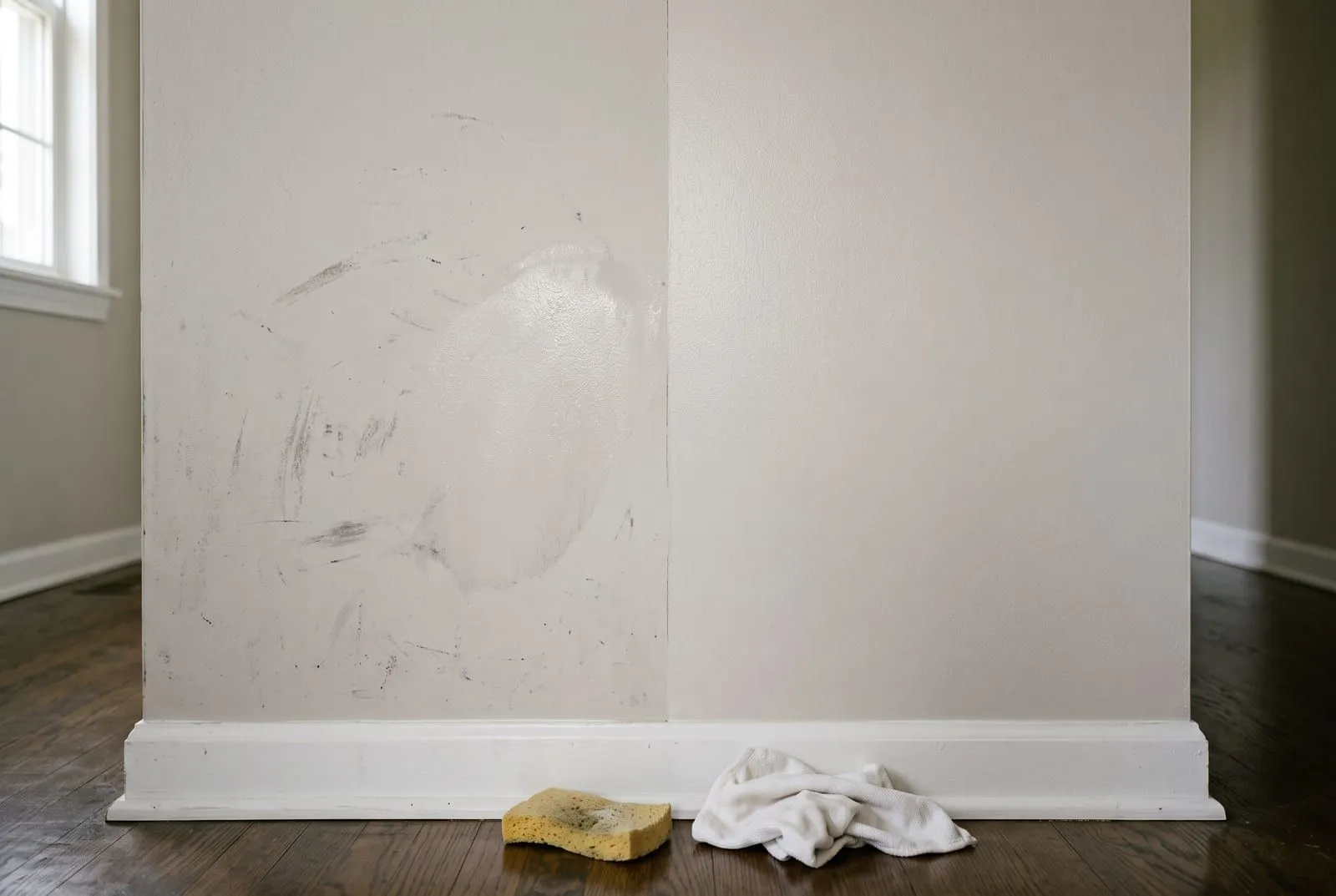 Flat (left) after scrubbing, satin (right) after a wipe. An illustration for this article.
On the flat half, the marks smear and the scrubbed patch goes shiny. On the satin half, a wipe removes the marks and the surface looks the same as before. Eggshell sits between them: it wipes clean with a soft cloth, but hard scrubbing can leave a mark.
Two rules help in any finish. Let new paint cure for about two weeks before you wash it, and use a soft cloth with mild soap before you try anything abrasive.
Which finish for which room?
| Surface | First choice | Also works | Avoid |
|---|---|---|---|
| Ceilings | Flat | Matte | Satin and gloss |
| Living and dining room walls | Eggshell | Matte, flat in a quiet home | Semi-gloss |
| Adult bedroom walls | Eggshell | Flat, matte | Semi-gloss |
| Kids’ rooms and playrooms | Satin | Scrubbable matte, eggshell | Flat |
| Hallways and stairs | Satin or eggshell | Scrubbable matte | Flat |
| Kitchen walls | Satin | Eggshell in a dry kitchen | Flat |
| Bathroom walls | Satin | Semi-gloss | Flat |
| Trim, doors and skirting | Semi-gloss | Satin | Flat |
Two notes on the chart. Trim takes the most knocks in a room, so it usually gets a step more sheen than the walls. The contrast also makes the trim read clearly against the wall, which is why a semi-gloss door frame looks crisp next to an eggshell wall. If you are adding panelling, such as board and batten, the same logic applies: paint the boards in satin or semi-gloss. The guide to board and batten, wainscoting and shiplap covers the trim itself.
For room-specific advice on colour and layout, the living room, bedroom and kitchen pages show each room type in seven styles. Before you buy, the paint calculator turns wall sizes into the number of gallons for two coats.
Does sheen change the colour?
Yes, a little. A shinier finish reflects more of the light that hits it, so the same colour can look slightly lighter and more saturated in satin than in flat. In the renders above, the satin wall looks a touch lighter where the light falls on it. Deep colours show this most. If you match a colour from a flat sample card, paint a test patch in the finish you will actually use.
Sheen also interacts with the style of the room. A minimalist or Scandinavian room usually wants walls that recede, which points to flat, matte or eggshell. A glossy wall draws attention to itself, which works for a lacquered accent wall but rarely for a whole room.
See a colour on your own walls first
Sheen is a decision you make at the paint counter. Colour is the decision you live with. remyhomeai restyles a photo of your furnished room in one of 7 styles and 39 colour palettes, so you can see a wall colour with your own floor, sofa and window light before you buy samples. Tick “floor” in the keep controls to lock the floor so only the walls and decor change. It does not simulate a specific brand’s paint or a sheen level, and a screen never shows colour exactly as your room will. Use it to narrow the colour, then test the finish with a real sample on the wall.
Try it on your own room. See your room in a new style with 3 free designs at signup, no card required.