Choose warm white (2700K to 3000K) for living rooms, bedrooms and dining rooms, and cool white (about 4000K) or daylight (5000K and above) for garages, laundry rooms, workshops and desks where you need to see detail. Warm light makes a room feel calm and makes wood and skin look good. Cool light makes a room feel alert and shows true colours on a white surface, but in a living room at night it can feel like an office.
The fastest way to understand the difference is to see it. Below, one living room is lit by four different bulbs.
What do the Kelvin numbers mean?
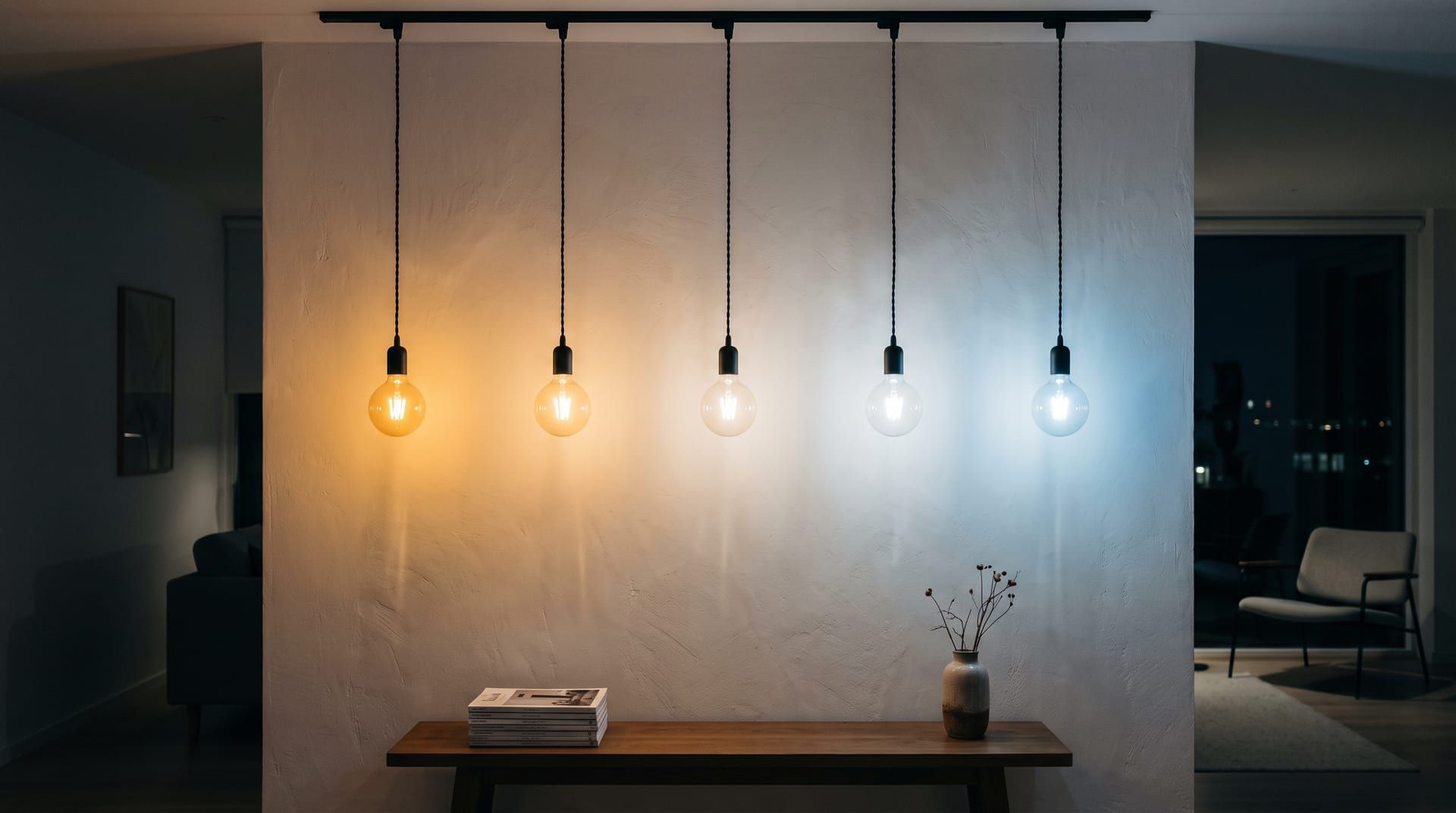
Colour temperature is measured in kelvin (K). Low numbers are yellow-orange, like a candle or an old incandescent bulb. High numbers are white to bluish, like an overcast sky. The number is printed on the bulb box, usually on the light appearance scale of the Lighting Facts label.
| Kelvin | Common label | Looks like | Feels |
|---|---|---|---|
| 2200K to 2400K | Extra warm, amber | Candlelight, a dimmed filament bulb | Very cosy, dim |
| 2700K | Warm white, soft white | A classic incandescent bulb | Relaxed, homely |
| 3000K | Warm white | Halogen | Warm but cleaner |
| 3500K to 4000K | Neutral, cool white, bright white | Office lighting | Neutral, alert |
| 5000K to 6500K | Daylight | Midday sky, overcast light | Crisp, clinical |
The labels overlap. One brand calls 4000K “cool white”, another calls it “bright white”. Always read the number.
One room under four bulbs
Each image below is the same living room photo, set in the evening, with only the bulb colour changed. Watch the white walls, the oak floor and the grey sofa.
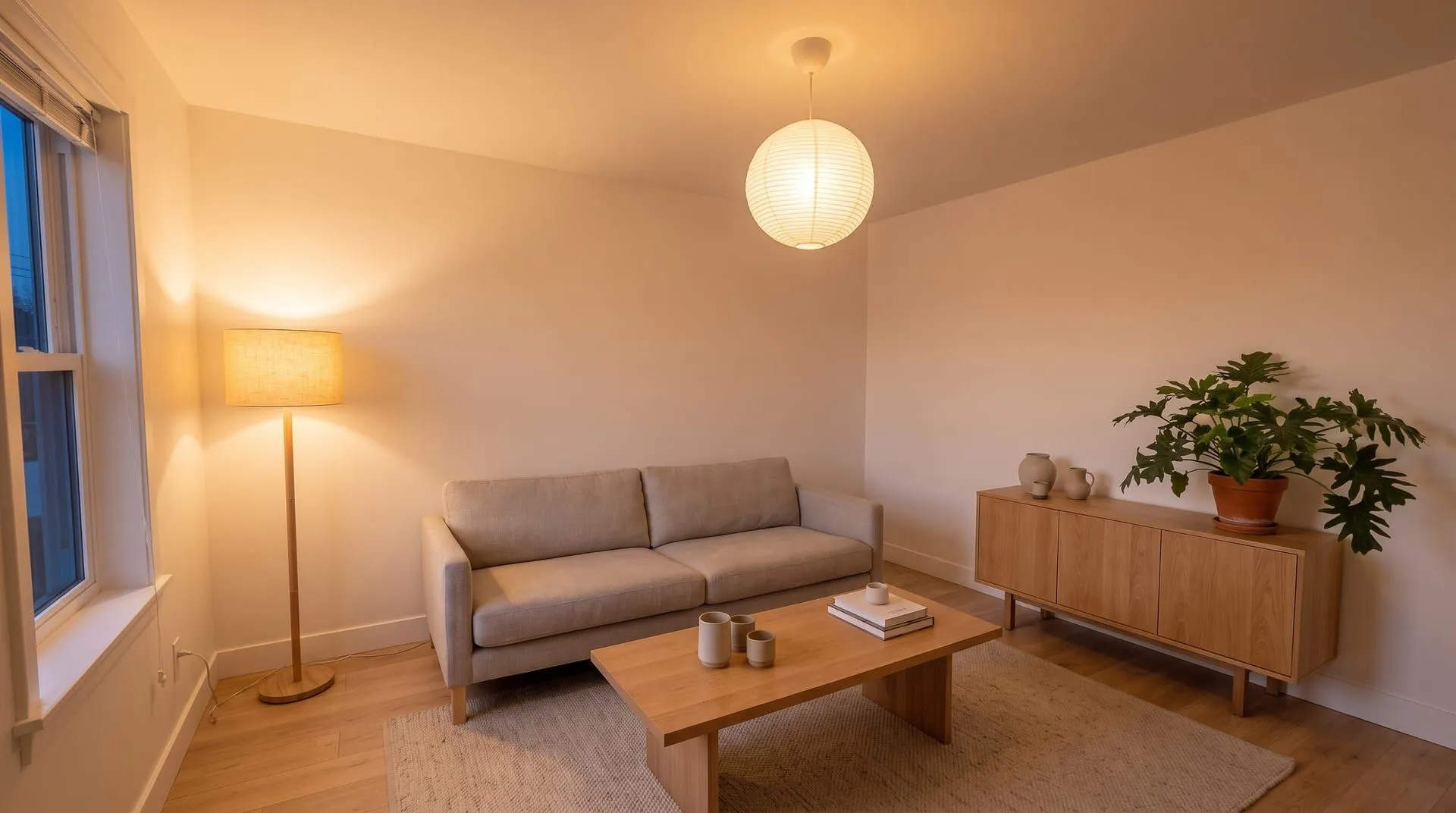 2700K warm white. Generated with remyhomeai’s AI model from one sample photo.
At 2700K the walls read as cream, the oak turns honey and the sofa looks almost beige. This is the light most people grew up with. It is the easiest to live with at night.
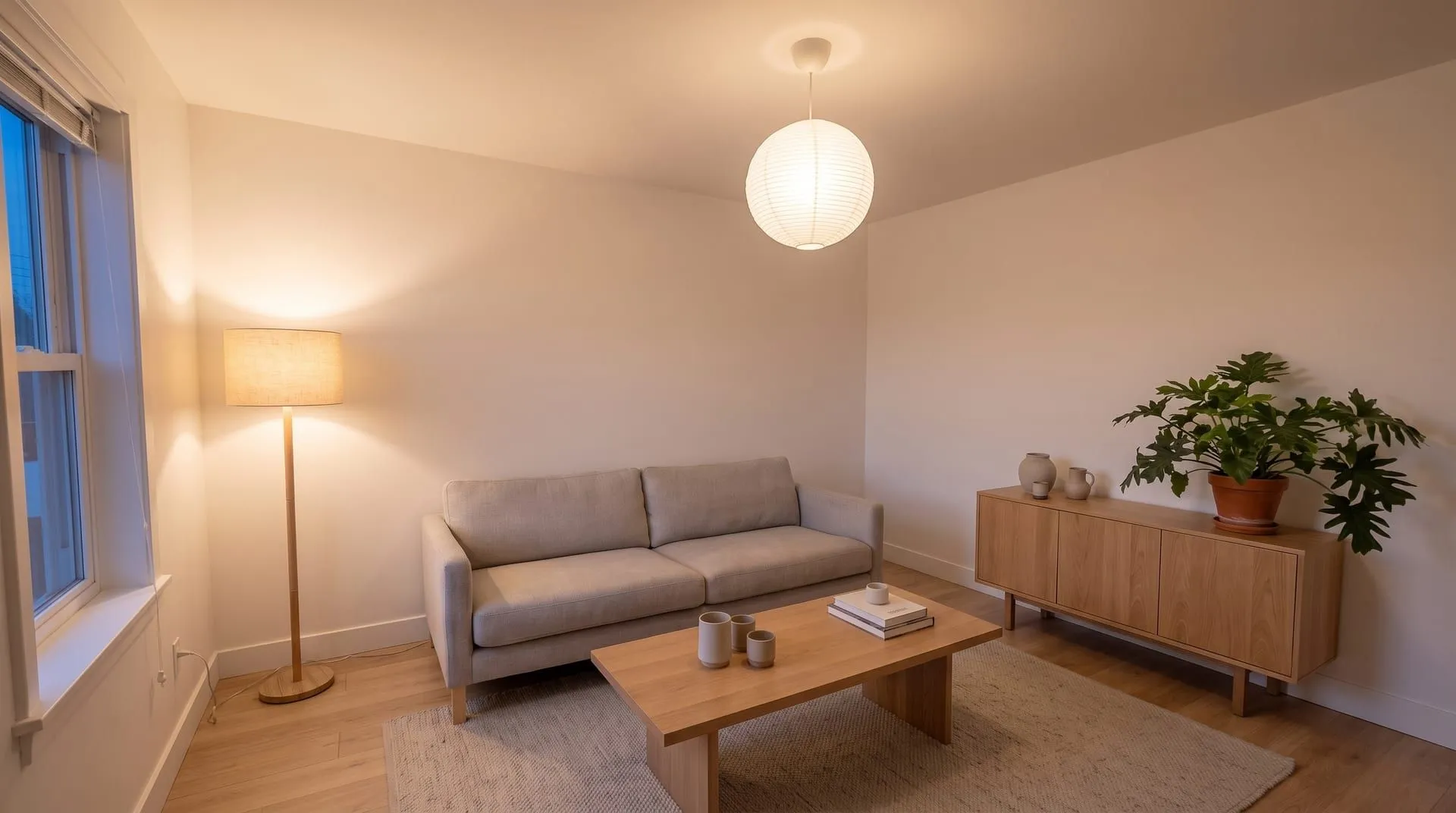 3000K warm white. Generated with remyhomeai’s AI model from one sample photo.
At 3000K the room is still warm, but the whites are cleaner and the grey sofa reads as grey. This is a good choice if 2700K feels too yellow, or for kitchens and bathrooms where you want warmth and a clearer view.
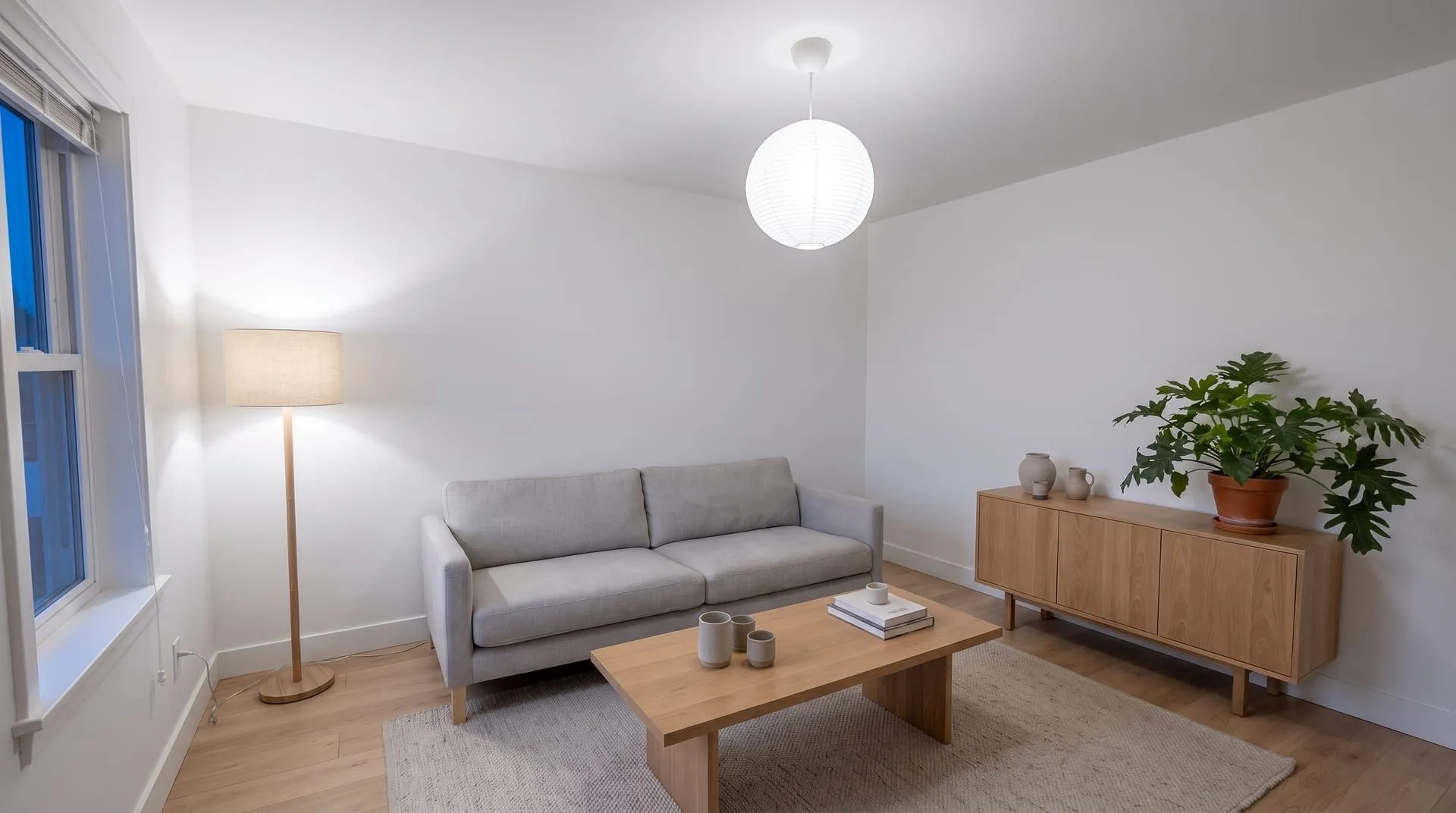 4000K cool white. Generated with remyhomeai’s AI model from one sample photo.
At 4000K the yellow is gone. The walls look pure white and the wood looks paler. The room is bright and clear, but it starts to feel like a workspace.
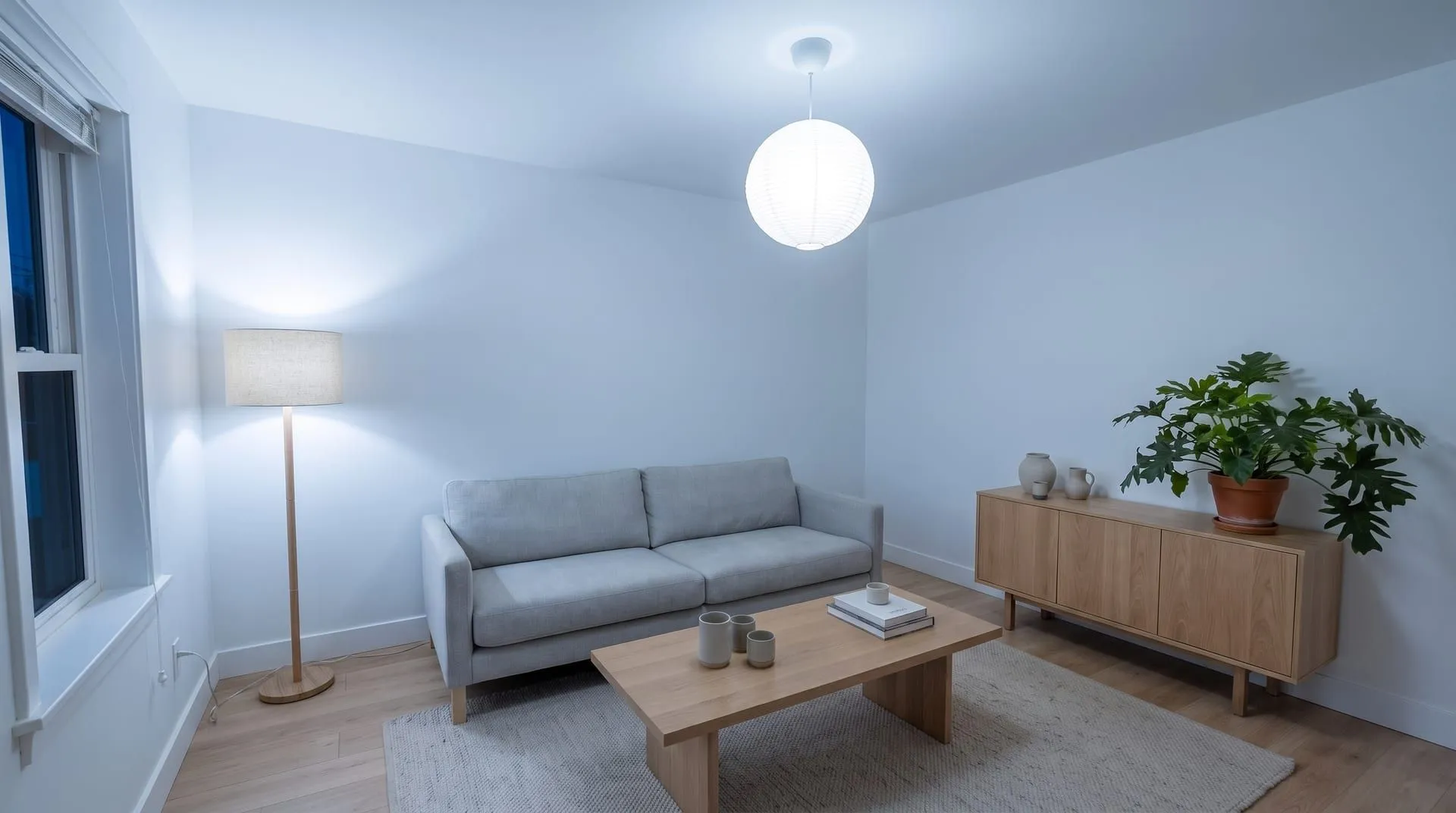 5000K daylight. Generated with remyhomeai’s AI model from one sample photo.
At 5000K the walls take a blue cast and the oak looks grey. In daytime this matches the window. At 10 pm it is harsh.
Warm white vs cool white compared
| Warm white (2700K to 3000K) | Cool white (3500K to 4100K) | Daylight (5000K to 6500K) | |
|---|---|---|---|
| Mood | Calm, cosy | Neutral, alert | Crisp, clinical |
| Wood and warm colours | Flattering, richer | Natural | Paler, greyer |
| Blues, greens, greys | Pushed toward yellow | Close to true | Close to true, slightly cold |
| Evening comfort | Best | Fair | Poor for most people |
| Detail work | Fair | Good | Best |
| Best rooms | Living, bedroom, dining | Kitchen task zones, bathroom vanity, home office | Garage, workshop, laundry, craft table |
Where warm white falls short
Warm light makes it harder to judge colour. Navy and black socks look the same. Make-up applied under 2700K can look heavier in daylight. Blues and greys shift toward green or beige. In a kitchen, warm light alone can make worktops and food look dull. Fix this with a 3000K bulb, or a cooler task light under the cabinets.
Where cool white falls short
Cool light is unflattering on skin and makes warm materials look flat. A room full of oak, terracotta and linen loses its warmth at 5000K. Many people also find blue-rich light at night less restful. A cool bulb in one lamp next to a warm bulb in another also makes the room look patchy, which brings us to the main rule.
How does light colour change paint and wood?
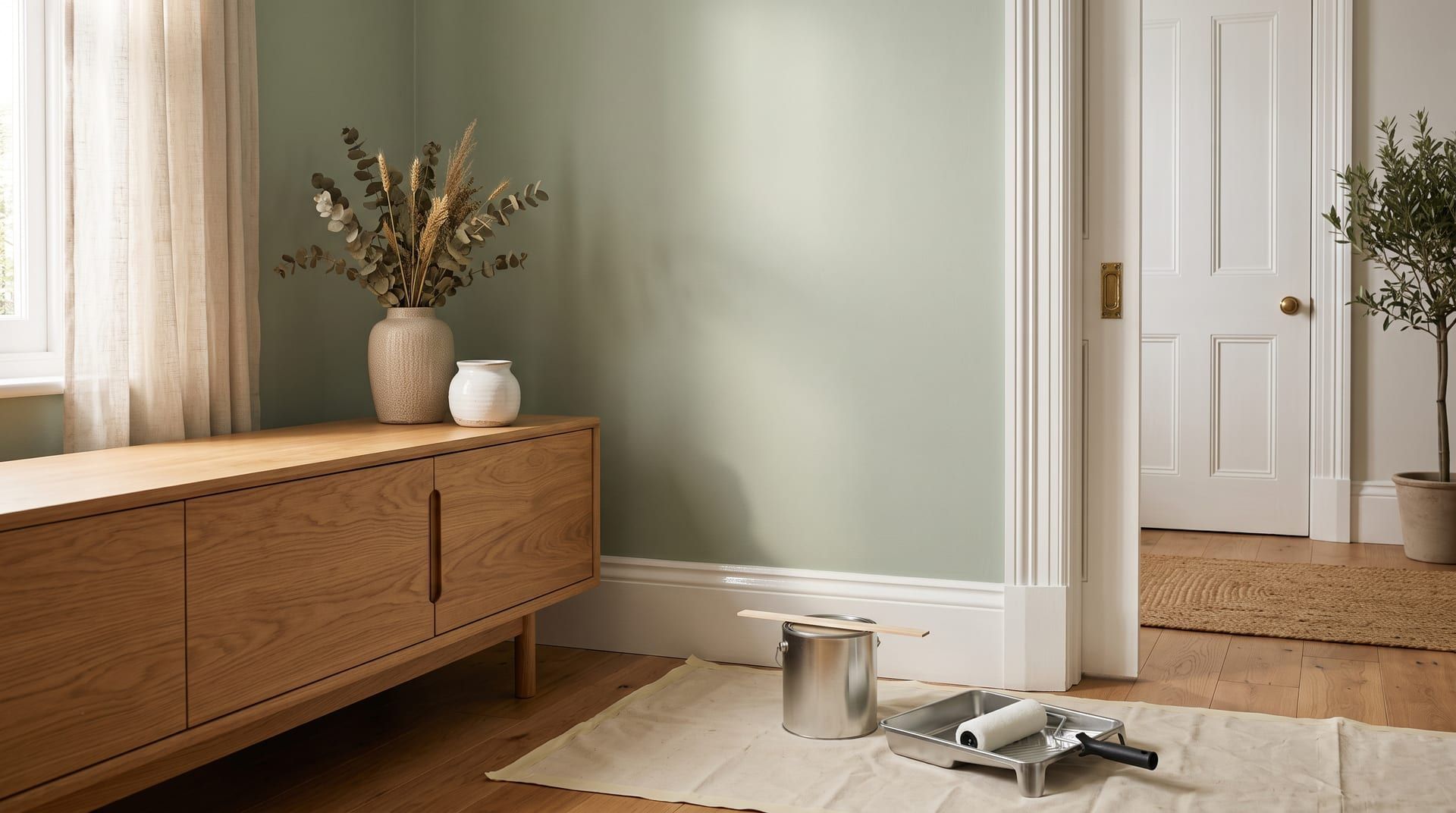
Light colour changes every surface in the room, but painted walls show it most. The two images below are the same sage green room, one lit at 2700K and one at 5000K.
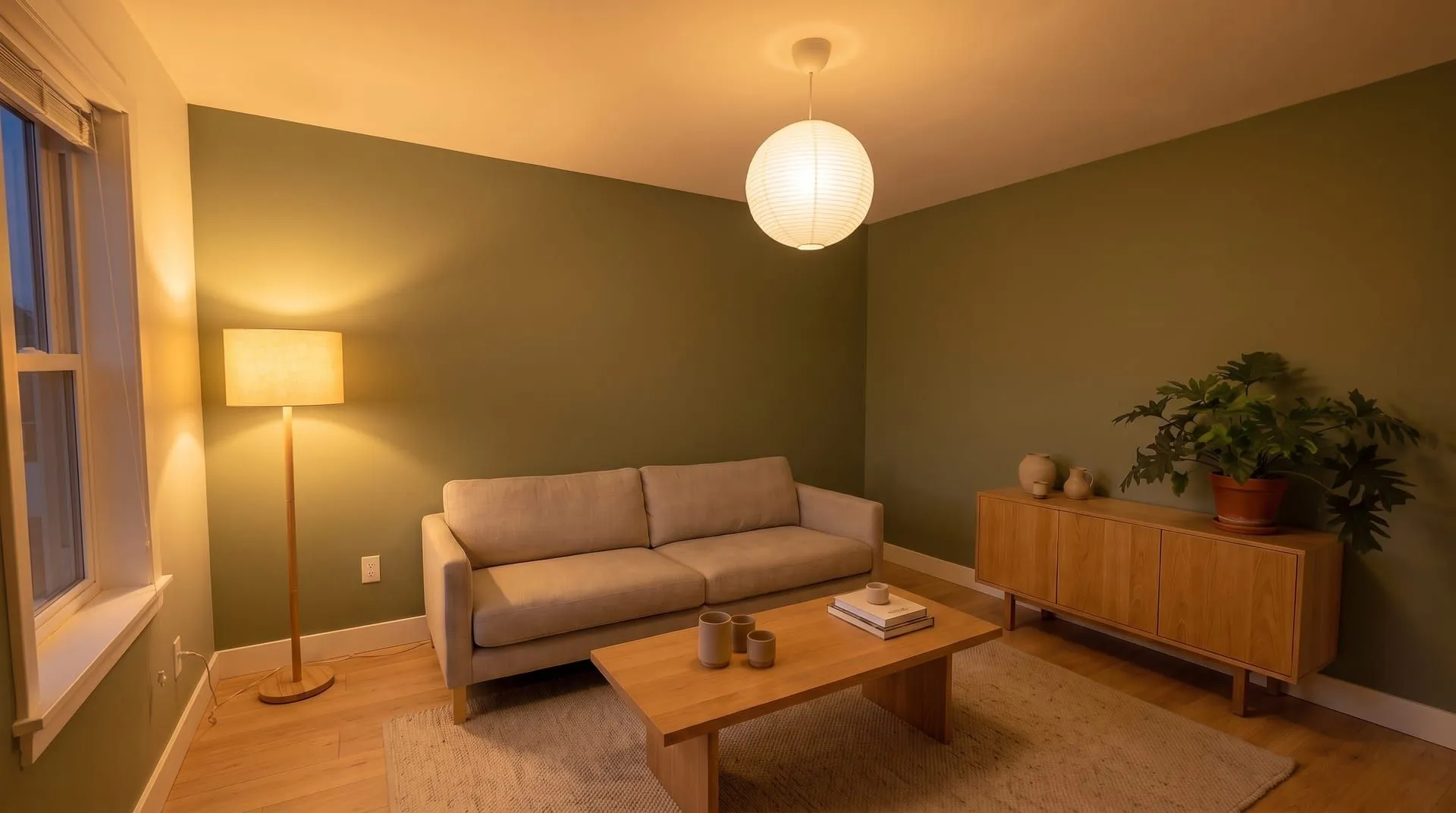 Sage green under warm light. Generated with remyhomeai’s AI model from one sample photo.
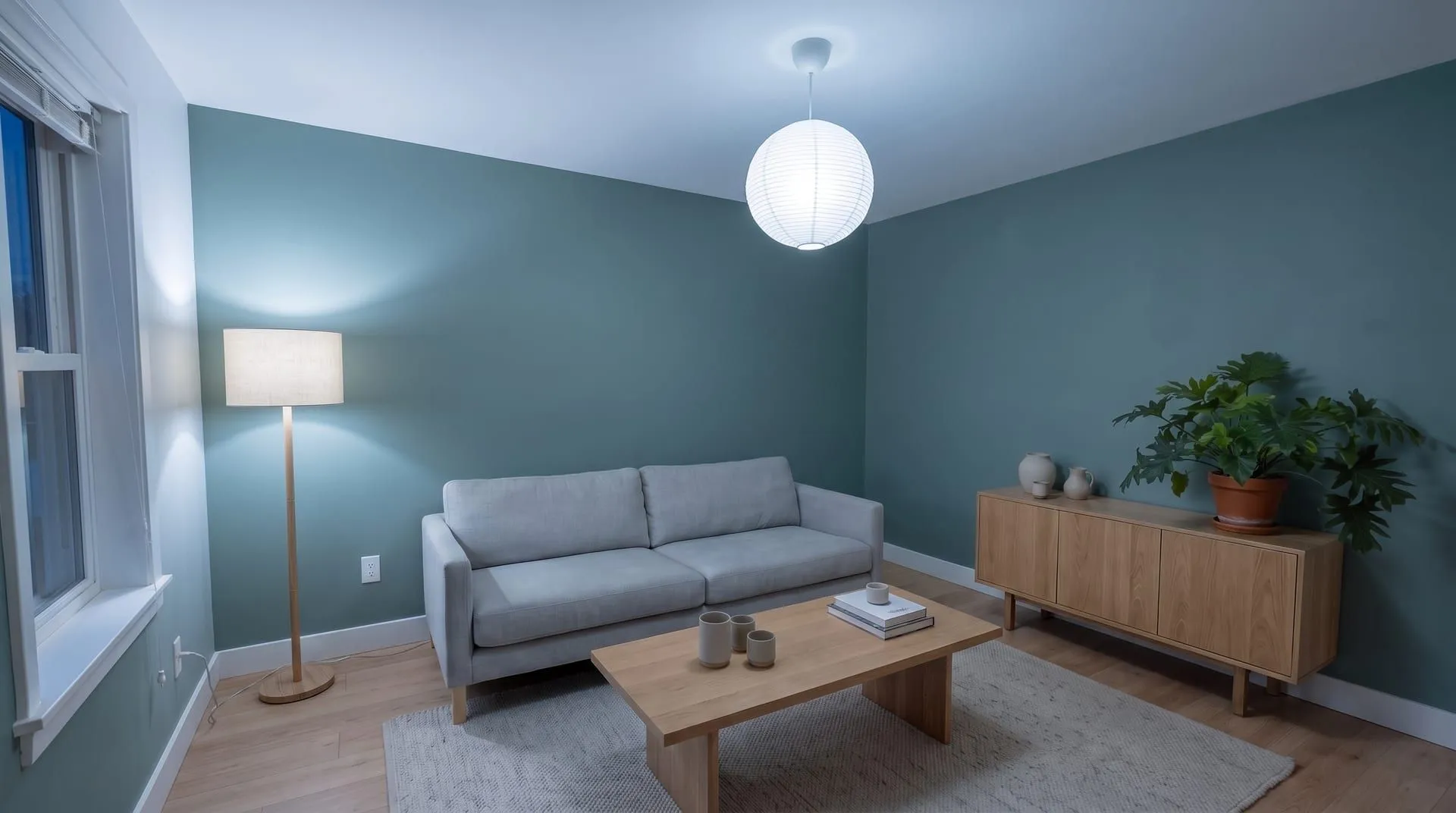 The same paint under cool light. Generated with remyhomeai’s AI model from one sample photo.
Under warm light the green turns olive. Under cool light it turns blue-grey. Neither is wrong, but they are different rooms. This is why paint samples must be judged under the bulbs you will actually use, at night as well as by day. The finish matters too: a satin wall reflects more of the bulb’s colour than a flat one. The guide to flat, eggshell and satin paint covers sheen.
Wood follows the same pattern. Warm light deepens oak and walnut. Cool light greys them. If you are choosing a floor or a worktop, look at the sample under your room’s light. The kitchen below shows warm and cool light side by side on the same cabinets and counter.
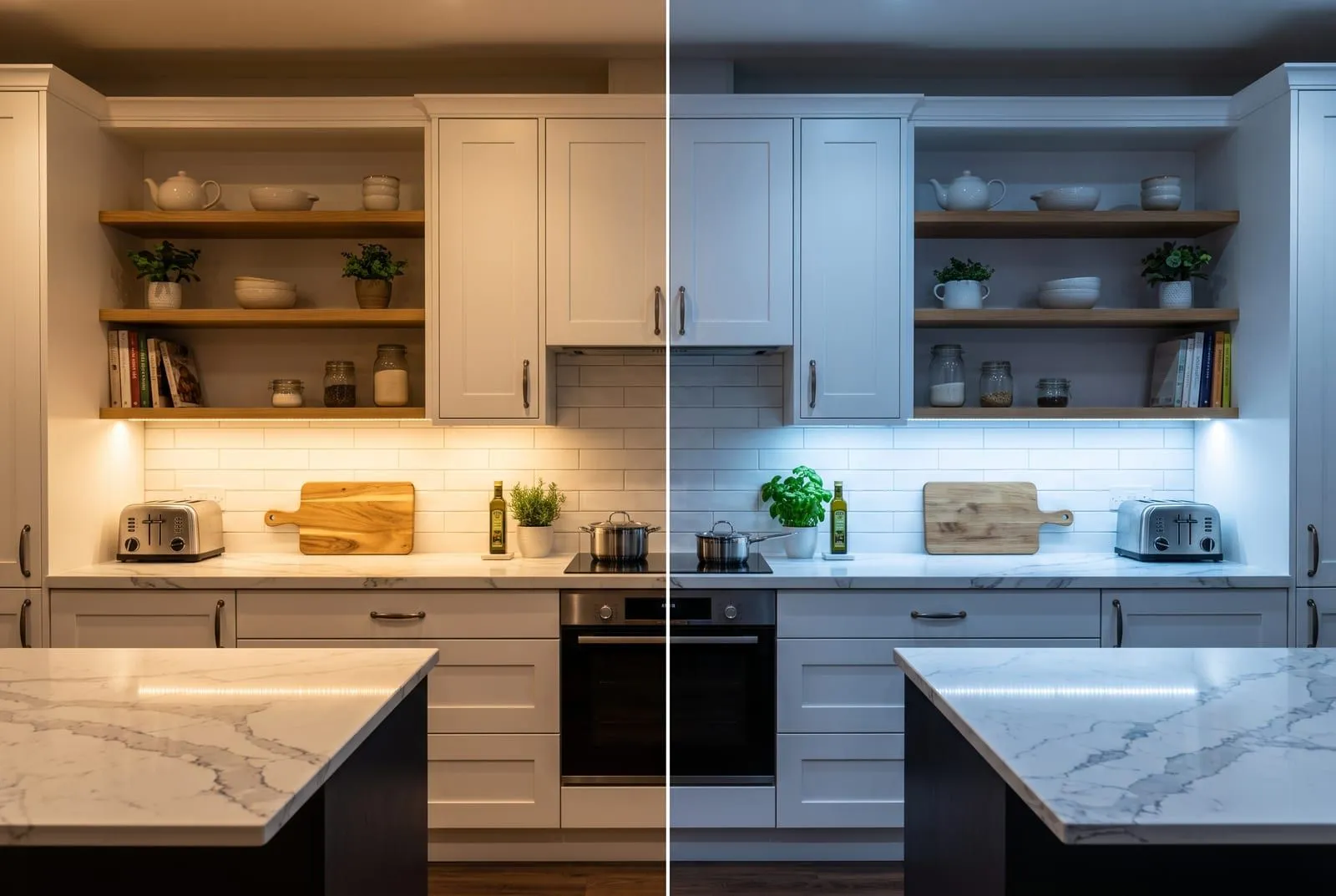 The same kitchen design under warm light (left) and cool light (right). An illustration for this article.
Which bulb for which room?
| Room | Main light | Task light | Notes |
|---|---|---|---|
| Living room | 2700K | 2700K to 3000K reading lamp | Dimmers help more than a cooler bulb |
| Bedroom | 2700K | 2700K bedside | Use extra warm (2200K) for night lights |
| Dining room | 2700K | None | Dim the pendant over the table |
| Kitchen | 3000K | 3000K to 4000K under cabinets | Keep both in one family, not 2700K next to 5000K |
| Bathroom | 3000K | 3000K to 4000K at the mirror | High CRI at the mirror matters most |
| Home office | 3000K to 4000K | 4000K desk lamp | Switch to warm lamps after work |
| Hallway | 2700K to 3000K | None | Match the rooms it connects |
| Garage, laundry, workshop | 4000K to 5000K | 5000K | Detail and colour checks matter more than mood |
Do not mix colour temperatures in one room
Pick one colour temperature for the general light in a room and stick to it. A ceiling light at 4000K and a floor lamp at 2700K make one wall blue and another yellow. The eye reads that as a mistake, not as a design choice. Keep every bulb you can see from one spot within about 500K of each other. The exception is a deliberate task light, such as a cooler strip under kitchen cabinets.
Tunable white bulbs and smart bulbs solve this if you want both: cooler light for work in the day, warmer light in the evening, from the same fitting.
What is CRI, and why does it matter?
Colour temperature says what colour the light is. CRI (colour rendering index) says how accurately the light shows other colours, on a scale up to 100. Sunlight and incandescent bulbs score 100. Many standard LED bulbs sit around 80. At 80, reds look muddy, skin looks grey and wood loses its depth. At 90 or above, colours look close to how they look in daylight.
For living spaces, buy bulbs with a CRI of 90 or more. It matters more than the exact Kelvin number in rooms where you judge colour: the bathroom mirror, the kitchen, a dressing area. The CRI is printed on the box or in the product details. If it is not listed, assume it is around 80.
Plan the light with the colour scheme
Light and paint work as one system. A warm colour scheme with cream walls and oak furniture suits 2700K. A cool scheme with grey walls, white oak and blue accents looks cleaner at 3000K. The 60-30-10 colour rule helps you set the scheme first. Then choose bulbs that flatter it.
remyhomeai restyles a photo of your furnished room in one of 7 styles and 39 colour palettes, so you can test a palette on your own room before you buy paint or bulbs. It does not simulate a specific bulb or a Kelvin value, so test the bulb in the room itself. A photo taken in daylight shows the room in daylight. Take a second photo at night with your lamps on to see the scheme in both lights.
Sources
- Home Depot: types of light bulbs, for colour temperature ranges by label.
- FTC: shopping for light bulbs, for the Lighting Facts label and light appearance.
Try it on your own room. See your room in a new style with 3 free designs at signup, no card required.