Herringbone and chevron are both zigzag floor patterns. The difference is the cut of the blocks. Herringbone blocks are rectangles with square ends, so each block butts into the side of the next and the zigzag looks staggered. Chevron blocks have ends cut at an angle, so they meet point to point in a clean, continuous V. Herringbone reads busier and more textured. Chevron reads calmer and more formal.
This guide shows how to tell them apart, how each one looks in the same living room, and which rooms suit which pattern. It ends with the other parquet patterns worth knowing.
What is the difference in the cut?
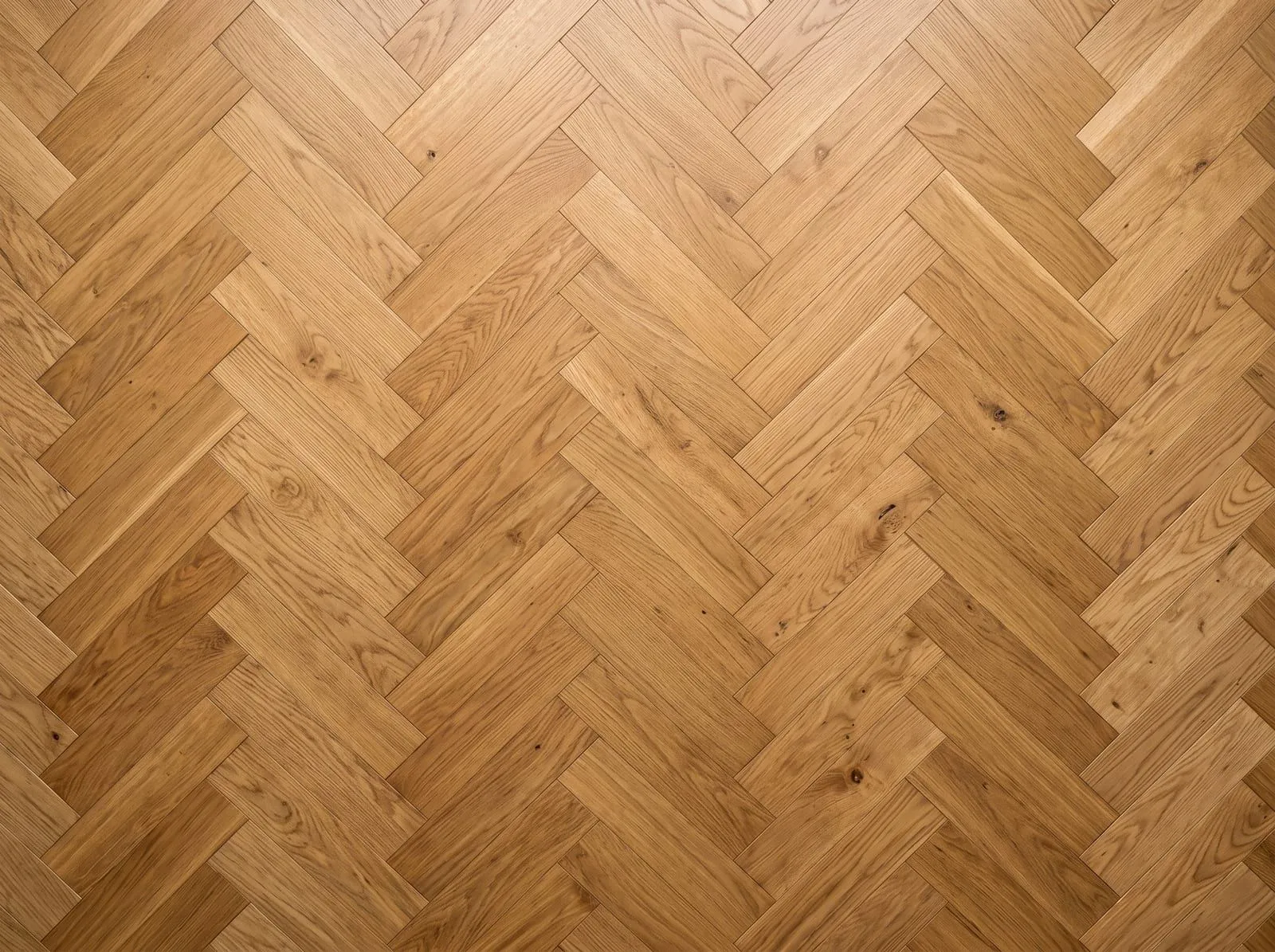 Herringbone from above. An illustration for this article.
In herringbone, every block is a plain rectangle. The blocks are laid at 90 degrees to each other. The square end of one block meets the long side of the next. The result is a zigzag with a stepped, broken edge, like the bones of a fish. The pattern dates back to Roman roads, and French floor makers call it “bâtons rompus”, meaning broken sticks.
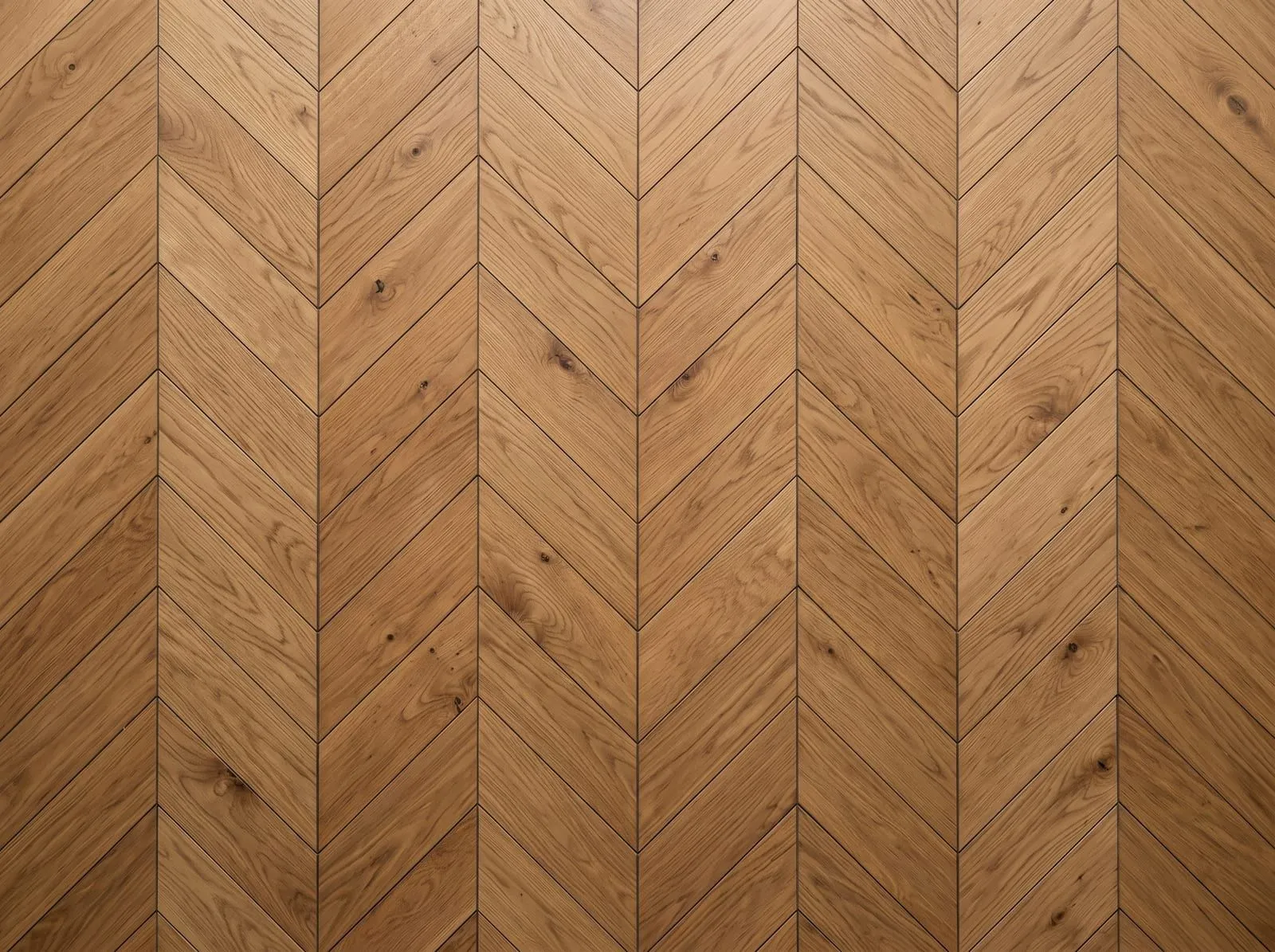 Chevron from above. An illustration for this article.
In chevron, each block is a parallelogram. Its ends are cut at an angle, usually 45 degrees, sometimes 30 or 60. The angled ends of two blocks meet on one straight seam down the centre of each row. The result is a row of clean V shapes, like arrows. The French name is “point de Hongrie”.
| Herringbone | Chevron | |
|---|---|---|
| Block shape | Rectangle, square ends | Parallelogram, angled ends |
| Where blocks meet | End of one block against the side of the next | Angled end against angled end |
| The zigzag | Stepped and broken | Clean and continuous |
| Look | Busier, more texture | Calmer, more formal, more directional |
| Cost | More than straight planks | A little more than herringbone |
| Waste at the walls | More than straight planks | Similar to herringbone |
A simple test: trace one row of the pattern with your finger. If your finger has to step sideways at each block, it is herringbone. If it follows one straight seam, it is chevron.
How do they look in the same room?
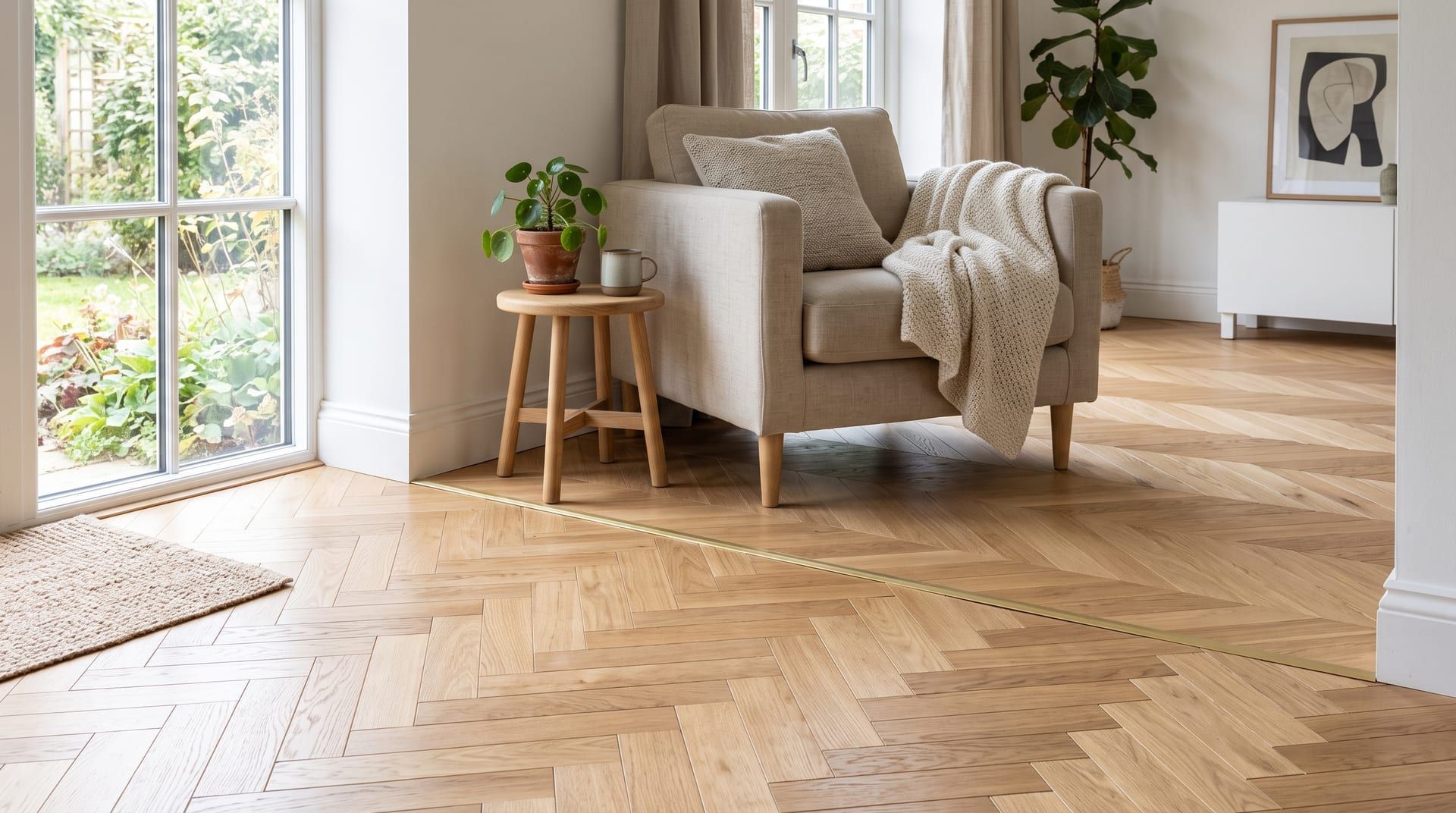
The two images below are one photo of the same living room. Only the floor pattern changes. The oak colour, the rug and the furniture stay the same.
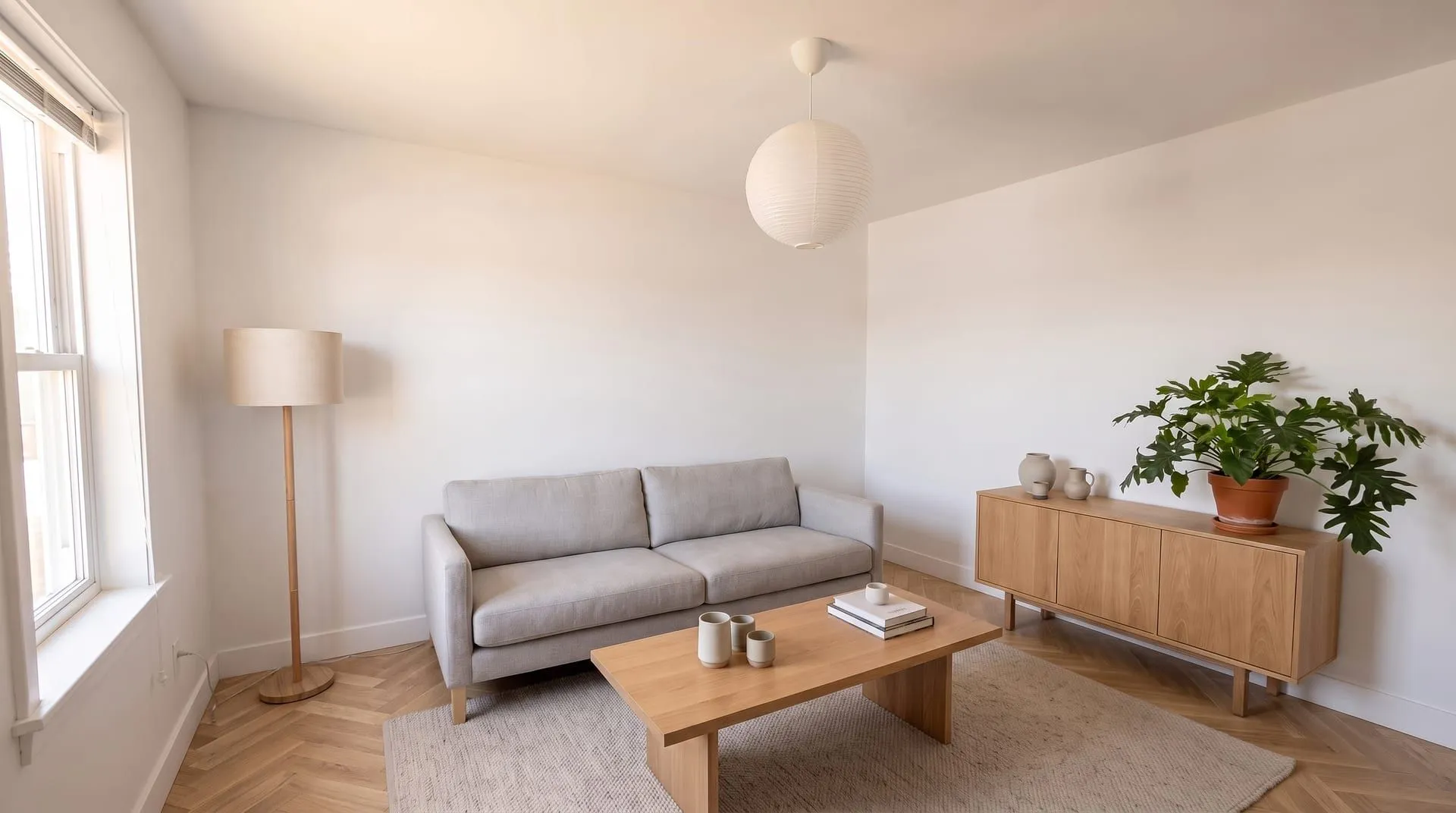 Oak herringbone. Generated with remyhomeai’s AI model from one sample photo.
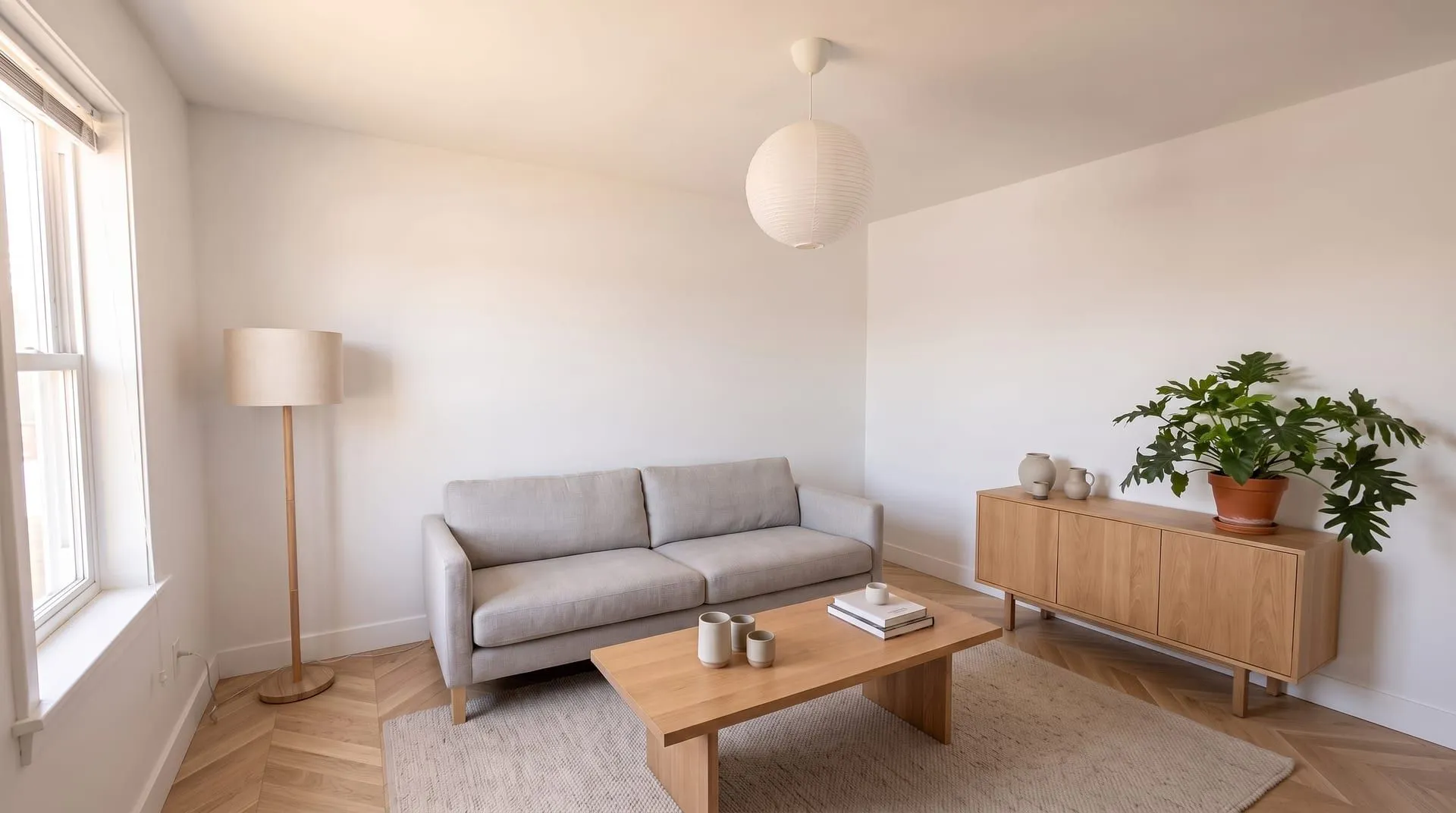 Oak chevron. Generated with remyhomeai’s AI model from one sample photo.
Herringbone gives the floor more texture. You see many short edges, so the floor reads as a surface in its own right. Chevron gives the floor direction. The V shapes point the eye along the room, so the floor reads as a line. In a room with simple furniture, either works. In a room with a patterned rug, busy shelves or a lot of art, chevron competes less.
Which works in a small room or a hallway?
In a small room, block size matters more than pattern. Small blocks create many edges and make a small floor look busy. Larger blocks look calmer and make the room feel larger. If you want the calmest result, pick chevron with long blocks.
The direction matters too. Point the pattern along the longest line of the room, or toward the main window. In a narrow hallway, run the zigzag along the length so it leads to the far door. Run across the hallway, either pattern makes it look shorter and wider.
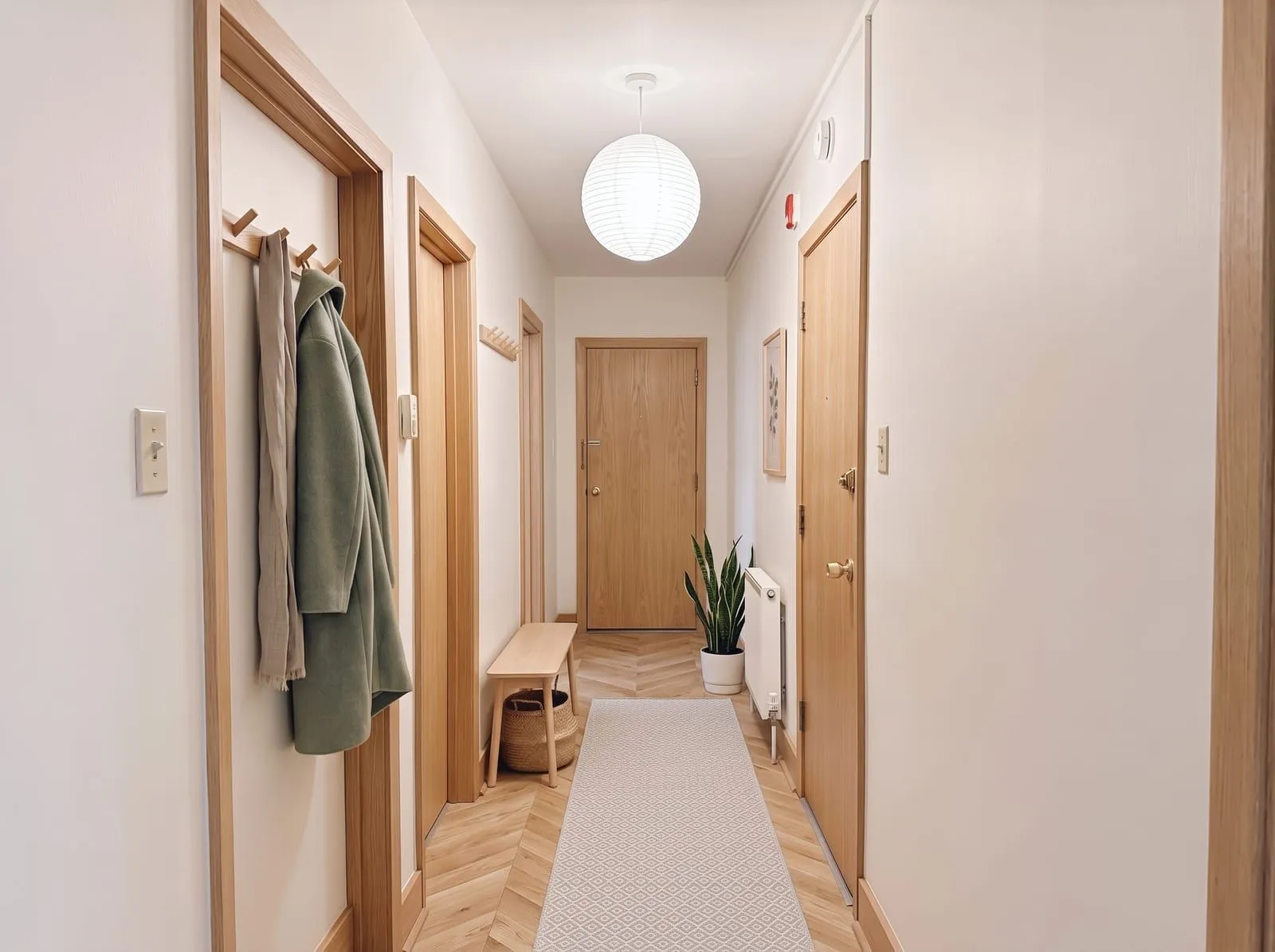 Chevron running the length of a narrow hallway. Generated with remyhomeai’s AI model from one sample photo.
For a hallway, also check the runner. A runner hides the centre of the floor, so the pattern shows only along the edges. Measure before you buy. The free rug size calculator gives a runner size from the hallway width and length. The hallway page shows what a full redesign changes in that space.
Which pattern suits which style?
| Style | Better pattern | Why |
|---|---|---|
| Traditional | Herringbone or chevron in a mid or dark stain | Both are classic. Herringbone feels like an old townhouse. Chevron feels like a French apartment. |
| Scandinavian | Herringbone in pale oak | Texture adds warmth to a plain, light room. |
| Modern and minimalist | Chevron in large blocks | The clean V keeps the floor calm and graphic. |
| Eclectic | Either, in a bold stain | The floor can be one more layer. Keep the rug plain. |
Where each one falls short
Herringbone can look busy in a small room with small blocks, especially with a patterned rug on top. Its staggered edge also makes it harder to stop cleanly at a doorway, so the threshold detail needs planning.
Chevron usually costs more, because the angled blocks are cut at the factory. The V points in one direction, so it shows any mistake in alignment. If the centre seam runs off square to the walls, everyone sees it. It also needs a clear main direction in the room. In a square room with doors on every side, there may be no right way to point it.
Both take more labour than straight planks, and both create more waste at the walls. Most tongue-and-groove and click products come in left and right blocks (often marked A and B), so you order both. Both patterns come in solid wood, engineered wood, laminate, vinyl plank and tile.
Other parquet patterns worth knowing
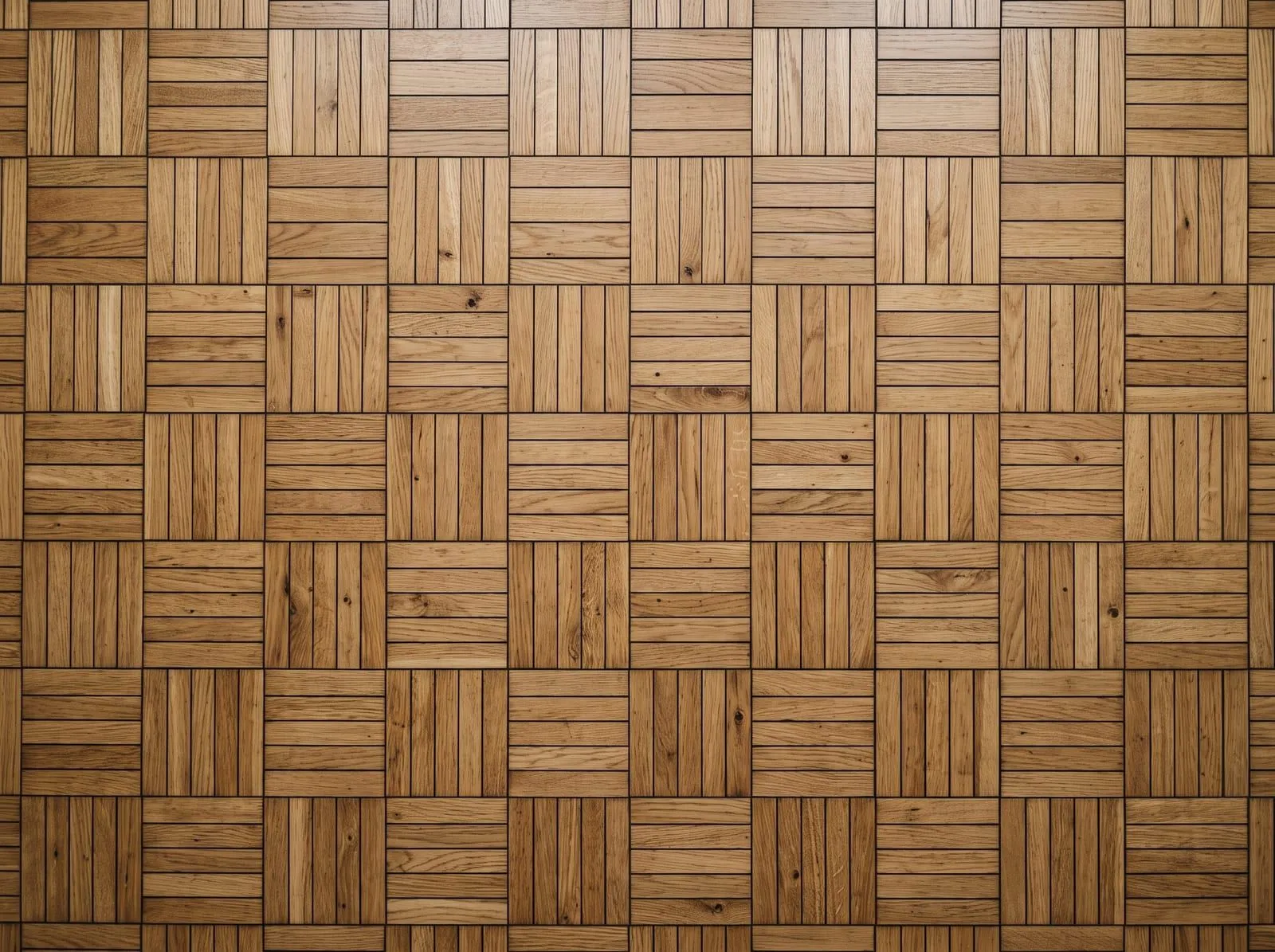 Basketweave from above. An illustration for this article.
- Basketweave: square groups of short slats that alternate direction, like a woven checkerboard. Calm and old-fashioned in a good way.
- Double herringbone: two blocks side by side in each step of the zigzag. It reads wider and calmer than single herringbone.
- Versailles: large square panels with a woven diagonal lattice inside a border. Very formal, and best in a large room.
- Straight plank: not a pattern, but the calm baseline. If you cannot decide, see how the room looks with plain planks first.
See a pattern on your own room
A sample board shows the pattern at 30 cm. It does not show how the pattern reads under your sofa, next to your rug, in your light. To see the room as a whole before you choose a floor, restyle a photo of it.
remyhomeai restyles a photo of a furnished room in one of 7 styles with 39 colour palettes. It edits your actual photo, so the walls, windows and camera angle stay in place. It does not let you choose herringbone or chevron as a product. It shows a full style direction, and the floor is part of it. If you already have the floor you want to keep, tick Keep on the floor so only the rest of the room changes. The living room page explains what to lock first.
Try it on your own room. See your room in a new style with 3 free designs at signup, no card required.