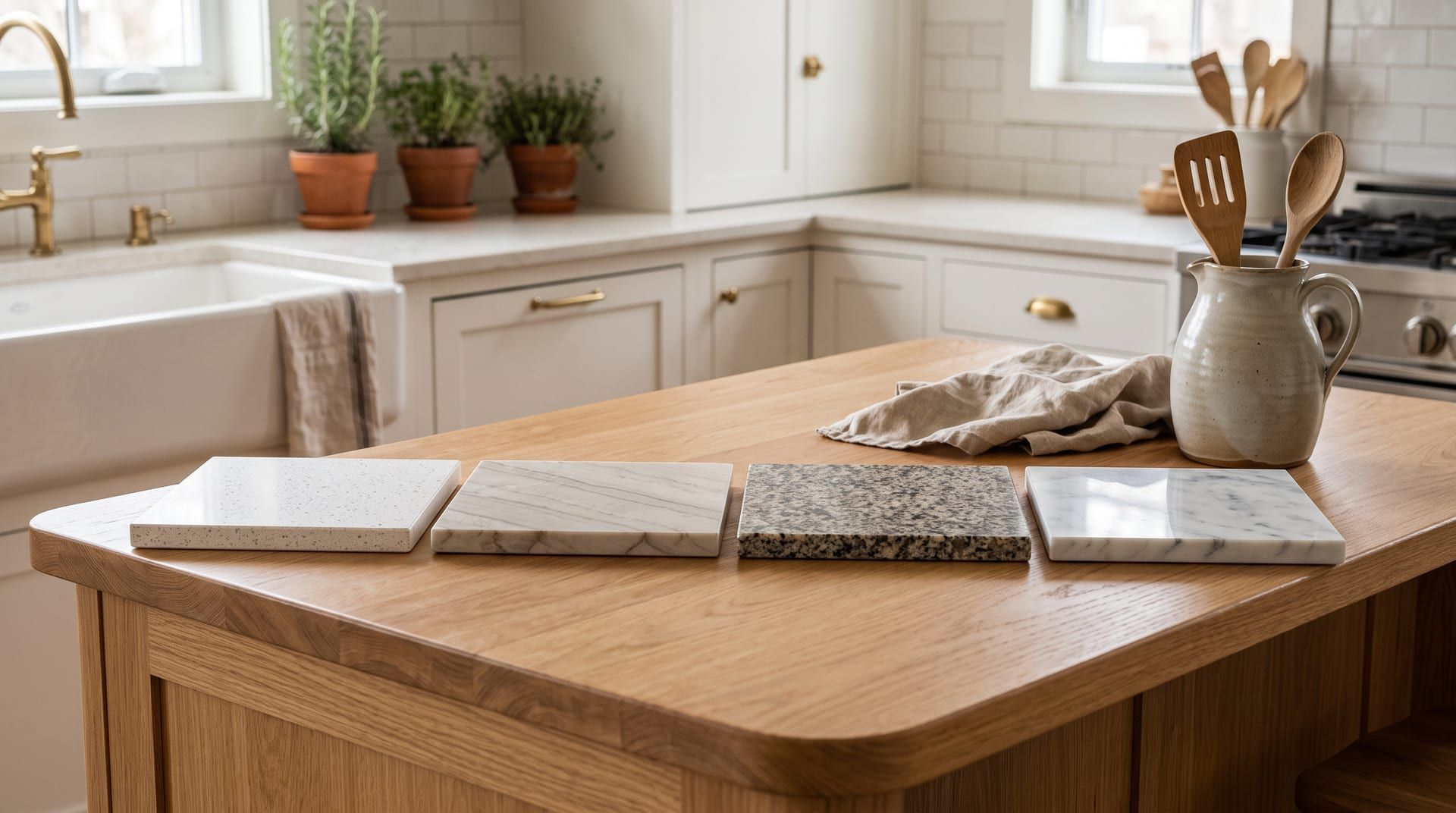
Quartz is the easiest countertop to live with, quartzite and granite are the toughest natural stones, and marble is the most beautiful but the most delicate. Quartz is engineered from crushed quartz and resin, so it needs no sealing and resists stains, but it does not like hot pans. Quartzite and granite are natural stones that take heat well but need sealing. Marble etches and stains, so it suits people who are happy to let a counter age. Below, one kitchen is shown with all four, with a close-up of each surface and installed costs as of October 2026.
The four materials at a glance
| Quartz | Quartzite | Granite | Marble | |
|---|---|---|---|---|
| What it is | Engineered: crushed quartz plus resin | Natural metamorphic rock | Natural igneous rock | Natural metamorphic rock |
| Look | Even, consistent, any colour | Long veins, glassy depth | Speckled, granular | Soft veining, classic white |
| Hardness (Mohs) | About 7 | About 7 | About 6 to 6.5 | About 3 to 4 |
| Heat | Resin can scorch | Good | Good | Good, but can mark |
| Stains | Best resistance | Good when sealed | Good when sealed | Poor, stains and etches |
| Sealing | None | Yes | Usually | Yes, often |
| Installed cost per sq ft | About $50 to $200 | About $80 to $220 | About $40 to $100 | About $65 to $125 and up |
Costs are rough bands from Angi pages listed at the end. Your price depends on the slab, the edge profile, the cutouts and your region.
How do they look in the same kitchen?
The four renders below use one kitchen. Only the countertop changes: same white cabinets, same plaster backsplash, same floor and light.
Quartz
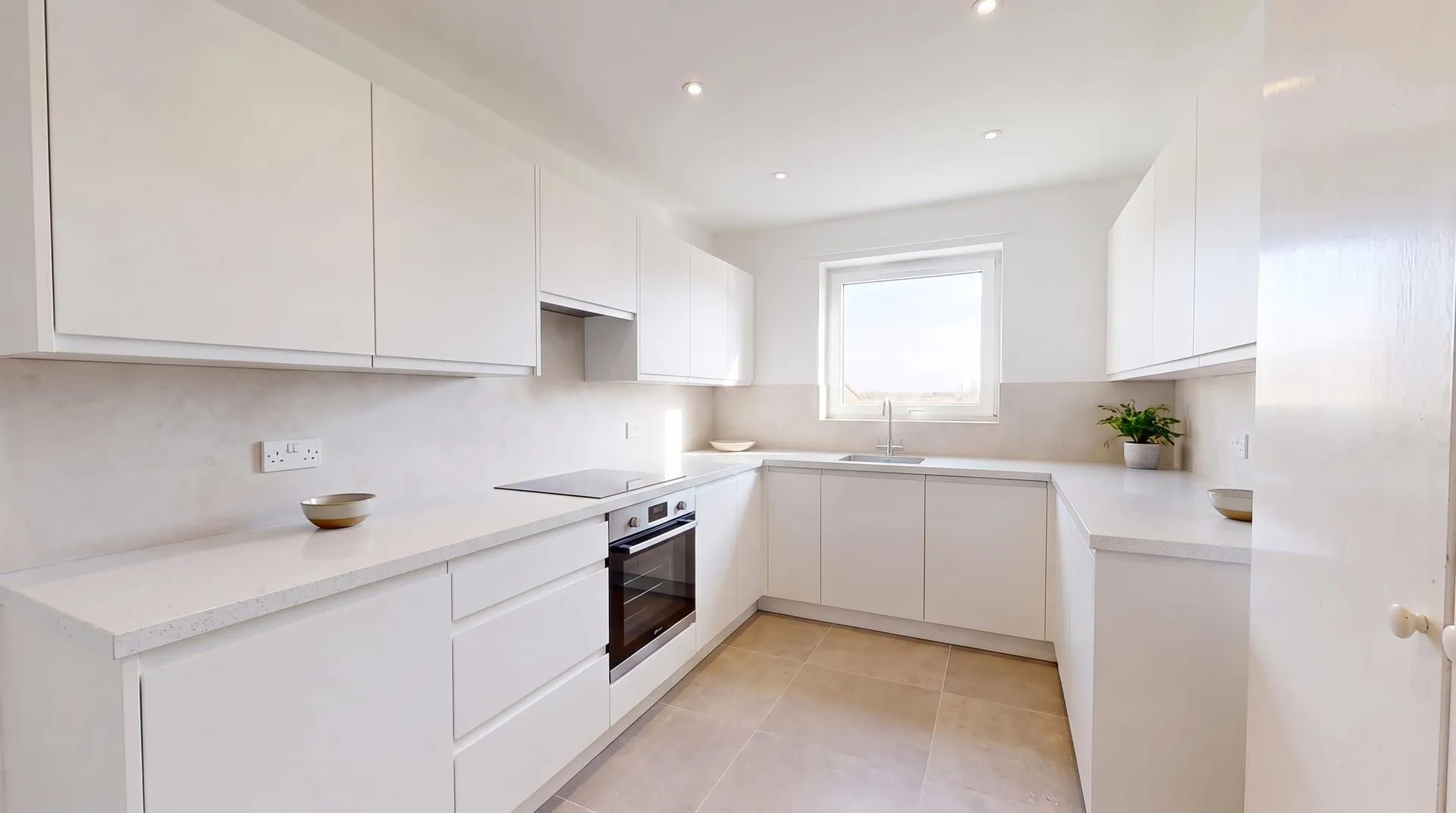 White quartz. Generated with remyhomeai’s AI model from one sample photo.
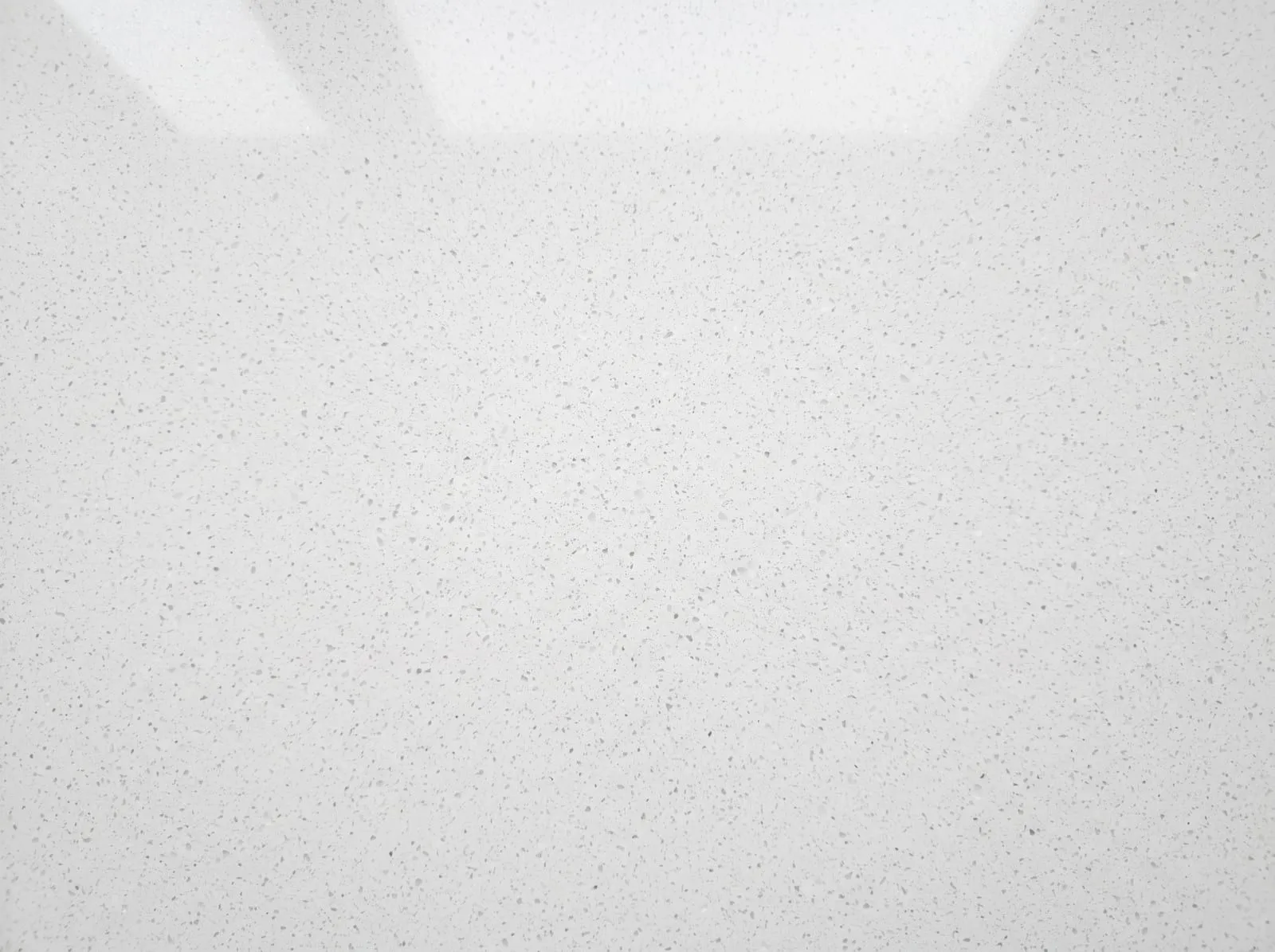 An illustration for this article.
Quartz is about nine parts ground quartz to one part resin and pigment, pressed into slabs. Because it is made, it is consistent: the sample you see is what you get across the whole kitchen. It does not need sealing and shrugs off coffee, wine and oil. Marble-look quartz with printed or poured veins is now common.
When not to choose it: if you put hot pans straight onto the counter. Resin can scorch or yellow under high heat, so use a trivet every time. Quartz can also fade in strong sun, so it is not for outdoor kitchens. Cutting it releases fine silica dust, which harms fabricators without proper controls. Australia banned engineered stone in 2024 for that reason. Ask your fabricator how they cut (wet cutting and extraction).
Quartzite
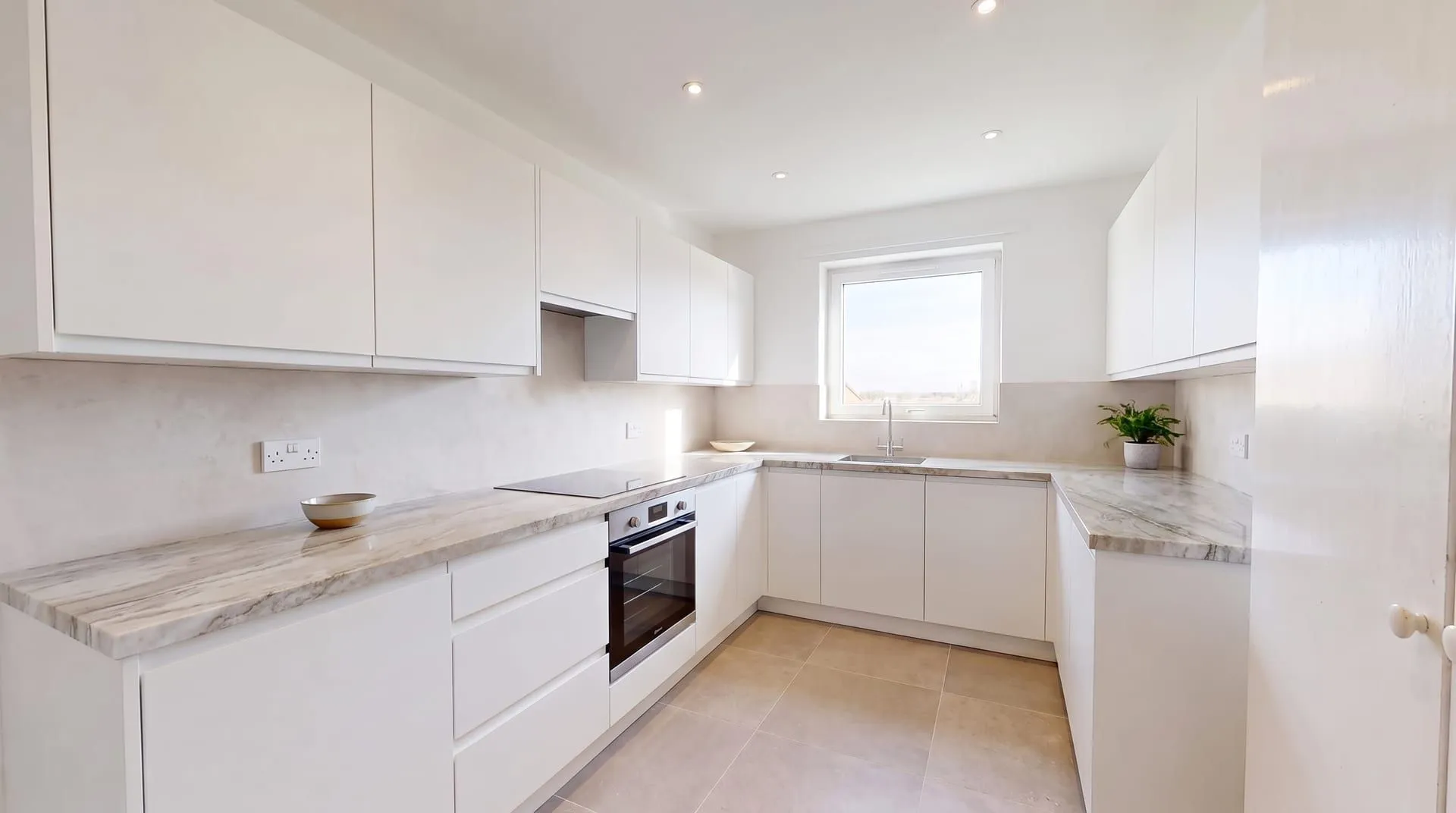 White and taupe quartzite. Generated with remyhomeai’s AI model from one sample photo.
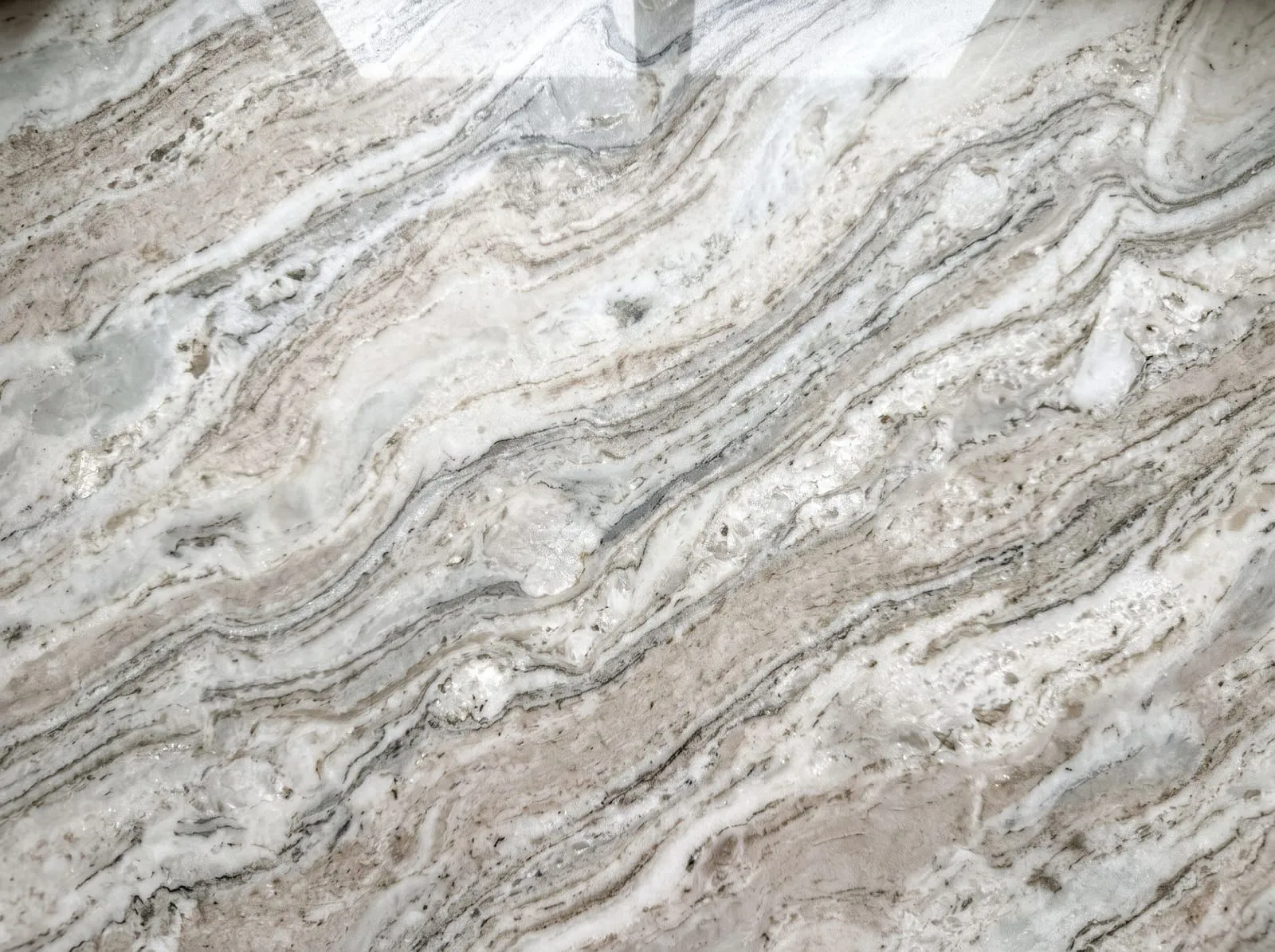 An illustration for this article.
Quartzite is sandstone that heat and pressure turned into a dense, hard rock. It often looks like marble, with long veins and a glassy depth, but it is far harder. It takes hot pans and does not etch from lemon juice.
When not to choose it: if the budget is tight, since it is often the most expensive of the four. It also needs sealing, because some quartzites are more porous than they look. Be careful with names: some stones sold as quartzite are really marble or dolomite. Ask for a sample and test it with lemon juice and a glass scratch before you buy a slab.
Granite
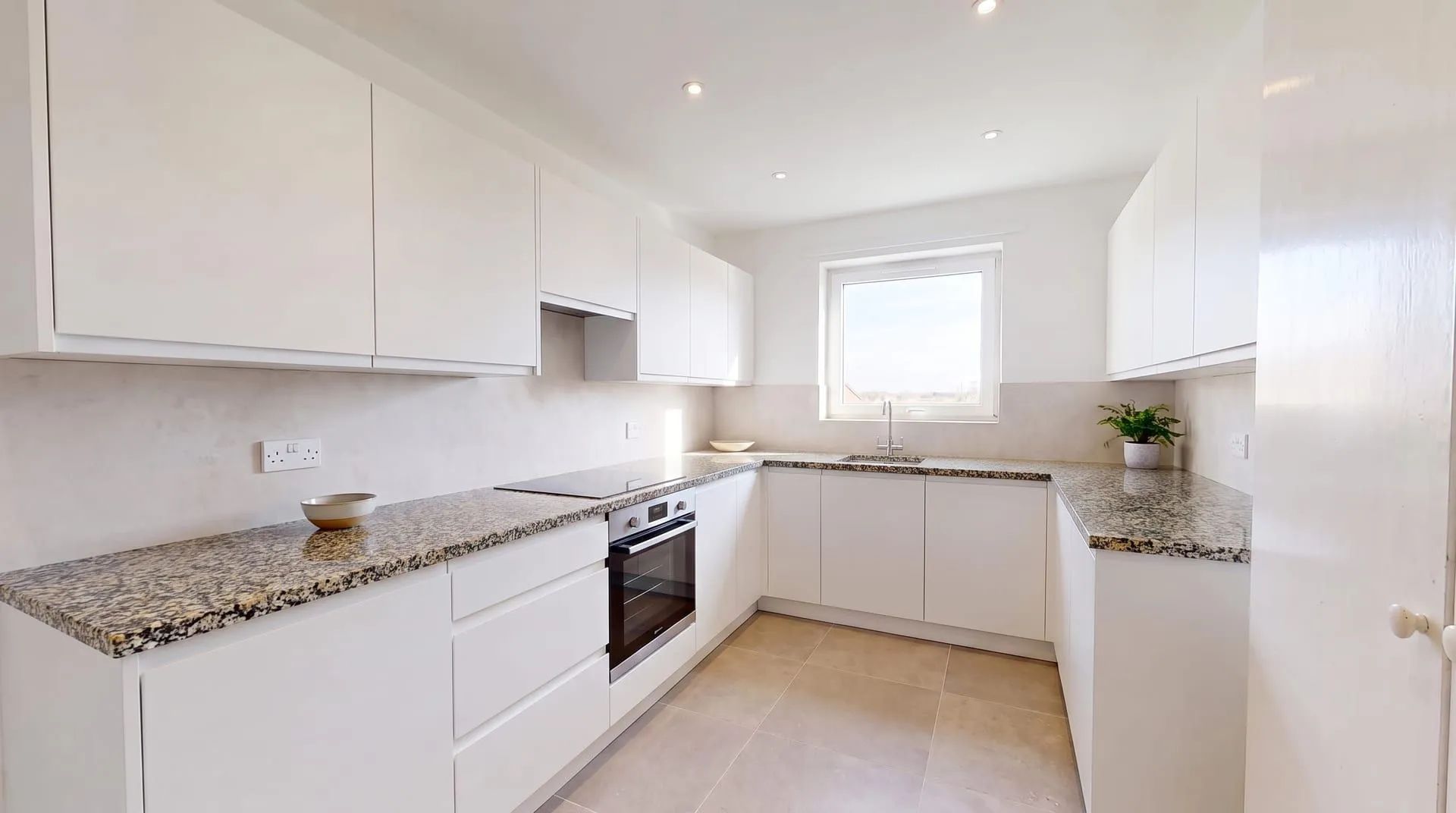 Speckled granite. Generated with remyhomeai’s AI model from one sample photo.
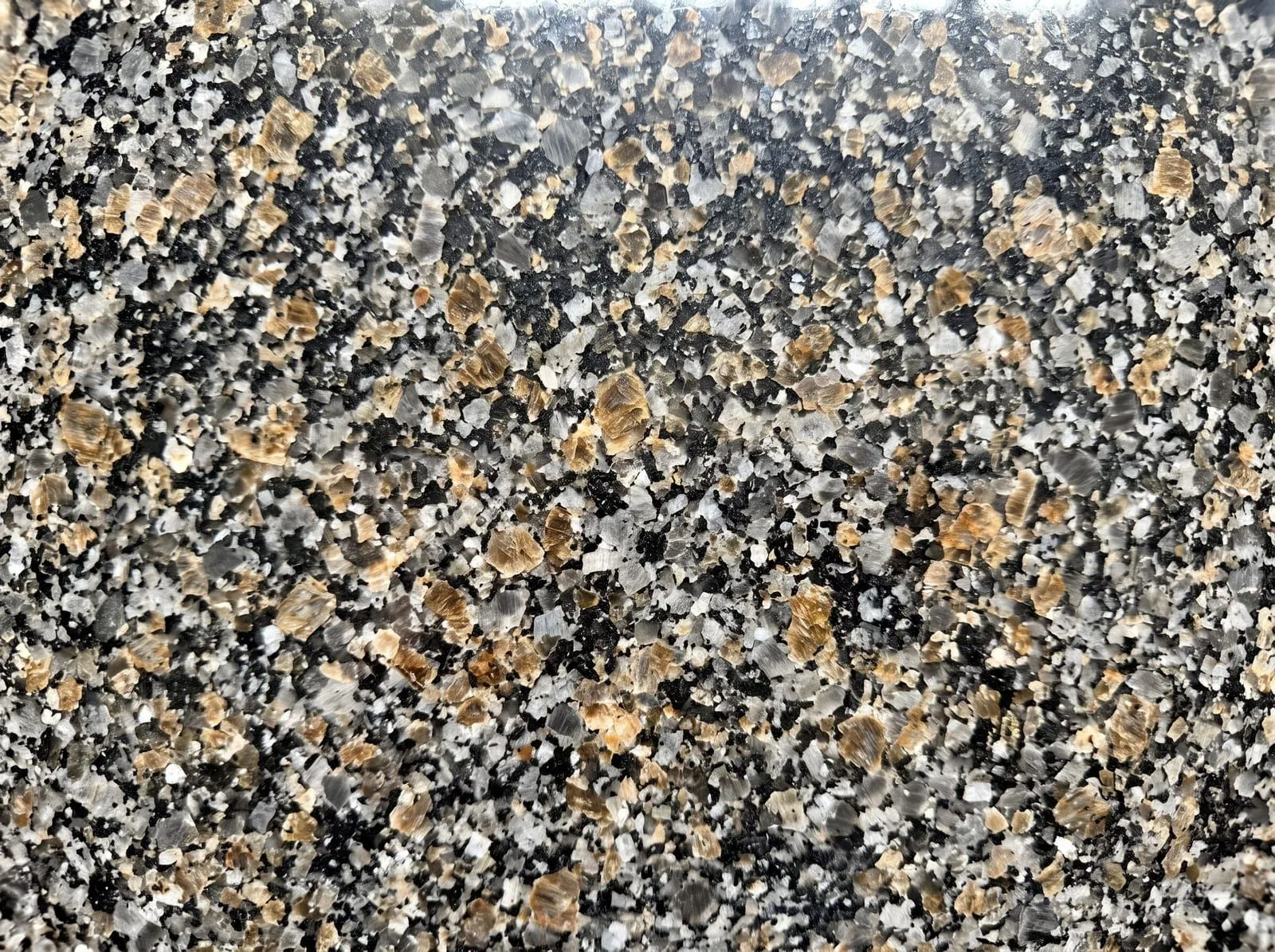 An illustration for this article.
Granite is cooled magma, a mix of quartz, feldspar and mica grains. The result is a speckled, granular pattern rather than veins. It is hard, takes heat and, once sealed, resists most stains. It is often the cheapest natural stone to install.
When not to choose it: if you want a calm, plain surface. A busy speckled granite can fight with a patterned backsplash or a strong floor. Many people now pick quieter granites, such as black or soft grey, for that reason. Granite also needs resealing every year or two, depending on the stone.
Marble
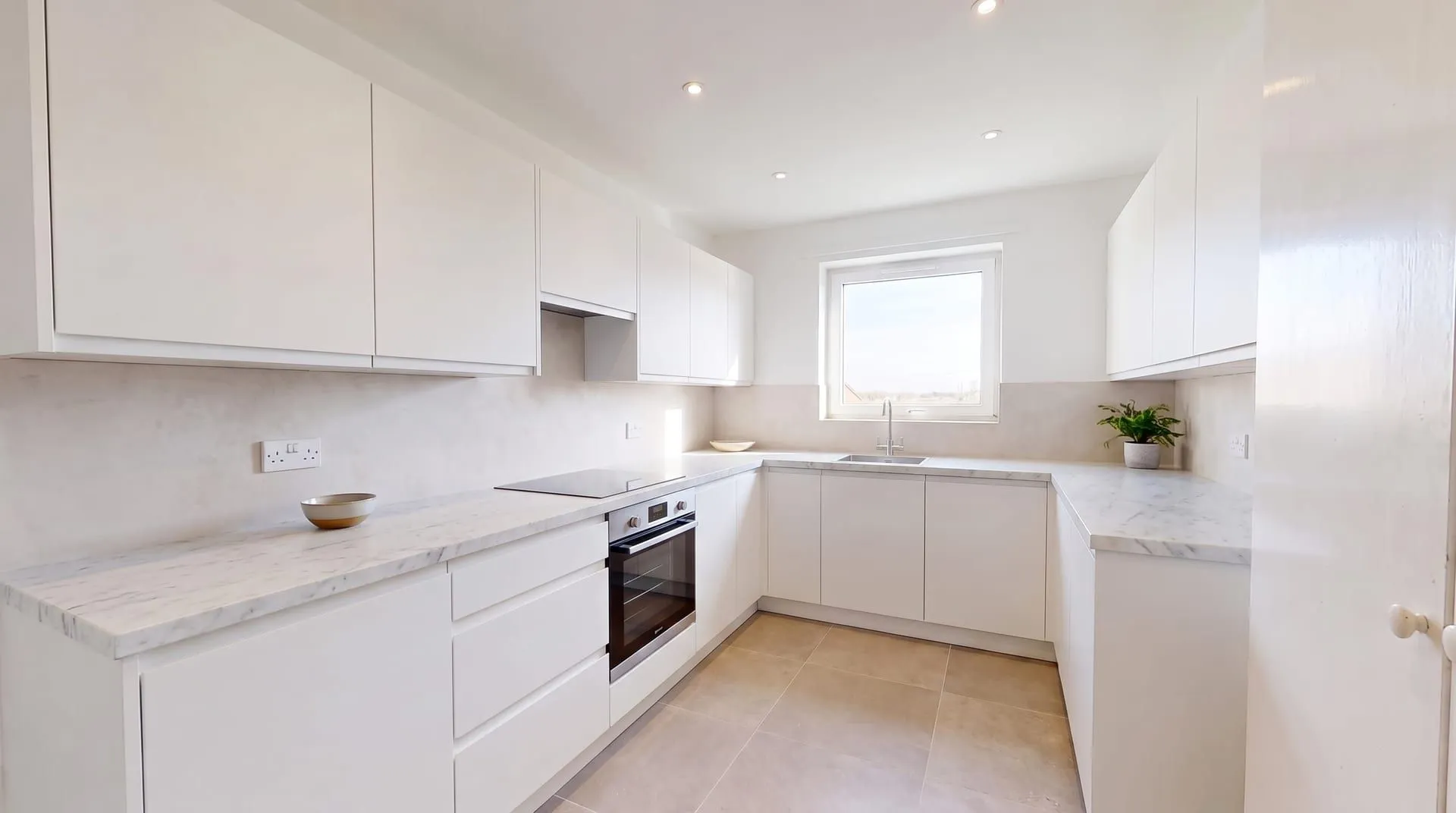 White Carrara marble. Generated with remyhomeai’s AI model from one sample photo.
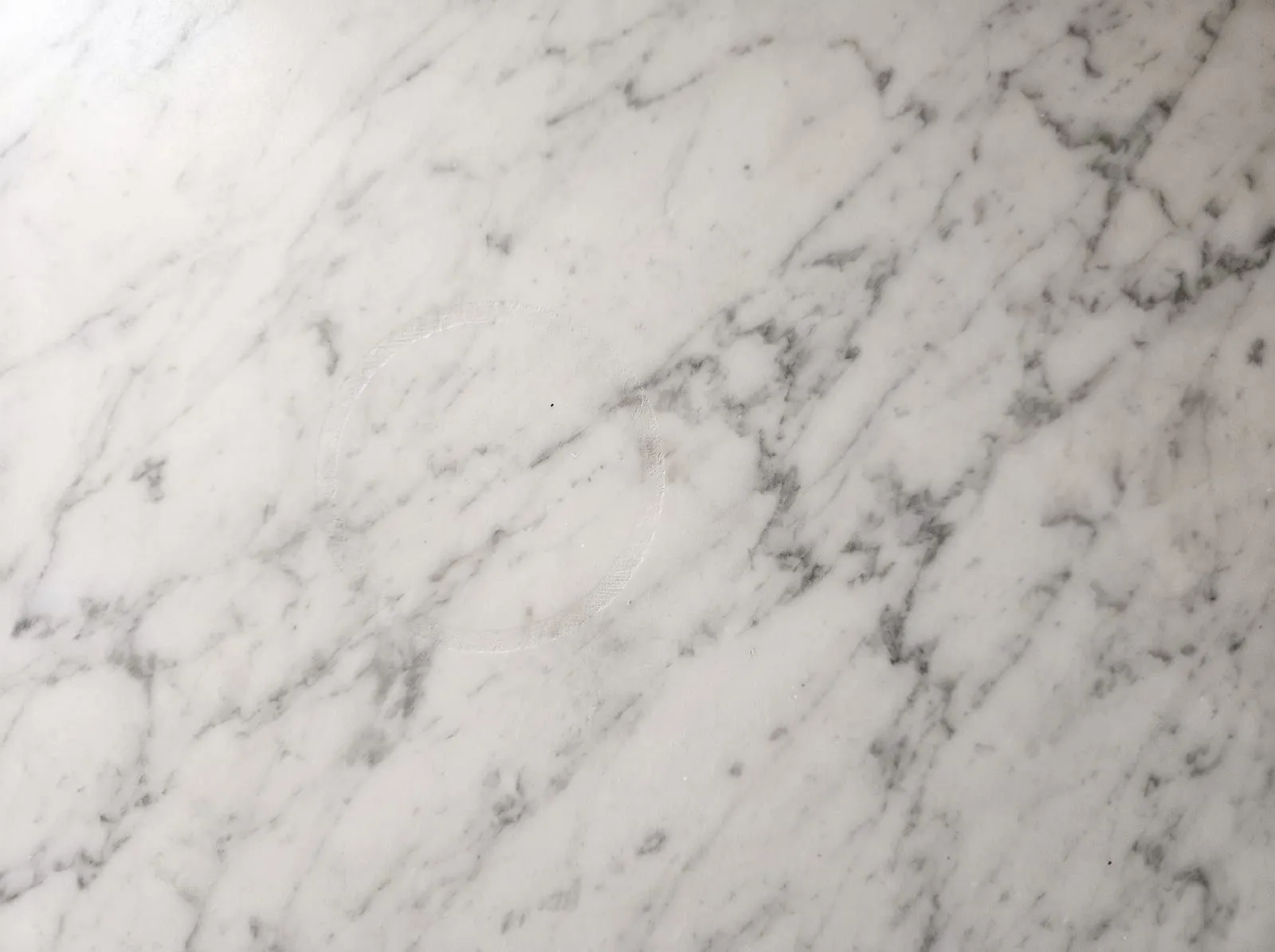 An illustration for this article.
Marble is limestone changed by heat and pressure. It is mostly calcite, which is soft and reacts with acid. That is why marble has been a baker’s surface for centuries (it stays cool) and why it shows life. The close-up shows a faint etch ring where an acidic drink stood.
When not to choose it: if marks will bother you. Lemon juice, vinegar, wine and tomato etch the surface into dull patches within minutes. Sealing slows stains but does not stop etching. A honed (matte) finish hides etches better than a polished one. If you love the look but not the care, choose marble-look quartz or porcelain.
Which one fits your kitchen?
- Busy family kitchen, low upkeep: quartz. Use trivets.
- Serious cook who wants natural stone: quartzite or granite.
- Marble look without marble care: quartzite, or marble-look quartz.
- Tight budget, natural stone: granite.
- Baker or a lover of patina: marble.
- Outdoor or sunny kitchen: granite or quartzite, not quartz.
Match the stone to the style too. Quartz and plain quartzite suit a modern kitchen. Marble and soft quartzite suit a traditional kitchen. Busy granite looks best with plain cabinets and a quiet wall. For wall ideas that work with each stone, see kitchen backsplash ideas. If you plan a tiled floor in the same room, porcelain vs ceramic tile explains which tile survives a kitchen.
How to buy a stone countertop
- See the actual slab. Natural stone varies from slab to slab. Ask to reserve the slab you saw.
- Test a sample at home. Put lemon juice, oil and red wine on it for 10 minutes, then wipe. You will see how it stains and etches.
- Plan seams. Ask the fabricator where the seams go, especially on veined stone.
- Ask what is in the price. Edge profile, sink cutout, hob cutout, removal of old counters and sealing all change the total.
Preview the kitchen first
A countertop is one of the most expensive surfaces in a kitchen, so it helps to see the whole room before you choose. remyhomeai restyles a photo of your own kitchen in one of 7 styles and 39 palettes. Use the keep controls to lock the floor, doors, windows or ceiling so only the rest changes. It does not let you pick a specific slab, brand or product, and it does not measure. Use it to settle on a direction, such as warm and natural or crisp and modern, then take that to the stone yard. For more layout ideas, see kitchen design ideas.
Sources
- Angi: quartz countertop cost
- Angi: quartzite countertop cost
- Angi: granite countertop cost
- Angi: marble countertop cost
Try it on your own room. See your room in a new style with 3 free designs at signup, no card required.