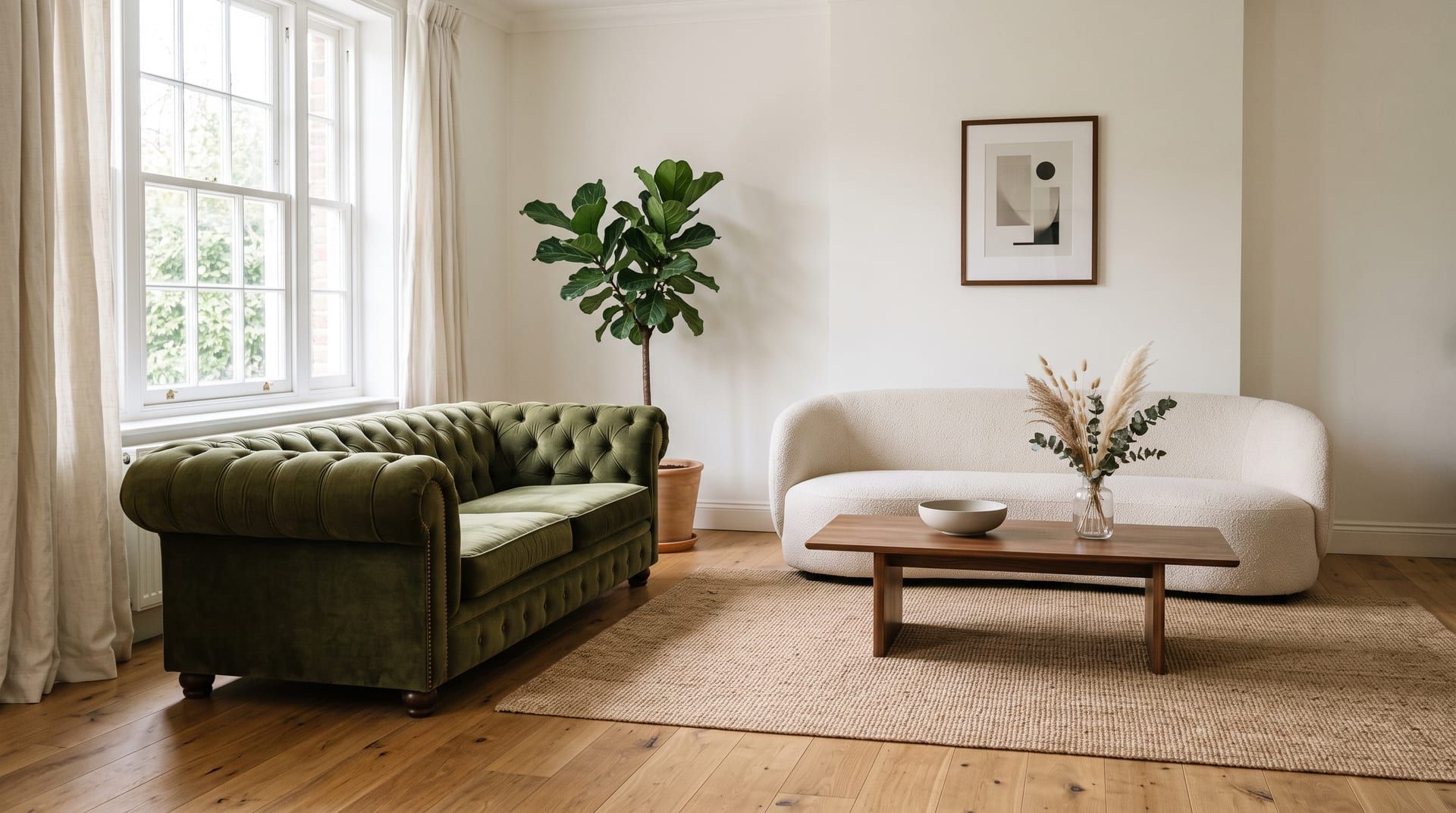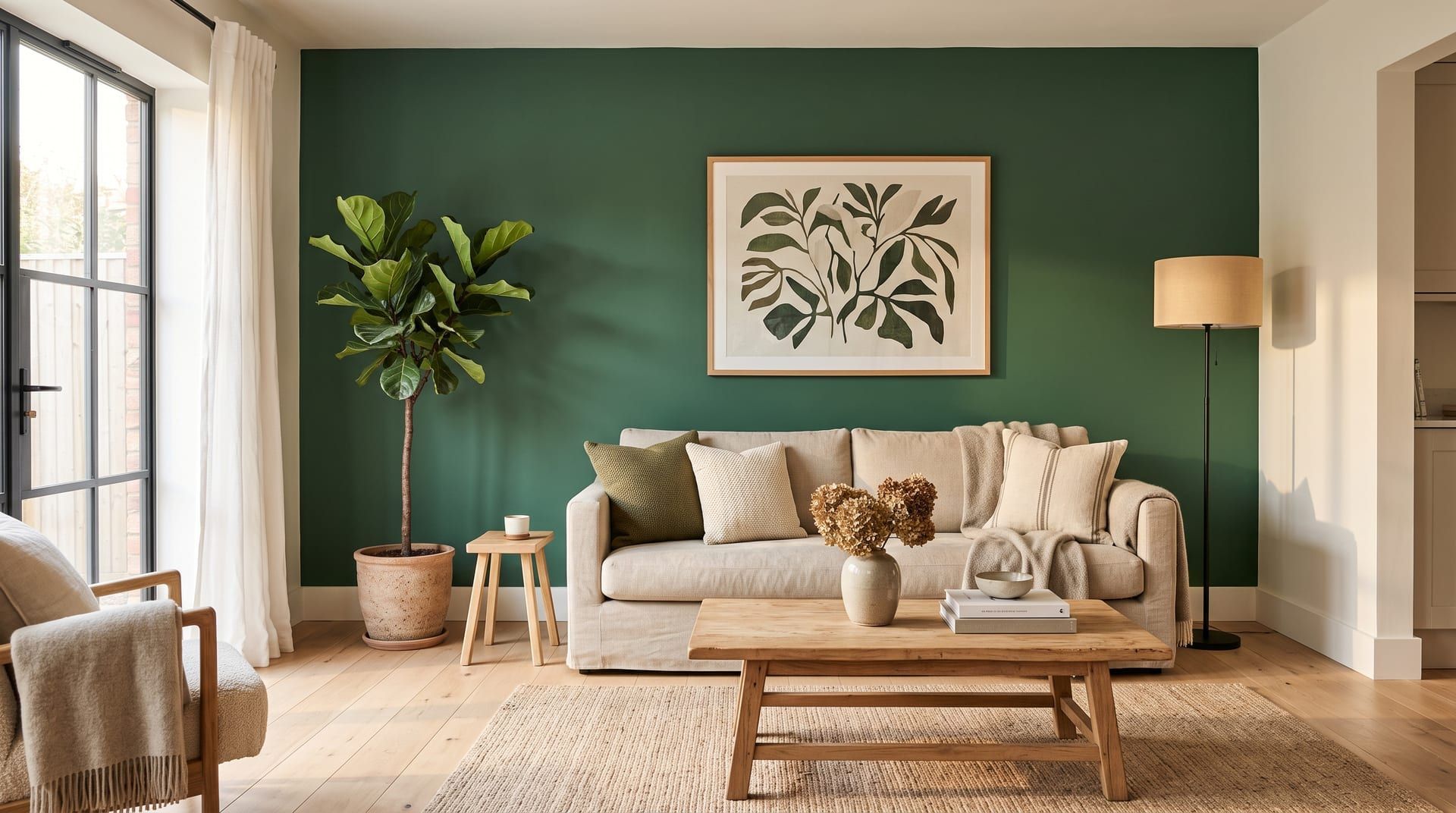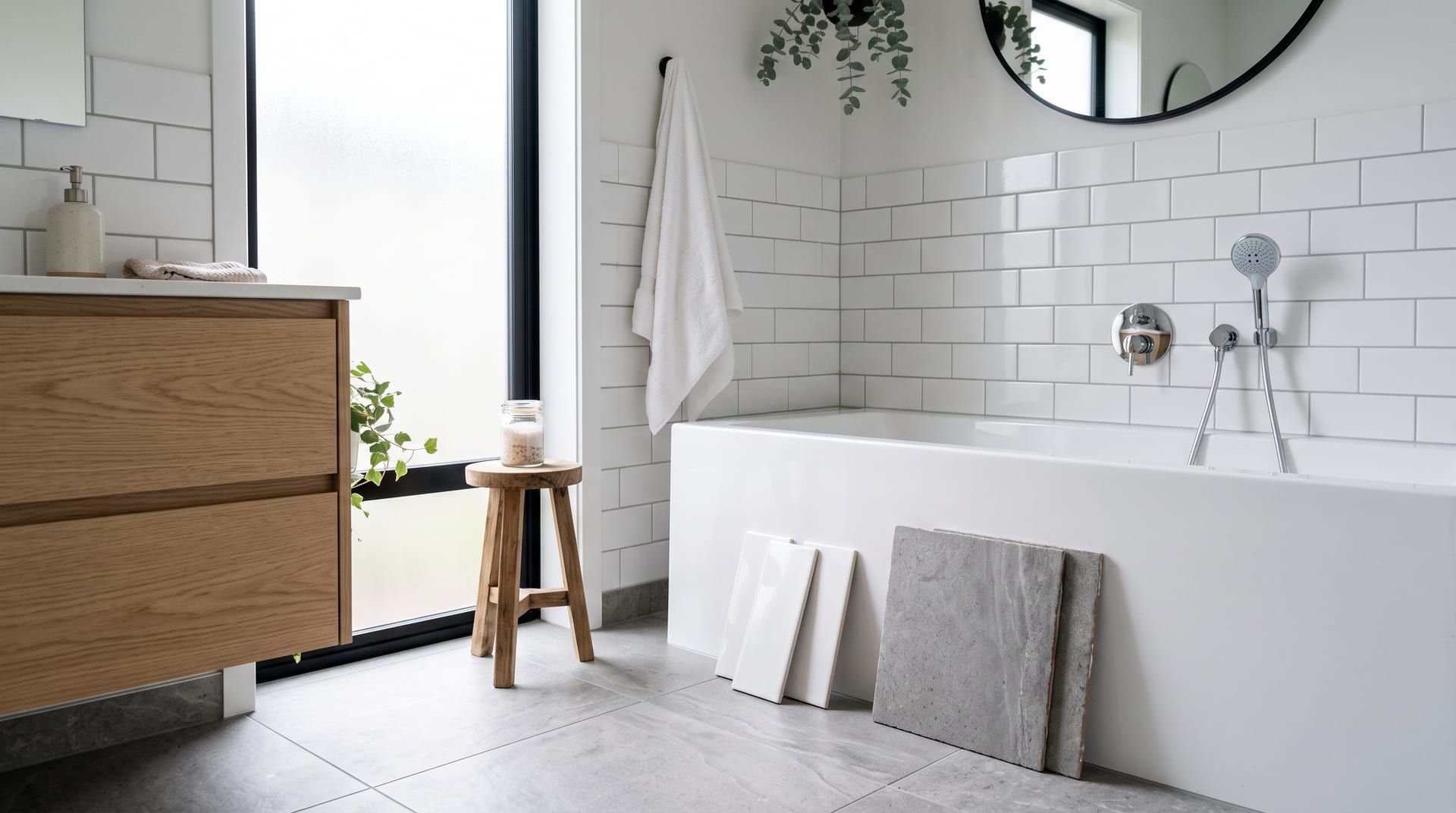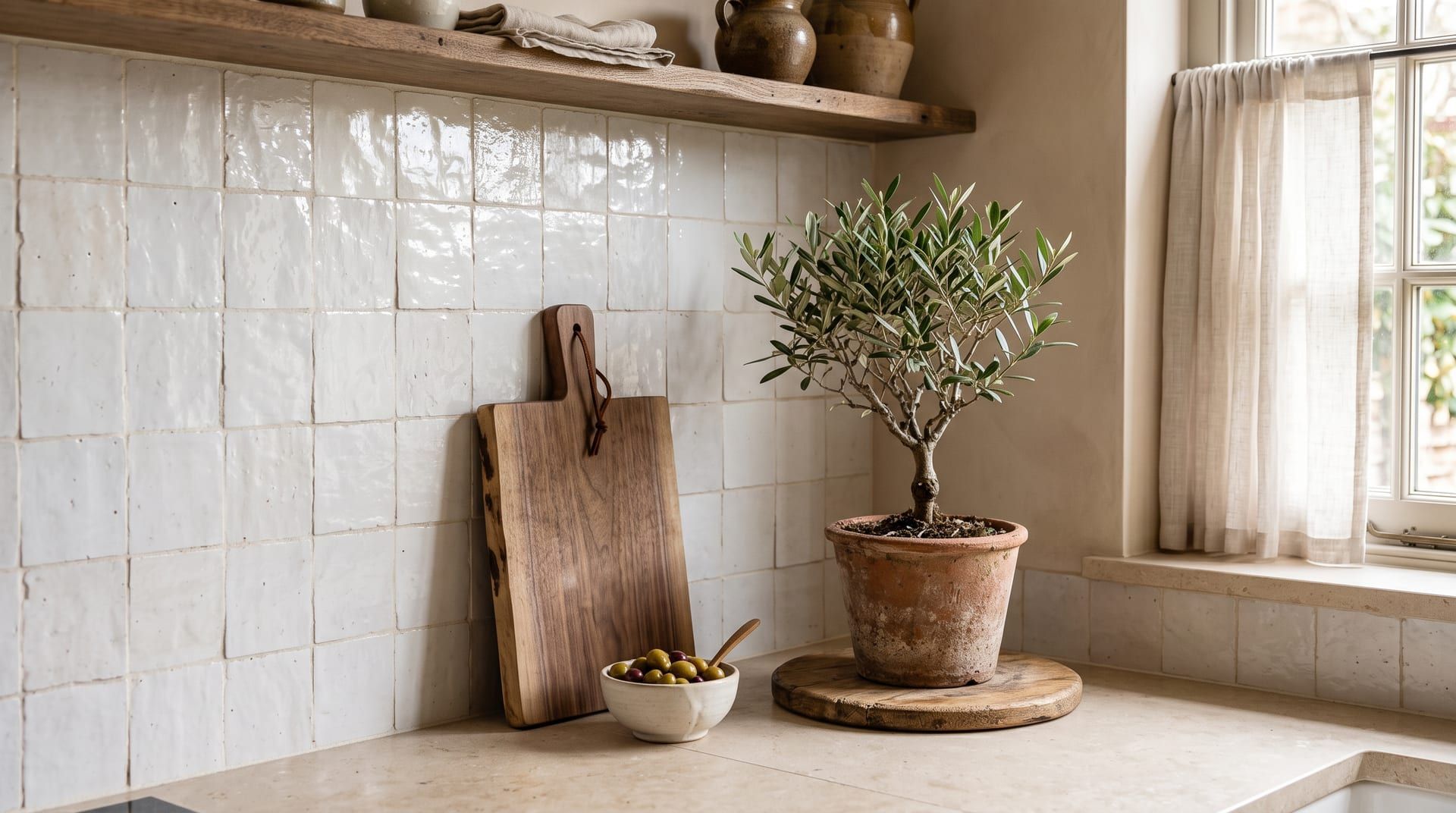
The best kitchen backsplash ideas come down to six choices: zellige, subway tile in a running bond, subway tile in a vertical stack, a stone slab, terracotta and patterned tile. Each changes the kitchen in a different way. Below, one kitchen is shown with each backsplash, with what it costs, how hard it is to clean and when to avoid it. Grout colour gets its own section, because it changes the result almost as much as the tile.
The six backsplashes compared
| Backsplash | Look | Cleaning | DIY difficulty | Relative cost | Avoid when |
|---|---|---|---|---|---|
| White subway, running bond | Classic, quiet | Easy | Easy | Low | You want the wall to be the feature |
| Subway, vertical stack | Modern, graphic | Easy | Medium (needs straight walls) | Low to medium | Walls are out of plumb |
| Zellige | Handmade, glossy, uneven | Medium | Hard | Medium to high | You want a perfectly flat, even wall |
| Stone or quartz slab | Seamless, calm | Easiest | Pro only | Highest | Budget is tight or the wall has many sockets |
| Terracotta | Warm, rustic | Hardest (porous) | Medium | Medium | It sits right behind a gas hob or sink |
| Patterned tile | Bold, decorative | Medium | Medium | Medium | The rest of the kitchen is already busy |
All six renders below use the same kitchen. Only the backsplash changes, so you can compare the wall and nothing else.
Zellige: handmade and glossy
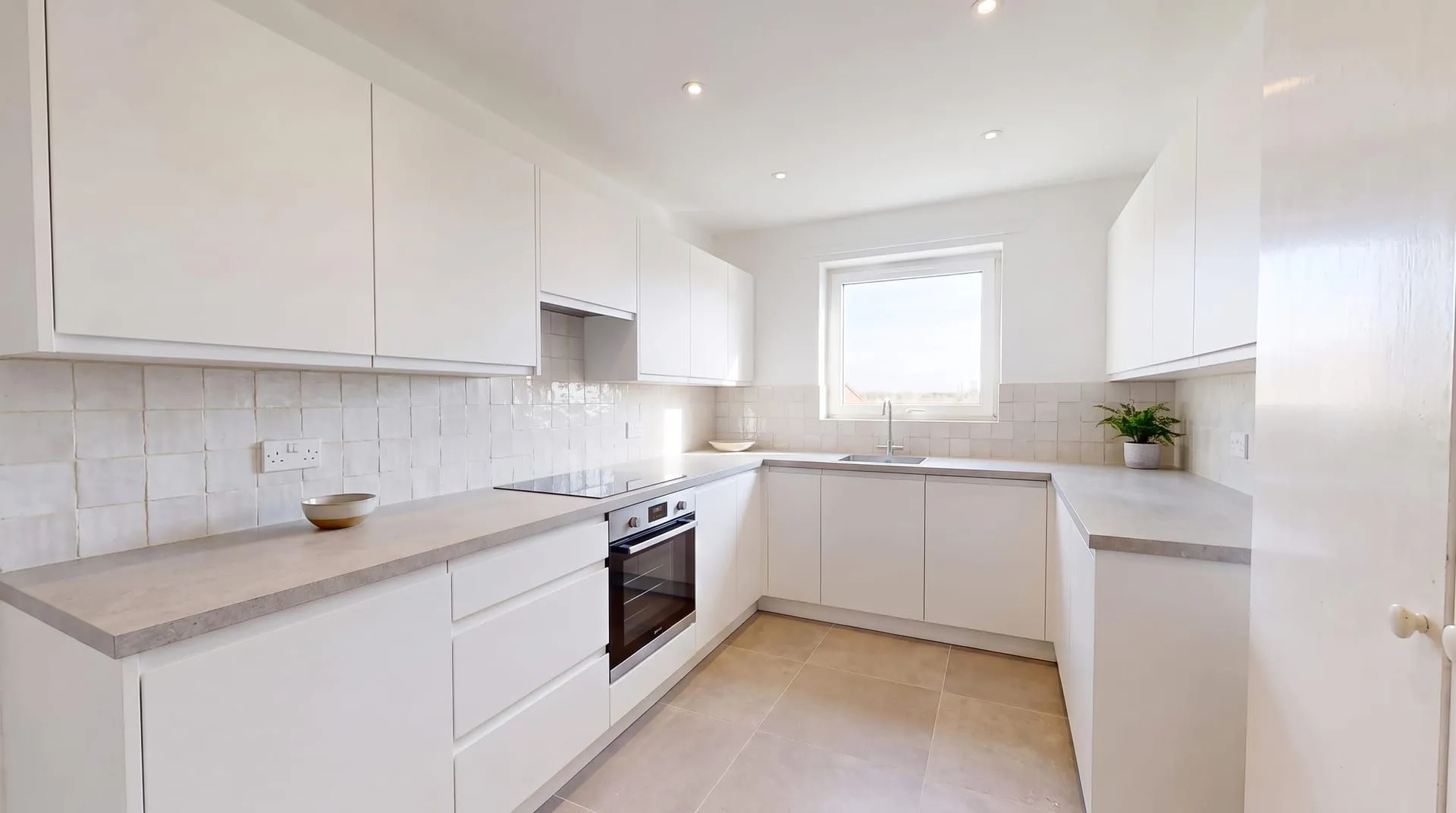 White zellige tile. Generated with remyhomeai’s AI model from one sample photo.
Zellige is a glazed terracotta tile, traditionally made by hand in Morocco. Each tile is slightly uneven in size, thickness and glaze, so light breaks across the wall. In a plain white kitchen, white zellige adds texture without adding colour.
Where it falls short: the edges chip, the tiles vary in thickness, and the joints are tight, so laying it is slow and skilled work. The surface is not flat, so grease in the hollows needs more wiping. Many zellige-look tiles are machine-made ceramic or porcelain with a wavy glaze. They are easier to lay and more even, if you want the look with fewer quirks.
Subway tile in a running bond
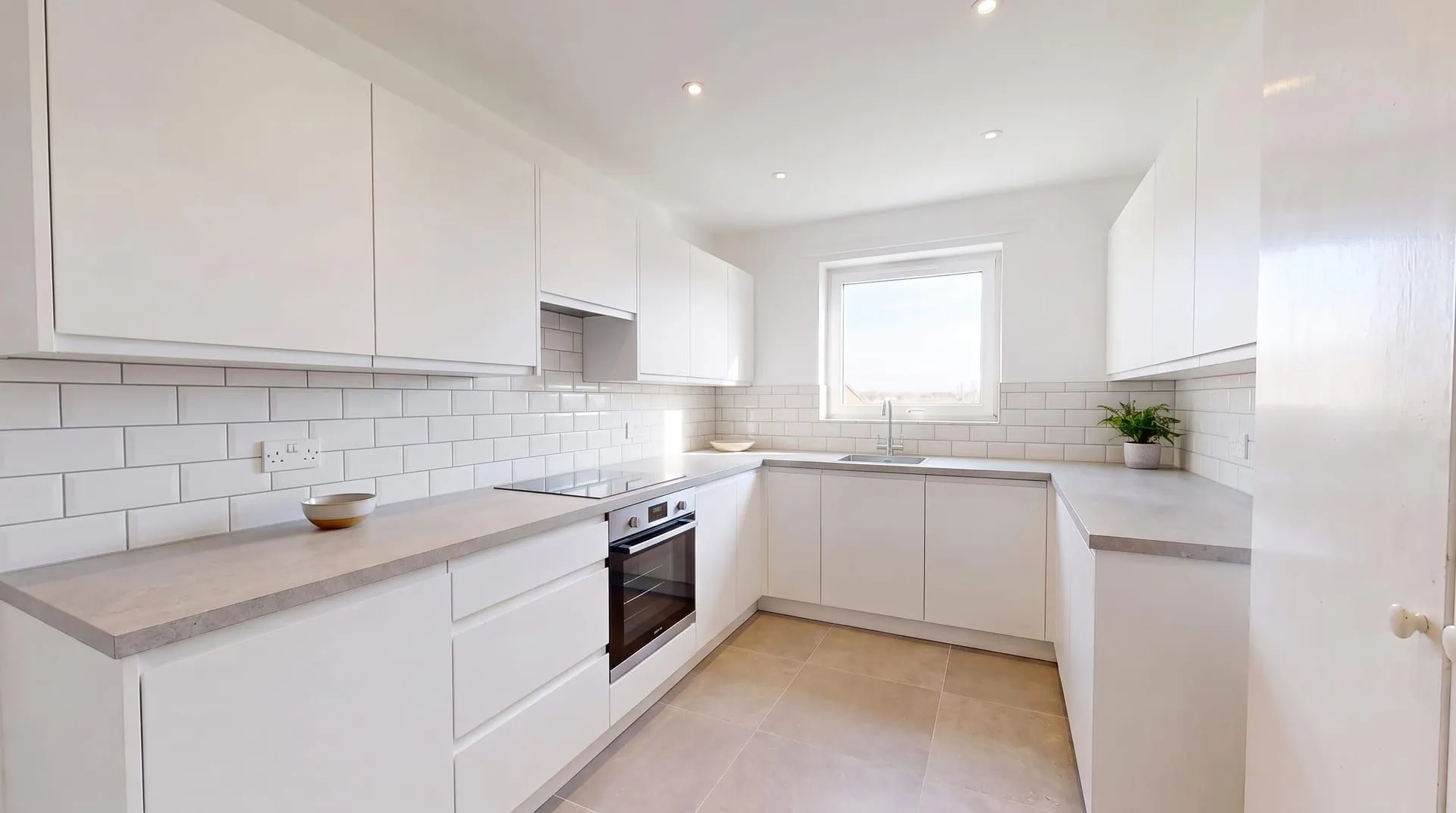 White subway tile in a running bond. Generated with remyhomeai’s AI model from one sample photo.
The classic subway tile is a 3 x 6 inch glossy ceramic rectangle laid like bricks, each row offset by half a tile. It is cheap, easy to cut around sockets and suits almost any cabinet. If you are unsure, this is the safe choice. For what the tile itself is made of, see porcelain vs ceramic tile.
Where it falls short: it is everywhere, so it does not make the kitchen memorable. Pick a colour, a longer tile, or a different layout if you want more character.
Subway tile in a vertical stack
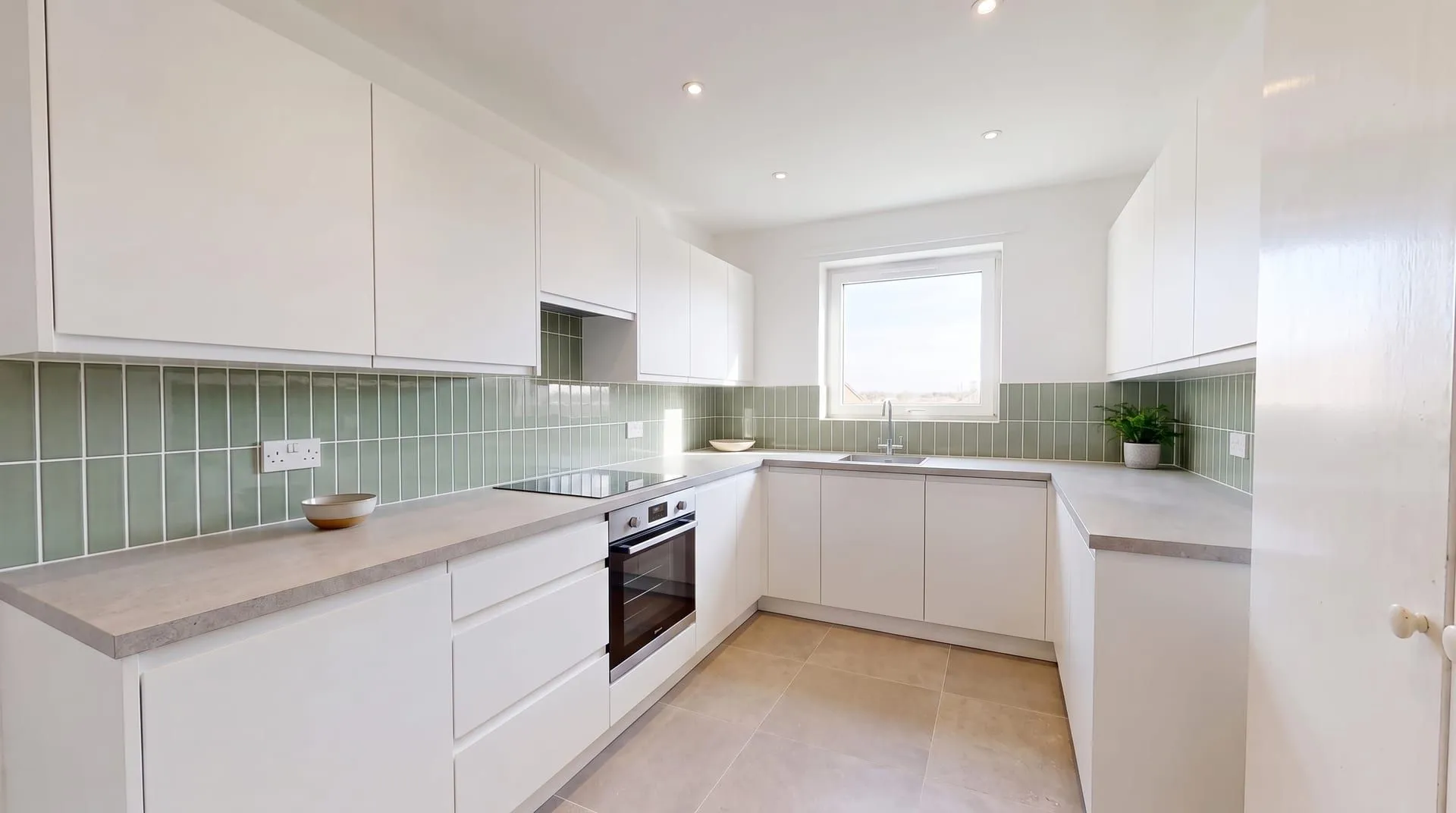 Sage green tile in a vertical stack. Generated with remyhomeai’s AI model from one sample photo.
Turn a long subway tile on end and stack it in straight columns, and the same tile looks modern. Vertical lines draw the eye up, which helps under low wall cabinets. Colour does the rest: sage green here, but deep blue, clay or black work too. Other layouts to consider are horizontal stack (calm, minimal) and herringbone (busy, best on a single feature wall).
Where it falls short: stacked layouts show every error. Walls that are out of plumb or a tiler who does not use a level make the columns lean. Budget for a skilled installer.
A stone or quartz slab
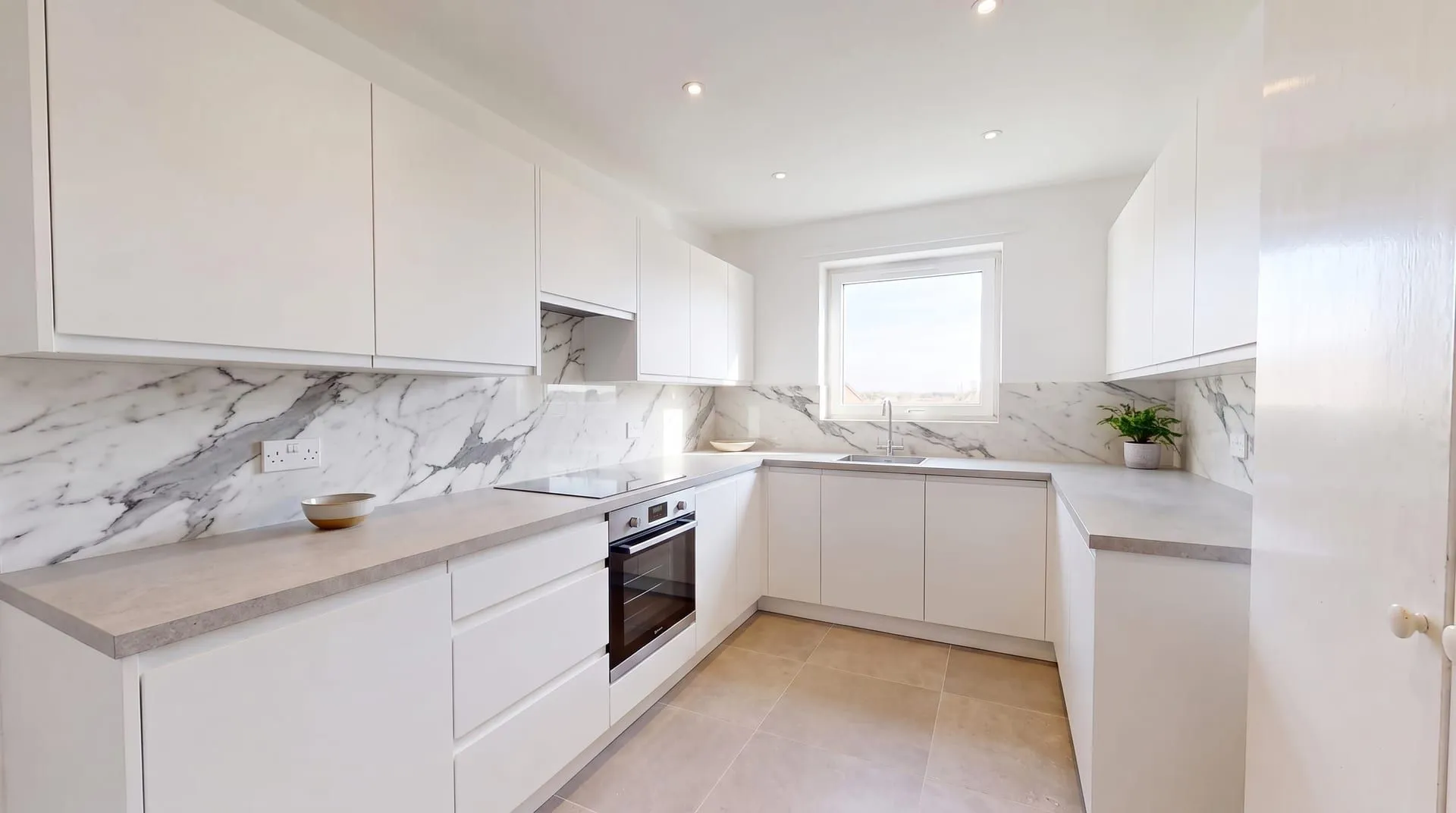 A white marble slab with grey veining. Generated with remyhomeai’s AI model from one sample photo.
A slab backsplash is one sheet of stone, quartz or sintered stone cut to fit. There are no grout lines, so it is the easiest backsplash to keep clean. If you run the countertop material up the wall, the kitchen reads as one calm block. Quartz and porcelain slabs resist stains better than natural marble.
Where it falls short: it is the most expensive option, it needs a fabricator to template and cut it, and every socket needs a precise cutout. Marble also etches from lemon juice and vinegar, which matters behind a prep area.
Terracotta
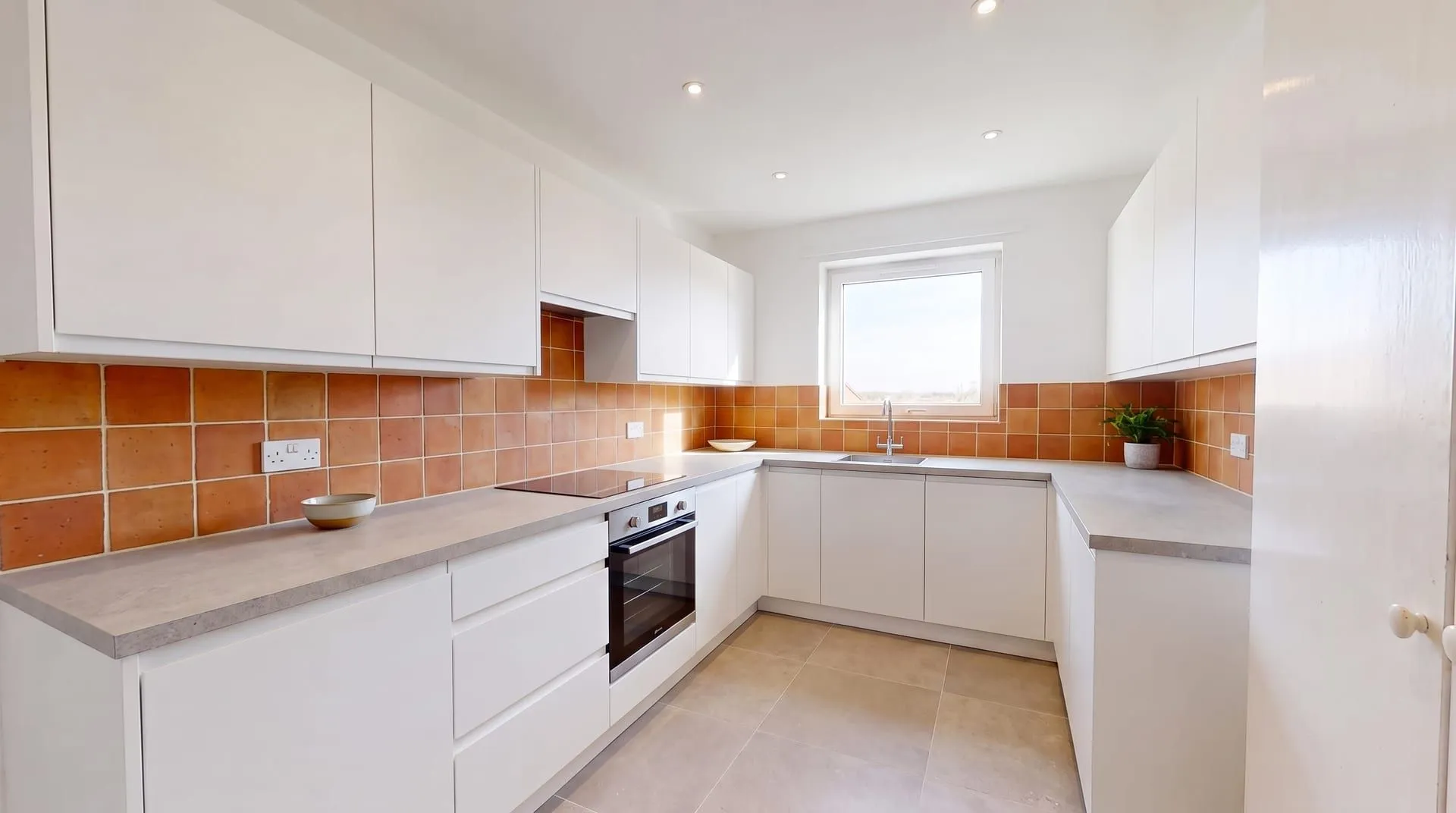 Matte terracotta tile. Generated with remyhomeai’s AI model from one sample photo.
Unglazed terracotta brings warmth to a white kitchen in one move. It suits rustic, Mediterranean and warm modern kitchens, and it pairs well with oak and brass.
Where it falls short: unglazed terracotta is porous. It soaks up oil and water, so it needs sealing before grouting and resealing over time. Behind a hob or a sink, a glazed terracotta-colour tile is the more practical choice.
Patterned tile
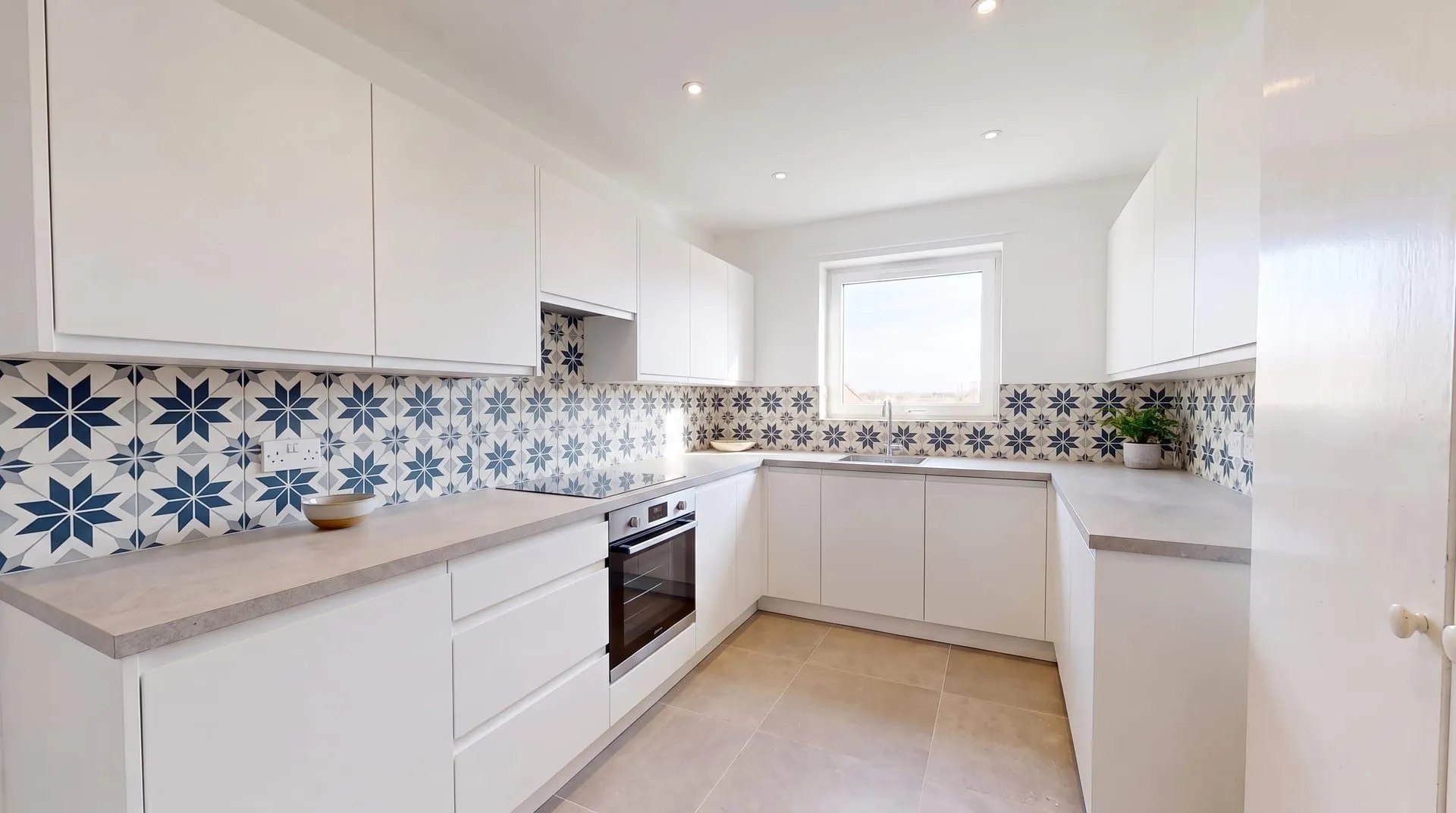 Navy and white patterned tile. Generated with remyhomeai’s AI model from one sample photo.
Patterned cement-look tiles turn the backsplash into the feature of the room. They work best when cabinets and counters are plain, as they are here. Most patterned tiles for walls are glazed ceramic or porcelain prints, which are easier to keep clean than real cement tile.
Where it falls short: a strong pattern is the first thing you tire of. Test it on a big sample, not a single tile. If the kitchen already has busy stone or open shelves, a pattern can make it feel crowded.
How does grout colour change a backsplash?
 An illustration for this article.
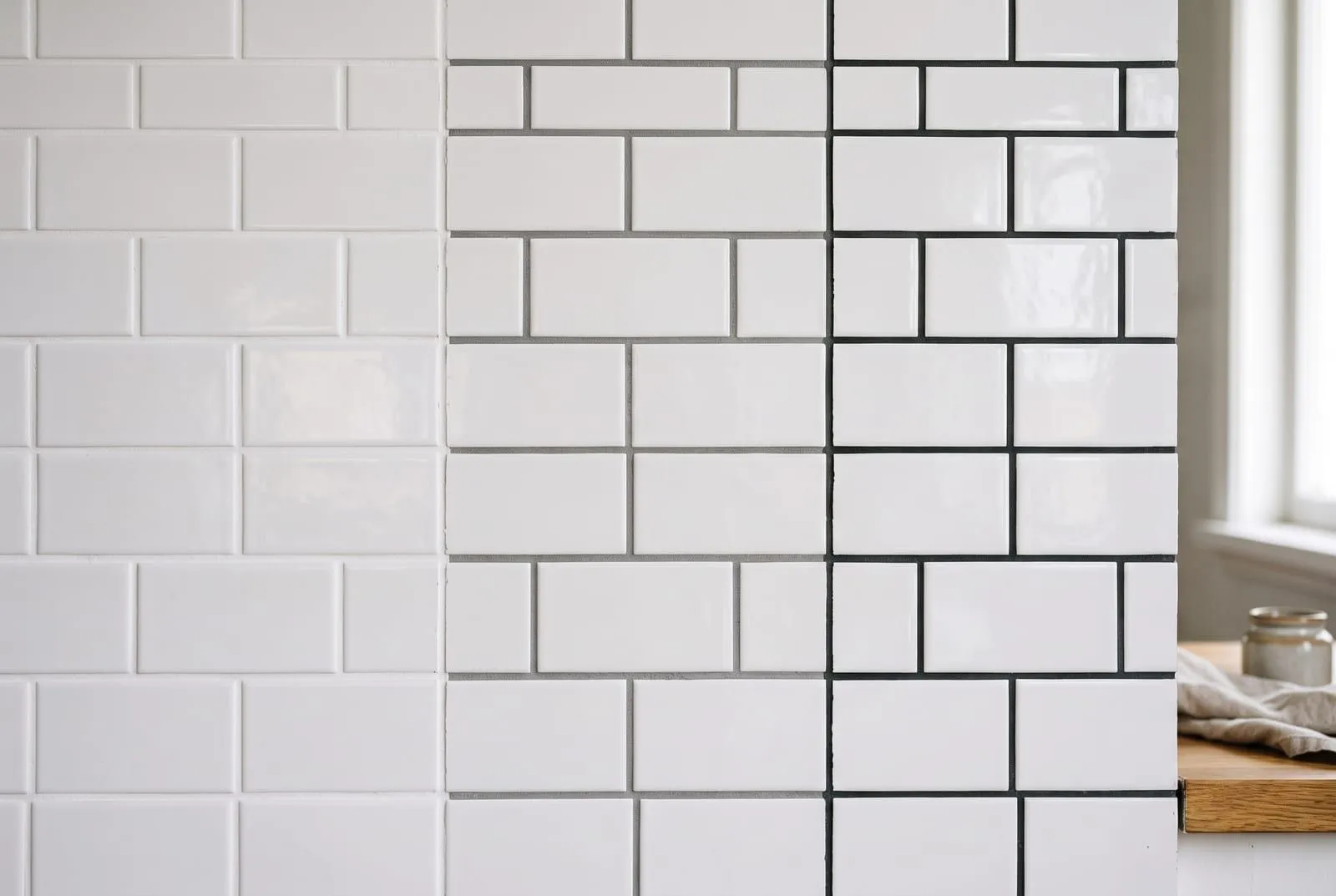
The same white tile looks like three different walls.
- White or matching grout: the wall reads as one surface. Quiet and clean, but it stains near the hob.
- Mid grey grout: defines each tile lightly and hides daily dirt. A good default for a working kitchen.
- Charcoal or black grout: turns the wall into a grid. It suits industrial kitchens and graphic layouts, but it exaggerates any uneven joints.
For joints wider than about 1/8 inch, tilers use sanded grout. Epoxy grout costs more and is harder to work with, but it resists stains best behind a hob. Seal cement-based grout to slow down staining.
What does a kitchen backsplash cost?
As of October 2026, Angi puts a professionally installed backsplash at about $480 to $1,500 for a typical area of around 35 square feet, with about $1,000 as a common total. Forbes Home gives a typical all-in range of about $15 to $40 per square foot. Simple ceramic subway tile sits at the low end. Zellige, natural stone and slabs sit at the high end. Removing an old backsplash and moving sockets add to the total.
How to pick the right one
- Start with what stays. Cabinets and counters cost more to change, so the backsplash should suit them. Pull the colours from a photo of your kitchen with the colour palette from photo tool.
- Pick one feature. If the countertop has strong veining, choose a quiet tile. If the counter is plain, the backsplash can be the feature.
- Match the style. Zellige and terracotta suit traditional kitchens and warm modern ones. Stacked tile and slabs suit modern kitchens.
- Order samples and grout. Look at them on the wall in daylight and at night.
For more on layout and colour in this room, see kitchen design ideas.
Preview a direction first
remyhomeai restyles a photo of your own kitchen in one of 7 styles and 39 palettes. Lock the floor, doors, windows or ceiling with the keep controls so only the rest changes. It does not place a specific tile or let you choose a product, and the result is a look, not a tiling plan. Use it to settle on a direction, such as warm and handmade or crisp and modern, before you order samples.
Try it on your own room. See your room in a new style with 3 free designs at signup, no card required.