For most homes, the answer is porcelain tile or SPC where water reaches the floor, and parquet, laminate or vinyl plank everywhere else. Tile and SPC are waterproof. Parquet is the floor you can sand and keep for decades. Laminate gives the best wood look for the money in dry rooms. Luxury vinyl plank (LVP) is the soft, quiet, waterproof middle option.
The sections below compare all five on water, comfort, noise, lifespan and cost. One living room is shown in each floor, so you can compare the look on a real room instead of a swatch. At the end, a table gives a first pick for each room.
The five floors at a glance
| Floor | Water | Feel underfoot | Noise | Lifespan | Cost per sq ft (rough band) |
|---|---|---|---|---|---|
| Parquet (solid or engineered wood) | Not waterproof. Spills must be wiped up. | Warm, firm | Quiet when glued down | Decades. Can be sanded and refinished. | $6 to $25 (hardwood) |
| SPC (rigid core vinyl) | Waterproof planks | Hard, cooler | Can sound hollow without a pad | Set by the wear layer | $2 to $14 (all vinyl) |
| Laminate | Water resistant at best. The core swells if water gets in. | Firm | Can click and echo without underlay | Set by the wear layer. It cannot be sanded. | $3 to $13 |
| LVP (flexible vinyl plank) | Waterproof planks | Softer, warmer | Quietest of the planks | Set by the wear layer | $2 to $14 (all vinyl) |
| Porcelain tile | Waterproof | Hard, cold without floor heating | Echoes in empty rooms | Often longer than the house needs | $3 to $30 (all tile) |
Costs are rough national bands, as of October 2026, from HomeAdvisor. HomeAdvisor gives one band for all vinyl. For SPC on its own, Fixr puts the material at about $3.50 to $7 per sq ft before labour. Removal of the old floor and subfloor repair cost extra. Your local quotes decide the real number.
The same living room in five floors
Each image below is one photo of the same living room. Only the floor changes. The rug, sofa and light stay the same, so the difference you see is the floor.
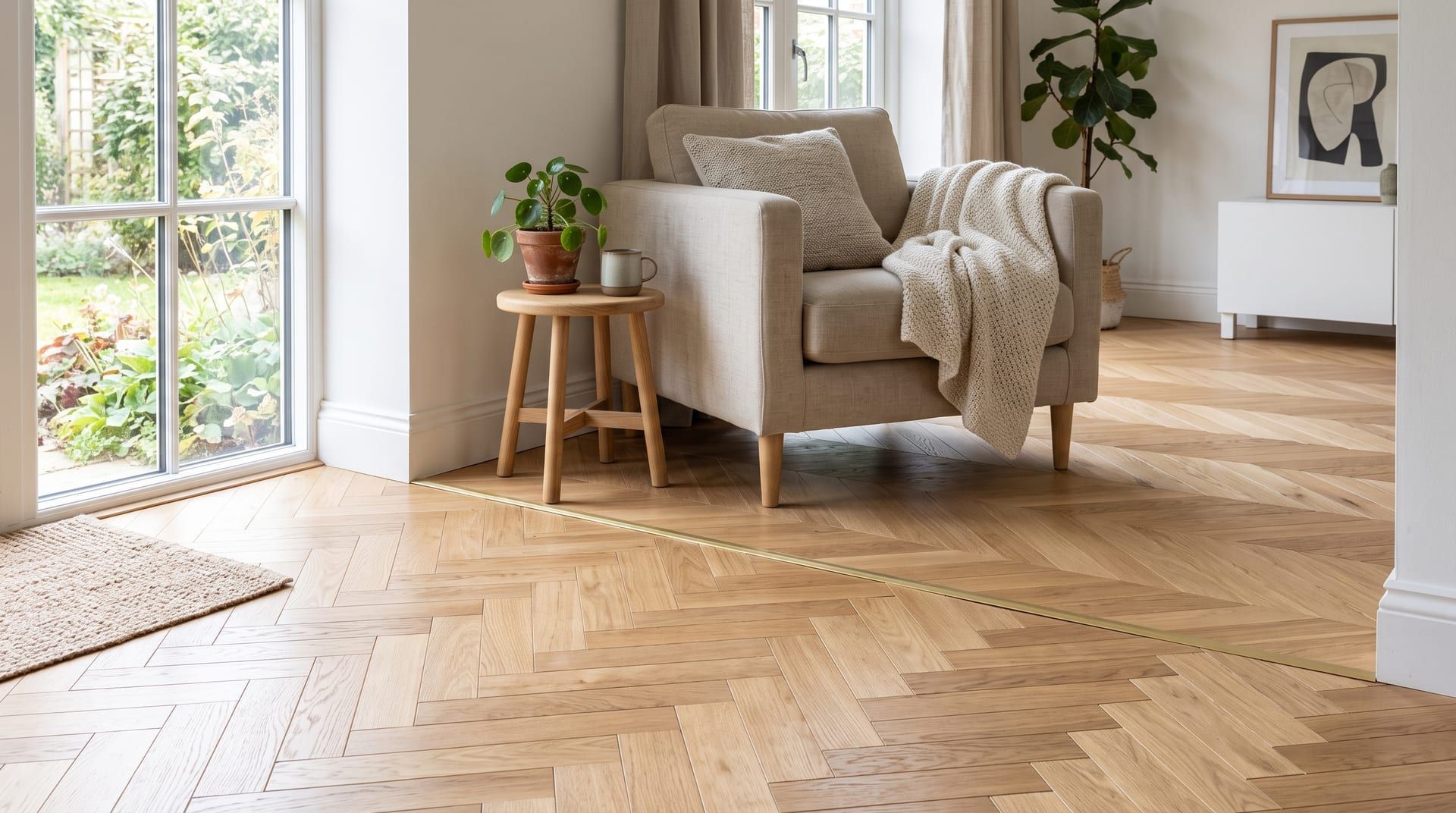
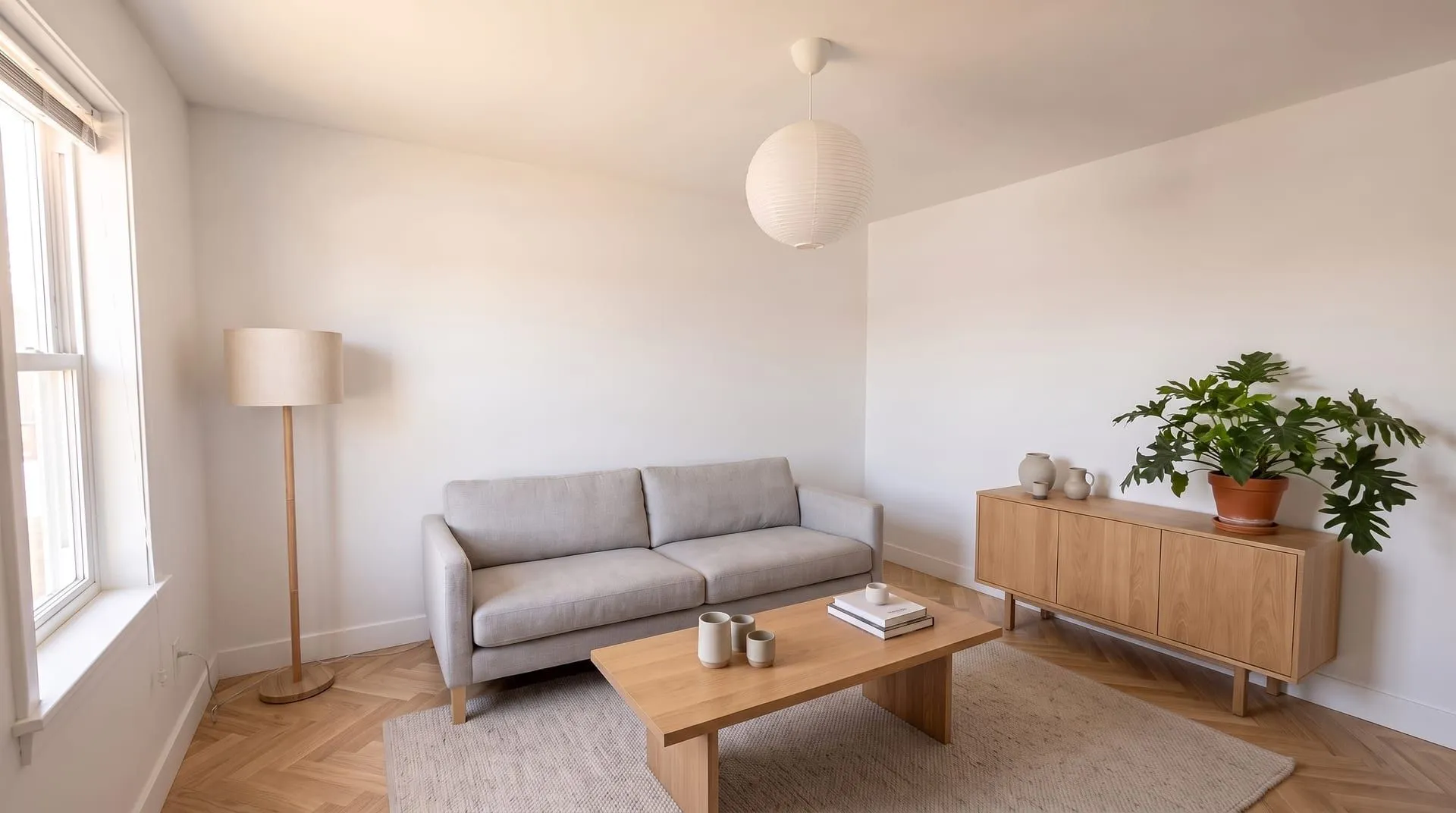 Oak herringbone parquet. Generated with remyhomeai’s AI model from one sample photo.
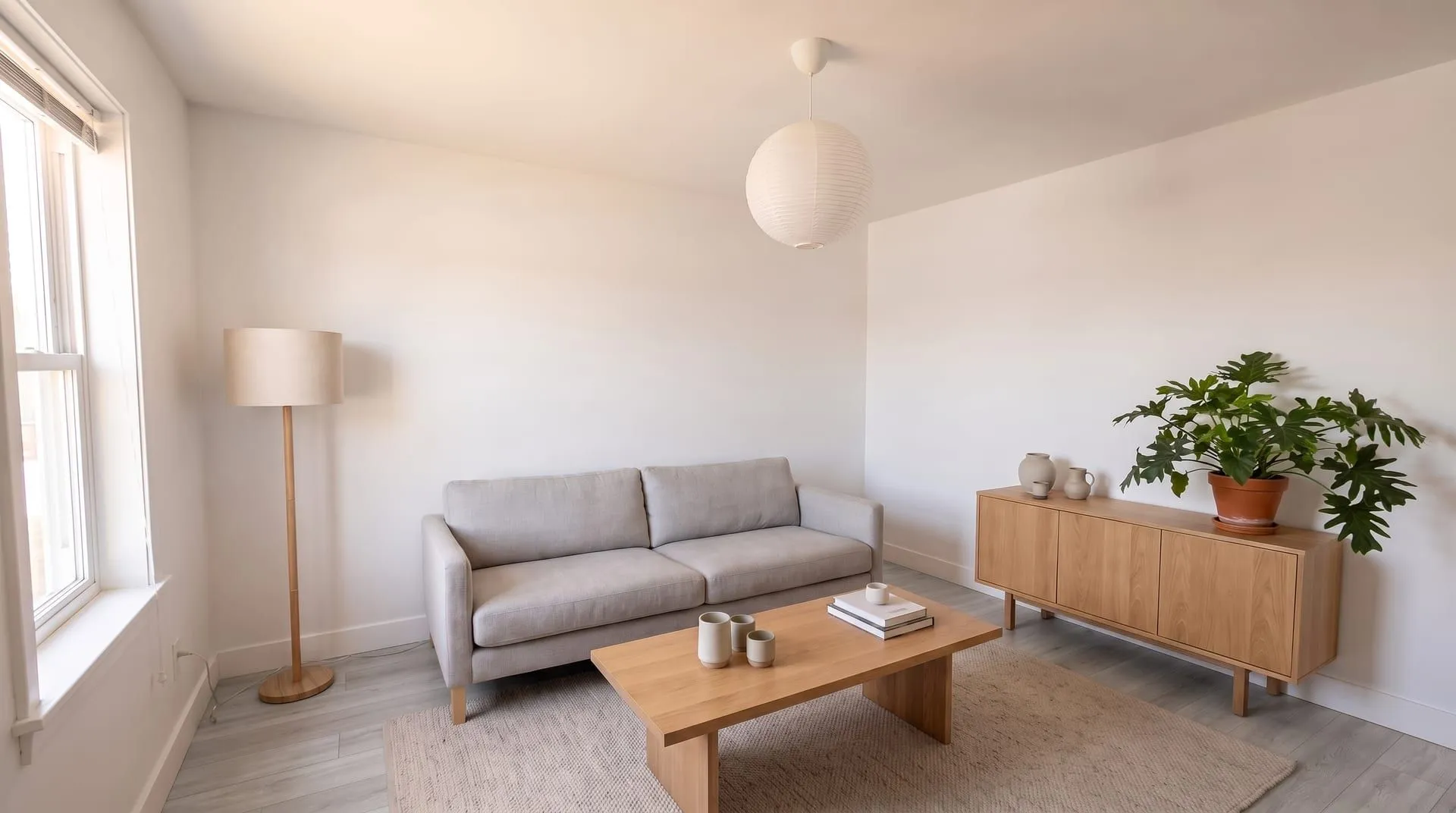 SPC in a light grey oak look. Generated with remyhomeai’s AI model from one sample photo.
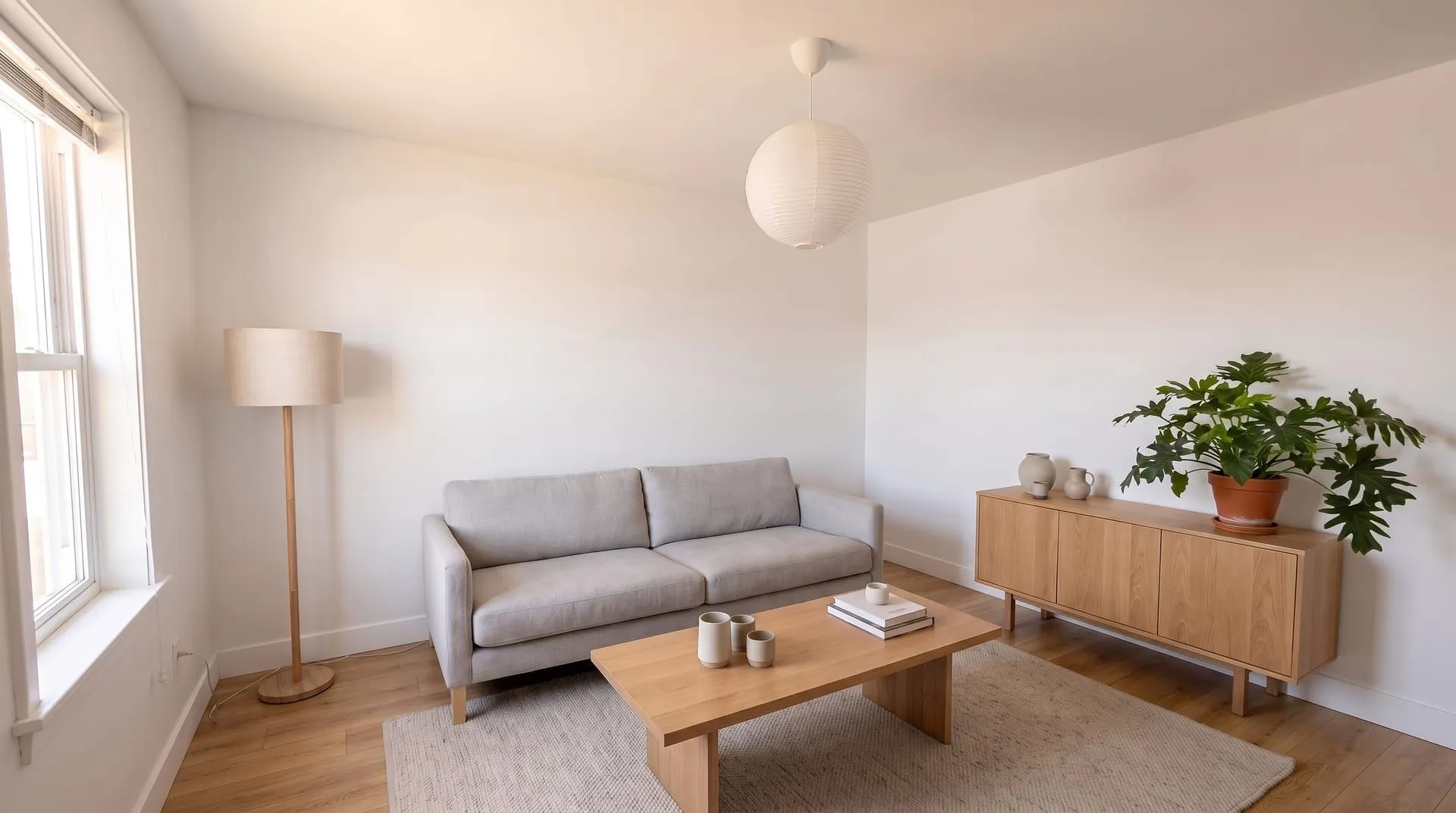 Laminate in a honey oak look. Generated with remyhomeai’s AI model from one sample photo.
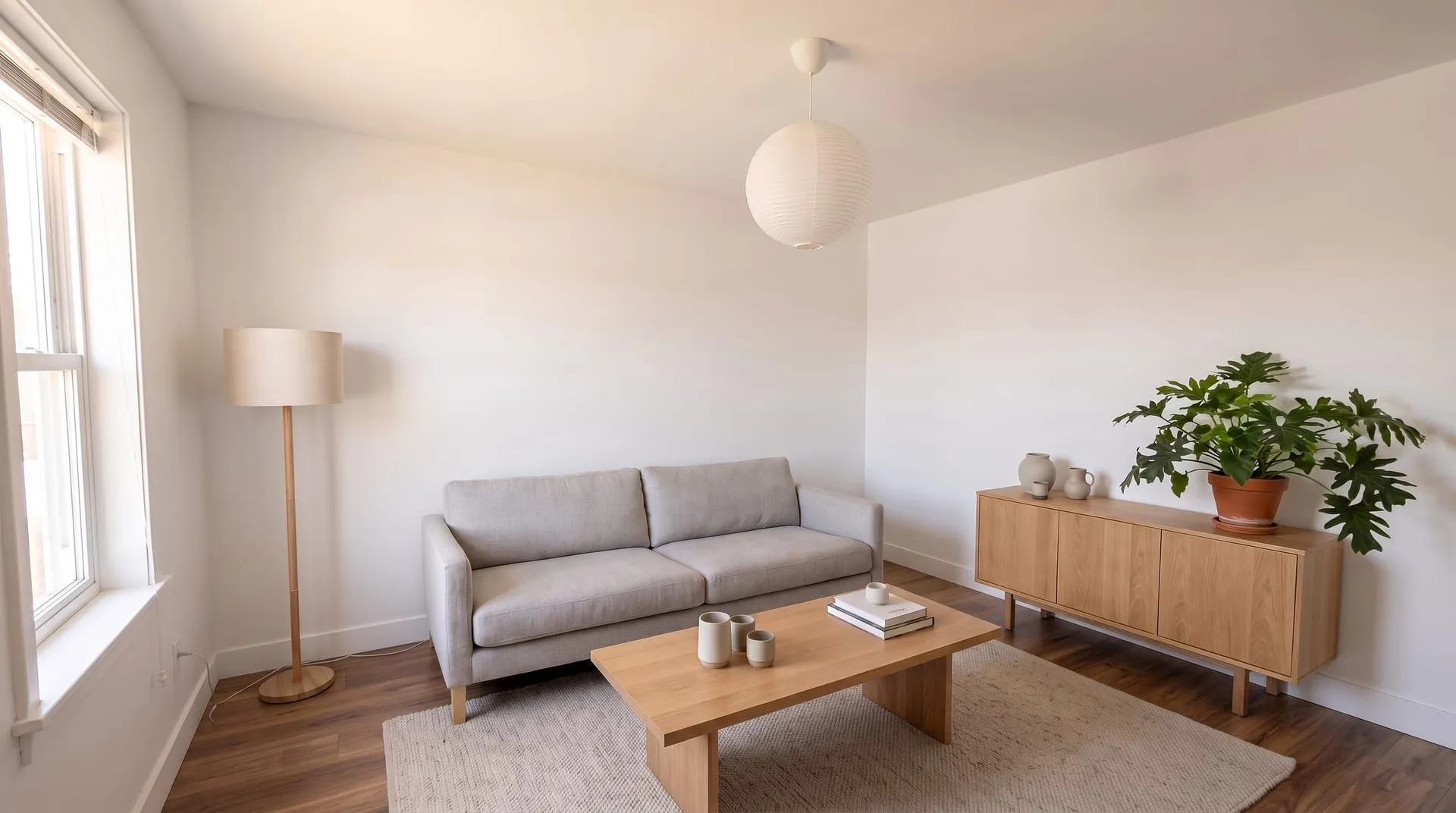 LVP in a walnut look. Generated with remyhomeai’s AI model from one sample photo.
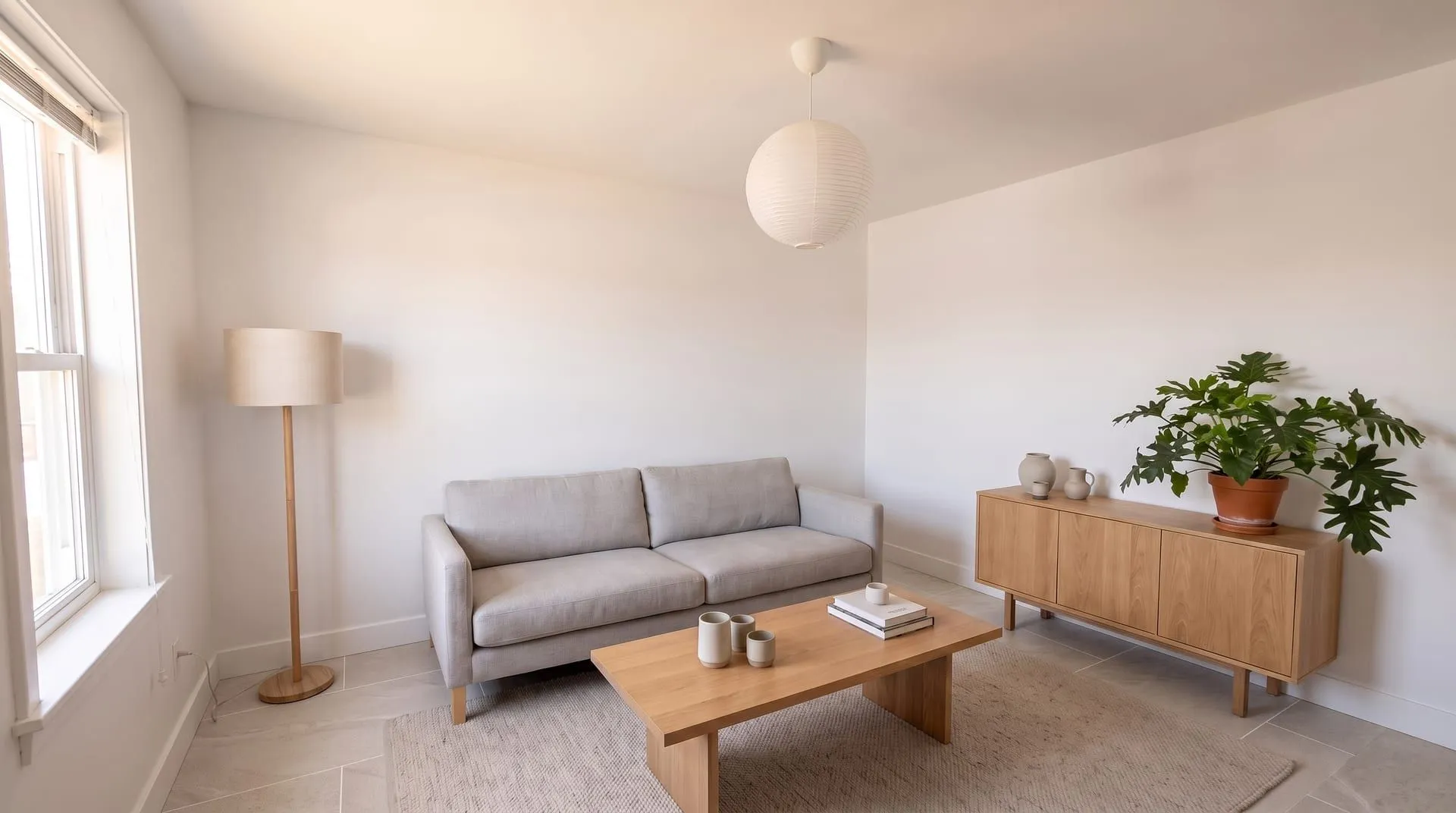 Large-format porcelain tile in a stone look. Generated with remyhomeai’s AI model from one sample photo.
Two things stand out. First, the three plank floors (SPC, laminate, LVP) can all look like wood. From standing height, colour and plank width matter more than the material. Second, parquet and tile change the character of the room more than any plank does. The herringbone pattern adds movement. The tile makes the room cooler and more formal.
Parquet: the floor you can refinish
Parquet is real wood laid in small blocks in a pattern, such as herringbone, chevron or basketweave. It comes as solid wood blocks or as engineered blocks, which have a hardwood top layer on a plywood base. Solid blocks can be sanded and refinished many times. Engineered blocks can be sanded fewer times, depending on how thick the top layer is. For the patterns and how they differ, see herringbone vs chevron.
Where it falls short. Wood is not waterproof. Standing water stains it and makes the blocks cup. Pattern laying takes more labour than straight planks, so it costs more to install. Avoid it in bathrooms and in basements with damp slabs.
SPC: rigid, waterproof, hard-wearing
SPC means stone plastic composite. The core is limestone powder bound with PVC, with a printed vinyl wood or stone layer and a clear wear layer on top. Many SPC planks have a foam or cork pad attached under the core. The rigid core does not dent easily, and it bridges small dips in the subfloor. That makes SPC a strong pick for kitchens, entries and basements.
Where it falls short. It is hard and cooler underfoot. Without a good pad, it can sound hollow when you walk on it. The look is a print, so it cannot be sanded or refinished. When the wear layer wears through, you replace the plank.
Laminate: the best wood look in dry rooms
Laminate has a high-density fibreboard (HDF) core, a photographic wood layer, and a hard melamine top. The top resists scratches better than most vinyl. Good laminate has an embossed texture that follows the printed grain, so it looks and feels close to real wood. It is often the cheapest way to get a convincing wood floor.
Where it falls short. The core is wood fibre. If water gets into the seams, the edges swell, and swollen laminate does not recover. Products sold as water resistant buy you time to wipe a spill, not protection from a leak. Skip it in full bathrooms, laundry rooms and basements.
LVP: the soft, quiet, waterproof plank
Luxury vinyl plank has a flexible vinyl core under a printed layer and a wear layer. It is softer and warmer underfoot than SPC or tile, and it is the quietest of the plank floors. It comes as click planks that float, or as glue-down planks. For a busy home with children or pets, choose a wear layer of about 20 mil. About 12 mil suits rooms with light use.
Where it falls short. A flexible plank shows every bump in the subfloor, so the subfloor must be flat. Heavy furniture can dent it over time. Like SPC, it cannot be refinished.
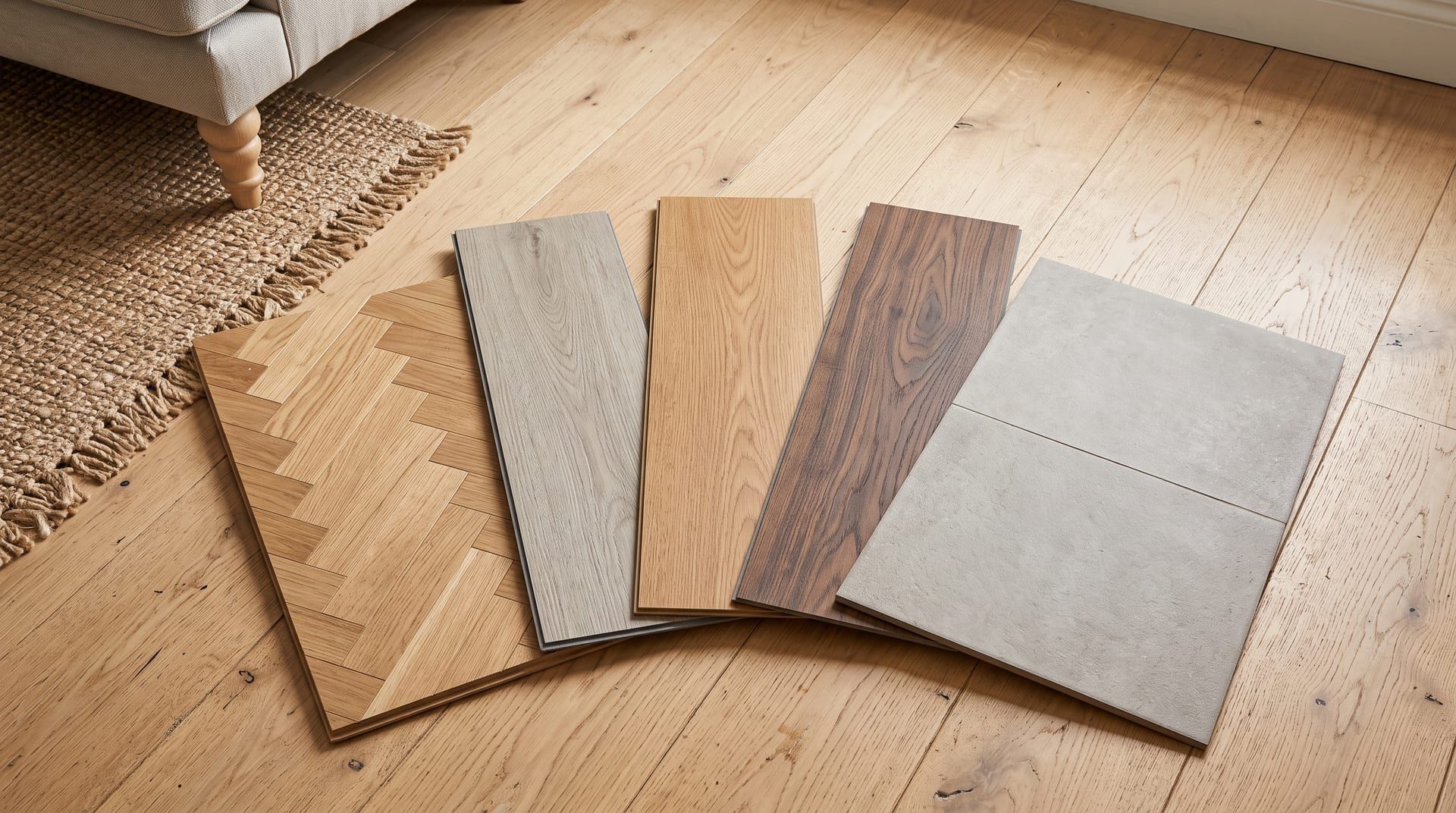
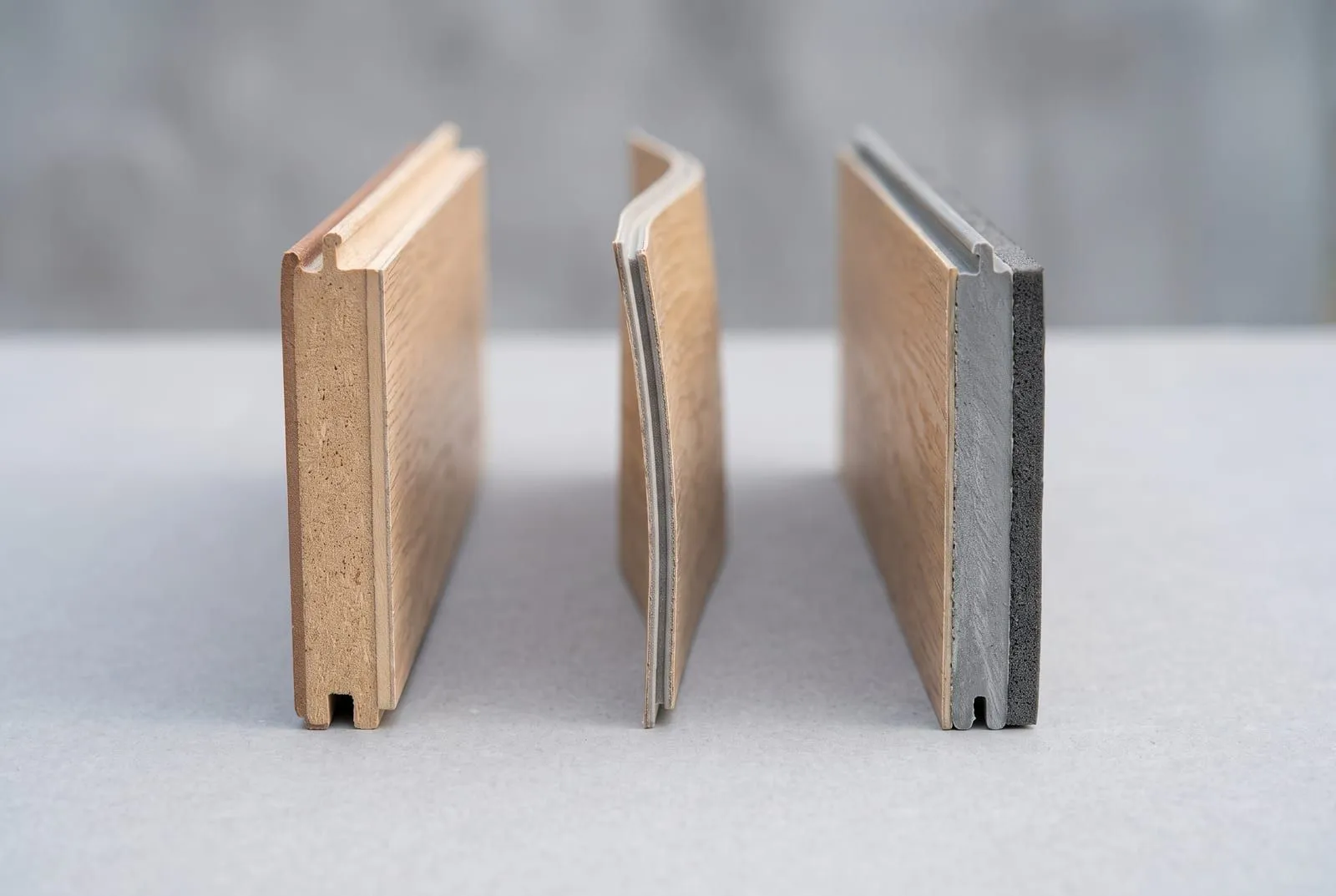 Left to right: laminate (fibreboard core), LVP (flexible vinyl), SPC (rigid stone-plastic core with an attached pad). An illustration for this article.
Porcelain tile: waterproof and almost indestructible
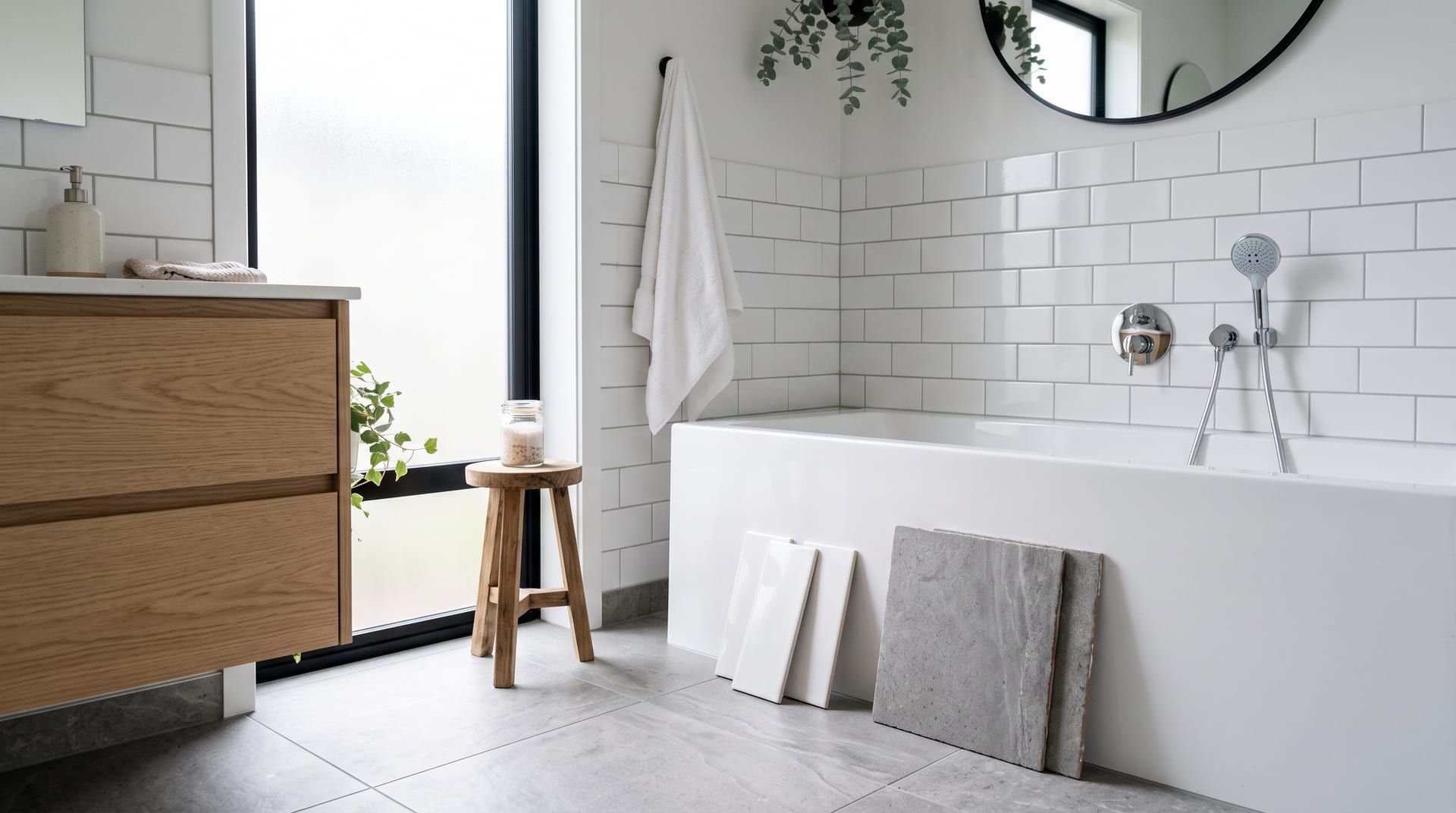
Porcelain is a dense fired clay tile that absorbs almost no water. It suits bathrooms, kitchens, entries and any room with underfloor heating. Large-format tiles have fewer grout lines and make a room look bigger. A well-laid porcelain floor can outlast the rest of the room. For the difference between porcelain and ceramic, see porcelain vs ceramic tile.
Where it falls short. It is hard and cold underfoot, and a dropped glass breaks. Grout needs cleaning. Installation is slow and needs a flat, stiff subfloor, so labour is a large part of the cost. A cracked tile is hard to replace if you have no spare tiles from the same batch.
A sixth option: sheet vinyl
Sheet vinyl is one continuous sheet with no seams, so water has nowhere to get in. It is usually the cheapest floor on this list, and it is soft underfoot. It suits laundry rooms, small bathrooms and rentals.
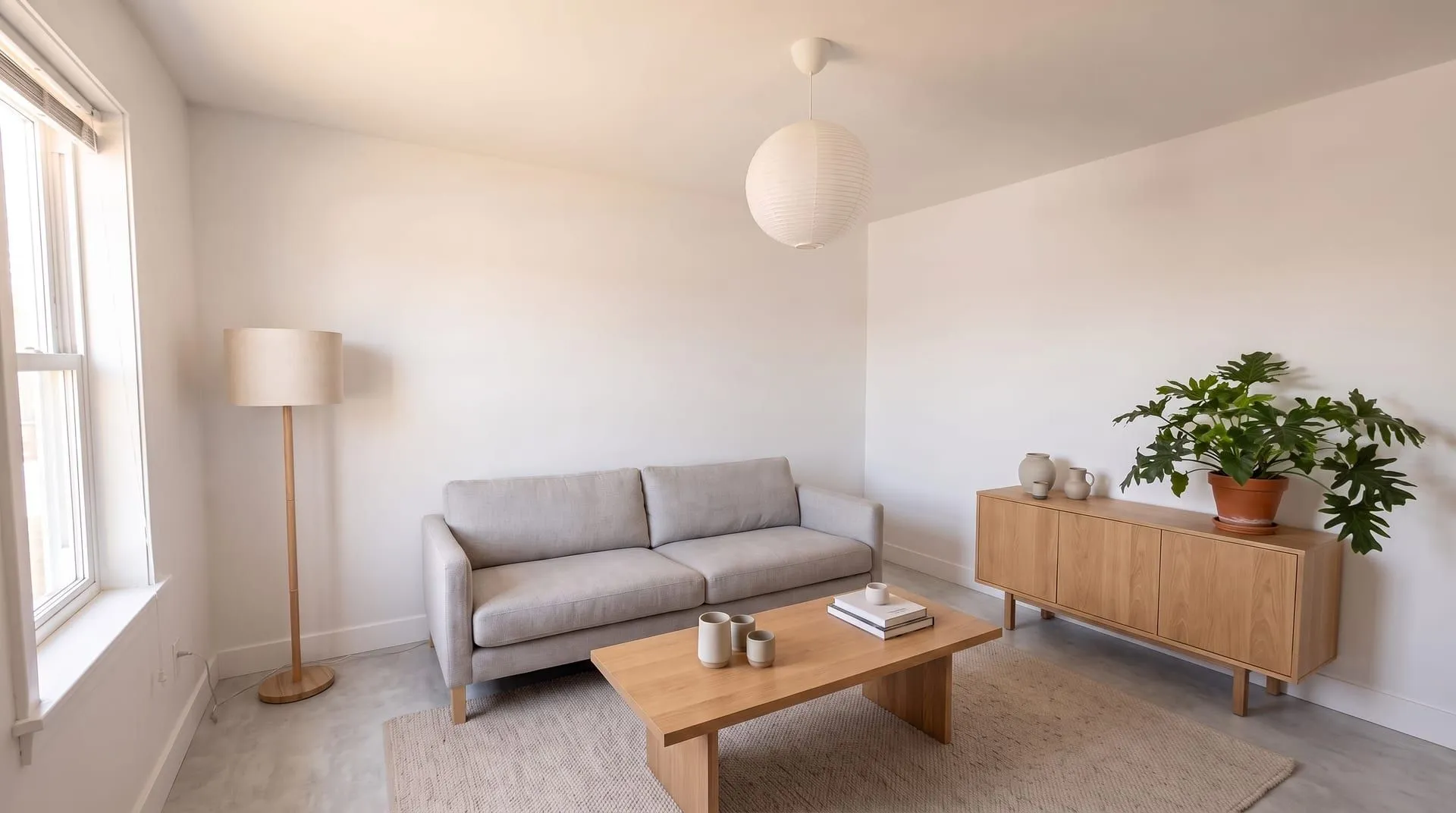 Seamless sheet vinyl in a concrete look. Generated with remyhomeai’s AI model from one sample photo.
Where it falls short. It looks less like real wood or stone than plank or tile, and a tear or burn is hard to repair without a visible patch.
Which floor for which room
| Room | First pick | Also good | Avoid |
|---|---|---|---|
| Living room | Parquet or engineered wood | Laminate, LVP | Nothing on this list fails here |
| Bedroom | LVP or laminate with underlay | Parquet | Tile, unless you have floor heating |
| Kitchen | SPC or porcelain tile | LVP | Standard laminate, solid parquet |
| Bathroom | Porcelain tile | SPC, sheet vinyl | Laminate, parquet |
| Entry and hallway | Porcelain tile | SPC | Soft LVP near a door with grit |
| Basement | SPC | LVP, porcelain tile | Solid wood, laminate |
| Home office | Laminate or SPC with a chair mat | Parquet | Soft LVP under chair casters |
| Rental or tight budget | Sheet vinyl or laminate | LVP | Parquet |
The kitchen and bathroom pages show what a full redesign changes in those rooms. If you keep one floor through the whole ground floor, pick for the wettest room it touches. A single floor without thresholds also makes a small home feel larger.
How to test a floor on your own room
A sample on the shop floor is 30 cm wide. Your room is not. Before you order, look at the floor colour against your walls, your sofa and your daylight.
remyhomeai restyles a photo of your room in one of 7 styles, such as Scandinavian or traditional, with 39 colour palettes. It edits your actual photo, so the walls, windows and camera angle stay in place. It does not let you pick a specific floor product or SKU. What it does is show you a direction: a light oak floor with a minimalist room, or a darker wood with a traditional one. If you have already chosen the floor, tick Keep on the floor so only the rest of the room changes, and check that the furniture and paint you plan work with it. The living room page shows what a redesign changes in that room.
Try it on your own room. See your room in a new style with 3 free designs at signup, no card required.