Porcelain is the better tile for floors, showers and anywhere wet or cold, because it absorbs almost no water and resists wear. Ceramic is the easier and usually cheaper tile for interior walls, because it is softer to cut and lighter to hang. Both are fired clay. The difference is in the clay, the firing temperature and the density that results. This post explains what that means in a real bathroom, where each one fails, and shows the same bathroom tiled both ways.
What is the difference between porcelain and ceramic tile?
Porcelain is a type of ceramic. It is made from a finer, denser clay mix with more feldspar, and it is fired at a higher temperature. The result is a tile that is close to glass inside. Standard ceramic tile uses a coarser clay body, often red or beige, fired at a lower temperature. It stays more porous.
The test that separates them is water absorption. In the US, the tile standard (ANSI A137.1) classes a tile as porcelain only when it absorbs 0.5% of its weight in water or less. Ceramic wall tile often absorbs 10% or more. That one number explains most of the practical differences below.
| Porcelain | Ceramic | |
|---|---|---|
| Water absorption | 0.5% or less | Often 3% to over 10% |
| Density and weight | Dense, heavy | Lighter, more porous |
| Wear resistance | High, good for busy floors | Lower, varies by glaze |
| Frost resistance | Usually yes, if rated | Usually no |
| Cutting and drilling | Hard, needs a wet saw and diamond bits | Easy, a manual cutter works |
| Chips | Through-body hides them | Shows the clay body under the glaze |
| Typical cost | Higher | Lower |
| Best place | Floors, showers, outdoors, walls | Interior walls, backsplashes, light-use floors |
How do they look in the same bathroom?
A swatch in a shop tells you little. The renders below take one bathroom and change only the tile. The bath, the screen, the vanity and the light stay the same, so you compare the tile and nothing else.
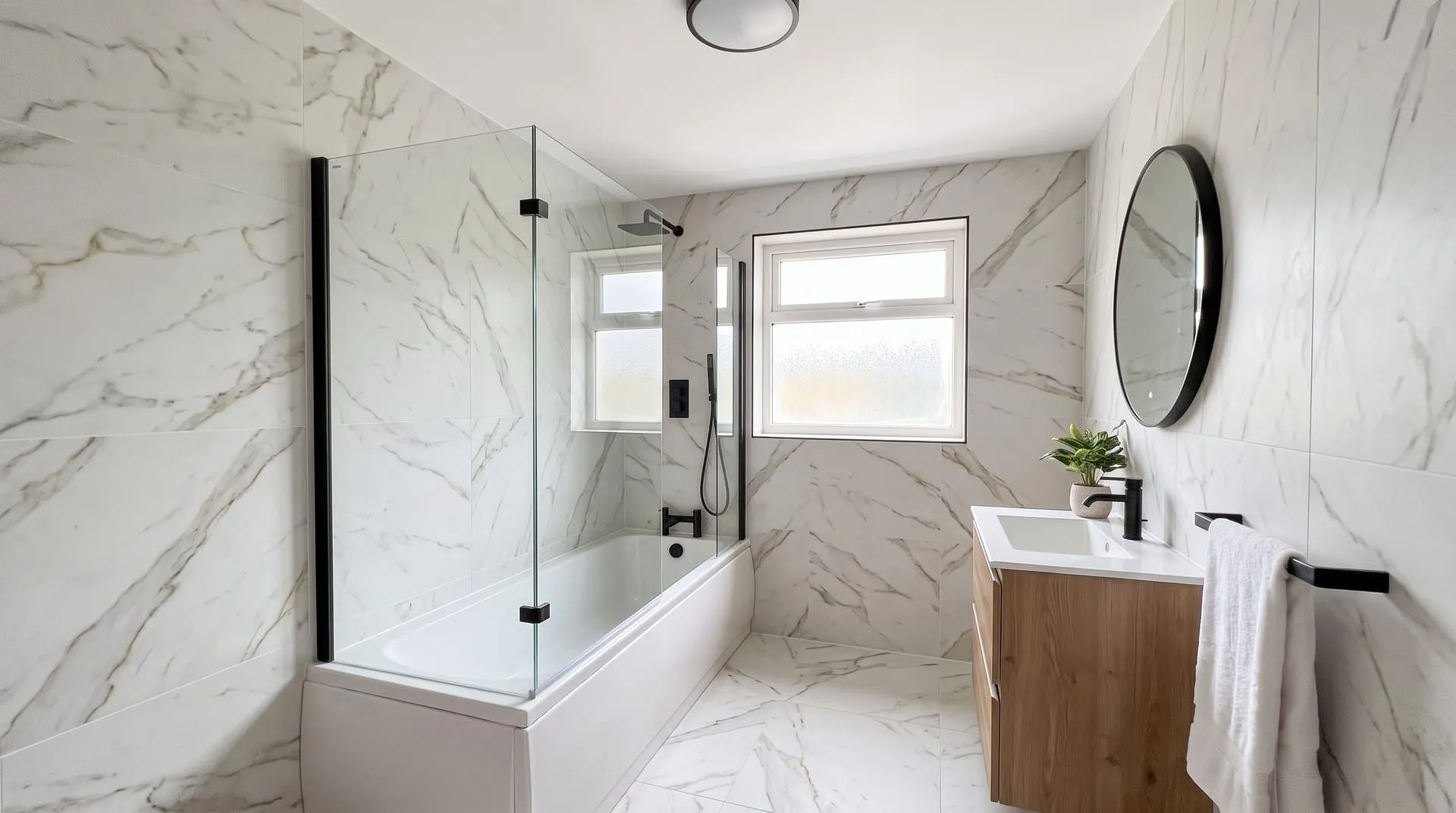 Large-format marble-look porcelain on walls and floor. Generated with remyhomeai’s AI model from one sample photo.
Large-format porcelain is what most new bathrooms use. The tiles are big (60 x 120 cm here), rectified so the edges are square, and laid with very thin grout lines. The room reads as one surface. Porcelain can carry a printed stone or marble look this convincingly because the print sits on a dense body that does not move or stain.
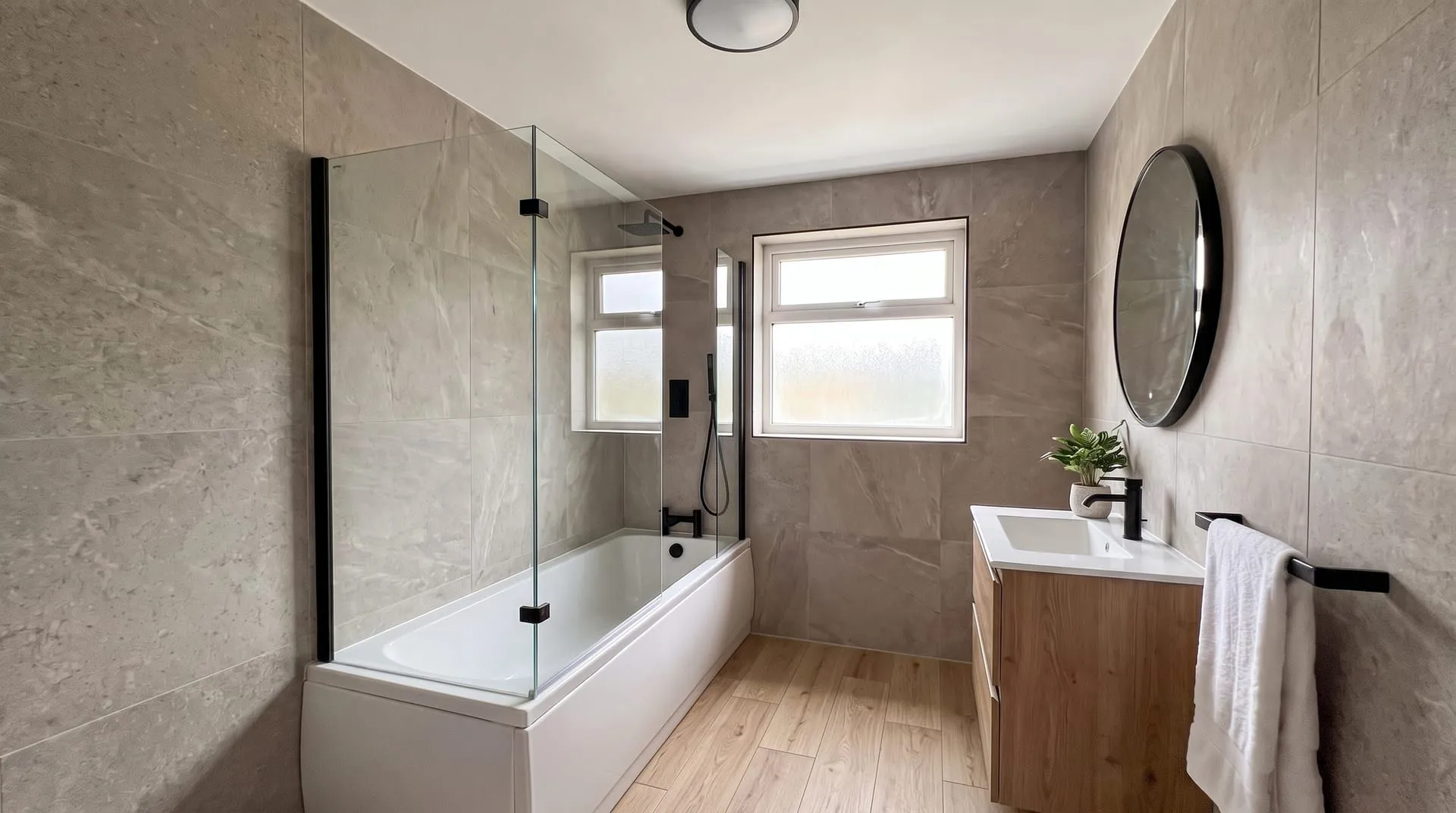 Wood-look porcelain planks on the floor. Generated with remyhomeai’s AI model from one sample photo.
Wood-look porcelain gives you the warmth of a timber floor in a room where real wood would swell. It is one of the few wood looks that can go into a shower area or a wet room.
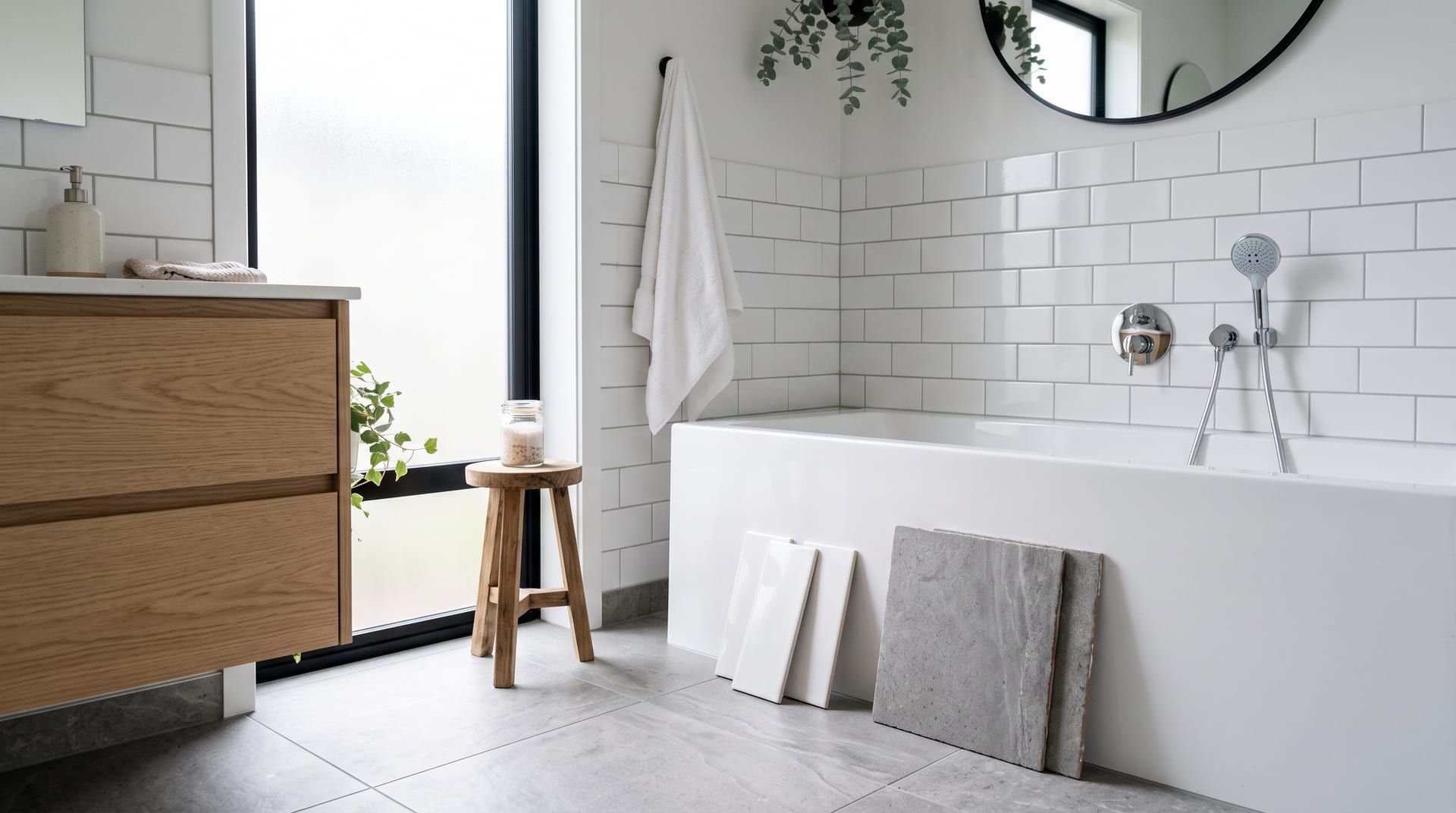
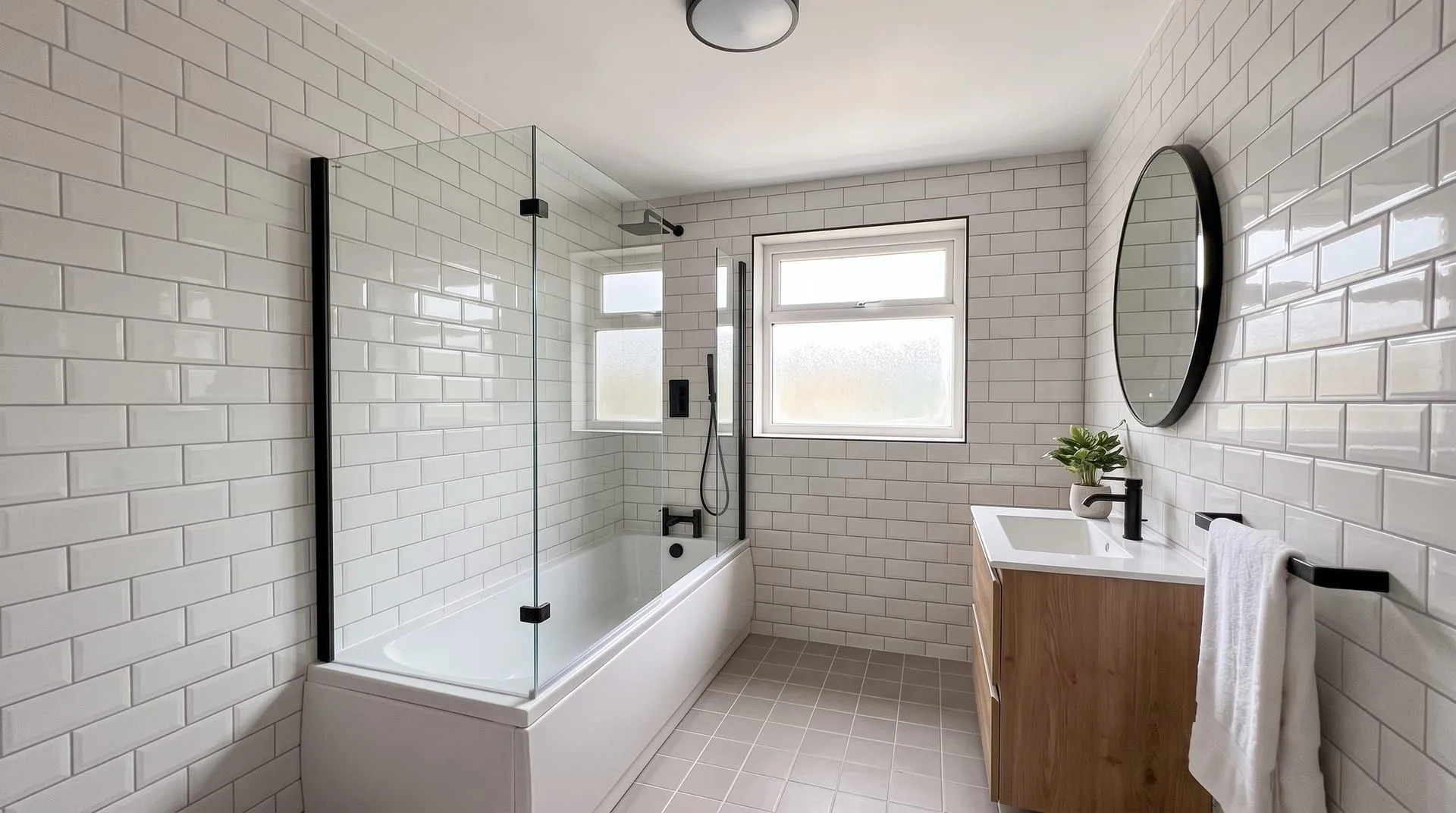 Glossy ceramic subway tile on the walls with a small-format ceramic floor. Generated with remyhomeai’s AI model from one sample photo.
Glossy white subway tile is the classic ceramic wall tile. It is light, easy to cut around pipes and windows, and bright. Small tiles mean more grout, which gives a bathroom floor extra grip but also more lines to clean.
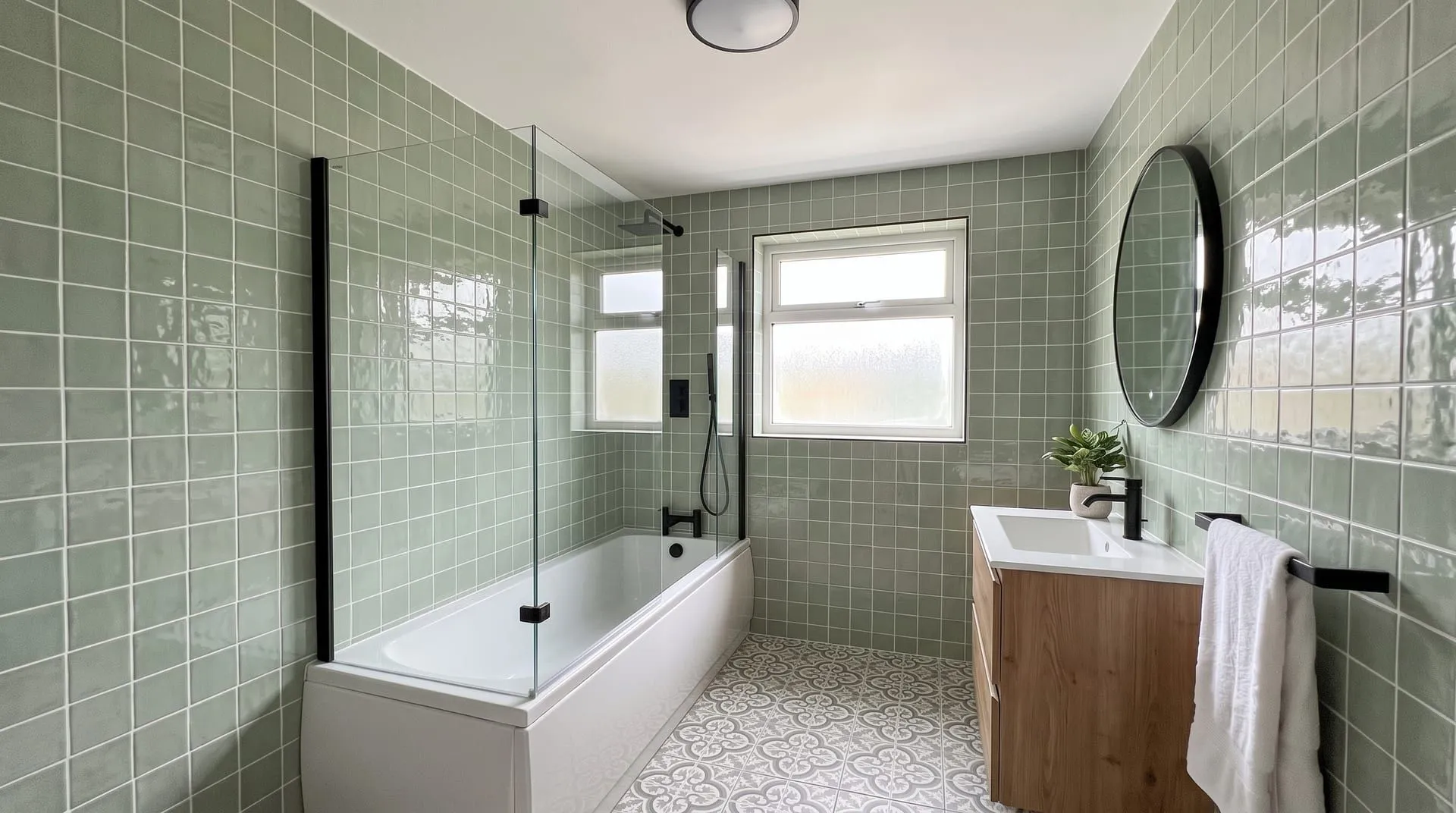 Handmade-look green ceramic walls with a patterned floor. Generated with remyhomeai’s AI model from one sample photo.
Ceramic is where you find the most colour and glaze effects. Uneven, glossy glazes like the green wall tile here are hard to make in porcelain. For the floor, check that a patterned tile is rated for floors. Many patterned tiles come in a porcelain body for that reason.
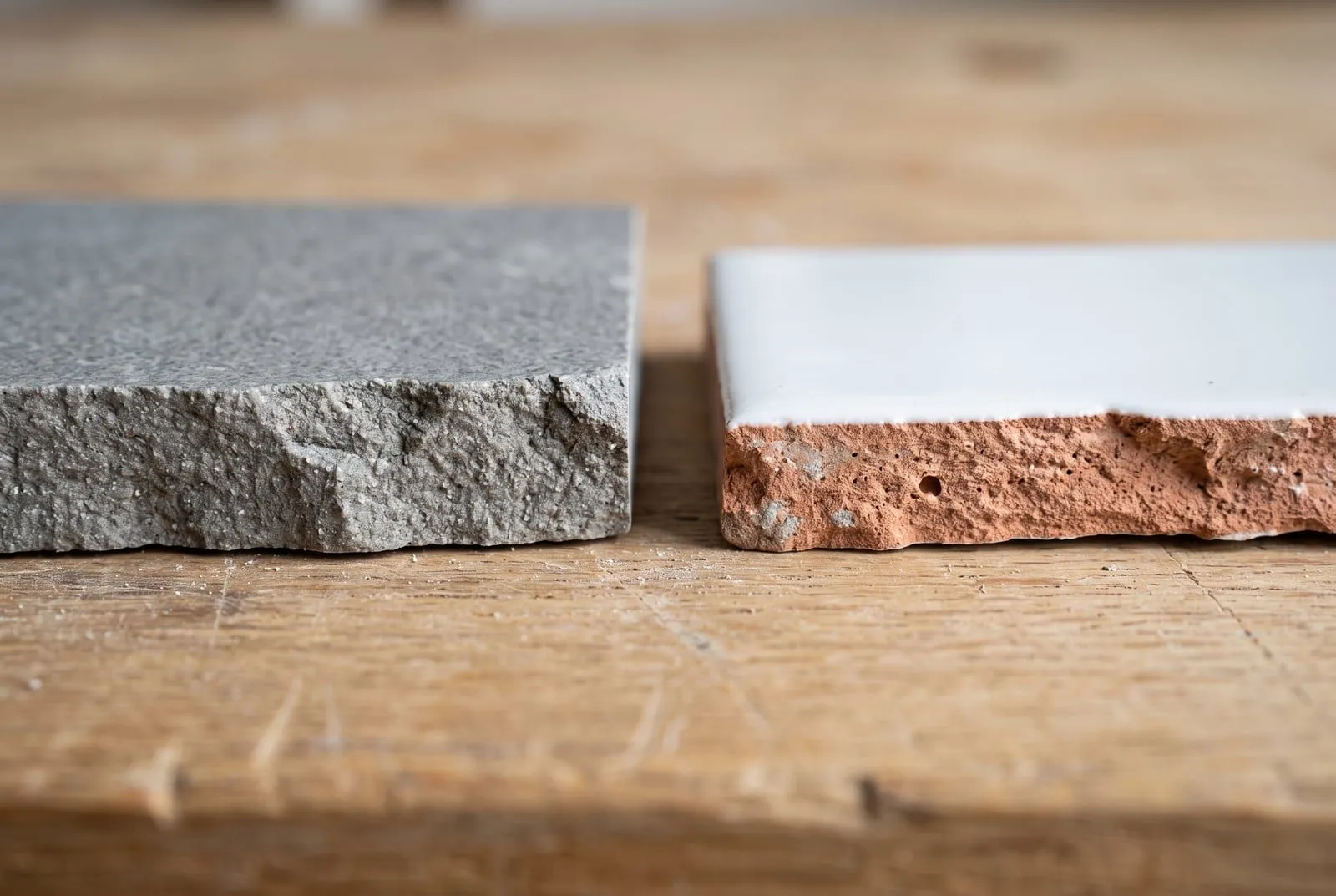
Why does through-body porcelain hide chips?
Most tiles have a glaze on top: a thin layer of coloured glass that carries the colour and pattern. Under it is the body. When a glazed tile chips, you see the body.
 An illustration for this article.
The left piece is through-body (also called full-body) porcelain. The colour runs from top to bottom, so a chip on a busy floor is hard to see. The right piece is glazed ceramic. A thin white glaze sits on a softer red clay body, so a chip shows as a red spot. Many porcelain tiles are glazed porcelain, not through-body. Their body is still dense, but a chip can show a paler colour. If you have heavy furniture, pets or a hallway that sees boots, ask for through-body or colour-body porcelain.
Where should each tile go?
Use water, wear and how much cutting the job needs to decide.
 An illustration for this article.
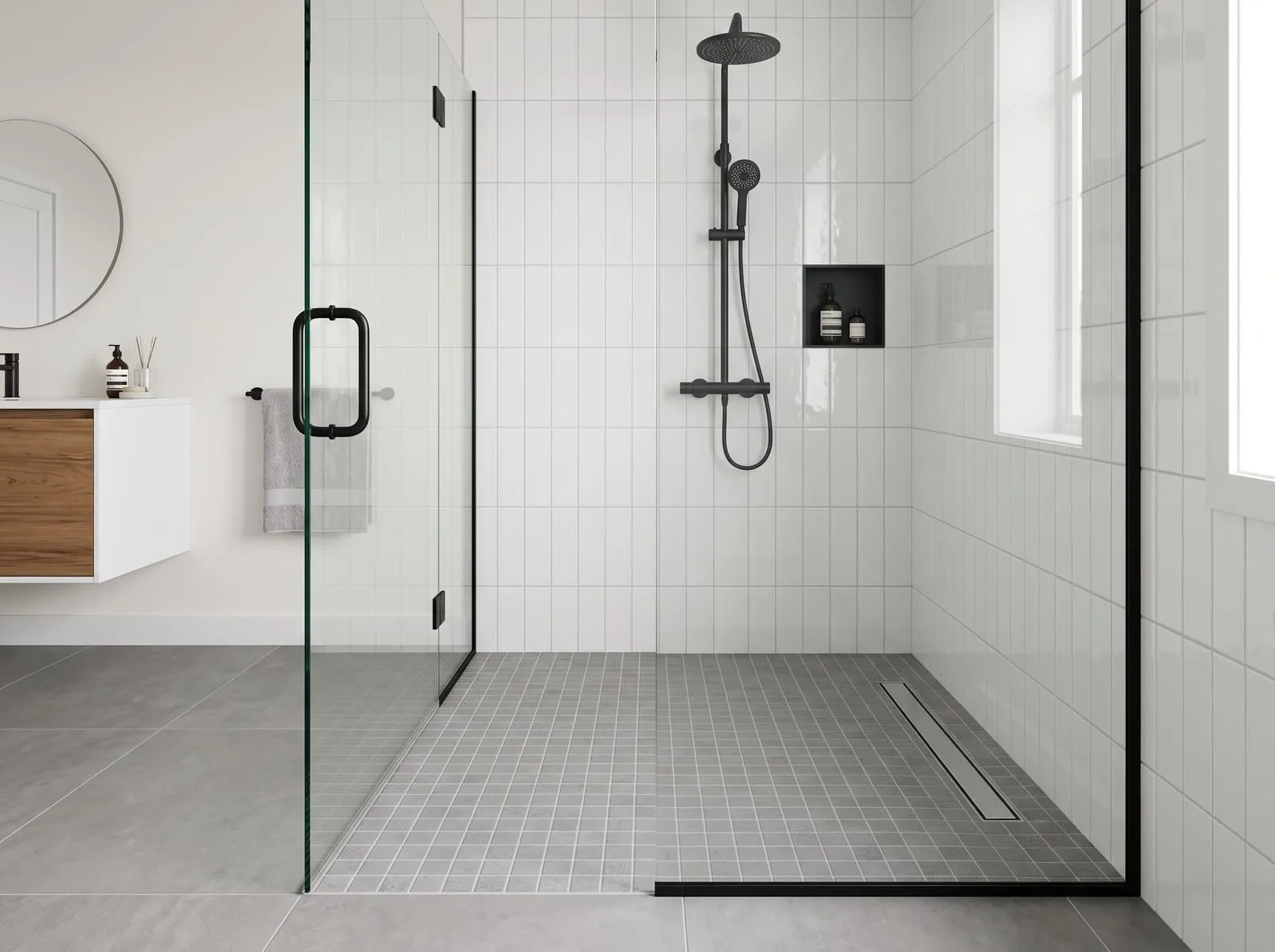
- Bathroom and shower floors: porcelain. Choose a matte or textured finish with a good slip rating. Small mosaics on a shower floor add grip because of the grout lines and follow the slope to the drain.
- Shower walls: either. Porcelain resists water better, but a good ceramic wall tile over a waterproofed wall works. The waterproofing behind the tile, not the tile, keeps water out of the wall.
- Kitchen floors: porcelain. It takes dropped pans, grit and spills. See the kitchen design ideas for how floor colour changes the room.
- Kitchen backsplashes: either. Ceramic is the common choice because it is easy to cut around sockets.
- Hallways and entrances: porcelain, through-body if possible.
- Outdoors and unheated rooms: porcelain rated for frost. Ceramic can absorb water, freeze and crack.
- Feature walls and fireplace surrounds: either. Ceramic gives more glaze and colour options.
Where porcelain falls short
Porcelain is not the right answer for every wall.
- It is hard to cut. Porcelain needs a wet saw or a quality scoring cutter, and holes for pipes need diamond core bits. A first-time DIYer will break more tiles than with ceramic.
- It is heavy. Large porcelain slabs on a wall need a strong substrate and often two people to set each tile.
- Large formats need a flat floor. A big rigid tile on an uneven floor rocks, cracks or shows lippage (one edge higher than the next). Floor prep adds time and cost.
- It costs more. Material, mortar and labour all cost more than for ceramic.
- Polished porcelain is slippery when wet. A high-gloss porcelain floor in a bathroom is a fall risk. Use matte or textured finishes for wet floors.
Where ceramic falls short
- It absorbs water. Most ceramic is not for outdoor use or for floors that freeze.
- It is softer. Many glossy ceramic tiles are rated for walls only. On a floor, the glaze wears and scratches in walkways.
- Chips show. A chip on glazed ceramic exposes the clay body in a different colour.
- Fewer large formats. Ceramic is usually made in smaller sizes, so there are more grout lines to clean.
How do you choose for your room?
Start with the room, not the tile.
- Mark which surfaces get wet, walked on or frozen. Those get porcelain.
- Choose the look for the dry walls. Here ceramic opens up more colours, glazes and handmade effects.
- Check the specs on the box: water absorption, a floor or wall rating, and slip resistance for floors.
- Decide who installs it. If you tile yourself, ceramic on walls is the easier first project.
A good default for a family bathroom is porcelain on the floor and in the shower, and either material on the dry walls. Pick the style first, so the tile supports it. A modern style suits large-format porcelain with thin grout lines. A traditional style suits ceramic subway tile or a patterned floor.
Preview the look before you order
Tile is hard to imagine from a sample board. remyhomeai restyles a photo of your own furnished room in one of 7 styles and 39 palettes, so you can see a direction, such as warm and minimal or bold and patterned, before you buy tile. Use the keep controls to lock the floor, doors, windows or ceiling, so only the rest changes. It does not let you choose a specific tile product or SKU, and it does not measure the room. Use it to decide on a look, then take the tile spec to a showroom. For a step-by-step plan, see how to redecorate a room, or browse bathroom design ideas.
Try it on your own room. See your room in a new style with 3 free designs at signup, no card required.