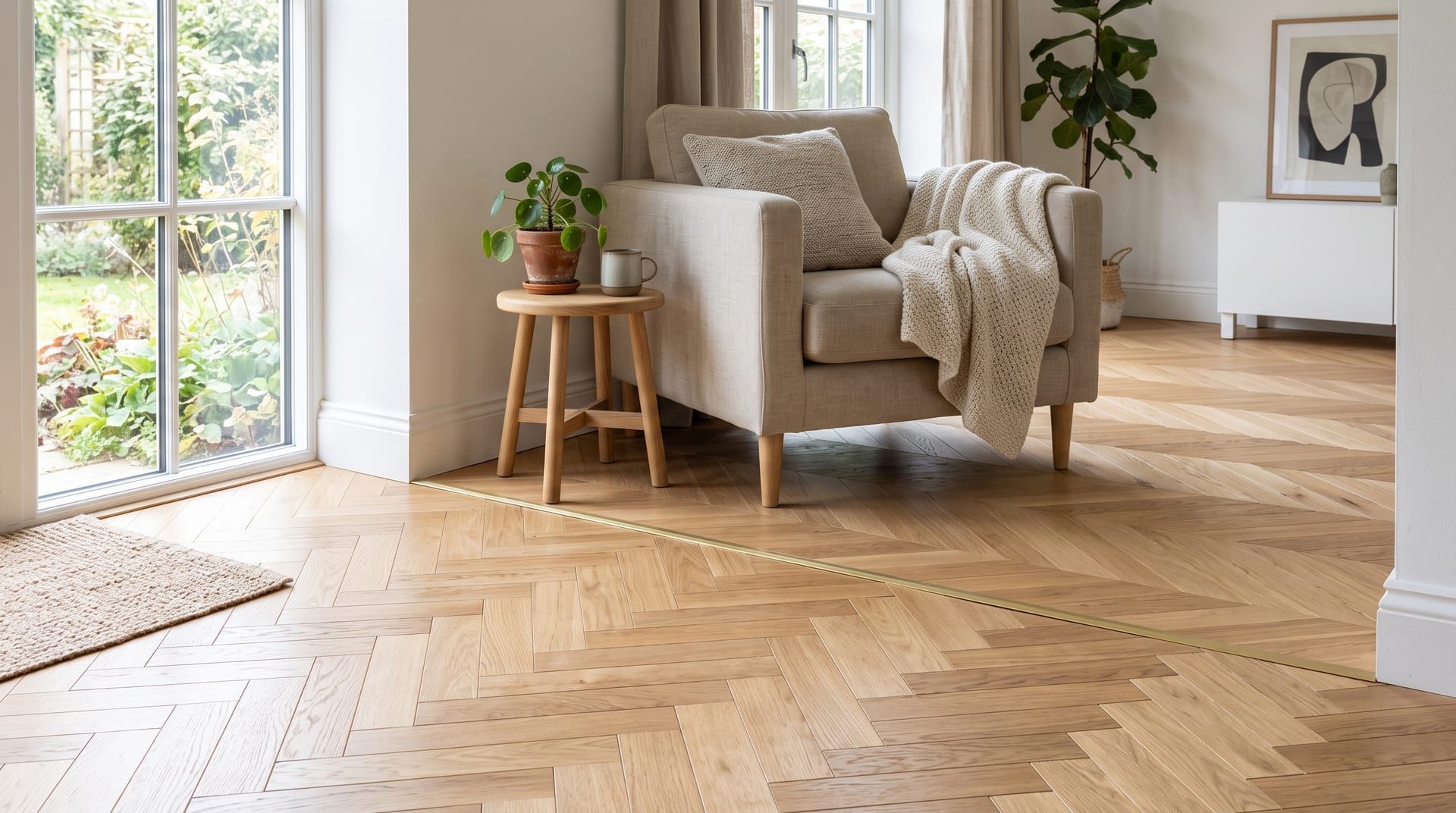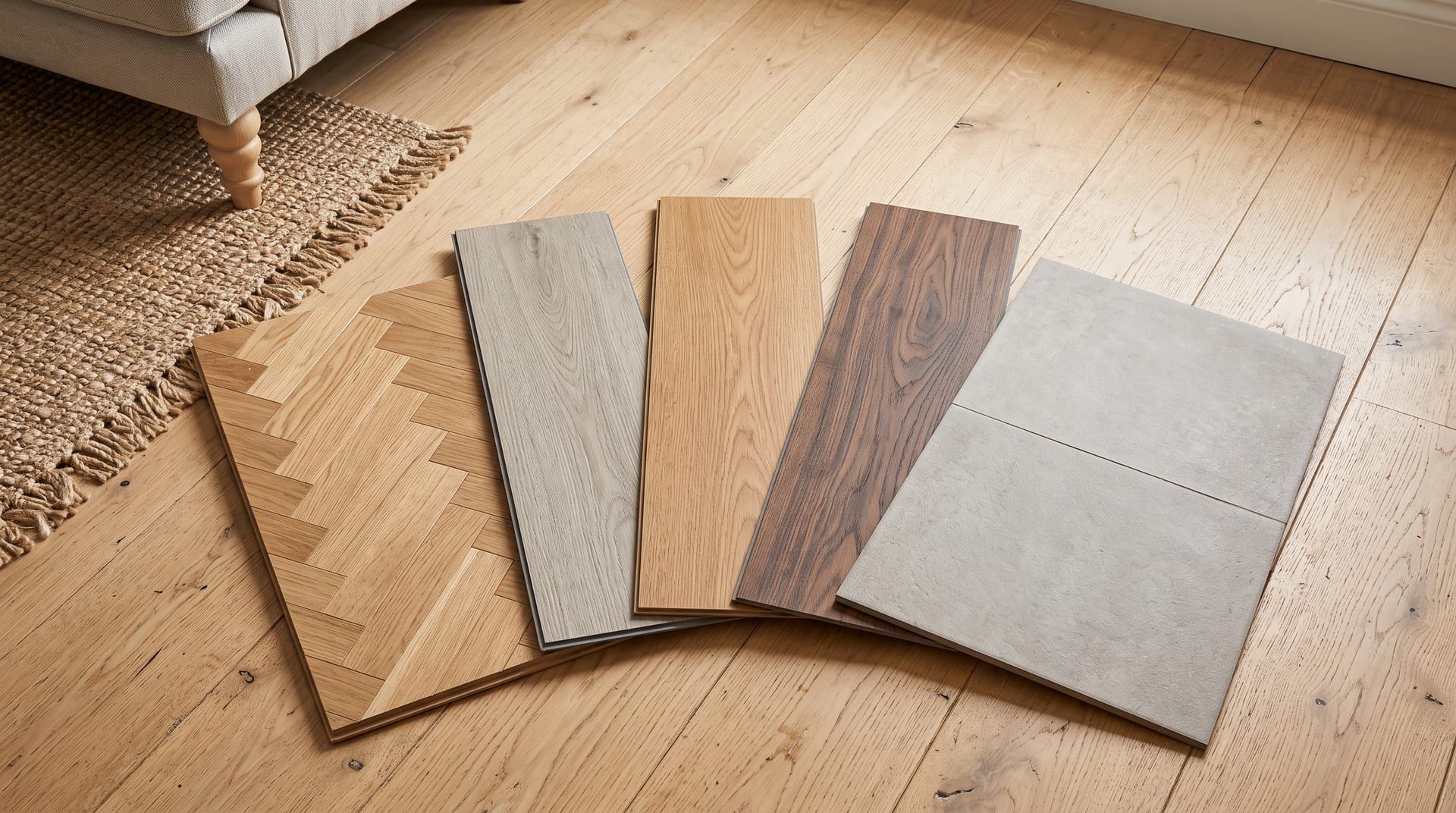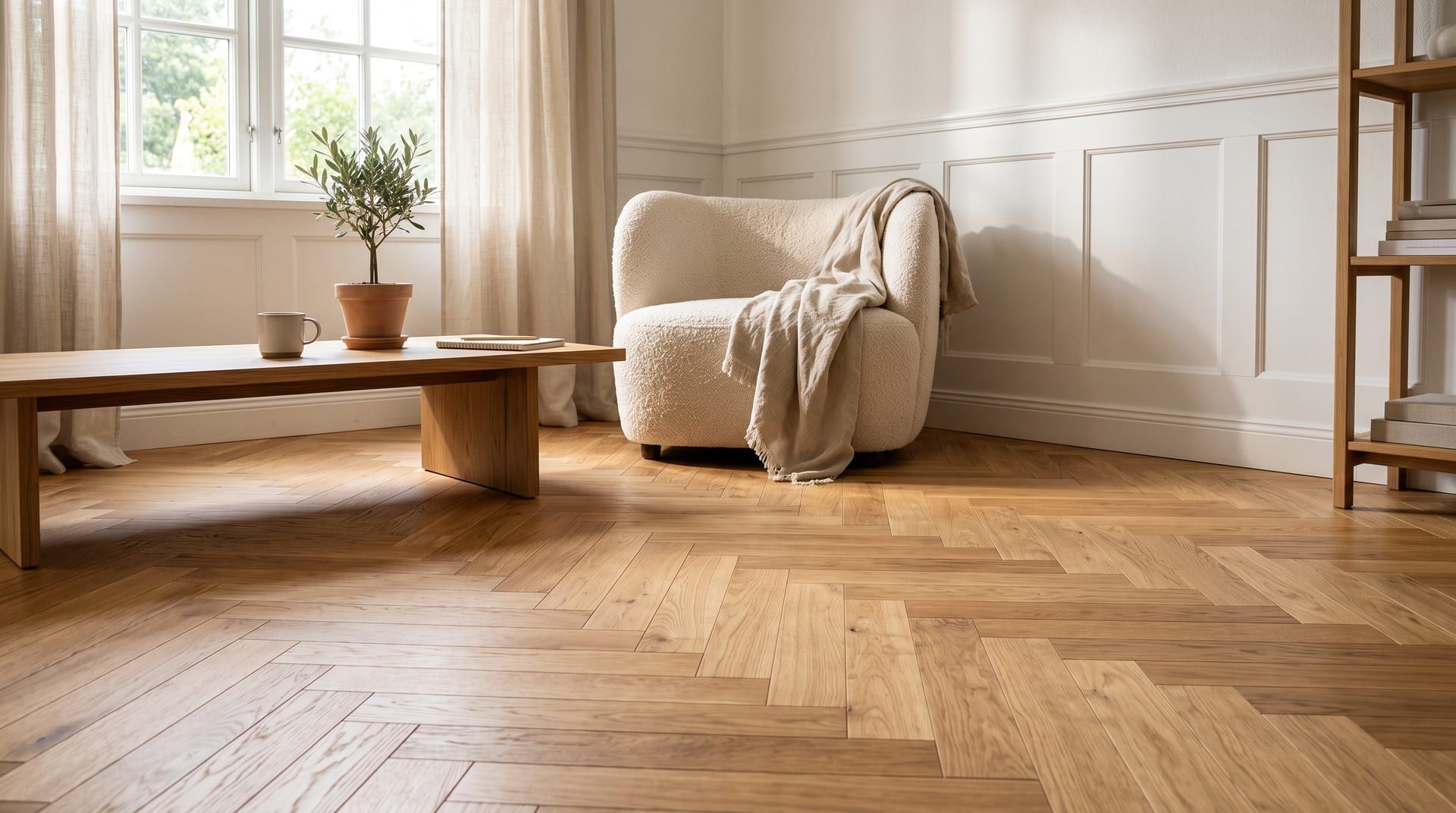
Parquet flooring is real wood laid in small blocks in a repeating pattern. The four classic patterns are herringbone, chevron, basketweave and Versailles. Oak is the usual wood. Parquet comes as solid blocks or as engineered blocks with a hardwood top layer. It works best in living rooms, dining rooms, bedrooms and hallways. It works worst where water stands on the floor.
This guide covers the patterns, solid vs engineered construction, the best woods and stains, the cost, and where parquet falls short. It shows one dining room in two oak stains.
What are the main parquet patterns?
The pattern sets the character of the room more than the wood does. Here are the four you see most often, from above.
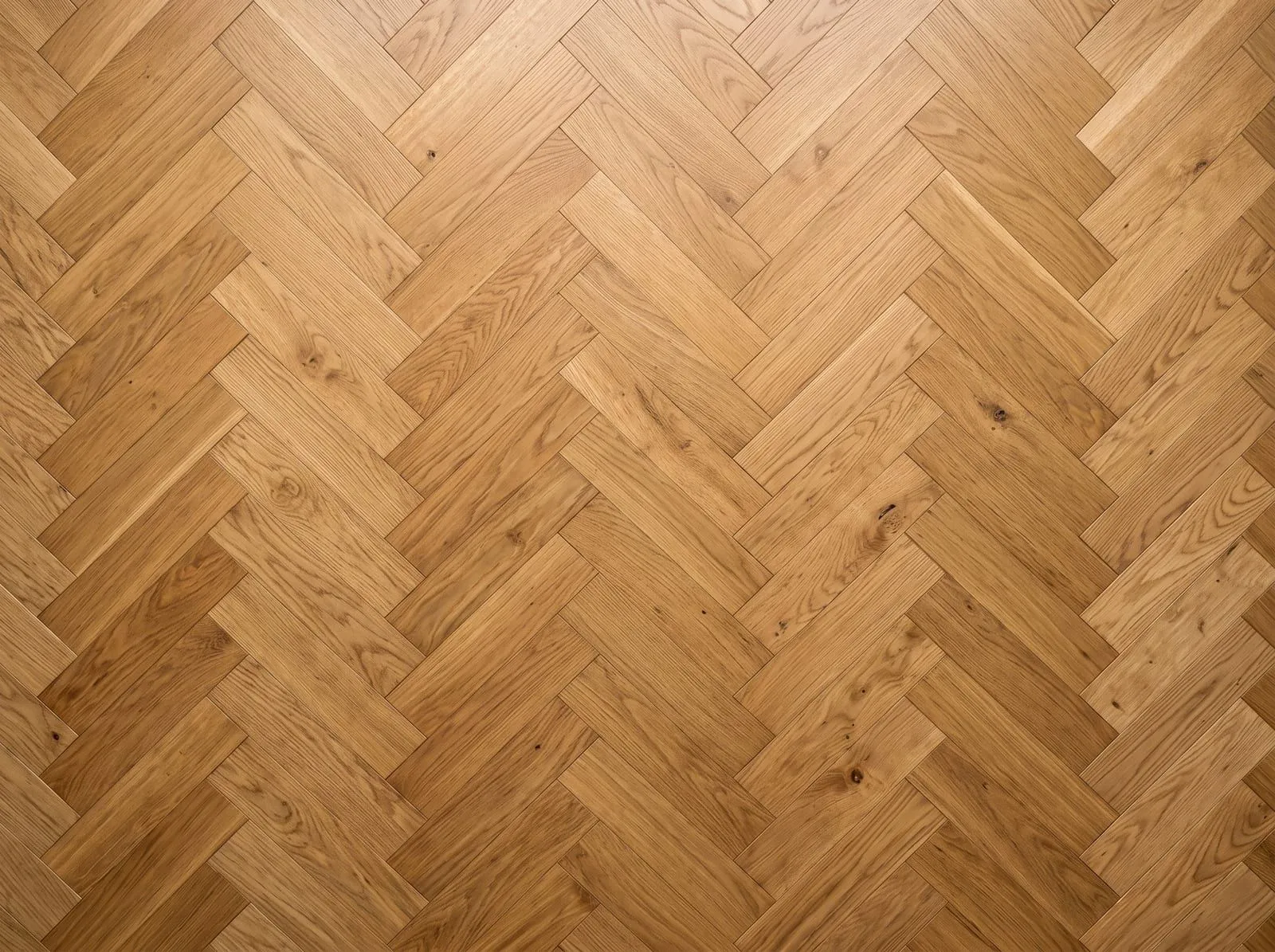 Herringbone. An illustration for this article.
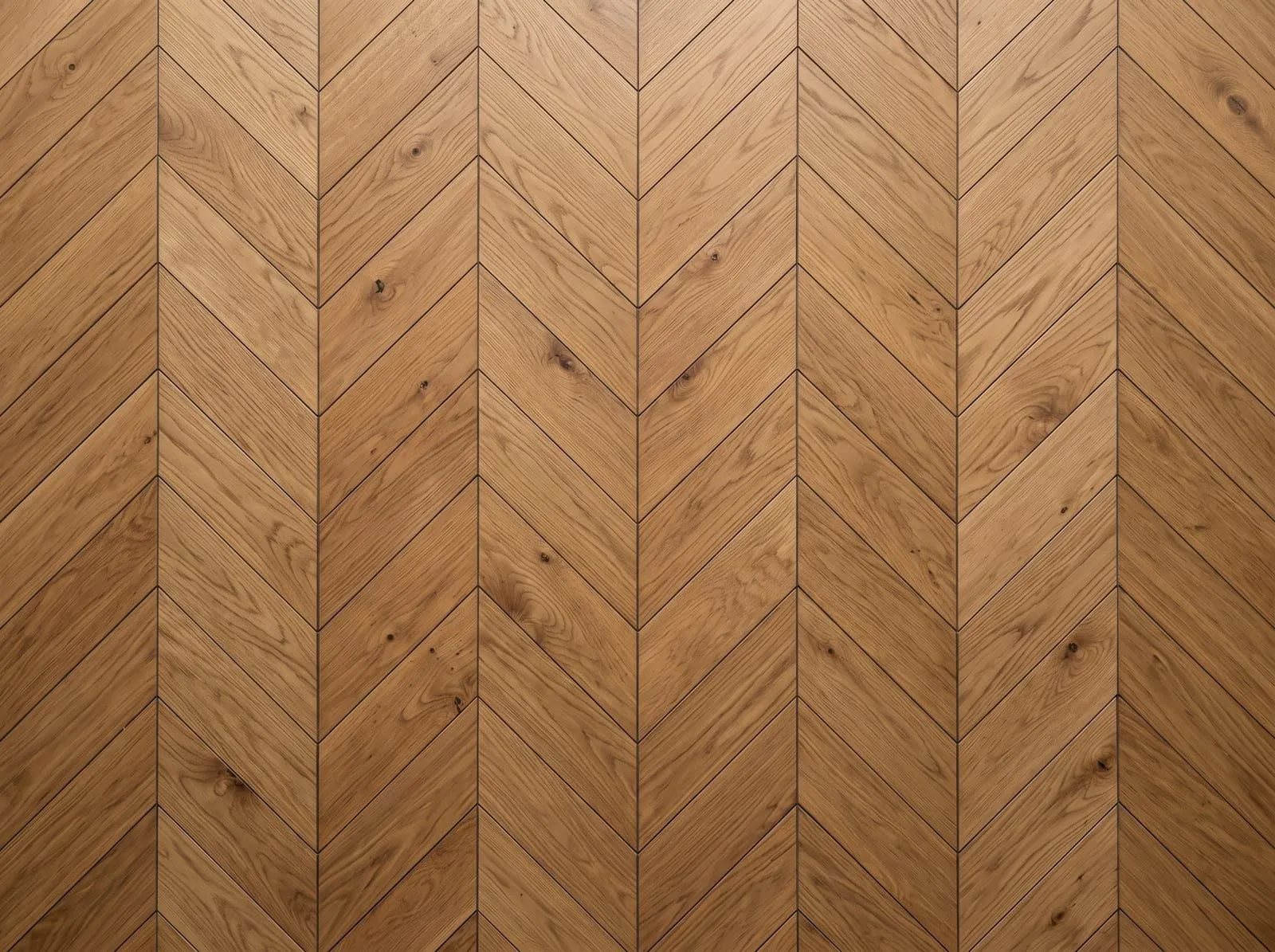 Chevron. An illustration for this article.
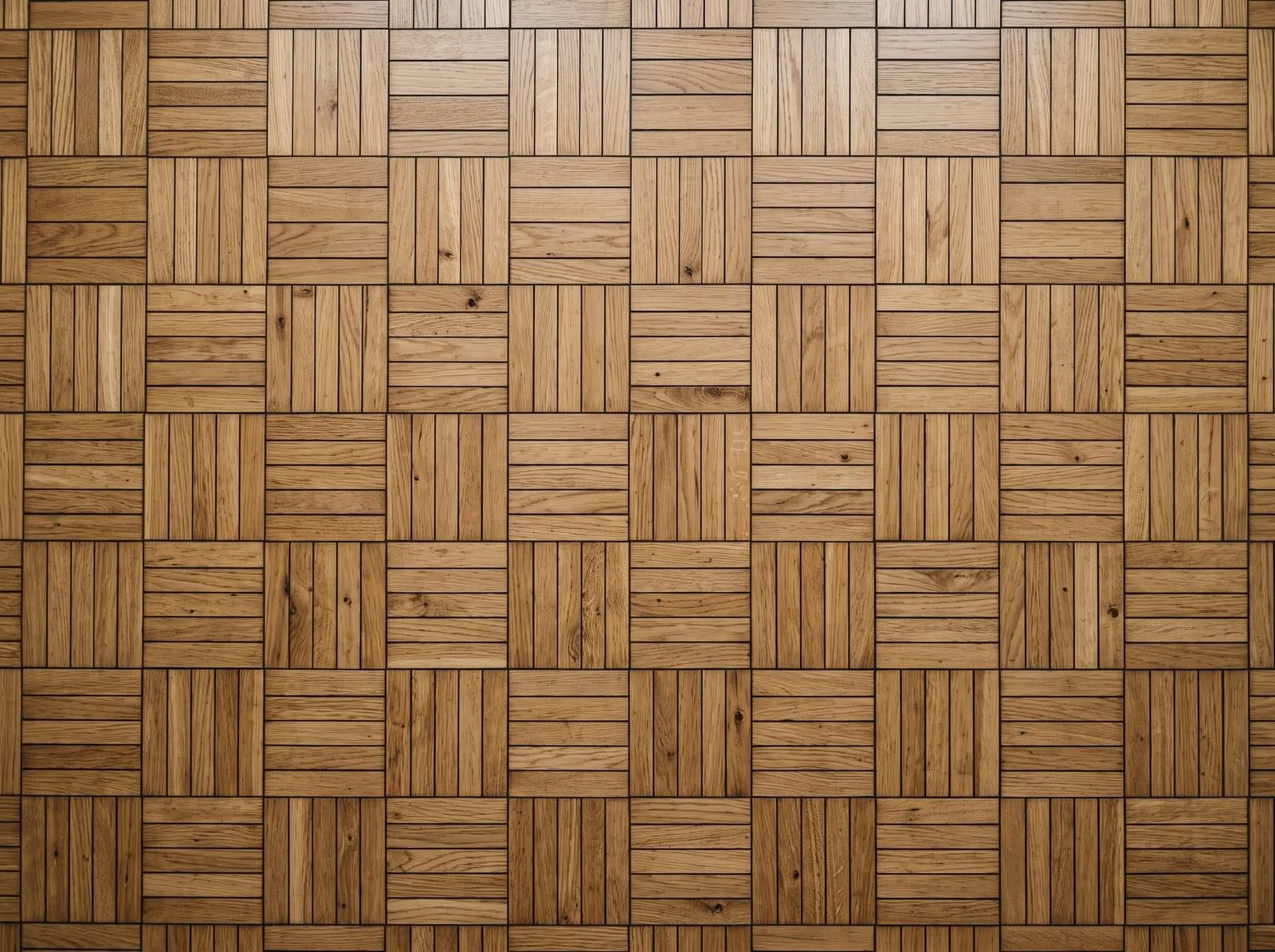 Basketweave. An illustration for this article.
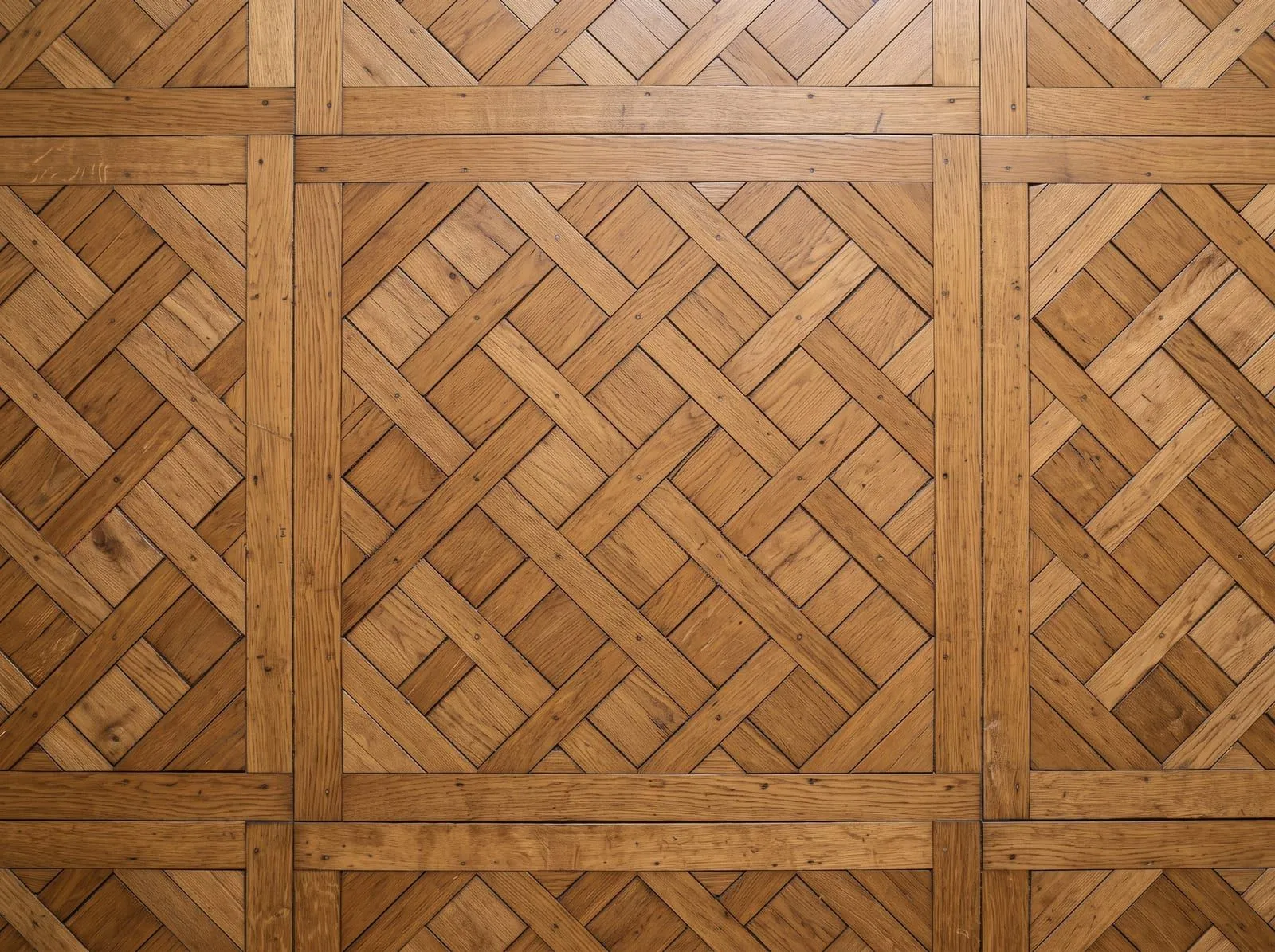 Versailles. An illustration for this article.
| Pattern | What it looks like | Feel | Best room size |
|---|---|---|---|
| Herringbone | Rectangular blocks in a staggered zigzag | Textured, classic | Any. Use larger blocks in small rooms. |
| Chevron | Angled blocks meeting in a clean V | Calm, formal, directional | Any room with a clear long axis |
| Basketweave | Square groups of slats that alternate direction | Quiet, old-fashioned | Small to medium rooms |
| Versailles | Large panels with a diagonal lattice in a border | Very formal | Large rooms, high ceilings |
Herringbone and chevron are the two most popular. They look alike from a distance, but the cut of the blocks differs. The full comparison, with both patterns shown in one living room, is in herringbone vs chevron. Versailles was first laid at the Palace of Versailles in the late 1600s. It is the most expensive pattern to make and to lay, and it needs space to read as a pattern instead of noise.
Solid or engineered parquet?
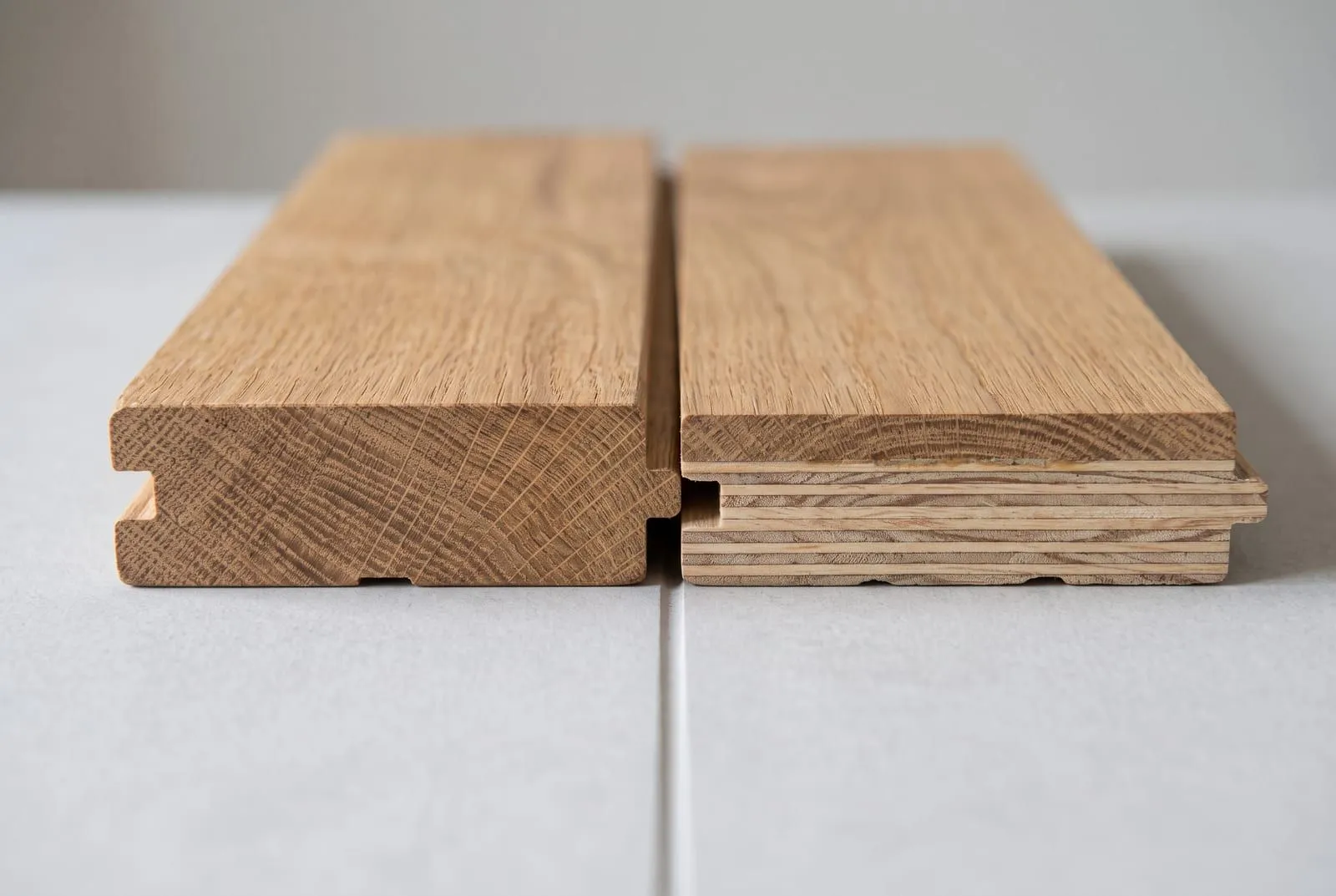 Left: solid oak. Right: engineered, with an oak top layer on cross-laid plywood. An illustration for this article.
Solid parquet is one piece of hardwood all the way through. Engineered parquet has a hardwood top layer glued on a plywood base. From above, they look the same.
| Solid parquet | Engineered parquet | |
|---|---|---|
| Construction | Hardwood all the way through | Hardwood top layer on plywood |
| Sanding | Many times over its life | Fewer times, set by the top layer |
| Stability | Moves more with humidity | Moves less, because the plywood layers cross |
| Underfloor heating | Often not recommended | Usually approved. Check the maker’s limits. |
| Installation | Glued or nailed to a stiff subfloor | Glued, or floating click systems |
| Best for | A floor you plan to keep and refinish for decades | Concrete slabs, floor heating, flats |
When not to choose solid. Skip it over underfloor heating, on a damp slab, or in a flat where the building rules ask for a floating floor with acoustic underlay. When not to choose engineered. Skip a thin top layer if you want to sand the floor more than once or twice. Ask for the top layer thickness, not only the total thickness.
Which wood and which stain?
Oak is the default. It is hard enough for family life, it is stable, and it takes stain evenly. Walnut is darker and richer, but it is softer than oak and dents more easily. Maple is hard and pale, but it often takes dark stains unevenly. Ash is pale with a strong grain, close to oak in strength. Teak and other oily tropical woods resist moisture better, but they cost more and the source matters.
The stain changes the room more than the species. Below is one dining room with the same herringbone parquet in two oak stains.
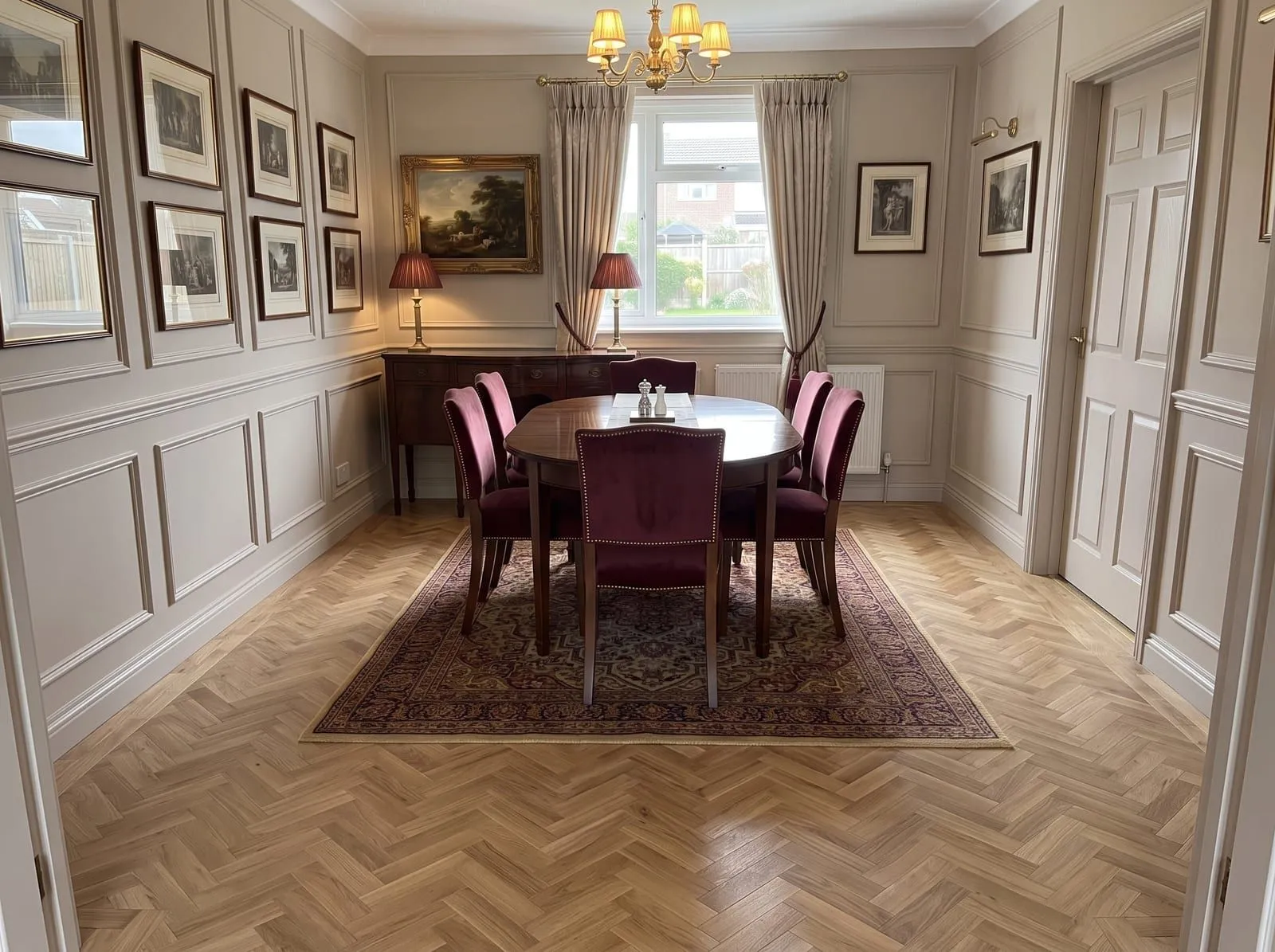 Natural oak herringbone. Generated with remyhomeai’s AI model from one sample photo.
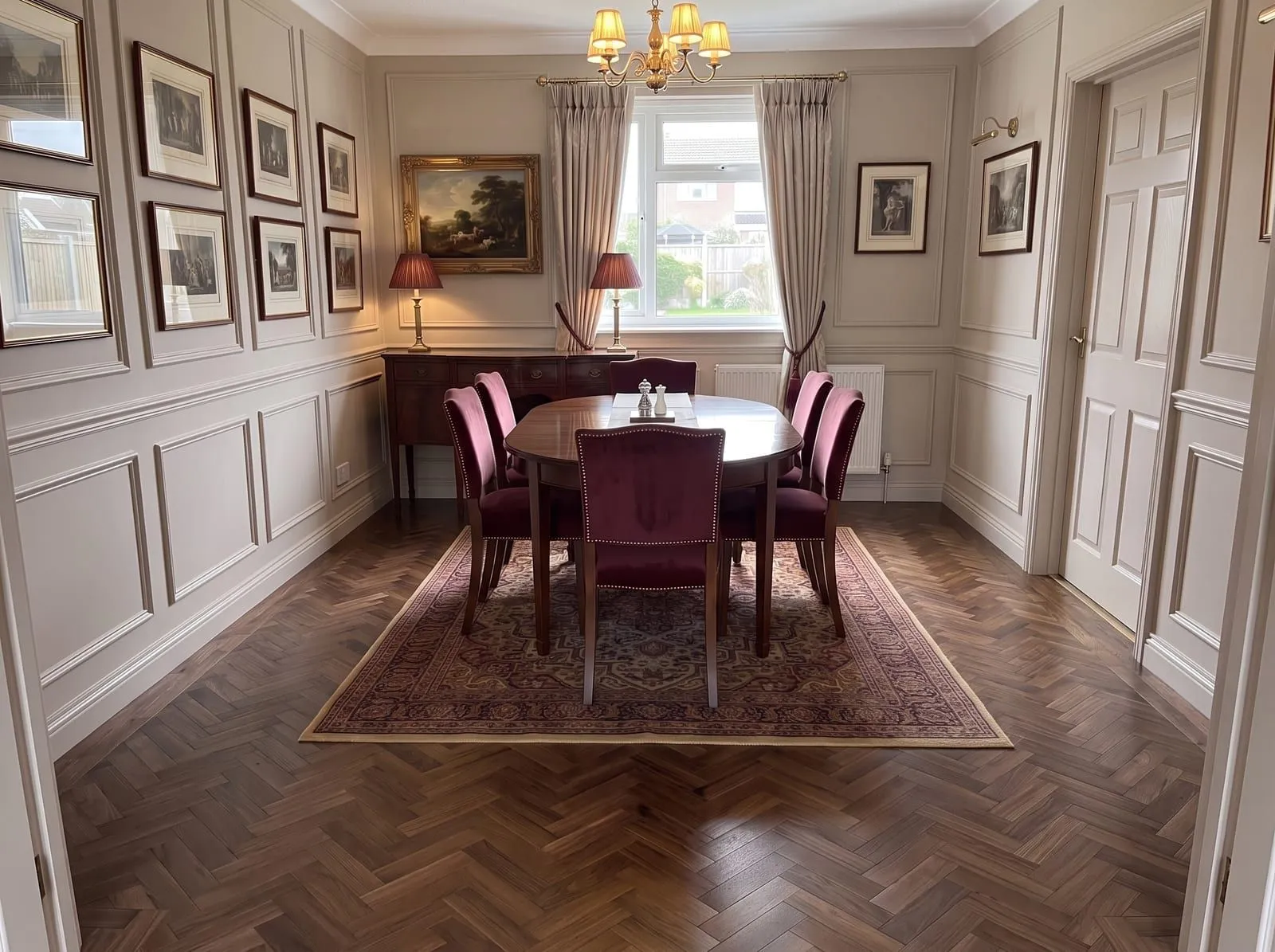 The same parquet in a dark walnut stain. Generated with remyhomeai’s AI model from one sample photo.
The natural oak lifts the room. It contrasts with the dark mahogany table and makes the red chairs stand out. The dark stain makes the room feel more enclosed and formal, and the furniture blends into the floor. Dark floors look rich, but they show dust, pet hair and fine scratches more than light and mid tones.
Which style suits which parquet?
| Style | Pattern | Wood and stain |
|---|---|---|
| Traditional | Herringbone, Versailles | Mid or dark oak, satin finish |
| Scandinavian | Herringbone | Pale oiled or white-washed oak |
| Modern and minimalist | Chevron in large blocks | Natural or pale oak, matte |
| Industrial | Herringbone | Smoked or dark oak |
| Eclectic | Basketweave, chevron | Any. Let the rug carry less pattern. |
A formal dining room is the classic home of parquet. The dining room page shows what a redesign changes in that room and what to keep.
What does parquet cost?
As of October 2026, HomeAdvisor puts hardwood flooring at about $6 to $25 per square foot. Parquet sits toward the upper half of that band. The blocks are small and each one is placed by hand, so pattern laying takes more labour than straight planks. Chevron and Versailles usually cost more than herringbone. Removal of the old floor and subfloor repair cost extra. Local quotes give the real number.
Compare that with the alternatives. Laminate and vinyl plank also come in herringbone, at a lower cost, but you cannot sand them. The full comparison of wood, laminate, vinyl plank, SPC and tile, with a room-by-room pick table, is in flooring types compared.
Where parquet falls short
- Water. Wood is not waterproof. Standing water stains it, and blocks cup or lift. Avoid it in bathrooms and laundry rooms, and in basements with damp slabs.
- Humidity. Solid blocks move with the seasons. Small gaps can open in a dry winter and close in a humid summer.
- Cost and time. Pattern laying is slow. A herringbone floor takes longer to install than the same area of straight planks.
- Dents and scratches. Oak resists dents well, but no wood resists a dropped cast-iron pan or a dog’s claws forever. Felt pads under furniture help.
- Repairs. A damaged block in the middle of a pattern is harder to replace than a plank at a wall.
See the direction on your own room first
A sample board shows parquet at arm’s length. It does not show how a stain reads with your walls, your furniture and your daylight. A photo of your own room does.
remyhomeai restyles a photo of a furnished room in one of 7 styles with 39 colour palettes. It edits your actual photo, so the walls, windows and camera angle stay in place. It does not let you pick a parquet pattern or a specific product. It shows a full style direction, and the floor is part of it. If you already have parquet and want to keep it, tick Keep on the floor so only the rest of the room changes.
Try it on your own room. See your room in a new style with 3 free designs at signup, no card required.