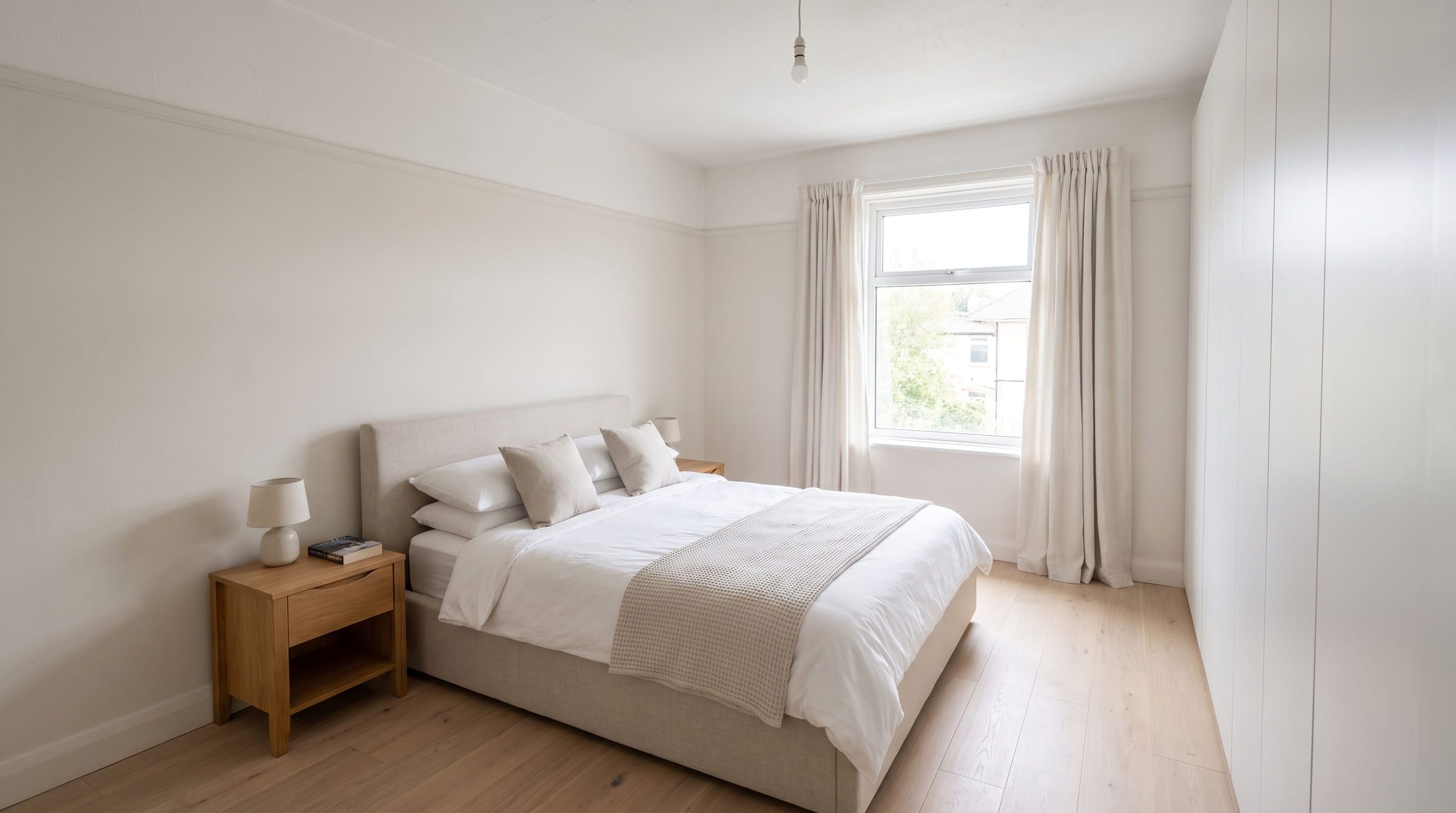
To redecorate a room, decide what stays, pick a style before you pick a product, test three directions on a photo of the actual room, then shop from the one you choose. Buying comes last. Most redecorating regret comes from the opposite order: a sofa bought on sale, then a rug to match the sofa, then paint to match the rug, and a room that never feels planned.
This guide is the sequence in five steps, with a section on how to test directions on your own photo and a plain statement of what that test cannot do.
Step 1: decide what stays
Walk into the room and list what you will not change. Three things are usually fixed: the floor, the windows and any large piece you keep (a bed, a sofa, a wardrobe, built-in shelves). Write them down with their colours. A honey oak floor, white window frames and a dark grey sofa are constraints. Every later decision has to work with them.
This list does two jobs. It shrinks the number of choices, which makes the rest faster. It also prevents a common mistake: picking a palette from a photo of someone else’s room, with a different floor, and wondering why yours does not look the same.
If you rent, add the landlord’s limits to the list. Painted walls can go back to white. Holes in tile cannot.
Step 2: pick a direction before a product
A direction has two parts: a style, then a palette. Pick them in that order.
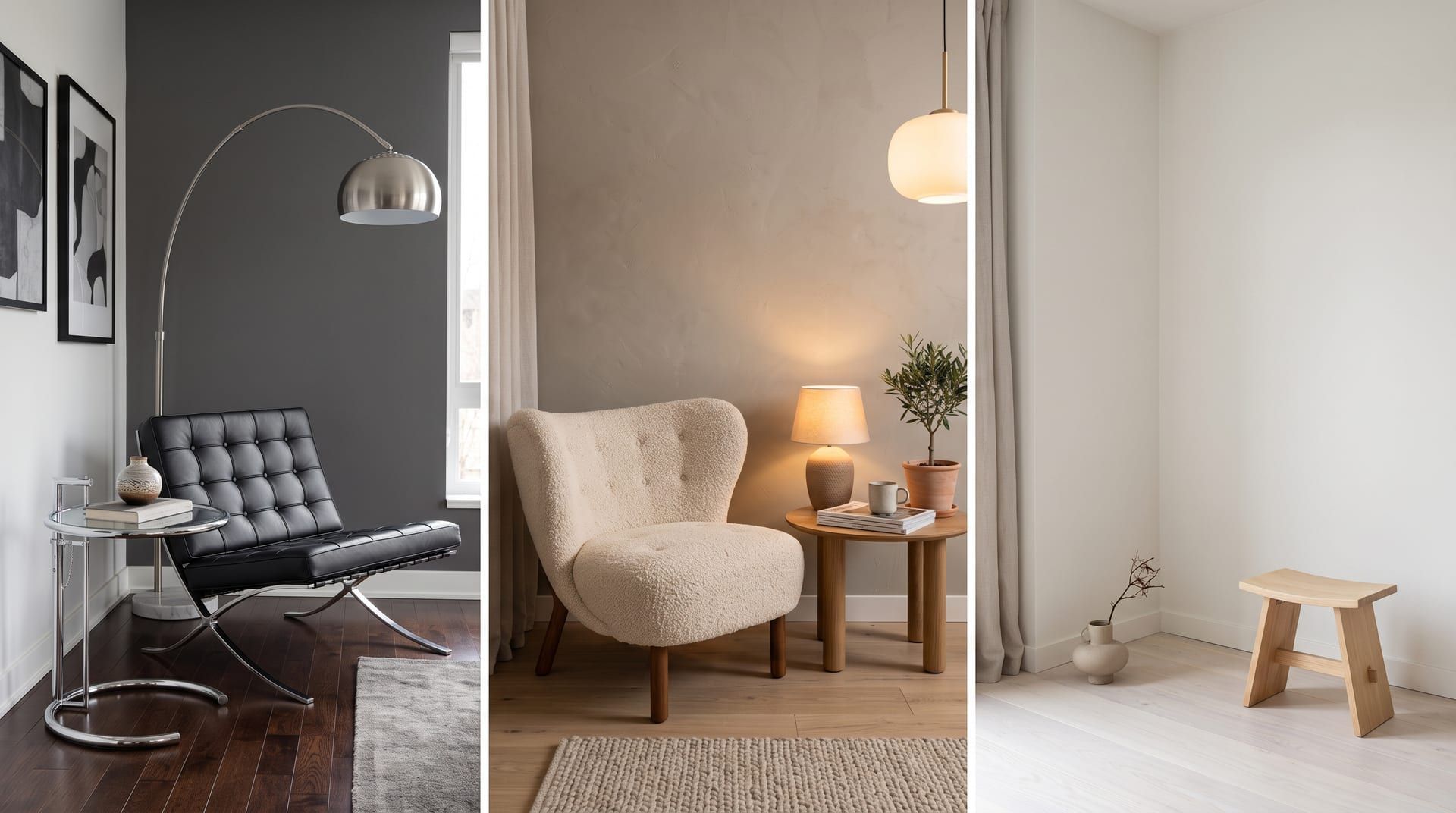
Style first. A style decides shapes, materials and how much is in the room. Minimalist means airy layouts, matte finishes and calm monochrome palettes. Traditional means symmetry, panelled details, rich fabrics and warm metals. Industrial means raw textures, concrete and steel, loft-style openness. The style pages describe all seven in a paragraph each, with a room shown in each one. Read three and notice which one you keep returning to.
Palette second. The palette is the three to five colours the room is made of, including the fixed ones from step 1. If the floor is warm wood, a palette like Warm Minimal (cream and caramel) or Japandi Calm (oat, taupe and espresso) sits with it. If the floor is grey tile, Slate & Sand or Misty Morning will not fight it. Pick the palette after the style because the style narrows it. A minimalist room in a Sunset Glow palette is possible, but harder to pull off than one in Modern Monochrome.
Do not pick a product yet. A product is a point. A direction is a line that every product has to sit on.
Step 3: test three directions on a photo of the actual room
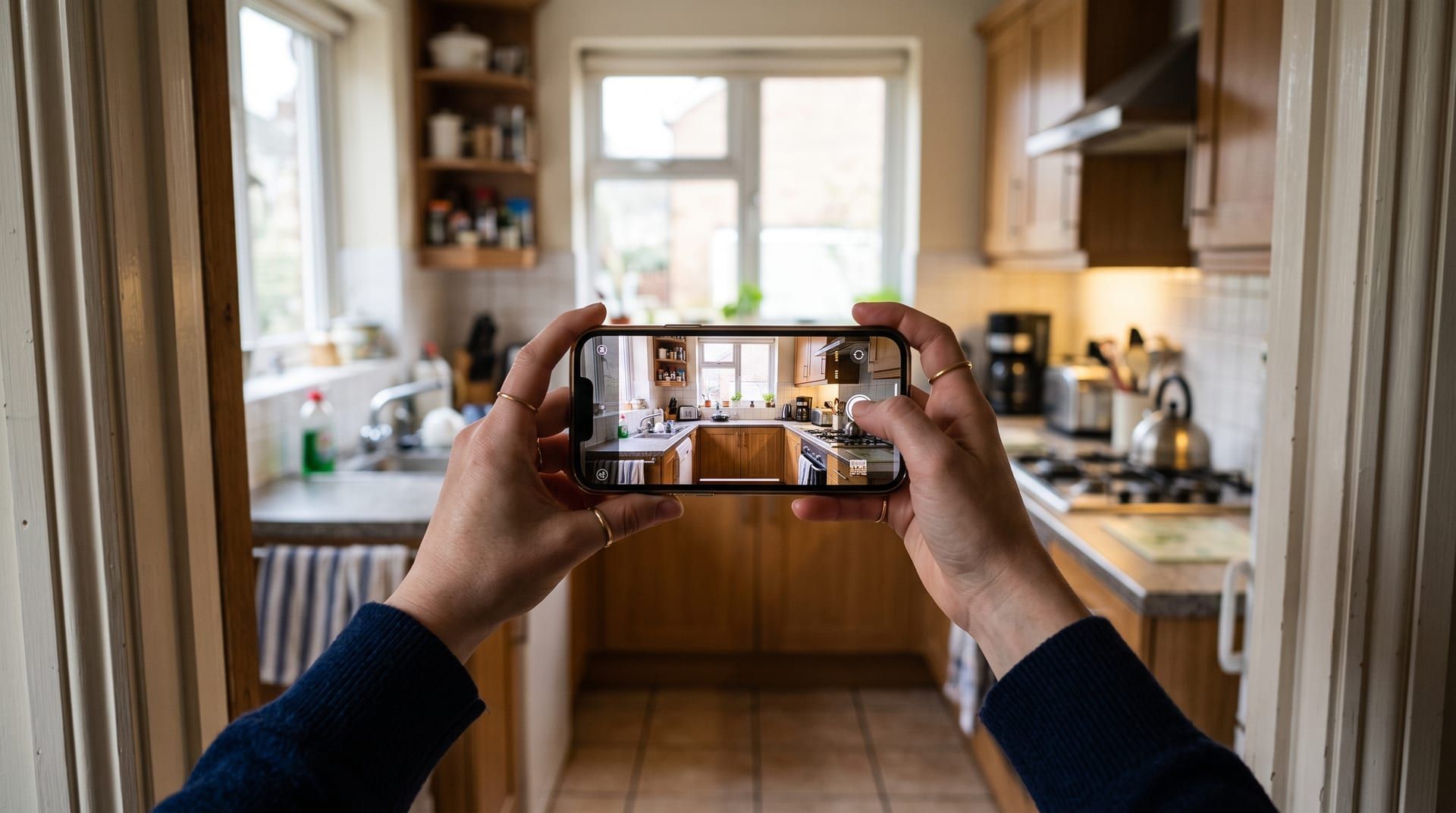
Shortlisting a style from other people’s rooms is guesswork. The reliable test is to see the direction in your room, with your floor, your window and your light. Take one photo from the doorway in daylight. Then produce the same photo in three different directions and compare them side by side.
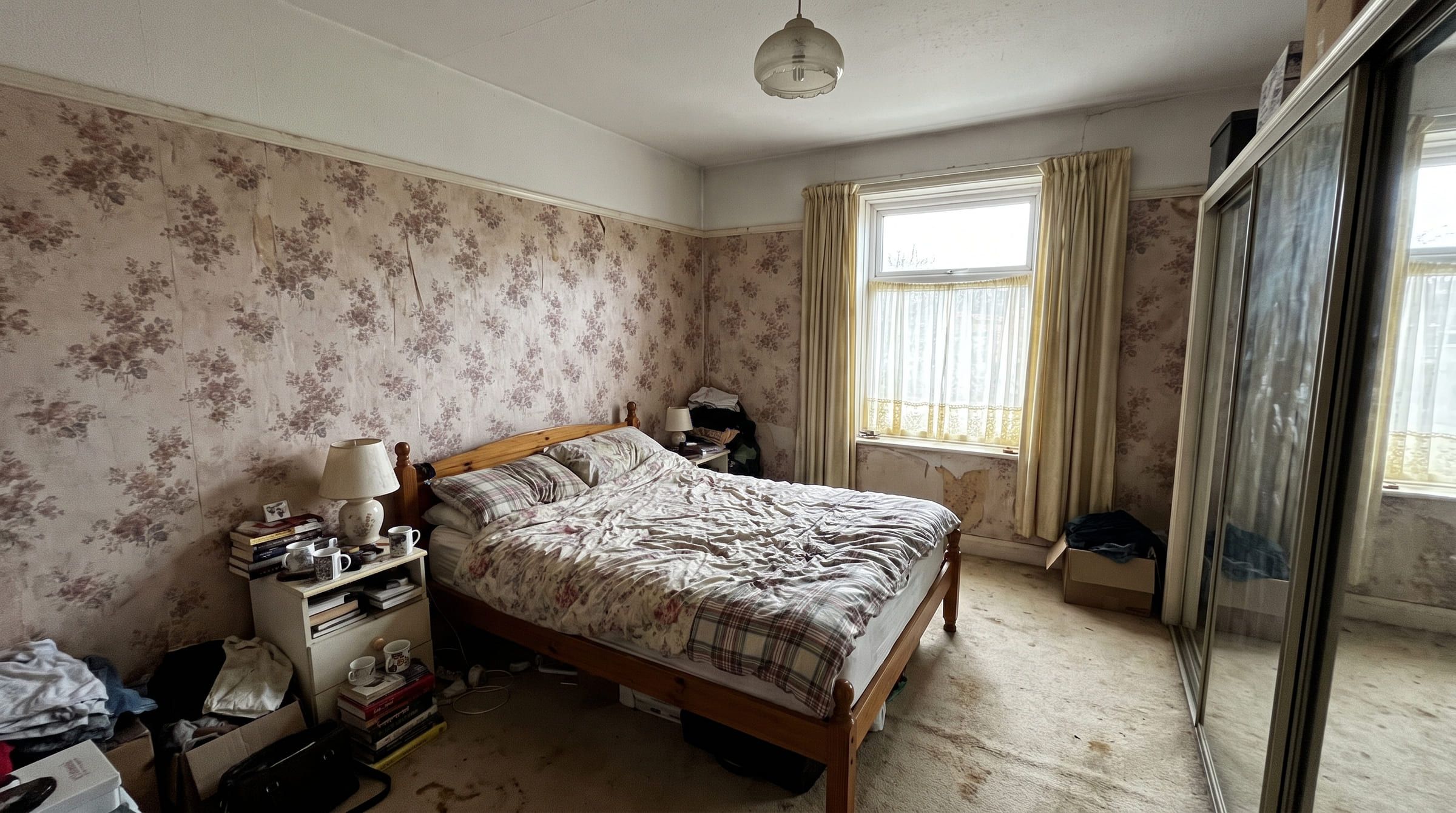
The bedroom below is one photo in three styles. Only the design changed. The window, the walls and the camera angle are the same in all three.
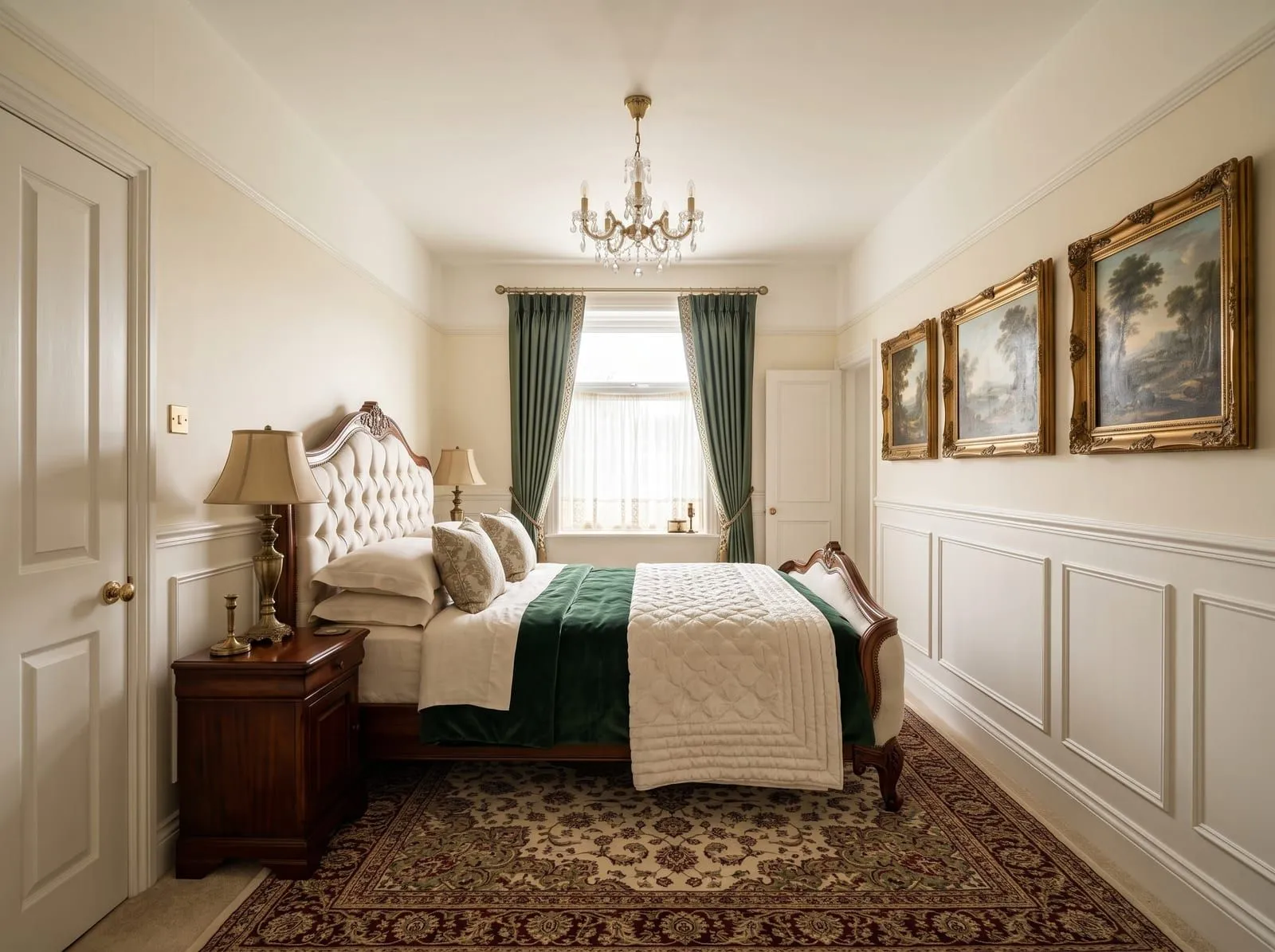 Generated with remyhomeai’s AI model from one sample photo.
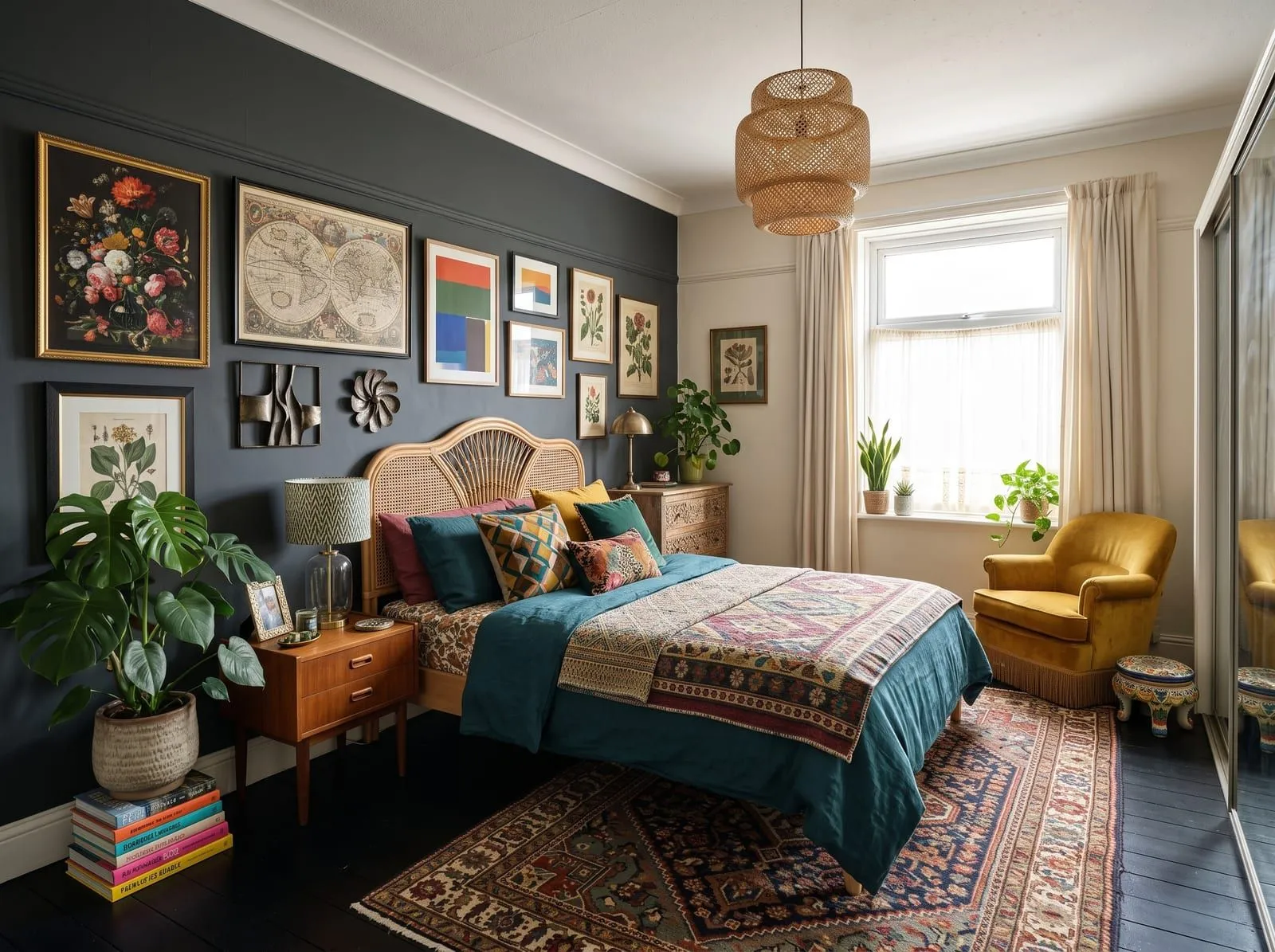 Generated with remyhomeai’s AI model from one sample photo.
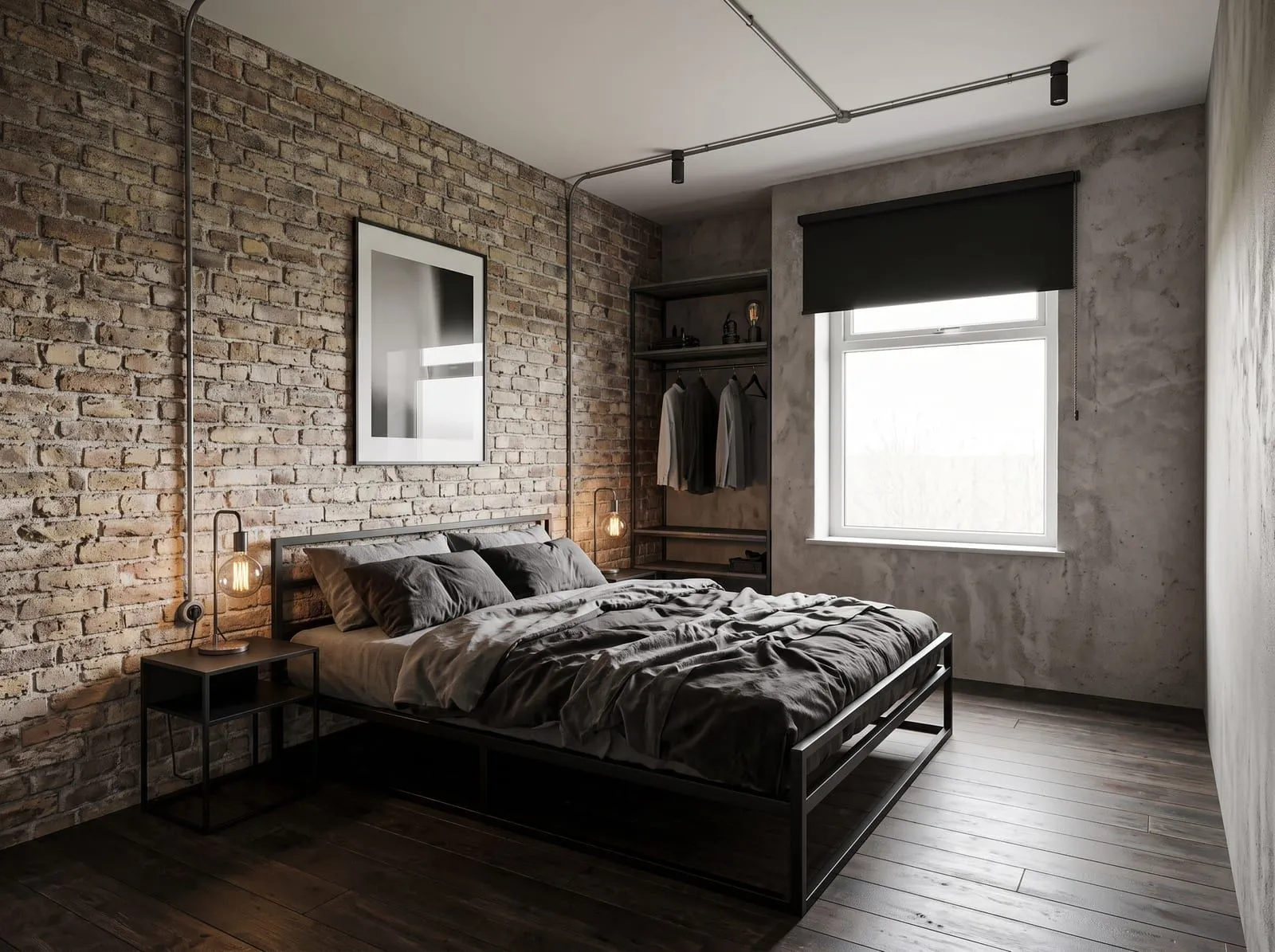 Generated with remyhomeai’s AI model from one sample photo.
Look for three things when you compare. Which version makes the fixed items from step 1 look intentional instead of inherited? Which one would you still like in a year, not just this week? Which one is closest to what you already own, so the shopping list is shortest?
Pick one. If two are close, pick the one with less in it. It is easier to add a piece later than to repaint a wall.
How to make the three test images from your own photo
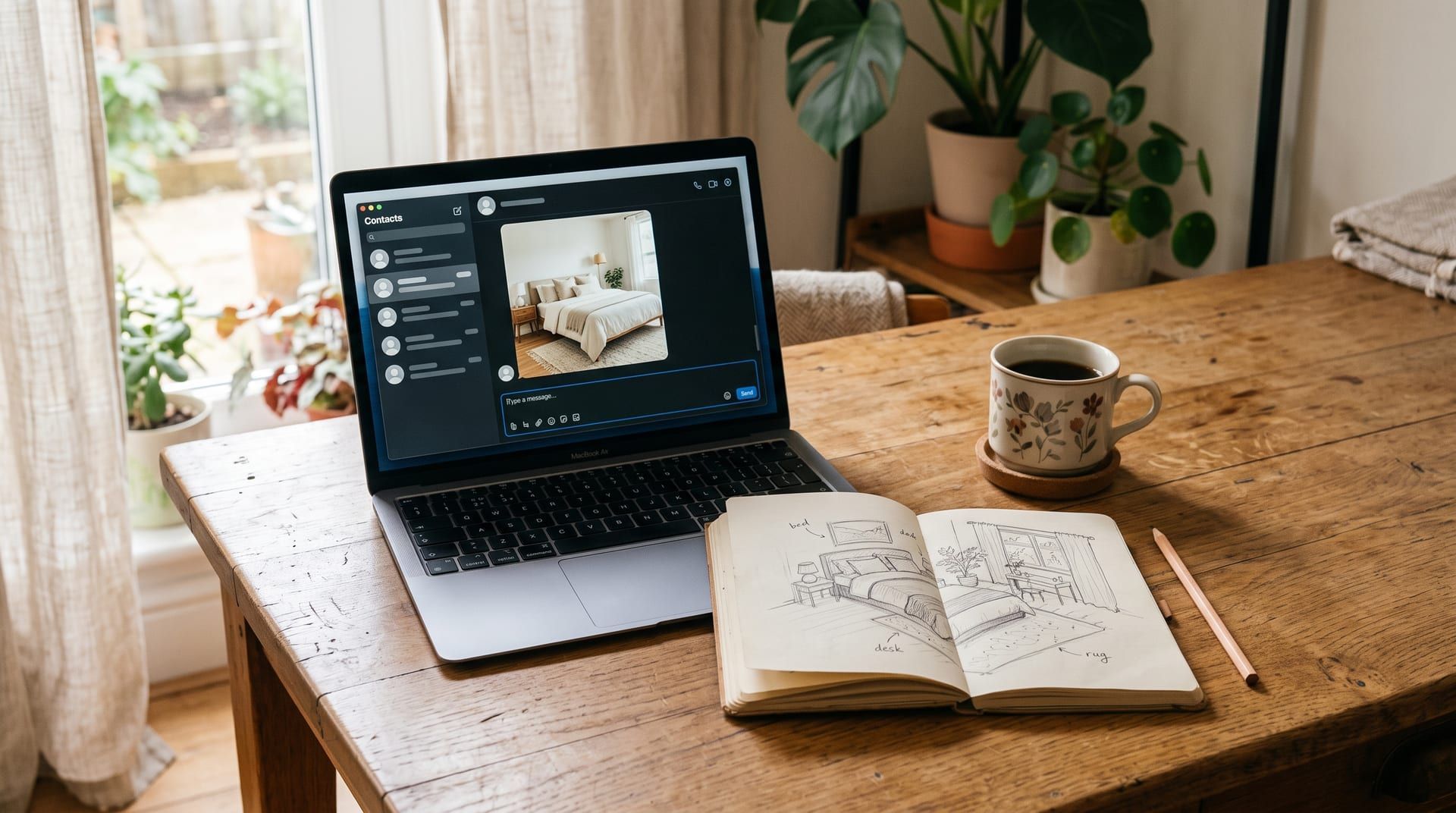
An AI redesign tool does this in minutes. remyhomeai edits the actual photo, so walls, windows, doors, ceiling height and camera angle stay where they are. Only the design changes. Upload a PNG, JPG or WebP of up to 10 MB, pick the room type (bedroom is one of the 7), pick a style, and pick a palette from the 39 in the list or describe your own in the free-text field.
Use the Keep controls to lock what you decided in step 1. Tick floor, doors, windows, ceiling or walls, and name anything else to keep, such as a fireplace or built-in shelves. A design takes 30 seconds to 3 minutes and runs in the background, so you can queue three styles and come back. Results wait in your history. Every upload and result is saved in a library that is searchable and taggable, so the comparison is still there next week when you are standing in a shop.
The free plan gives you 3 designs a month, which is exactly one test of three directions. The guide to using AI to decorate a room walks through the upload step by step. If the room is a bedroom, the bedroom page shows what to expect for that room type.
Step 4: make the shopping list from the result
Open the chosen image and list what is in it, in three groups: what you already have, what you can adapt, what you need to buy. Be literal. “Pale wall colour, low wooden bed, two bedside lamps with fabric shades, one large plain rug, linen curtains to the floor.” The redesign gives you four attributes for each item: colour, shape, scale relative to the room, finish. Those four attributes are what you search for. The exact product is your choice.
Measure before the list leaves the house. Measure the wall for the headboard width, the floor for the rug, the window for the curtain drop. Write the numbers on the list. The redesign shows proportion, not centimetres. More on that below.
Step 5: buy in order
Buy in the order below. Each purchase is then tested against the previous one in the real room, not against a product photo.
| Order | What | Why this order |
|---|---|---|
| 1 | Paint | Cheapest to change, touches everything else, and dries before the furniture arrives. |
| 2 | Large pieces (bed, sofa, wardrobe, table) | They set the layout. Everything smaller is placed around them. |
| 3 | Lighting | Fit it once the large pieces fix where you sit, read and work. |
| 4 | Textiles (rug, curtains, bedding, cushions) | They carry most of the palette and are easy to swap if a tone is off. |
| 5 | Decor (art, plants, objects) | Last, after a week of living in the room tells you what is missing. |
Many room makeover plans start at row 5 because decor is cheap and fun. Resist it. Decor bought before the large pieces ends up fighting them.
Budget rules of thumb
These are advice, not statistics. Adjust them to your room.
- Spend the most on what you touch every day. In a bedroom, the mattress and bedding. In a living room, the sofa.
- Spend the least on what is easy to swap: cushions, throws, small objects.
- Keep about a tenth of the budget untouched until the end. Something will not fit, and the reserve pays for the fix instead of forcing a compromise.
- Paint is the cheapest change with the largest effect. If the budget is very small, do paint and textiles and stop.
- Price the whole list before you buy anything on it. A makeover done one item at a time, each one only slightly over, ends up well over.
Where it falls short: a redesign is a direction, not a product list
A redesign shows what the room could look like. It does not tell you where to buy the pieces. remyhomeai does not provide shopping links for the furniture it shows. The bed in the image is a shape and a colour, not a product.
It does not measure. A generated image can show a bed that fits the wall with a comfortable margin, when the bed you buy at that visual size is 10 cm too wide. Measure every wall and opening before you order. Treat the image as a brief for your eyes and the tape measure as the brief for your wallet.
It does not move walls, change the window or rearrange furniture to a floor plan. It restyles the room you photographed from the angle you photographed it. If the problem is the layout and not the look, move the furniture first, photograph again, then test directions.
Try it on your own room. The free plan gives you 3 designs a month, no card required. Start free.