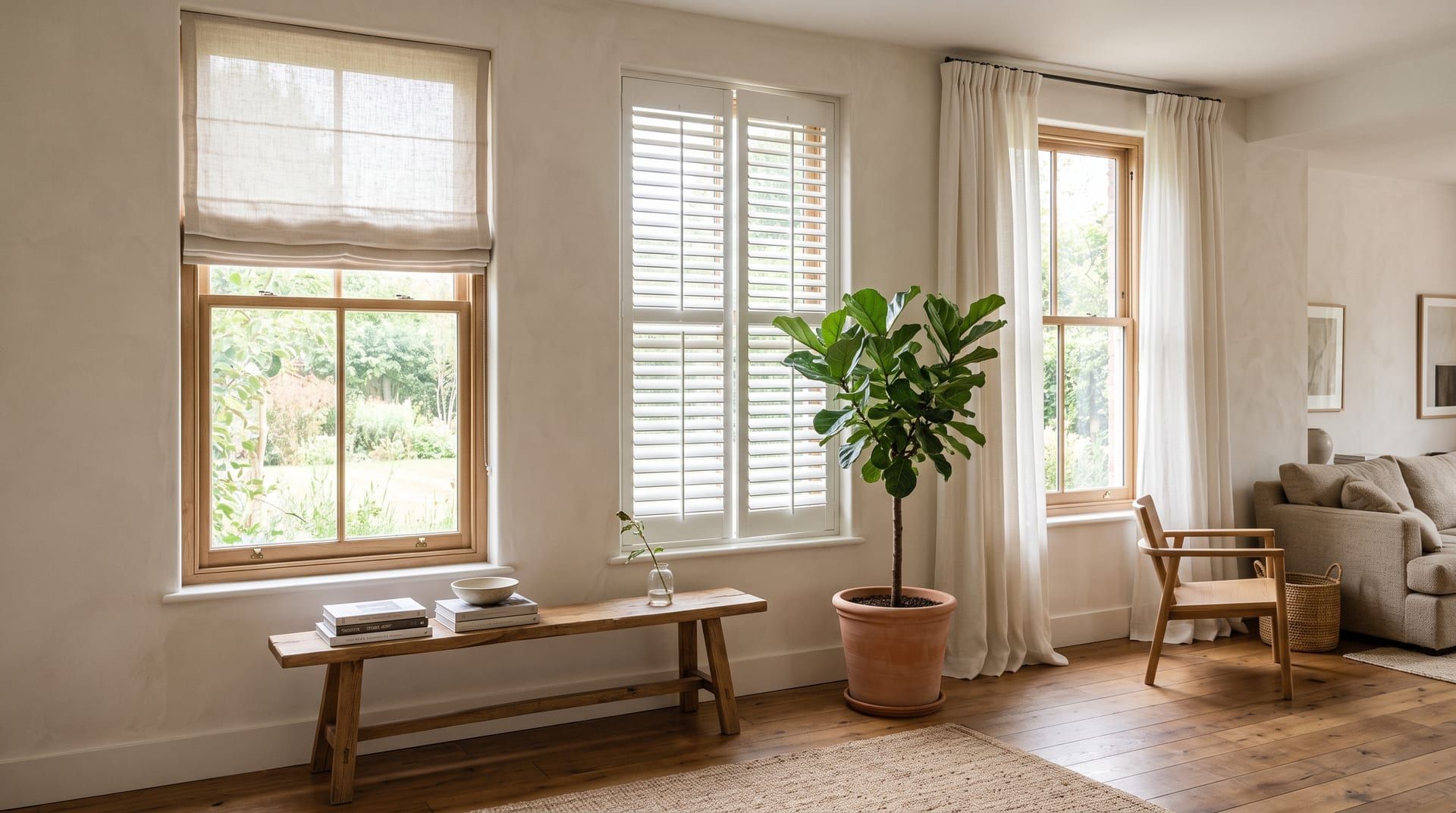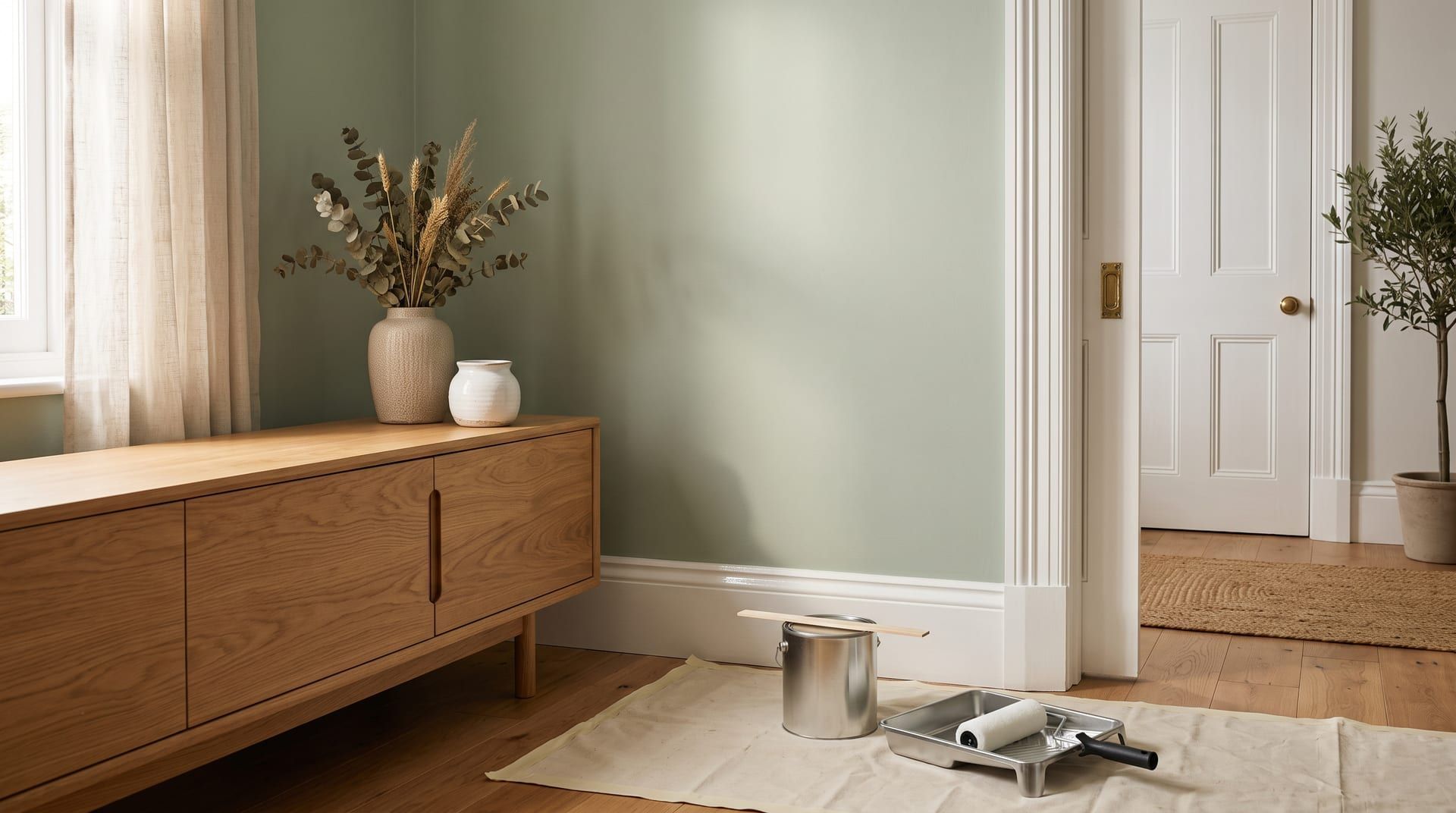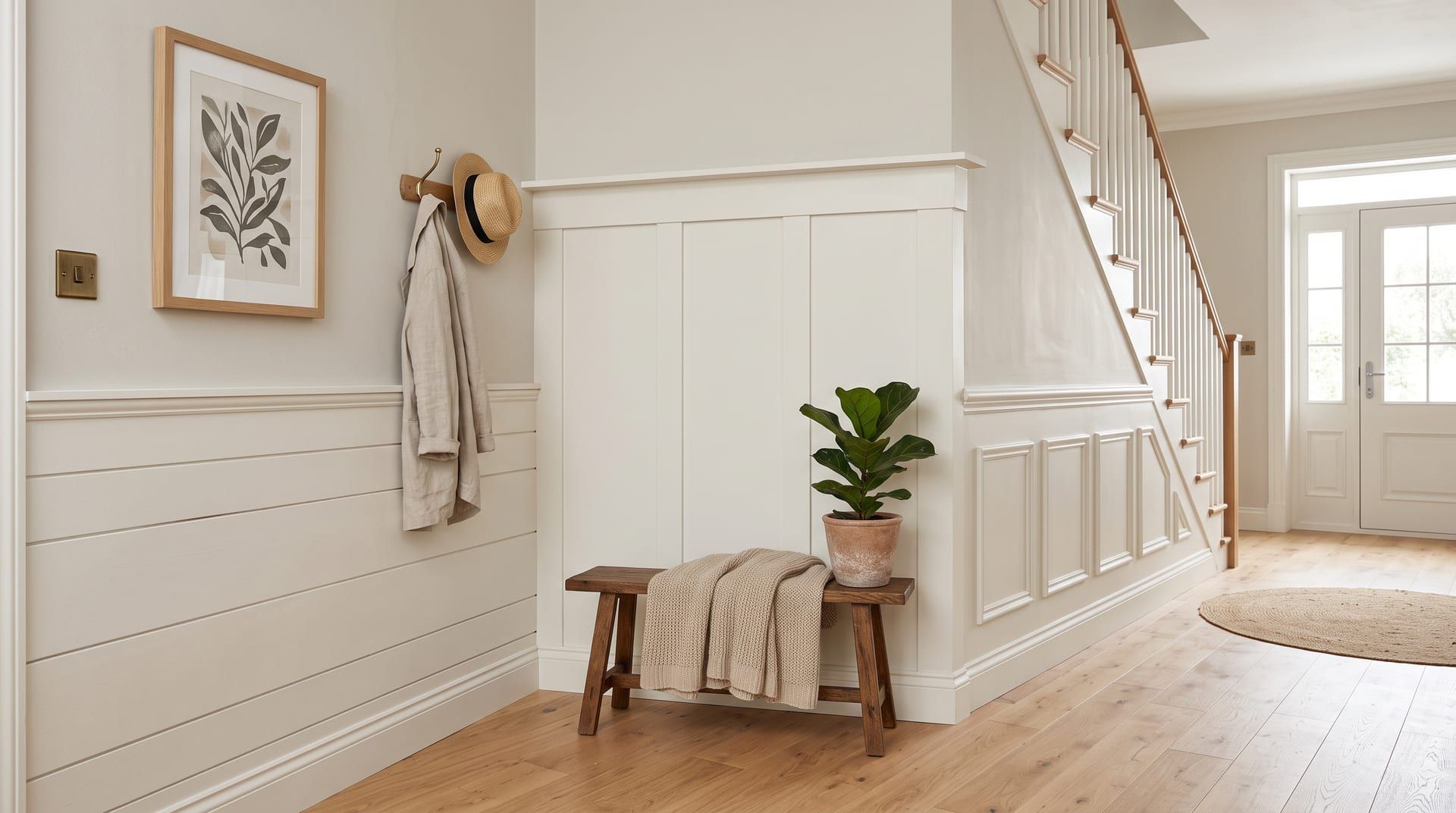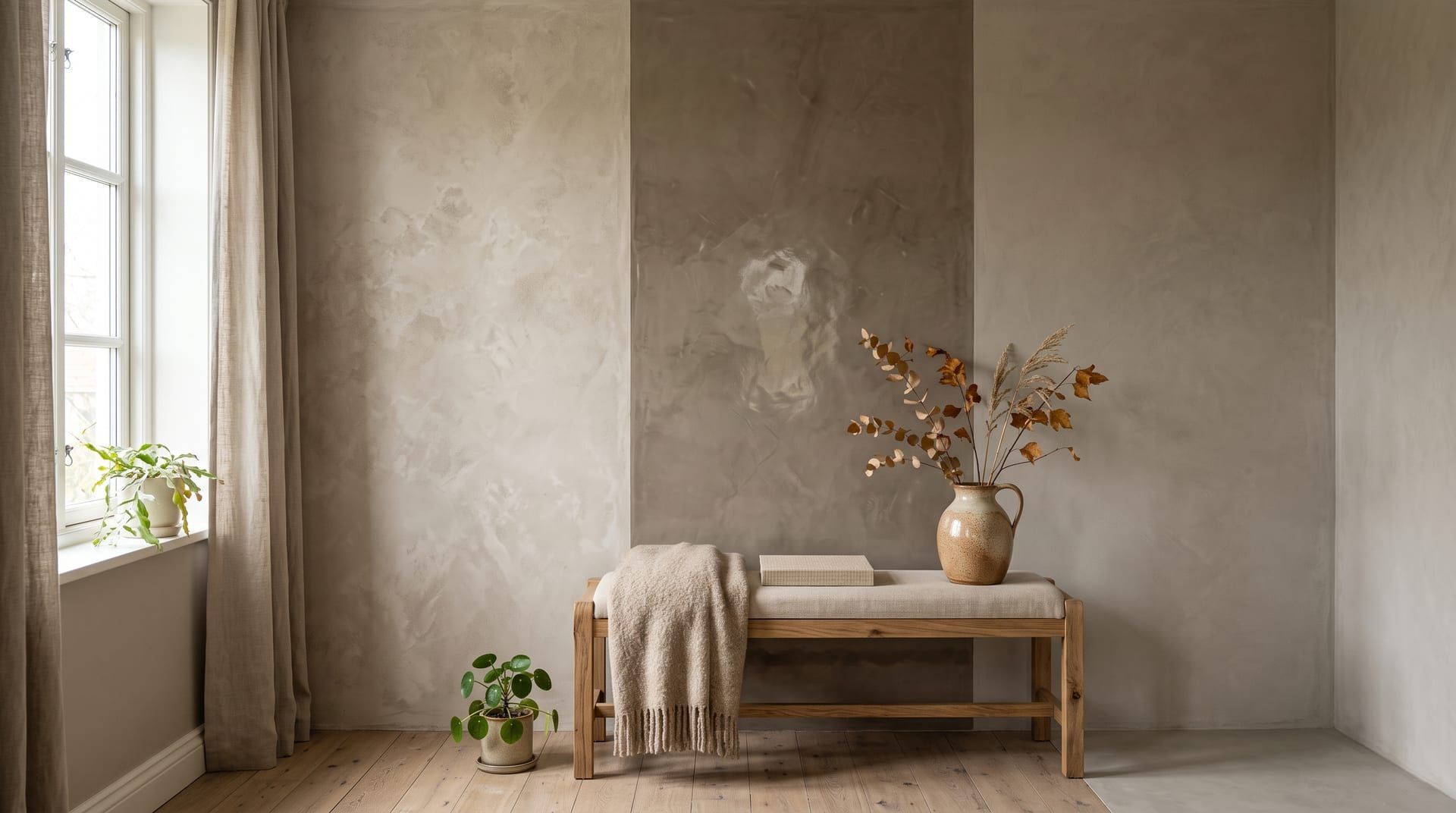
Limewash, Venetian plaster and microcement all give a wall movement and depth that flat paint cannot. They differ in how they are made, how they look up close and where they survive. Limewash is a thin mineral paint with a cloudy, matte look, and you can brush it on yourself. Venetian plaster is a polished lime and marble finish with a soft sheen, applied by a plasterer. Microcement is a thin sealed cement coating that runs across walls and floors without joints, and it is the one to choose for a shower.
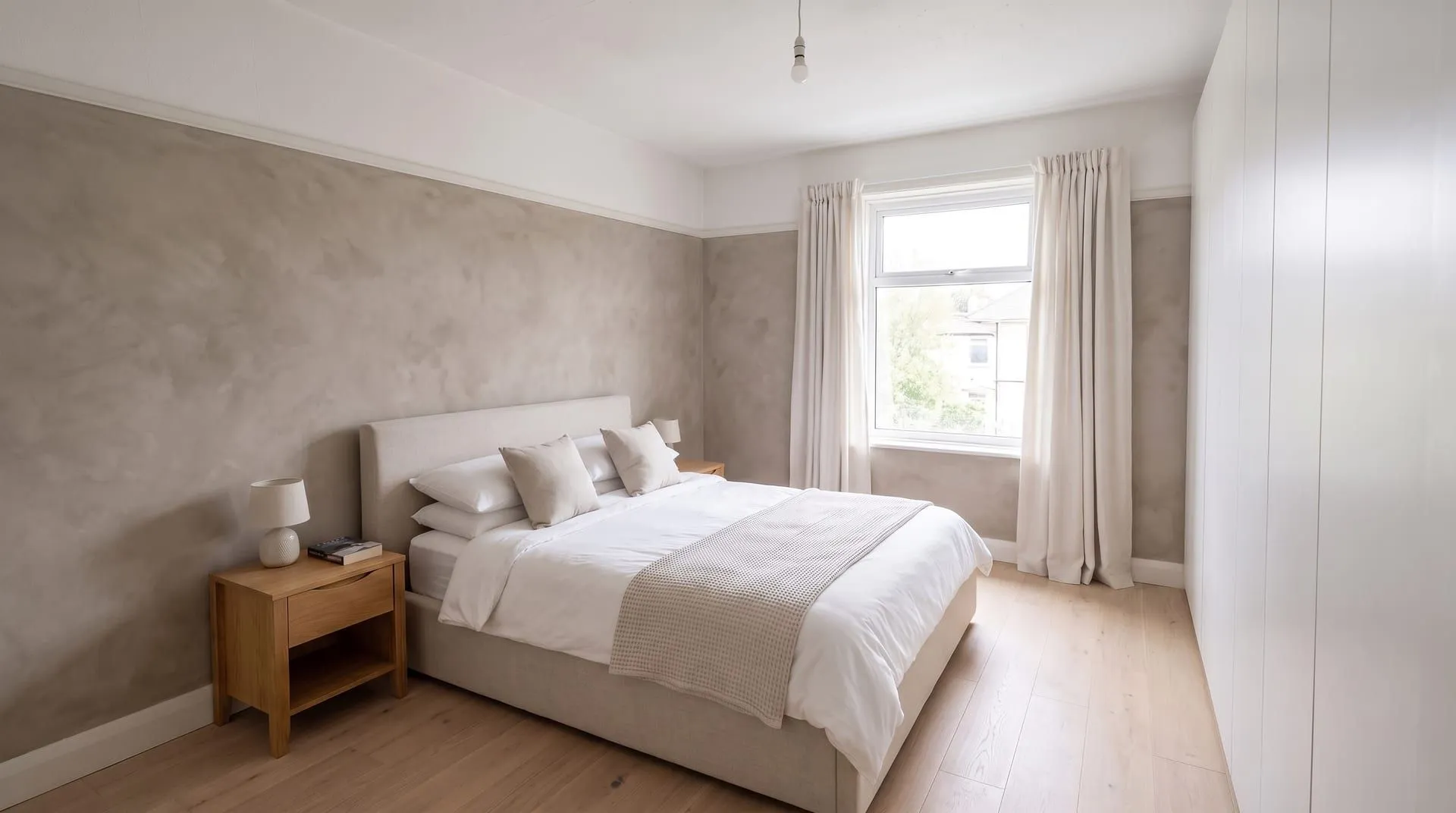 Limewash on the bed wall. Generated with remyhomeai’s AI model from one sample photo.
What is the difference between limewash, Venetian plaster and microcement?
All three are mineral finishes, but they are built in different ways.
Limewash is slaked lime mixed with water and pigment. You brush it on in two or three thin coats with a wide brush, in loose crossing strokes. The lime soaks into the surface and cures by taking carbon dioxide from the air. Each stroke dries to a slightly different tone, which gives the cloudy, suede-like look. It adds colour, not thickness.
Venetian plaster is lime putty mixed with fine marble dust. A plasterer applies several very thin layers with a steel trowel, then burnishes the last layer by pressing the trowel hard across it. The pressure gives it a polished, stone-like depth. A wax topcoat adds sheen and some water resistance.
Microcement is a cement and polymer mix, applied in thin layers (usually about 2 to 3 mm in total) over a primer and mesh. It is trowelled smooth, sanded and sealed. The sealer makes it water resistant, and because it has no joints, it can wrap a wall, a floor and a shower tray as one surface.
| Limewash | Venetian plaster | Microcement | |
|---|---|---|---|
| What it is | Lime paint | Lime and marble dust plaster | Cement and polymer coating |
| Look | Cloudy, chalky, fully matte | Polished stone, soft sheen, depth | Smooth concrete, matte to low sheen |
| Thickness | A paint film | About 1 to 2 mm | About 2 to 3 mm |
| DIY? | Yes | Hard to do well | No, hire a pro |
| Wet areas | No | Splash zones only, waxed | Yes, sealed, including showers |
| Floors | No | No | Yes |
| Touch-ups | Easy, blends | Hard to hide | Hard to hide |
| Cost | Lowest | Middle | Highest |
How do they look on the same bedroom wall?
The three images in this section use one bedroom photo. Only the finish on the wall behind the bed changes. The bed, the floor, the window and the camera angle stay the same, so you can compare like with like.
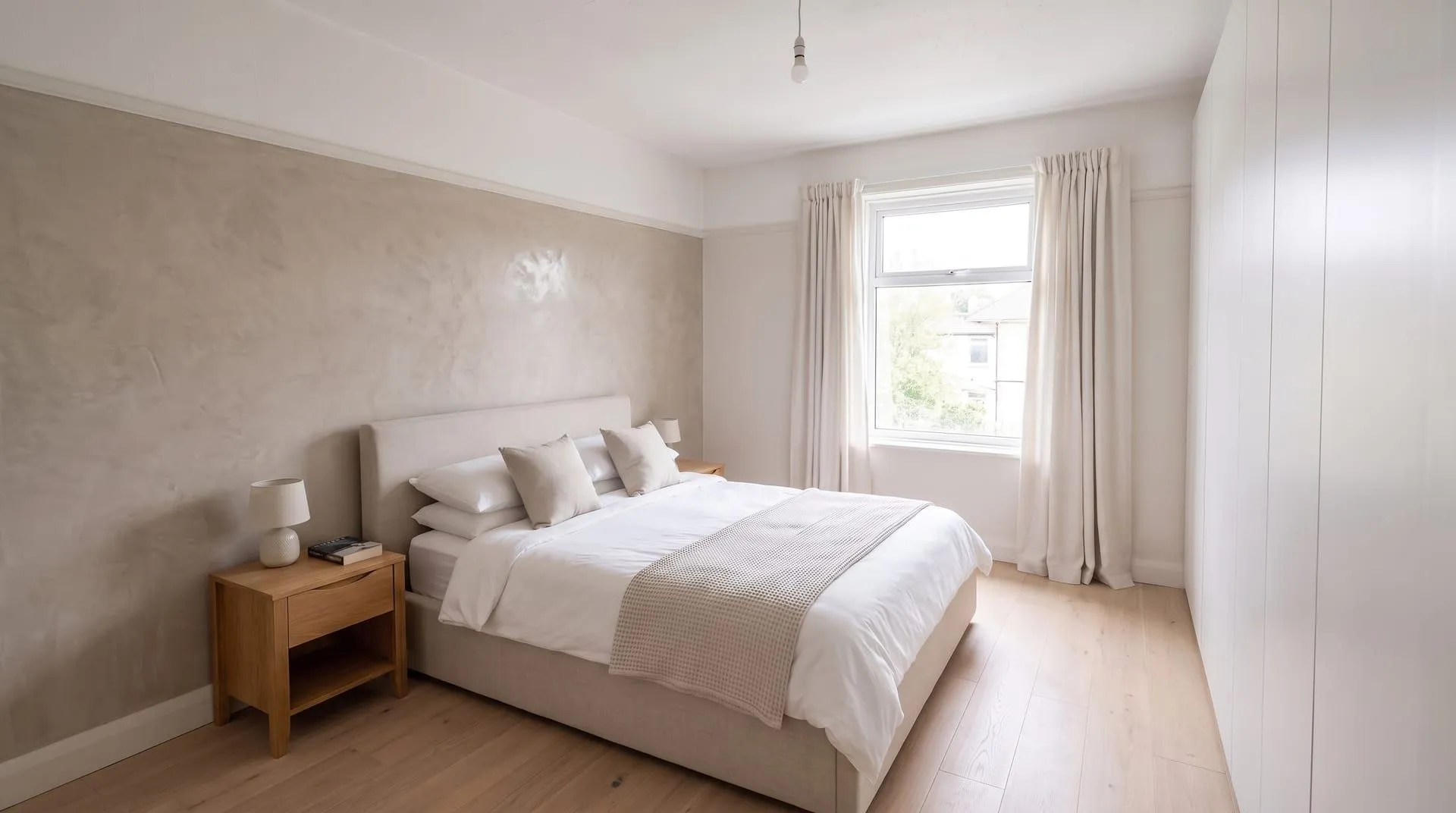 Venetian plaster on the bed wall. Generated with remyhomeai’s AI model from one sample photo.
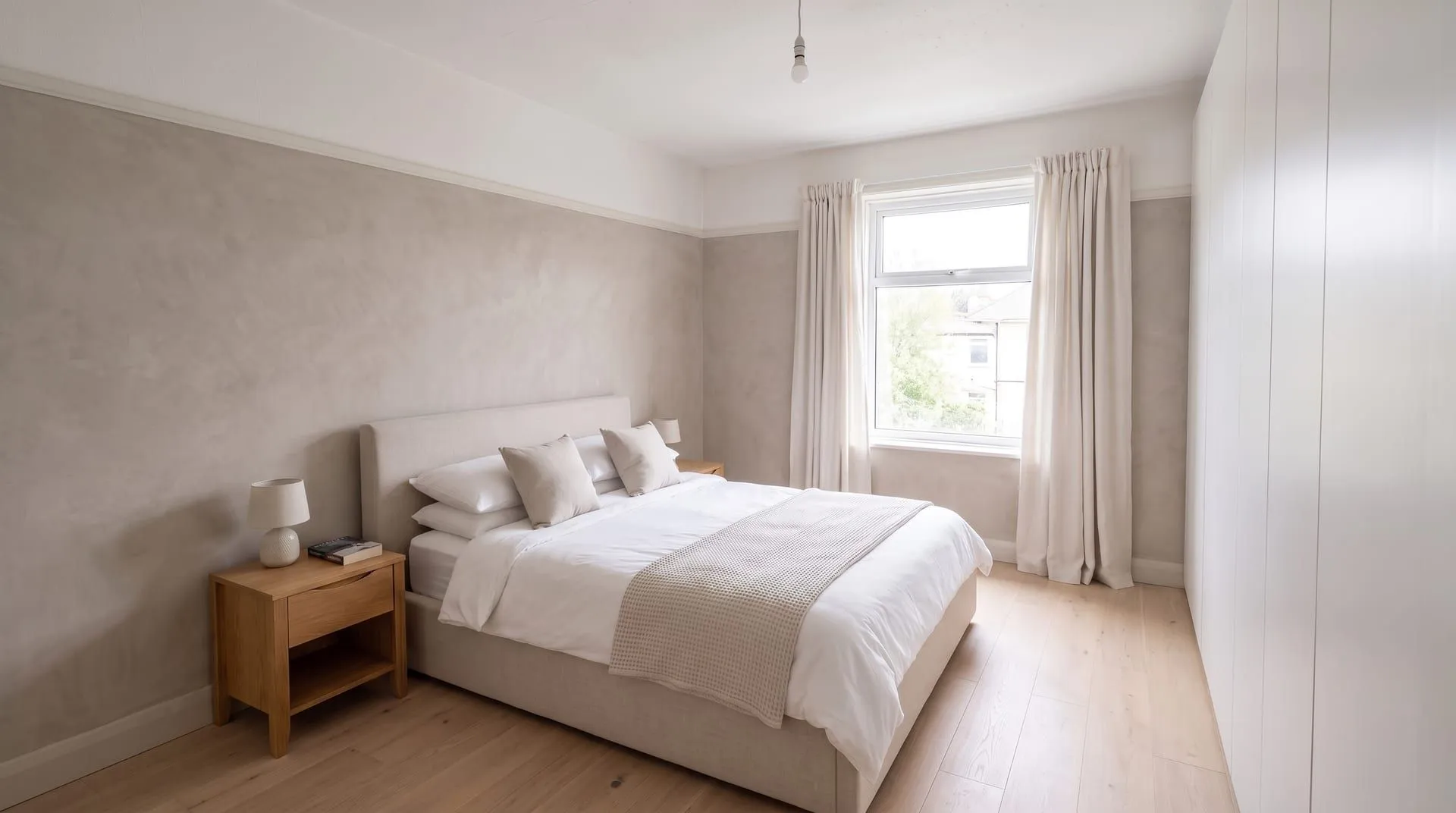 Microcement on the bed wall. Generated with remyhomeai’s AI model from one sample photo.
From across the room, limewash reads as soft colour with movement. Venetian plaster reads as a surface you want to touch, and it catches a highlight from the window. Microcement reads as calm and architectural, closer to a concrete wall. In a quiet bedroom like this one, limewash and Venetian plaster both add warmth. Microcement can feel cooler unless you pick a warm tone.
What do they look like up close?
The difference is clearest at arm’s length and in light that grazes across the wall.
 Limewash close up: tone changes, no relief. An illustration for this article.
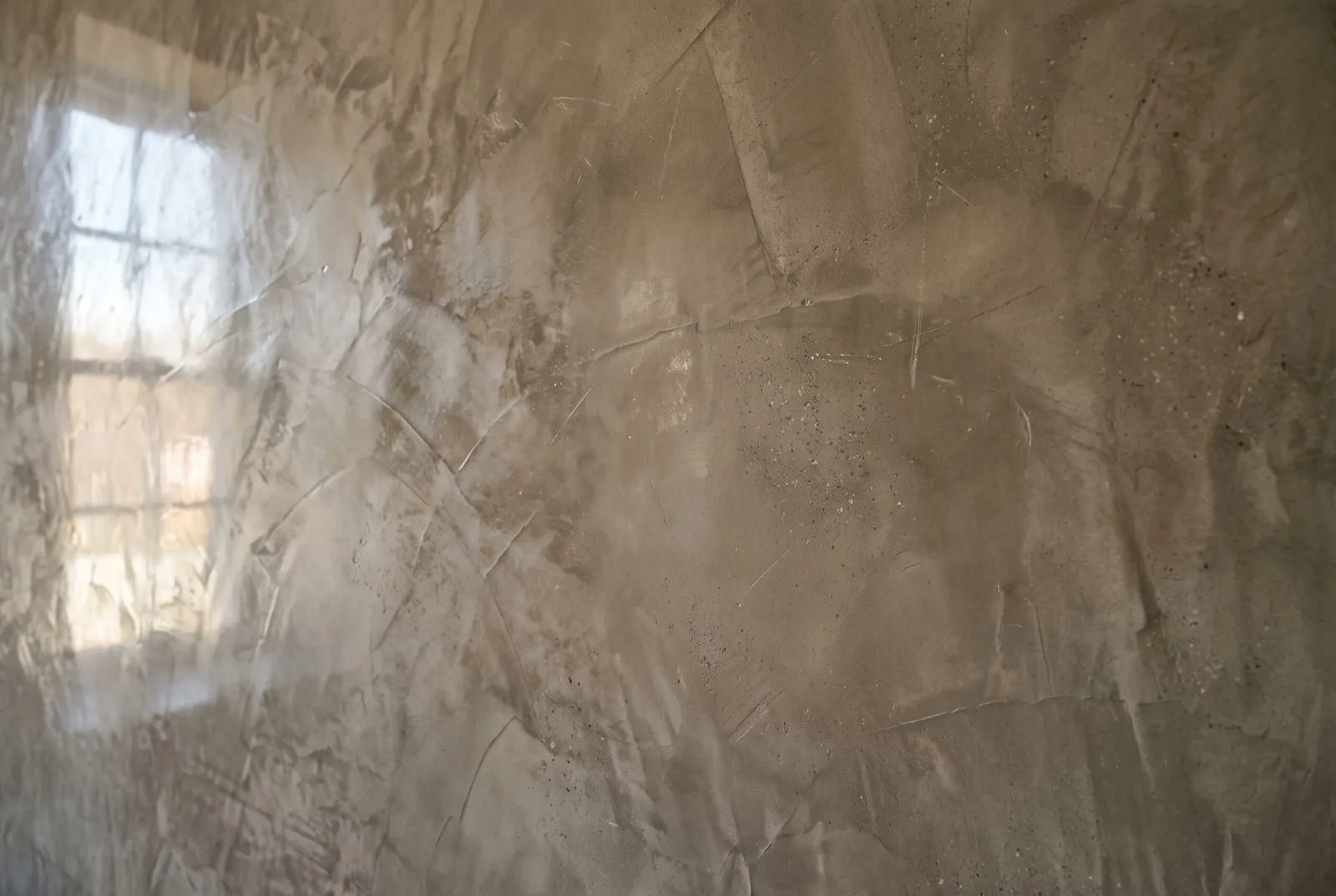 Venetian plaster close up: layered trowel marks under a burnished sheen. An illustration for this article.
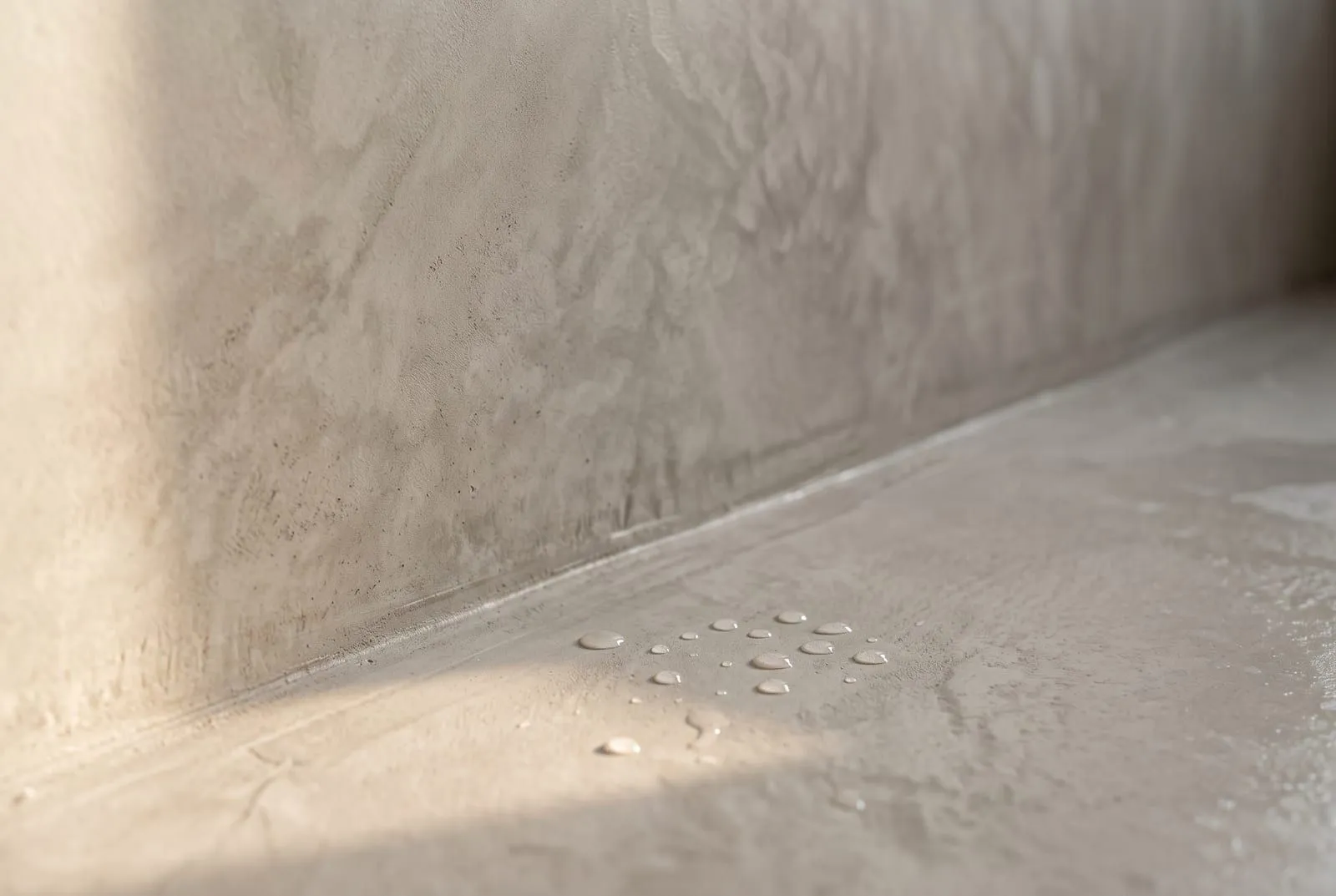 Microcement close up: one continuous sealed surface, wall to floor. An illustration for this article.
Limewash is flat to the touch. All the movement is colour. Venetian plaster has real depth under a smooth skin, and the sheen changes as you walk past. Microcement is smooth and even, with a faint trowel cloud and no grout lines.
Which one can you do yourself?
Limewash is a realistic weekend project. The technique is loose by design, so small faults disappear into the pattern. On bare plaster, brick or concrete it goes straight on. On painted drywall you need a mineral primer first so the lime has something porous to grip. Expect it to look patchy while wet. It evens out as it cures over a day or two.
Venetian plaster is possible for a patient DIYer on a small feature wall, but it takes practice to burnish an even sheen. Most people hire a decorative plasterer. Cheaper “Venetian effect” products based on acrylic are easier and look flatter.
Microcement is a job for a trained installer. It needs the right primer, mesh, several coats, sanding and a two-part sealer. Mistakes show as cracks or patchy sealer, and they are hard to fix after the fact.
Which one works in a bathroom?
Microcement is the one built for wet areas. Sealed correctly over a waterproofing layer, it covers shower walls and floors with no grout to clean. That is its main appeal: one smooth surface from floor to ceiling.
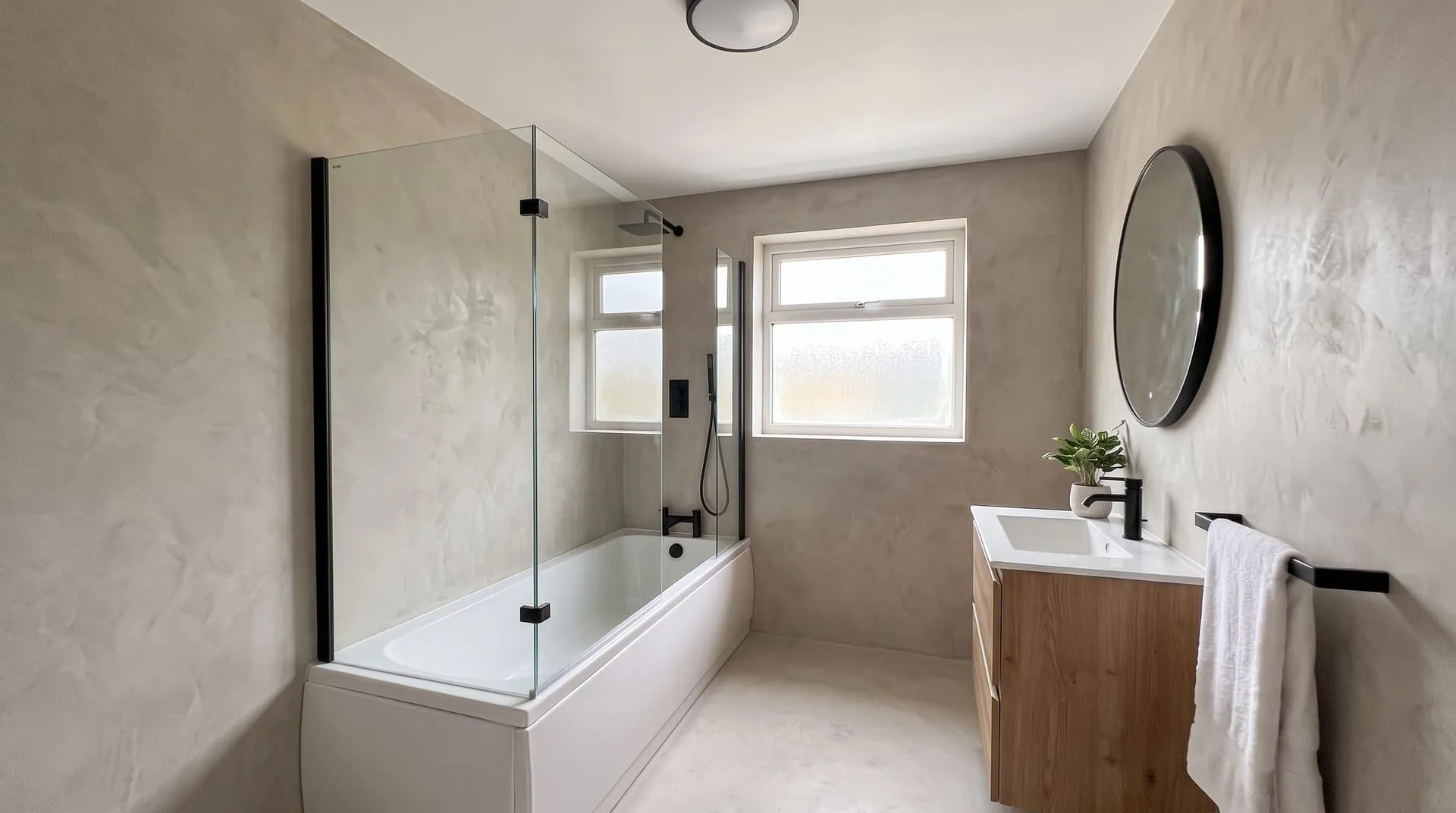 The same bathroom with microcement replacing the tiles. Generated with remyhomeai’s AI model from one sample photo.
Venetian plaster with a wax topcoat resists splashes, so it suits a bathroom wall away from the shower, or a powder room. It is not made for direct water. Limewash stays porous and wipes off under water, so keep it out of bathrooms except on a ceiling in a well ventilated room. If you want tile instead, the guide to porcelain vs ceramic tile compares the standard wet-room options.
What does each finish cost?
Prices vary a lot by region and by the state of the wall. As of October 2026, rough installed bands are:
- Limewash: about $2 to $6 per square foot when a painter applies it (Angi). DIY costs much less, mainly the product and a good brush.
- Venetian plaster: about $10 to $25 per square foot for professional application (Angi).
- Microcement: about $29 to $39 per square foot with a professional applicator (Smartcret). Shower work and tile removal push it higher.
For one bedroom feature wall, limewash is the clear budget choice. Microcement only pays back where you would otherwise tile.
Where each one falls short
Limewash is not washable in the way paint is. Scrubbing lifts the lime, and splashes can leave marks. It also fades and chalks slowly, so plan on a fresh coat every few years in busy spots. The cloudy look is part of the product. If you want an even, solid colour, use paint (the guide to flat vs eggshell vs satin paint covers which sheen to pick).
Venetian plaster depends on the person with the trowel. A poor job shows as dull patches or ridges. Repairs are hard to blend, and dents from furniture show in the sheen. It costs several times more than limewash for a look that is subtle from across the room.
Microcement can crack if the wall or floor under it moves, for example on a timber floor or over unstable tiles. The sealer wears in high-traffic floor areas and needs renewal. It is also the most expensive option here, and a bad installation is difficult to fix without starting again.
Which textured wall finish should you choose?
- Choose limewash for a bedroom, living room or accent wall where you want soft texture on a small budget and may do it yourself.
- Choose Venetian plaster for one statement wall in a dry room where you want a polished, stone-like finish and can hire a skilled plasterer.
- Choose microcement for a bathroom, shower or open floor where you want one seamless surface without grout, and the budget covers a trained installer.
See the finish on your own room first
A textured wall is a commitment, so it helps to see the overall effect on your room before you buy materials. remyhomeai redesigns a photo of your furnished room, for example a bedroom or a bathroom. Tick Keep on the floor, doors and windows so the walls and decor carry the change, and pick one of the 39 palettes close to the colour you have in mind. It shows a style and a palette, not a specific product or finish, so use it to judge the mood and colour, then test real samples on the wall.
Sources
Try it on your own room. See your room in a new style with 3 free designs at signup, no card required.