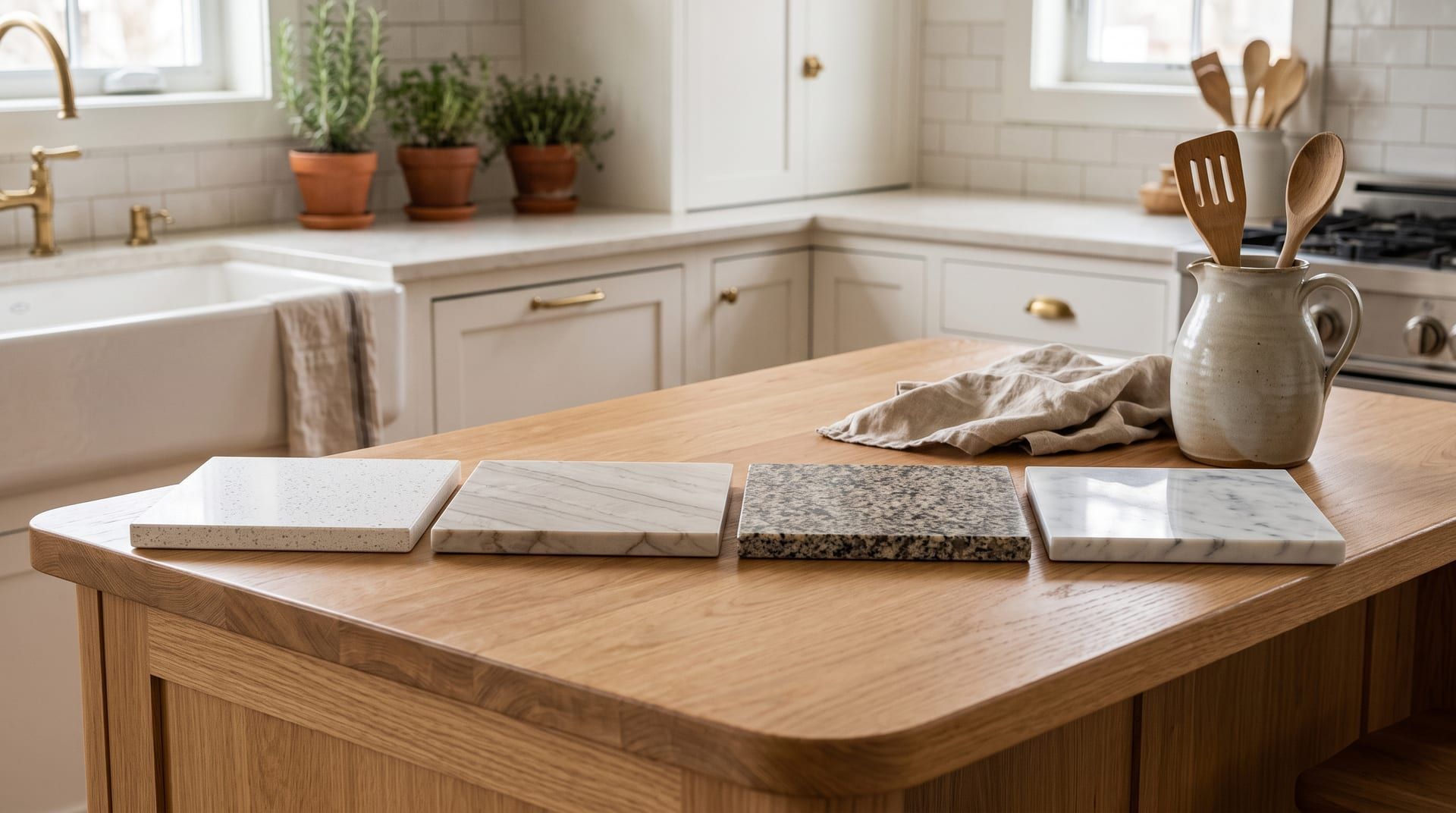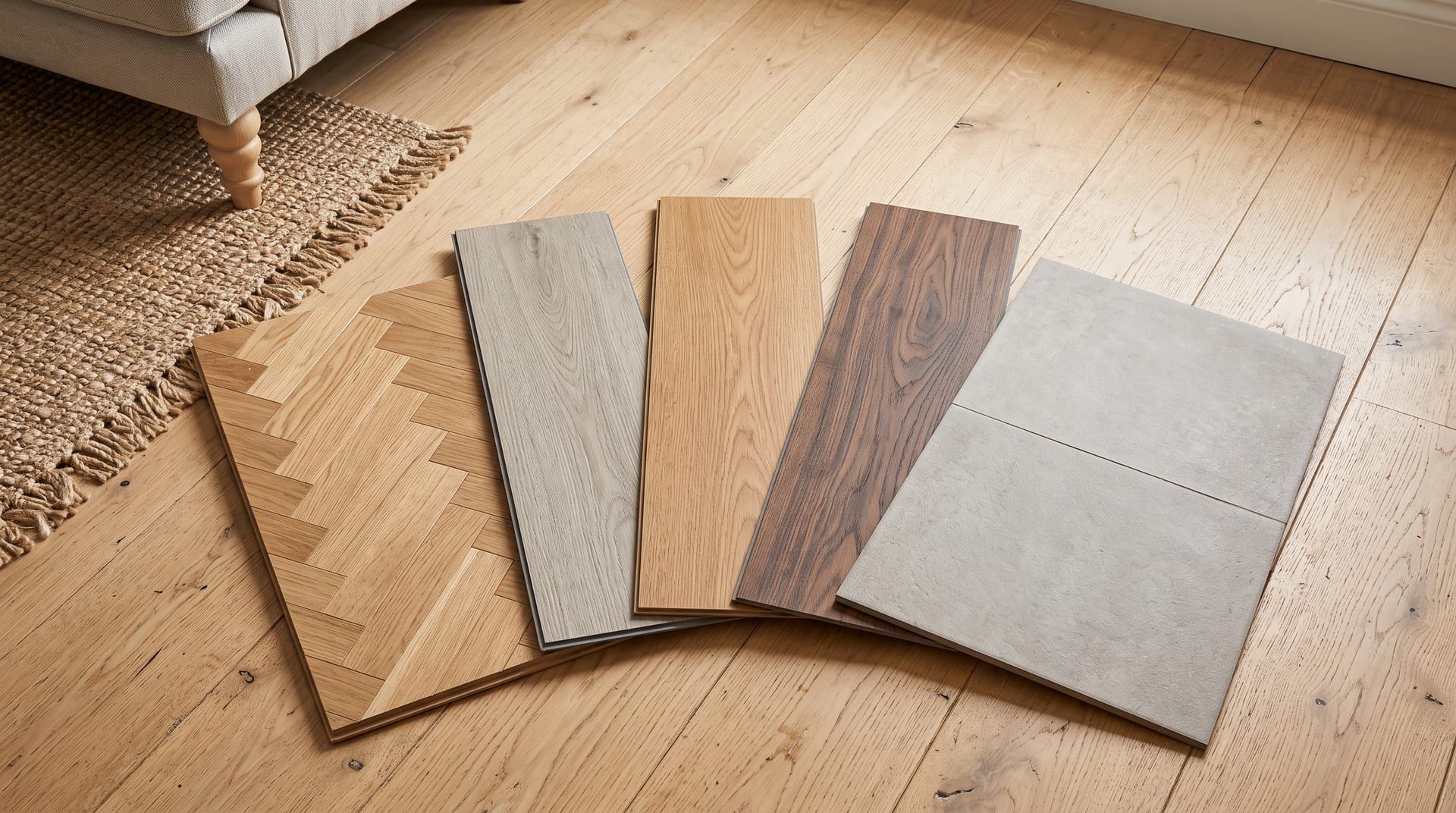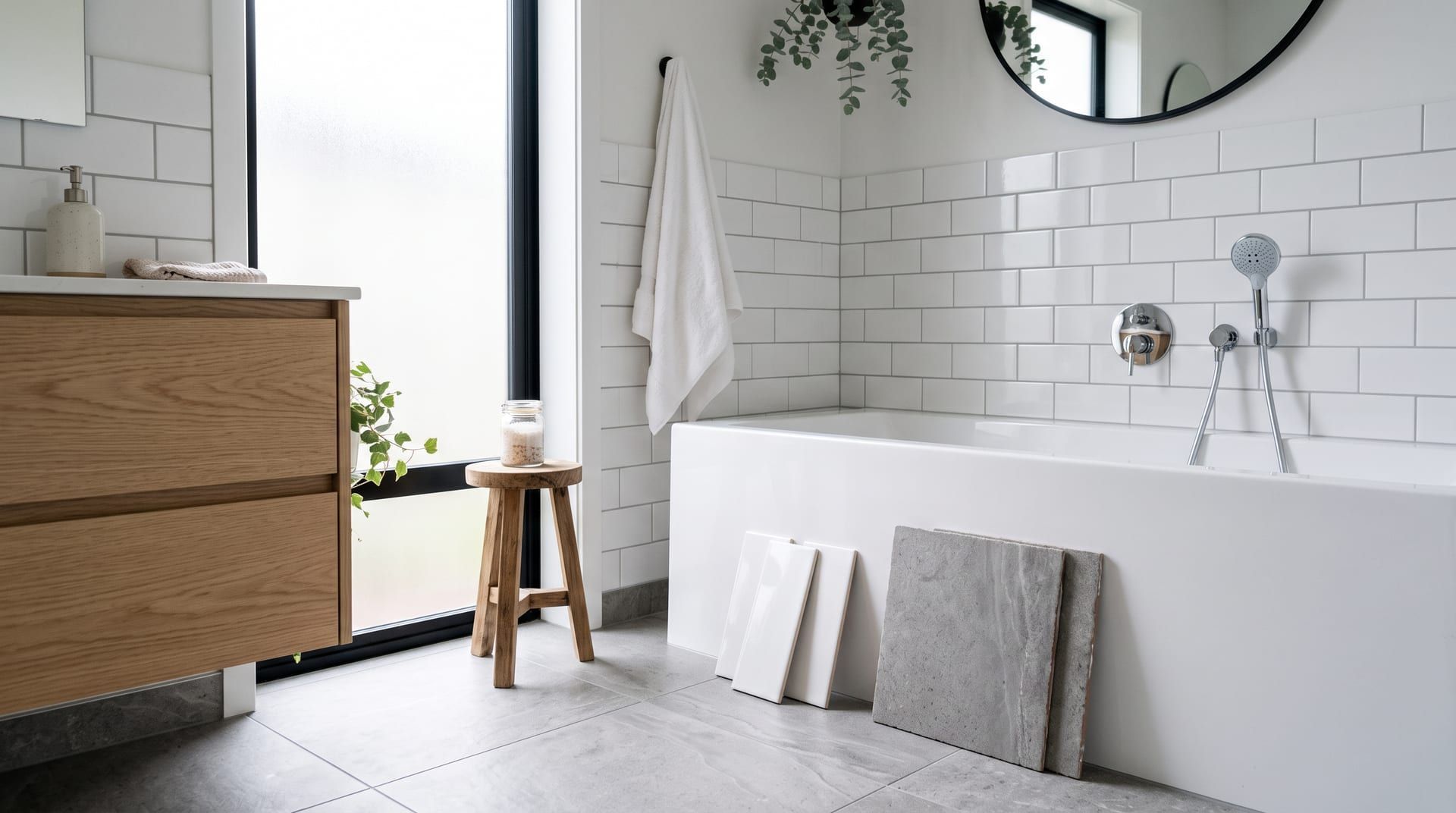
Butcher block, laminate and solid surface are the three countertops that cost less than stone. Laminate is the cheapest and needs no care, but it cannot be repaired and does not take heat. Butcher block brings warmth and can be sanded back to new, but it needs oil and dislikes water. Solid surface sits between them on price, has no visible seams, can carry an integrated sink and can be repaired, but it scratches and does not like heat. If you want stone performance, compare quartz, quartzite, granite and marble instead.
Butcher block vs laminate vs solid surface at a glance
| Butcher block | Laminate | Solid surface | Quartz (for reference) | |
|---|---|---|---|---|
| What it is | Glued strips of hardwood | Printed plastic layer on particleboard | Acrylic or polyester resin with mineral filler | Crushed stone bound with resin |
| Look | Warm wood | Prints of stone, wood, solid colours | Solid colours, soft stone looks, no seams | Stone looks, crisp veins |
| Water | Needs oil or sealer, wipe spills | Fine on top, seams and edges swell | Non-porous, integrated sinks | Non-porous |
| Heat | Can burn | Scorches and blisters | Can discolour or crack | Resists more, still use a trivet |
| Scratches | Scratches, sand them out | Resists light wear, deep cuts are permanent | Scratches, sand them out | Resists scratches |
| Repair | Sand and re-oil | Hard or impossible | Sand and polish | Professional repair |
| Upkeep | Oil regularly | None | None | None |
| DIY install | Possible | Possible | Fabricator | Fabricator |
| Installed cost | Middle | Lowest | Middle to high | Higher |
How does the same kitchen look with each countertop?
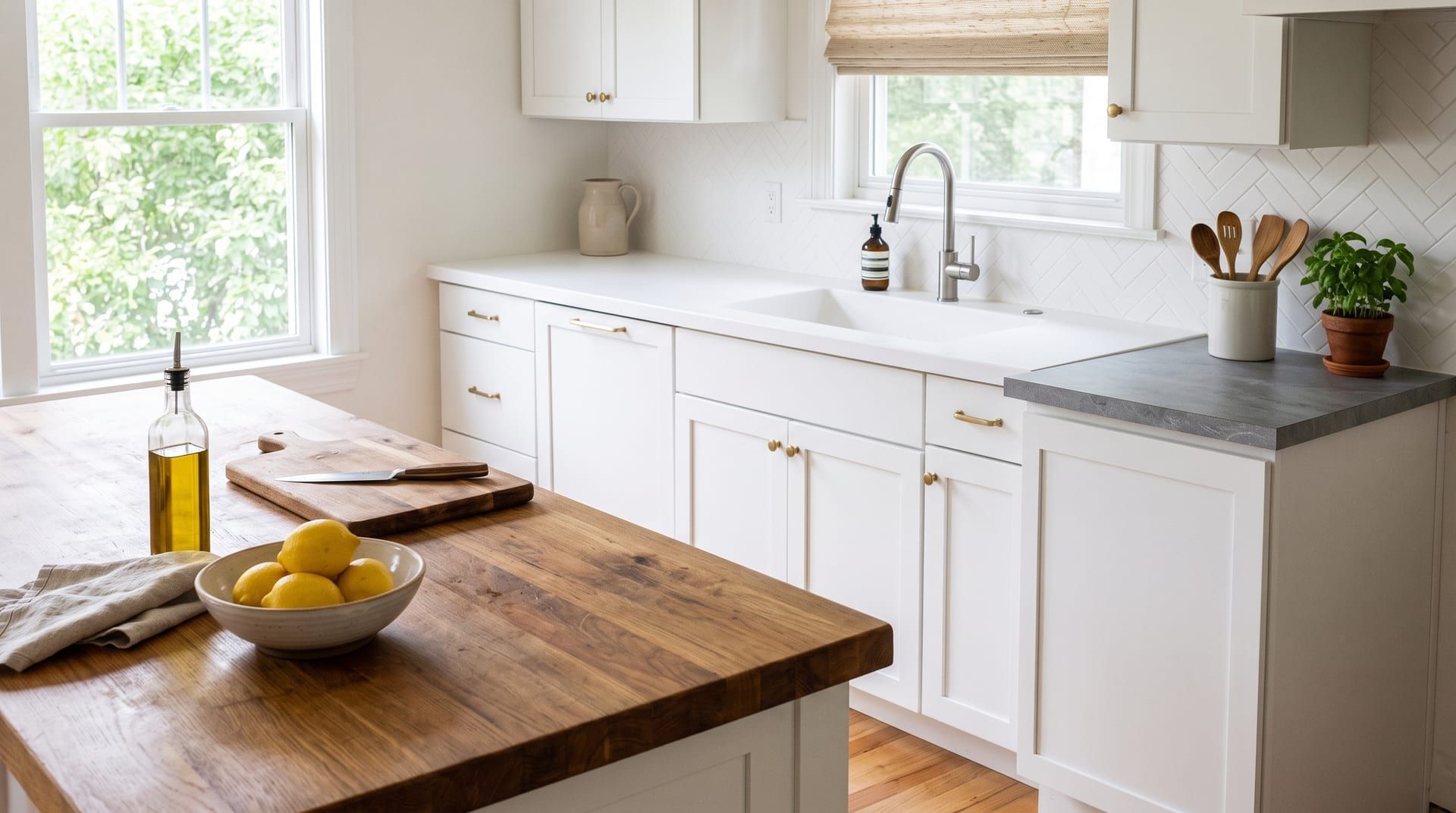
The four images in this section use one kitchen photo. Only the countertops change. The cabinets, the floor, the window and the camera angle stay the same.
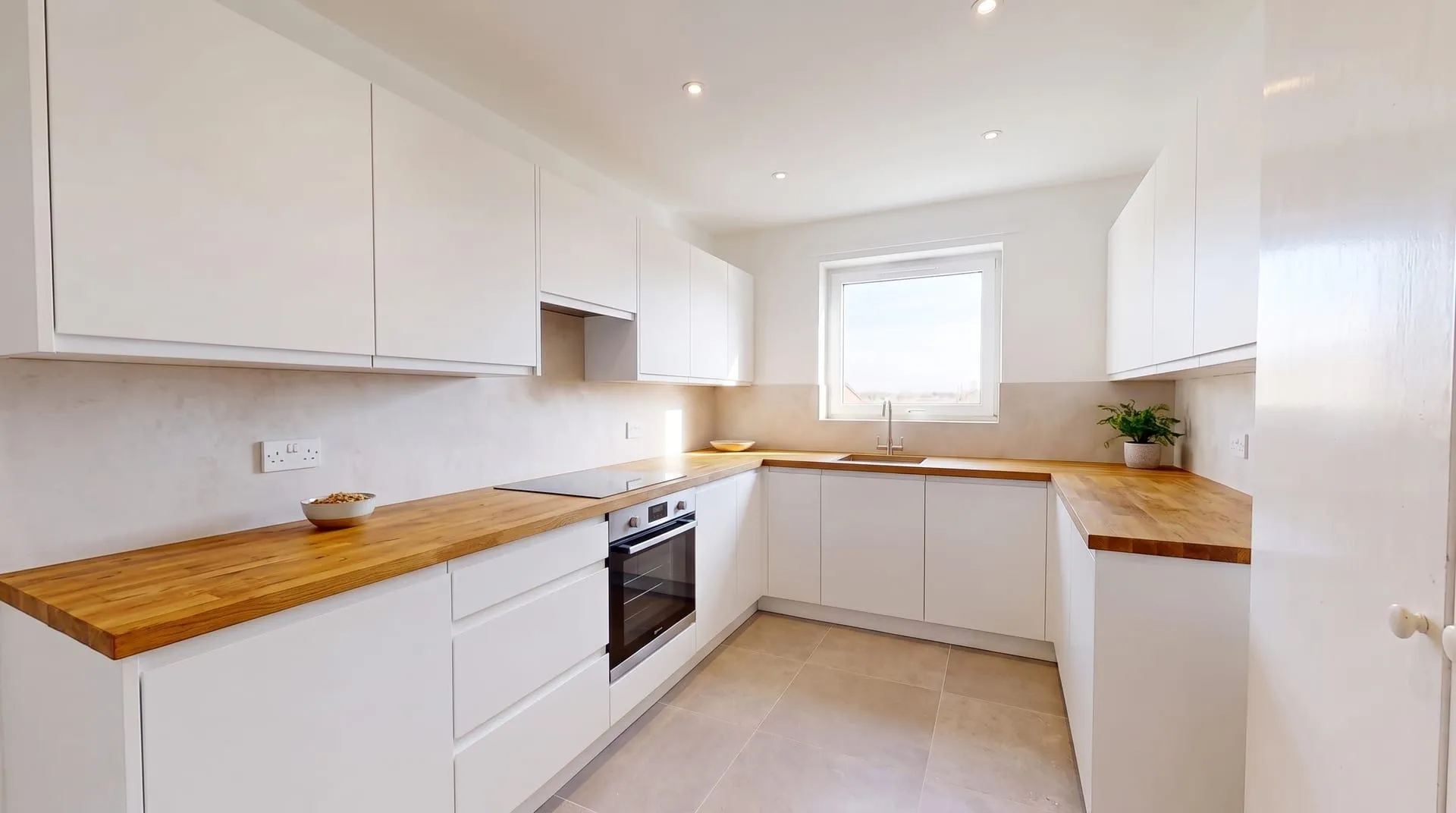 Oiled oak butcher block. Generated with remyhomeai’s AI model from one sample photo.
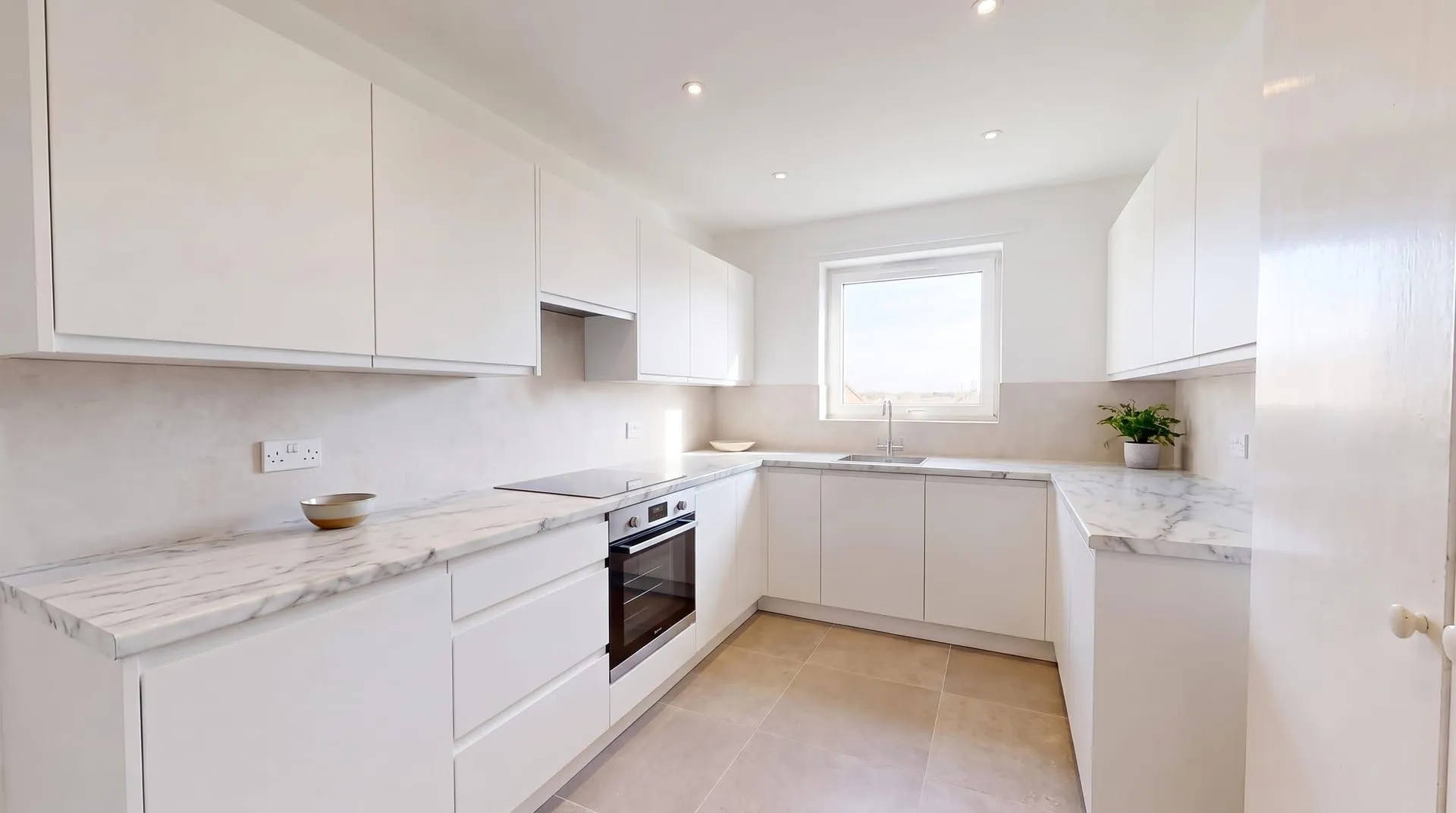 Marble print laminate. Generated with remyhomeai’s AI model from one sample photo.
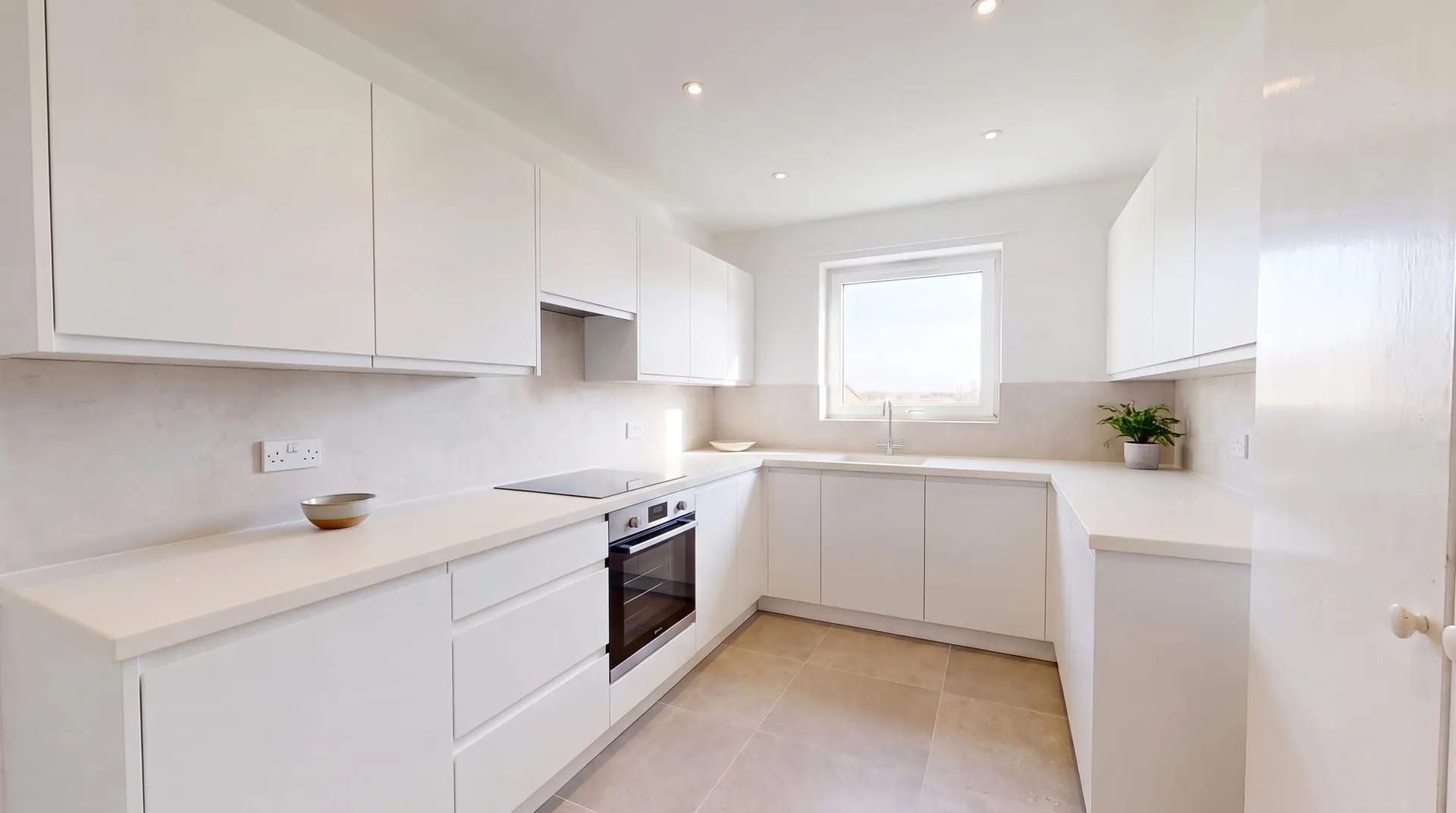 Matte white solid surface. Generated with remyhomeai’s AI model from one sample photo.
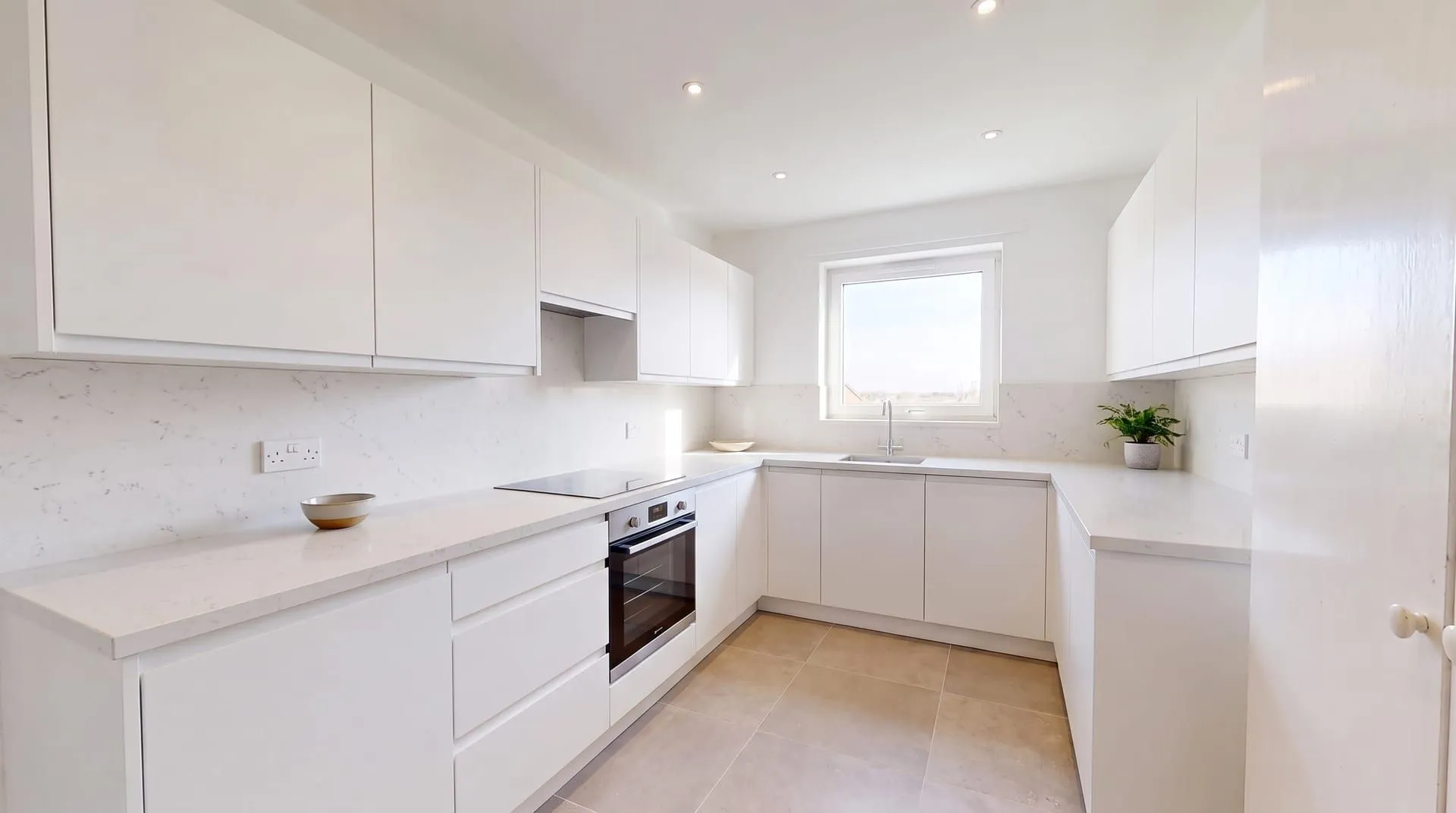 White quartz with a matching splashback, for reference. Generated with remyhomeai’s AI model from one sample photo.
In a white kitchen, butcher block makes the biggest change. It adds warmth and makes the room feel more lived in. The marble print laminate and the white solid surface keep the room bright and calm, and from across the room they read close to quartz. The differences show up close, at the edges and after a few years of use.
Butcher block: warm, repairable, needs care
Butcher block is made of strips of hardwood (often oak, maple or walnut) glued into a slab. Most kitchen worktops are edge grain, with the long sides of the strips facing up.
Why choose it: it is warm to look at and to touch. It is quiet when you put things down. Scratches, knife marks and stains can be sanded out, and you re-oil the area. It suits a kitchen in a Scandinavian, farmhouse or traditional style, and it makes a good island top beside a harder material at the sink.
Where it falls short: it needs oil, often monthly at first and then a few times a year. Standing water around the sink causes dark rings and grey, lifted grain. A hot pan leaves a burn. Wood also moves with humidity, so it needs fixings that let it expand.
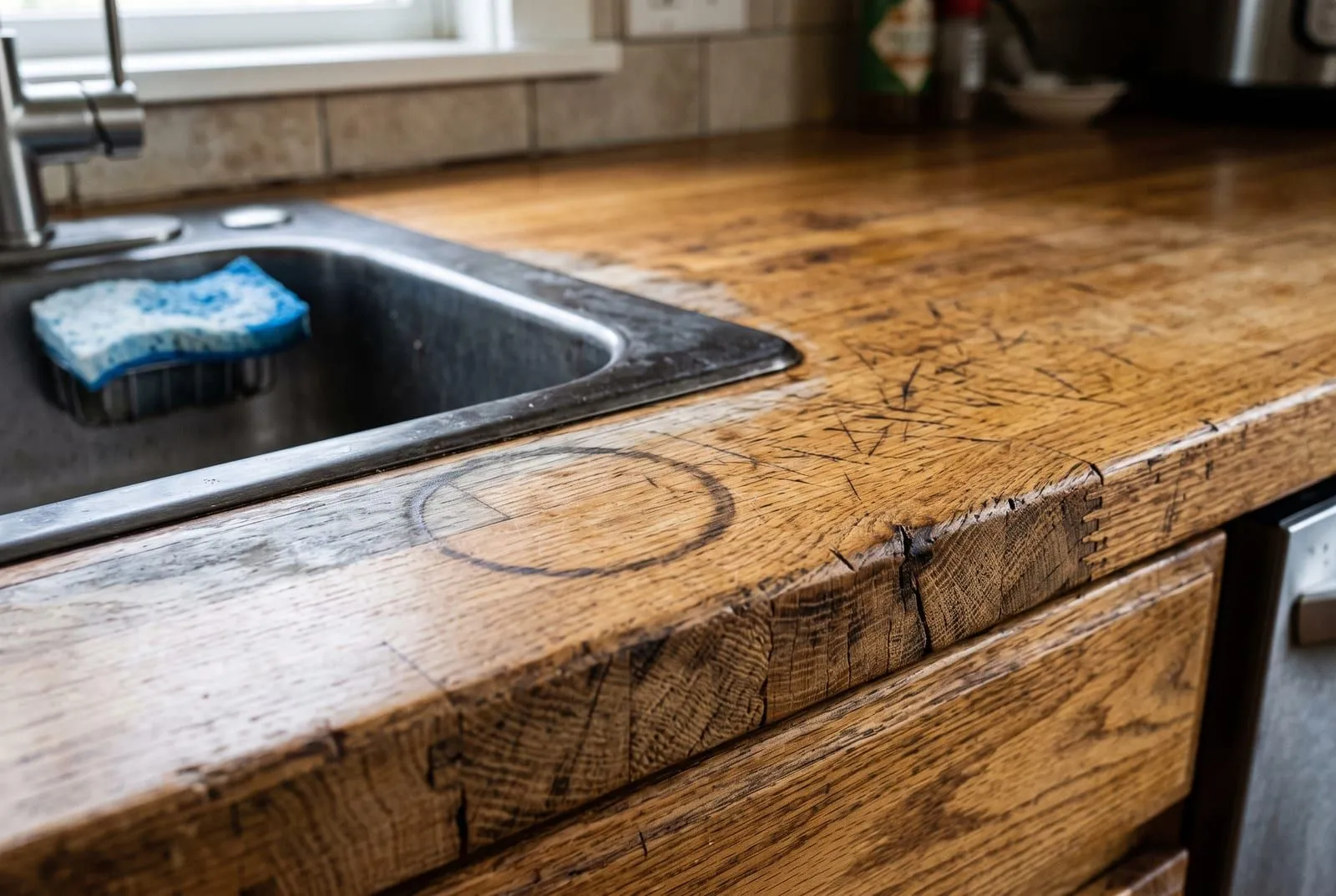 Knife marks and a water ring by the sink: the wear butcher block shows first. An illustration for this article.
Laminate: the cheapest, but not repairable
Laminate is a thin layer of printed paper and resin pressed onto a particleboard or MDF core. Modern prints of marble, concrete and wood look convincing, and a rounded, post-formed edge hides the core.
Why choose it: it has the lowest installed cost of any common countertop. It needs no sealing or oil. It resists stains and light wear, and it is light enough for a confident DIYer to fit.
Where it falls short: heat from a pan can scorch or blister the surface. A deep cut or chip shows the core and cannot be repaired invisibly. If water gets into a seam or a cut edge, the particleboard swells and the top lifts. Most laminate also cannot take an undermount sink, so you get a sink with a rim on top. Its resale appeal is lower than stone.
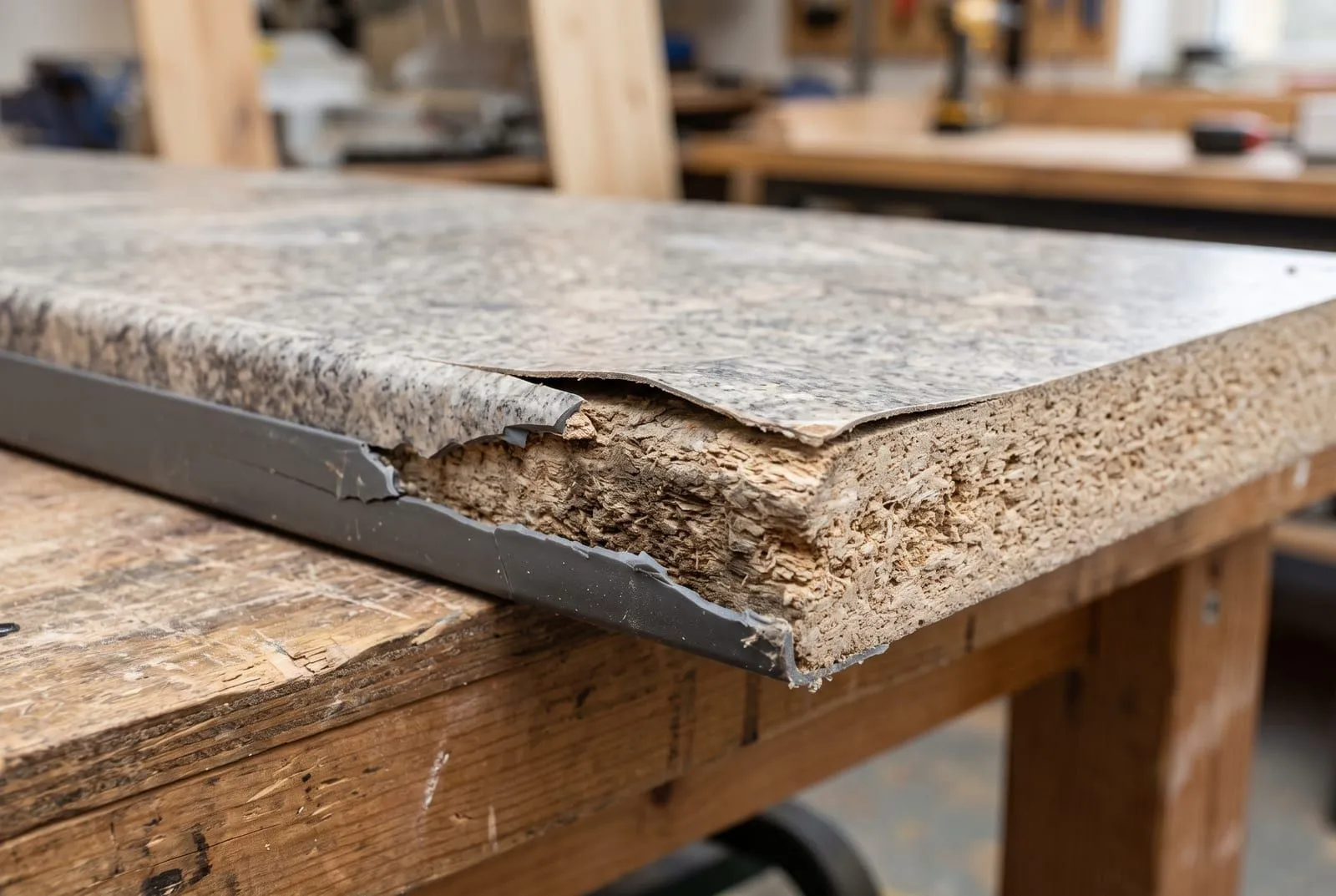 A chipped edge on a swollen particleboard core: the failure laminate cannot recover from. An illustration for this article.
Solid surface: seamless and repairable
Solid surface (Corian is the best known brand) is a resin with a mineral filler. The colour runs all the way through. Joints are bonded with a matching adhesive and sanded flush, so a long run or an L-shape has no visible seams.
Why choose it: it is non-porous, so it does not stain like wood or need sealing like natural stone. It can include an integrated sink moulded into the worktop, with no rim or seam for dirt. Scratches and small burns can be sanded and polished out.
Where it falls short: it is softer than quartz and shows fine scratches, especially in dark colours. Hot pans can discolour or crack it. The stone patterns look less real than quartz, and the installed price can approach the low end of quartz.
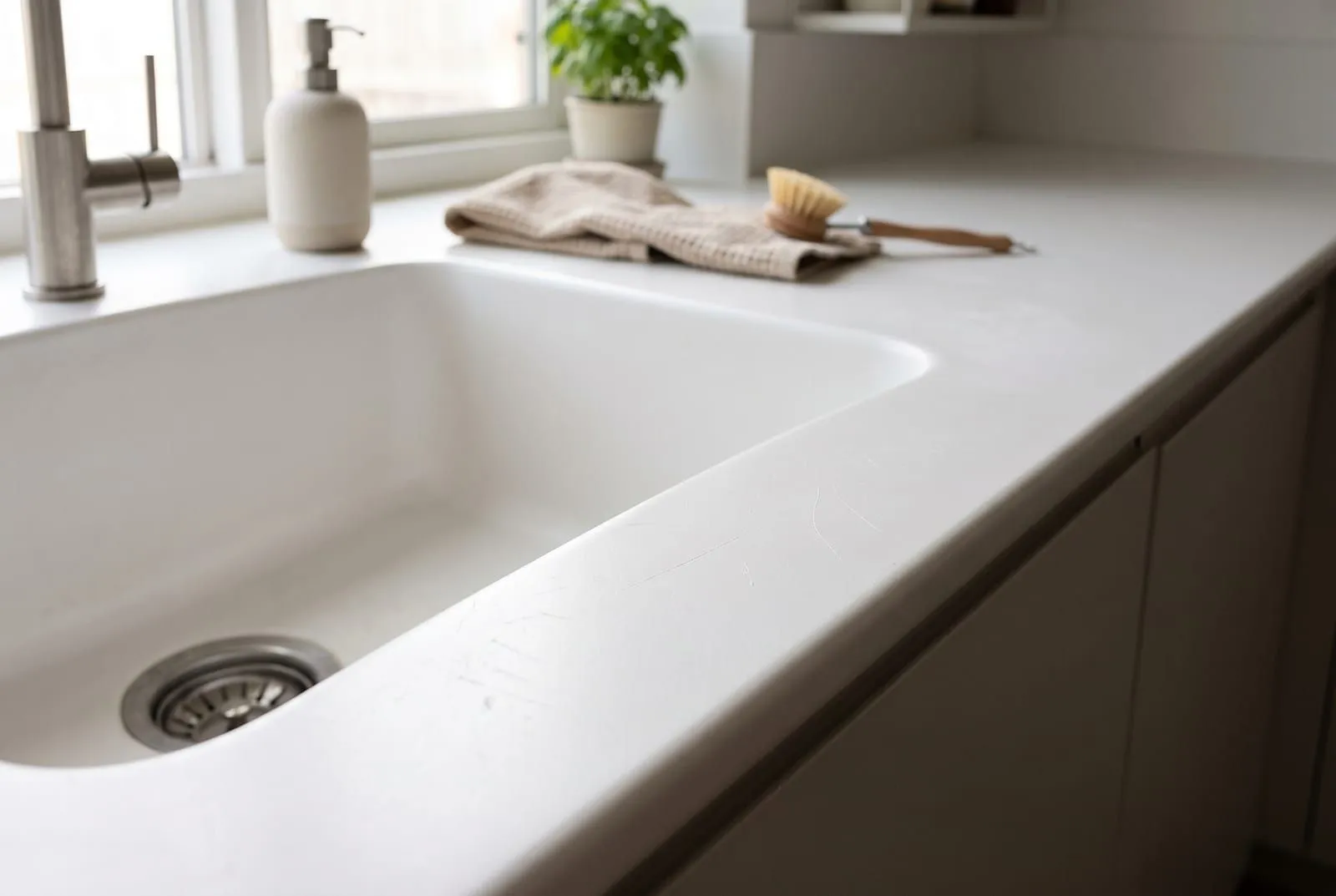 An integrated sink with no seam, and the fine scratches that come with use. An illustration for this article.
What do they cost?
Prices vary with region, edges, cut-outs and the size of the job. As of October 2026, rough installed bands per square foot are:
- Laminate: about $15 to $60, averaging around $30 (Fixr).
- Butcher block: about $50 to $100, more for exotic hardwoods (Bob Vila).
- Solid surface: about $45 to $150 (Slabwise).
Laminate is clearly the cheapest. Butcher block and solid surface overlap, and both can cost as much as entry-level quartz in some markets, so get quotes for all of them before you decide.
Which budget countertop should you choose?
- Choose laminate for a rental, a quick refresh, a utility room or the lowest possible cost. Avoid it if you cook with heavy pans straight from the hob.
- Choose butcher block for warmth, on an island or a run away from the sink, and if you do not mind oiling it.
- Choose solid surface for a clean, seamless look with an integrated sink, and for a family kitchen where you want to sand out damage instead of living with it.
- Choose quartz or stone if heat and scratch resistance matter most. The stone countertop comparison covers that choice.
Whatever you pick, plan the splashback with it. The kitchen backsplash ideas guide shows which tiles and materials suit each countertop.
Preview the look on your own kitchen
A countertop changes how the whole kitchen reads, so it helps to see the overall effect first. remyhomeai redesigns a photo of your own kitchen in one of 7 styles and 39 palettes. Tick Keep on the floor, doors, windows and walls so the rest stays as it is. It shows a style and a palette, not a specific countertop product or edge, so use it to judge warm wood against white or stone looks, then compare real samples in your light.
Sources
- Fixr: laminate countertop cost
- Bob Vila: butcher block countertops cost
- Slabwise: solid surface countertops cost
Try it on your own room. See your room in a new style with 3 free designs at signup, no card required.