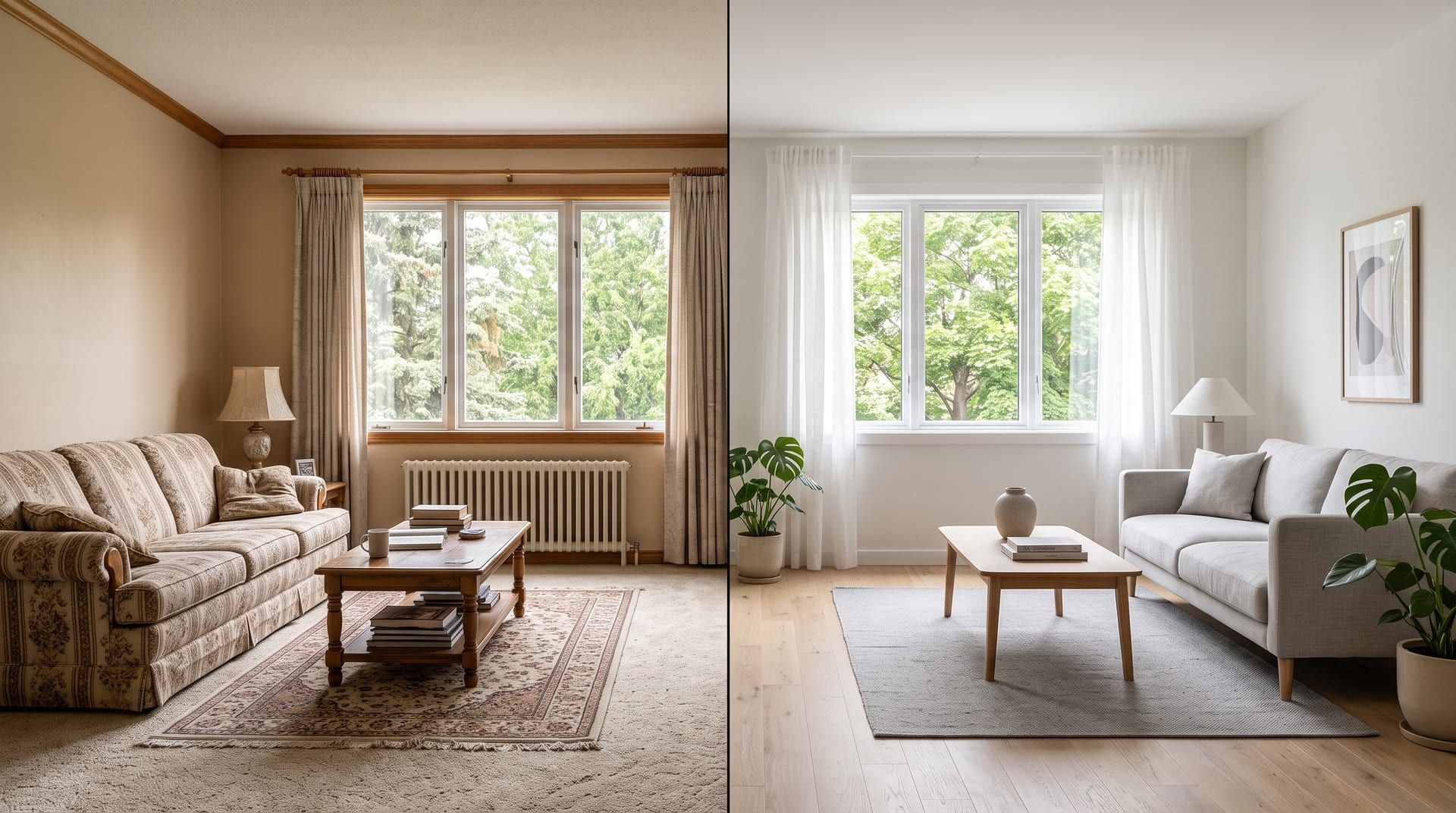
AI virtual staging furnishes an empty listing photo digitally, in minutes, for a subscription or a small fee per image. A human staging service does the same job by hand, slower and at a higher price per photo, with more control over the result. Both have to be disclosed as virtually staged in most markets. Both fail in the same ways: wrong furniture scale, floating objects, light that does not match the window, and a floor that quietly changed.
What is virtual staging?
Virtual staging adds furniture, rugs, art and lighting to a photo of an empty room, so a buyer or renter can picture living there. Nothing physical moves. The listing shows the staged photo, usually beside the empty original. It replaced the truck of rented furniture for many listings because it costs less and takes hours instead of days.
It is different from restyling. Restyling starts with a furnished room and changes how it looks. Staging starts with an empty room and decides what goes in it. The two tasks need different tools.
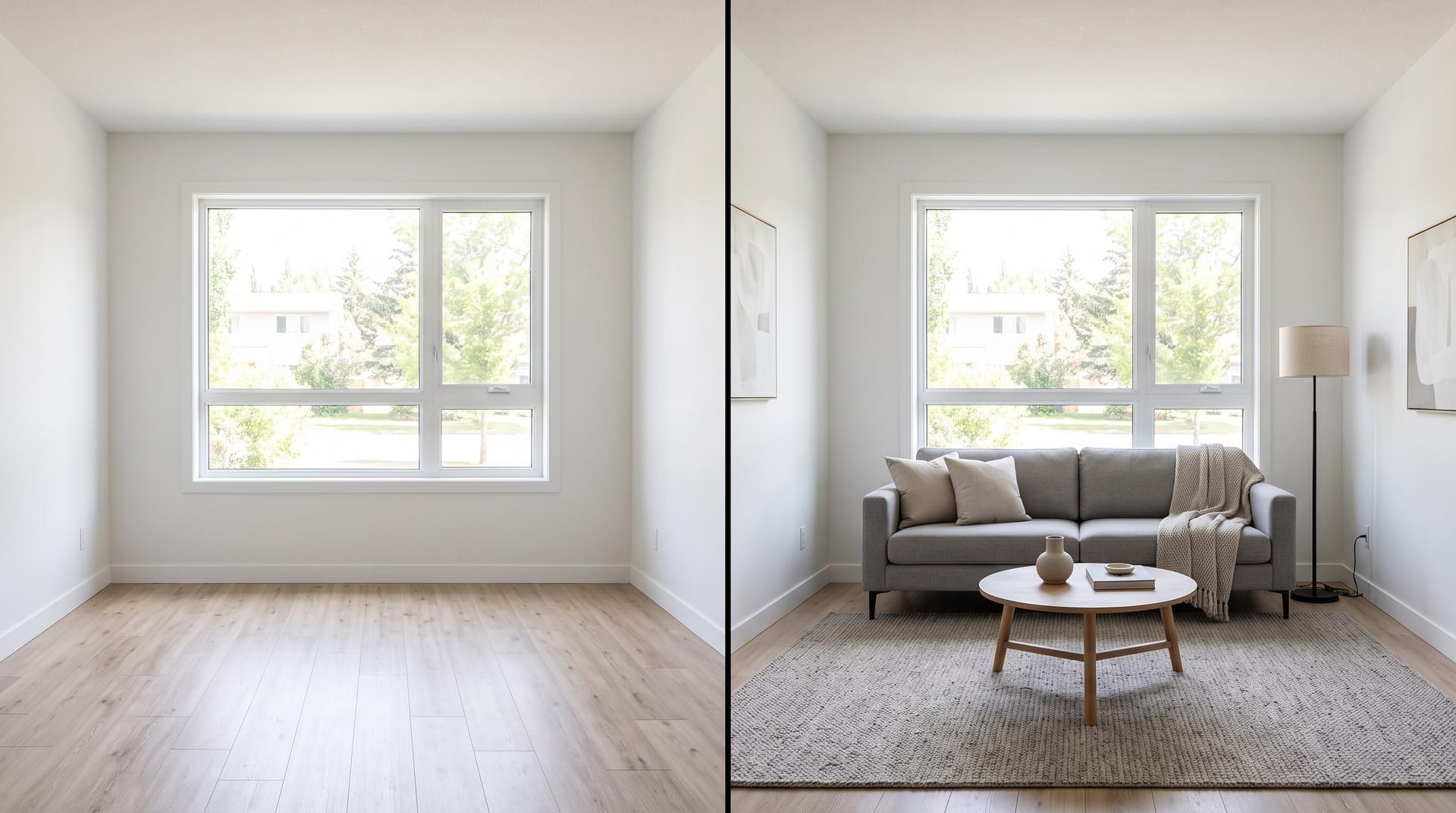
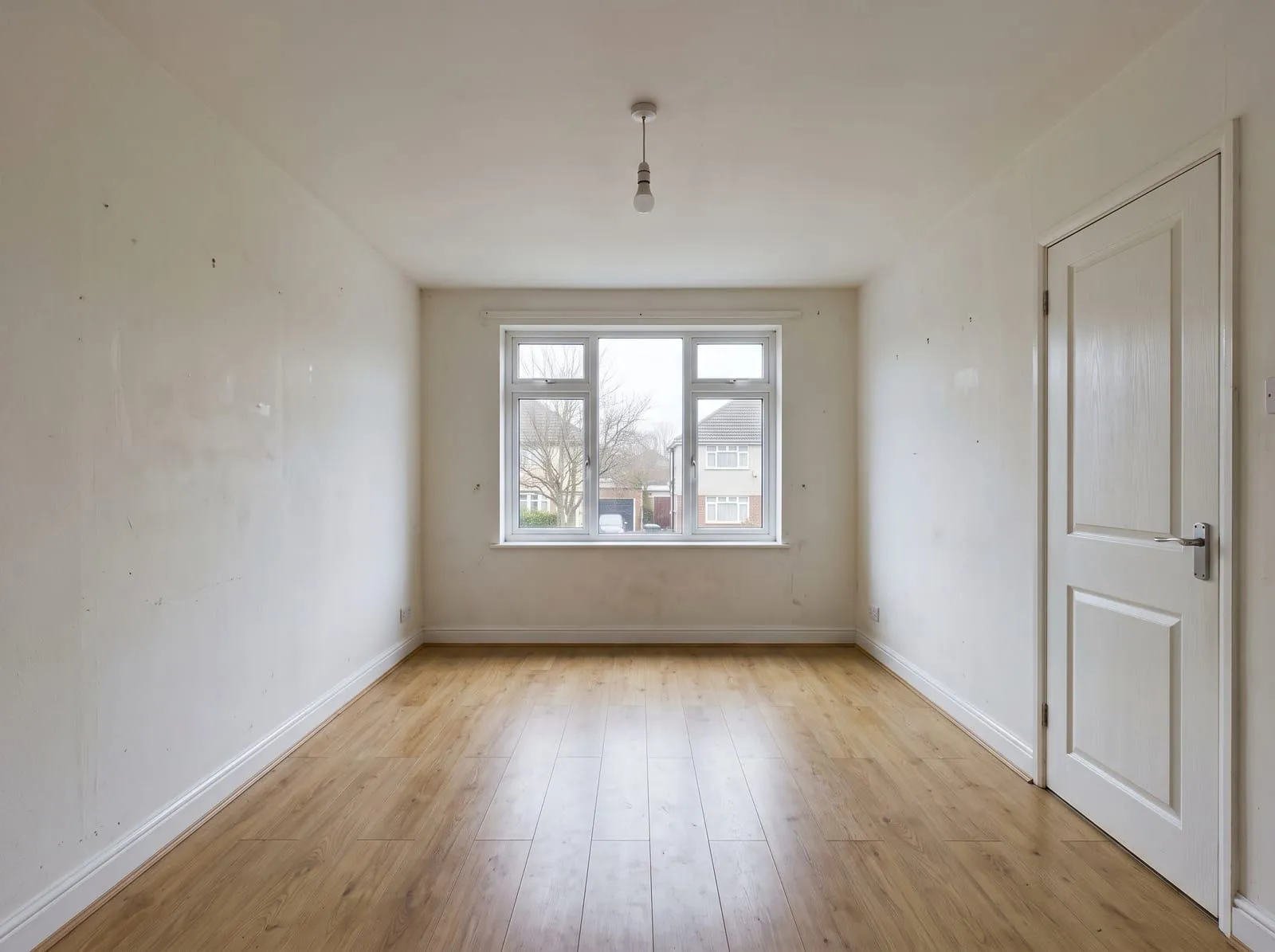 An empty room, generated as an illustration for this article.
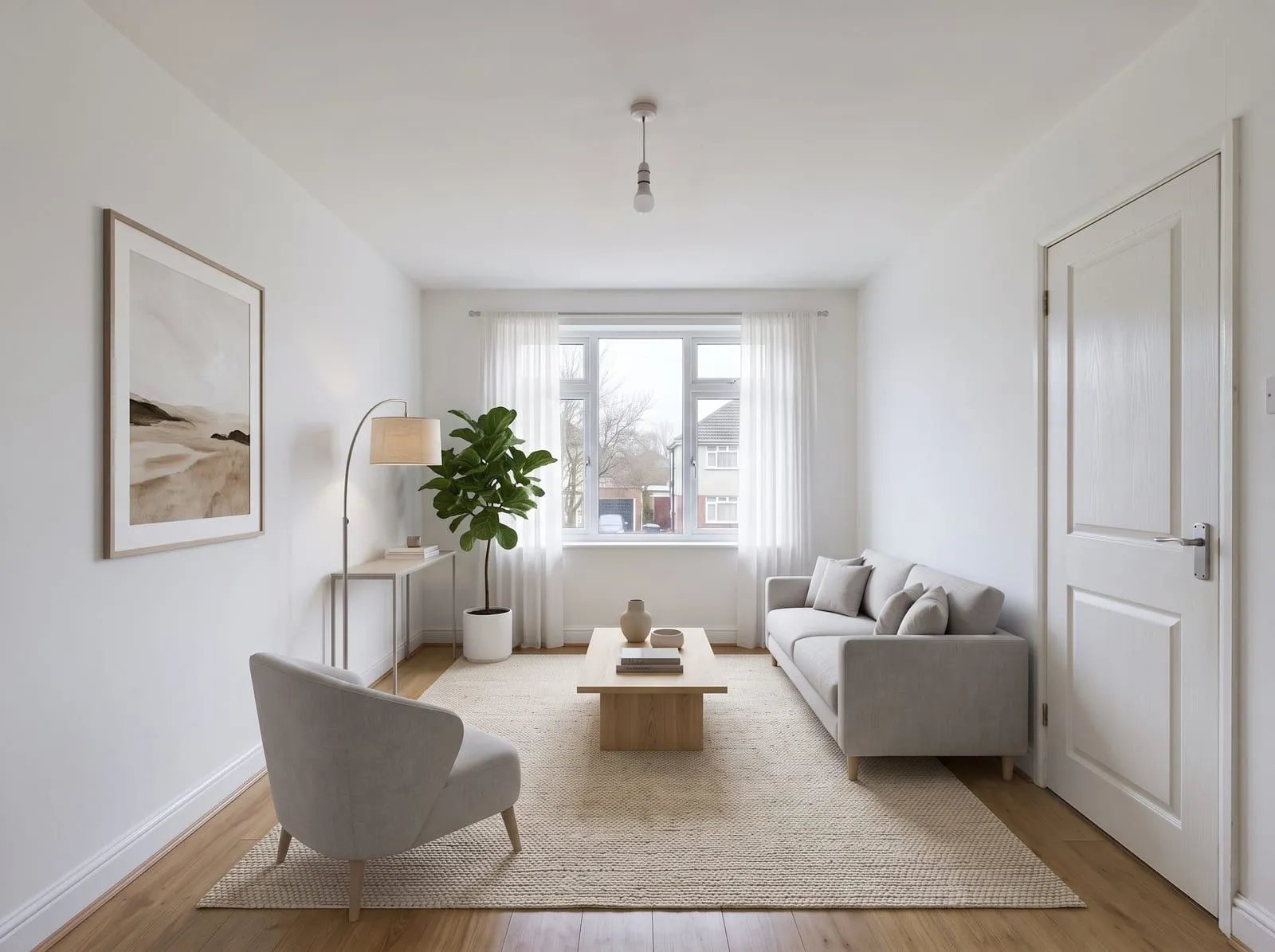 The same image, furnished digitally to show what staging does. remyhomeai does not stage empty rooms.
How does AI staging work compared with a human service?
An AI staging tool takes the empty photo and a prompt (room type, style, sometimes a palette) and generates furniture into the image. The model infers the floor plane, the walls and the light from the photo and places objects to match. You get a result in seconds to minutes and can regenerate until one works.
A human service hands the photo to a designer, who places 3D furniture models in the scene with editing software, matches shadows and perspective by hand, and sends a proof. Revisions go back and forth over a day or two.
| Human staging service | AI staging tool | |
|---|---|---|
| Turnaround | One to three business days, plus revision rounds | Seconds to minutes, regenerate at will |
| Control | A person places each item. You can ask for a specific sofa. | A prompt steers it. Exact placement is up to the model. |
| Consistency across a listing | High. One designer stages every room in one style. | Variable. Each photo is generated on its own, so styles can drift between rooms. |
| Common errors | Rare, but a proof round is still needed | Scale, floating objects, changed floors. Check every image. |
| Pricing shape | Per photo, sometimes per revision | Subscription or credits per image |
What does virtual staging cost?
Prices take two shapes. Human-edited services charge per photo and sometimes per revision. AI tools charge a monthly subscription that includes a number of images, or sell credits per image. As of October 2026, the market ranges from a few dollars per photo for AI tools to tens of dollars per photo for a human-edited service.
A listing often needs five to eight staged photos, so multiply before you compare. Check the vendor’s current pricing page before you rely on any figure.
Do you have to disclose a virtually staged photo?
In many markets, yes. MLS rules and consumer protection rules commonly require that a staged photo be labelled as virtually staged, and some require the empty original to be shown as well. The reason is simple. A buyer who books a viewing from a photo and walks into a bare room with a different floor feels misled, and misled buyers complain to the board.
Check your local MLS rules and ask your broker before you publish. The safe practice is the same everywhere: label every staged image in the caption and on the image itself, never alter the structure (walls, windows, floors, fixtures), and keep the unstaged photo available on request.
Where does virtual staging fail?
Check for these five failures before a photo goes live.
- Scale of furniture. The model guesses the room’s size from the photo. A sofa that is 20 percent too small makes the room look larger than it is, which is exactly what a buyer will notice at the viewing. Compare the staged sofa to the door height.
- Floating objects. A rug that does not meet the skirting, a chair whose legs stop a few pixels above the floor, a lamp with no shadow. These read as fake even to people who cannot say why.
- Wrong window light. Daylight comes from the window on the left, but the sofa’s shadow falls to the left. The result looks like a collage.
- Changed flooring. Some generators repaint the floor along with the furniture. A laminate floor that becomes oak in the listing is a misrepresentation, not a style choice. Lock the floor if the tool allows it, and compare with the original.
- Buyers who feel misled. The photo was technically correct and still oversold the room. Furniture in a style the buyer dislikes, or a layout that would not work with real furniture, costs trust at the viewing. Stage conservatively.
What remyhomeai does and does not do
remyhomeai is a restyling tool for furnished rooms. For an empty room, use a tool built for staging.
What it does: it edits a photo of a real, furnished room. Walls, windows, doors, ceiling height and camera angle stay where they are. Only the design changes. You pick one of 7 room types, one of 7 styles and one of 39 colour palettes, or describe a palette in your own words. The Keep controls lock the floor, doors, windows, ceiling or walls so they stay as photographed. A design takes 30 seconds to 3 minutes.
What it does not do: it does not furnish empty rooms. It does not rearrange furniture to a floor plan or produce a floor plan or 3D model. It does not give shopping links for the furniture shown. If the listing is empty, this is the wrong tool.
When is restyling a furnished listing photo the better fit?
Many listing photos are not empty. They are furnished and dated. For those, restyling fits better than staging because the furniture already has correct scale and real shadows. The tool changes the style and leaves the geometry alone.
- A dated but furnished home for sale. The owners still live there. The room is tidy but the sofa is twenty years old and the walls are a colour that makes buyers scroll past. A restyle shows the room as it could be, with the same windows and the same floor.
- A rental between tenants, with furniture staying. A furnished let needs photos now, and the furniture is part of the deal. A restyle in a lighter style shows the next tenant what the room can be without a single purchase before the listing goes up.
- A short-let or Airbnb refresh. The host wants to know whether a new palette and textiles would lift the photos before spending on them. Three styles on one photo answer that in a few minutes.
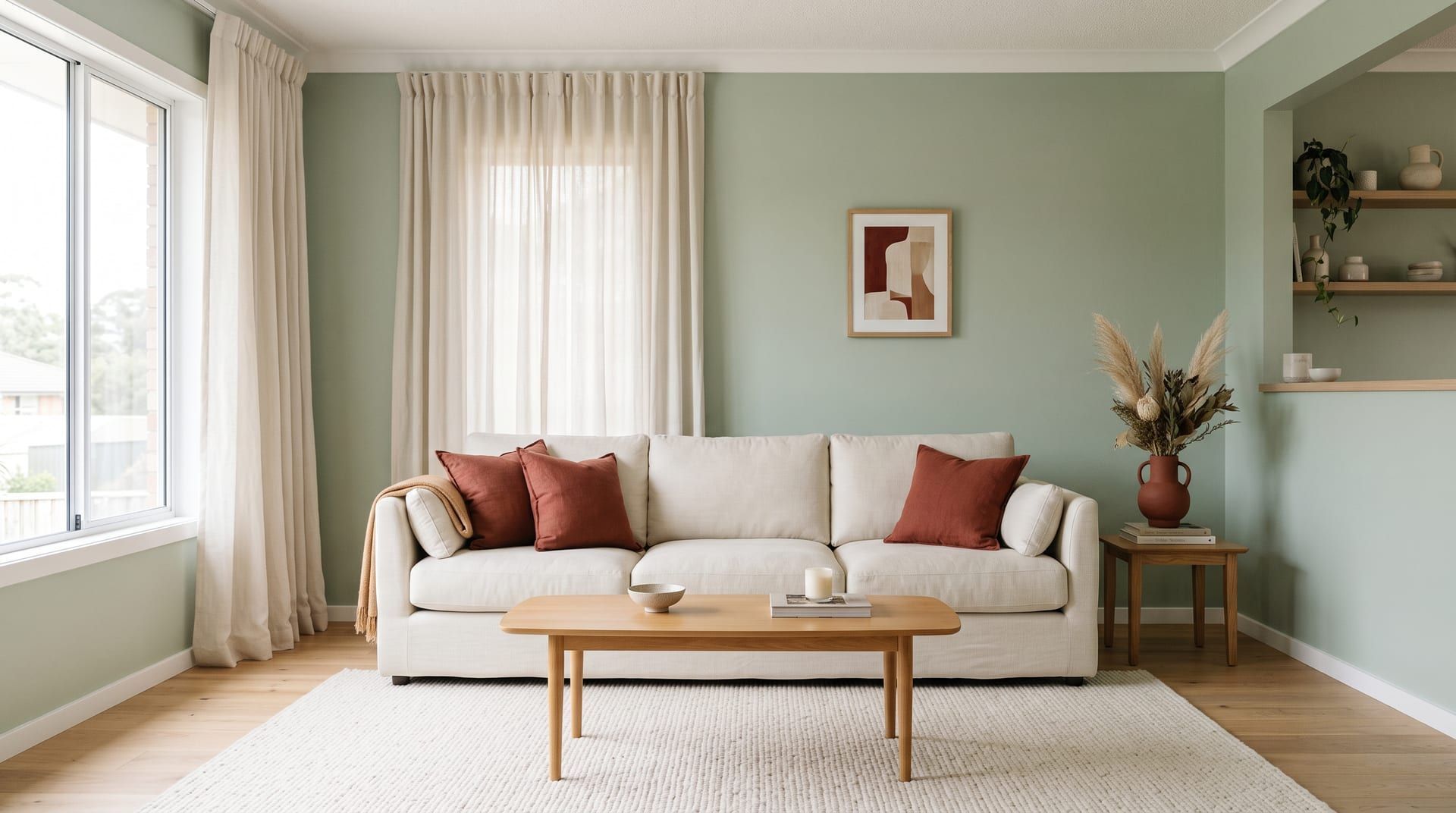
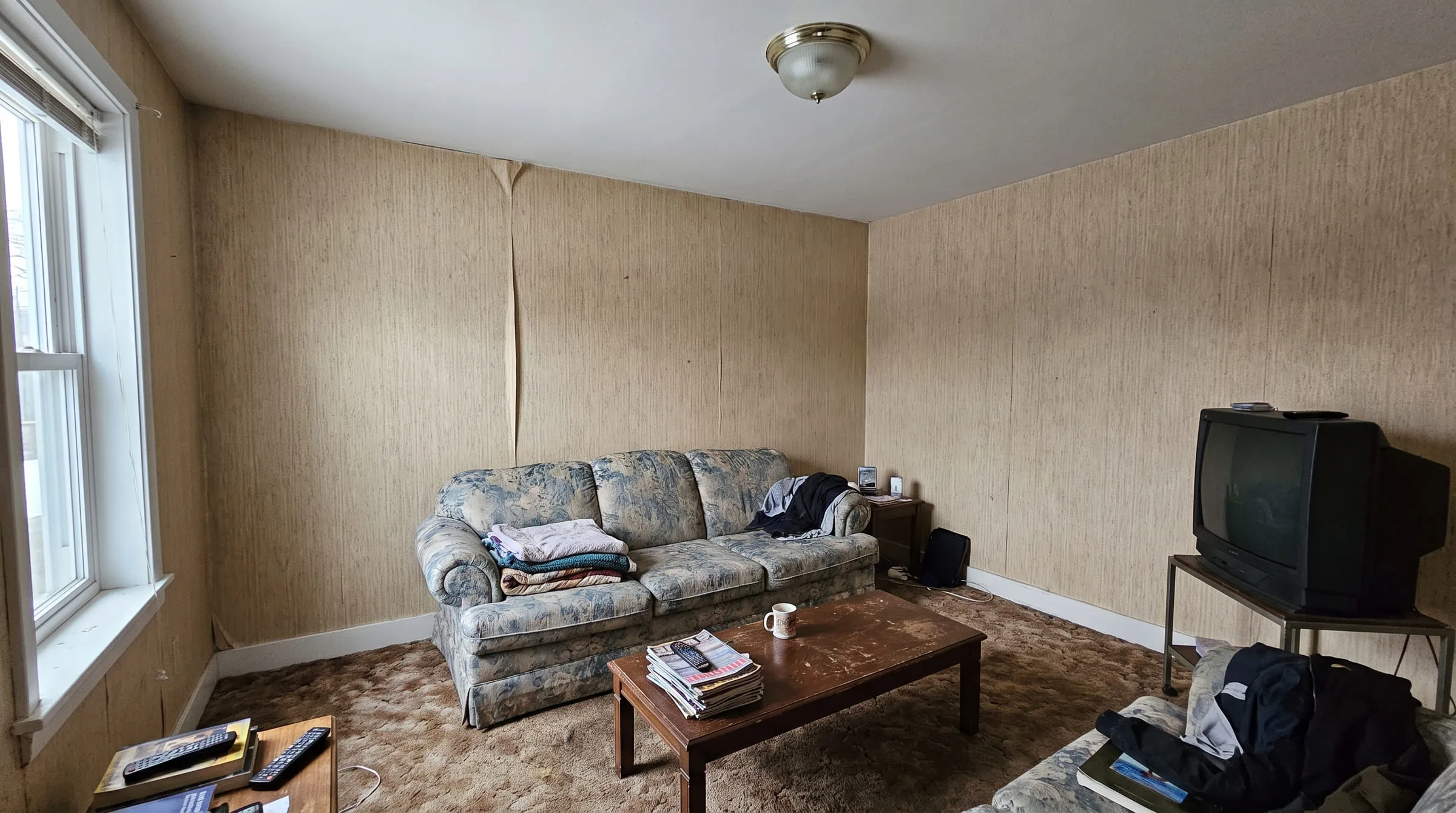 The original photo of a furnished living room.
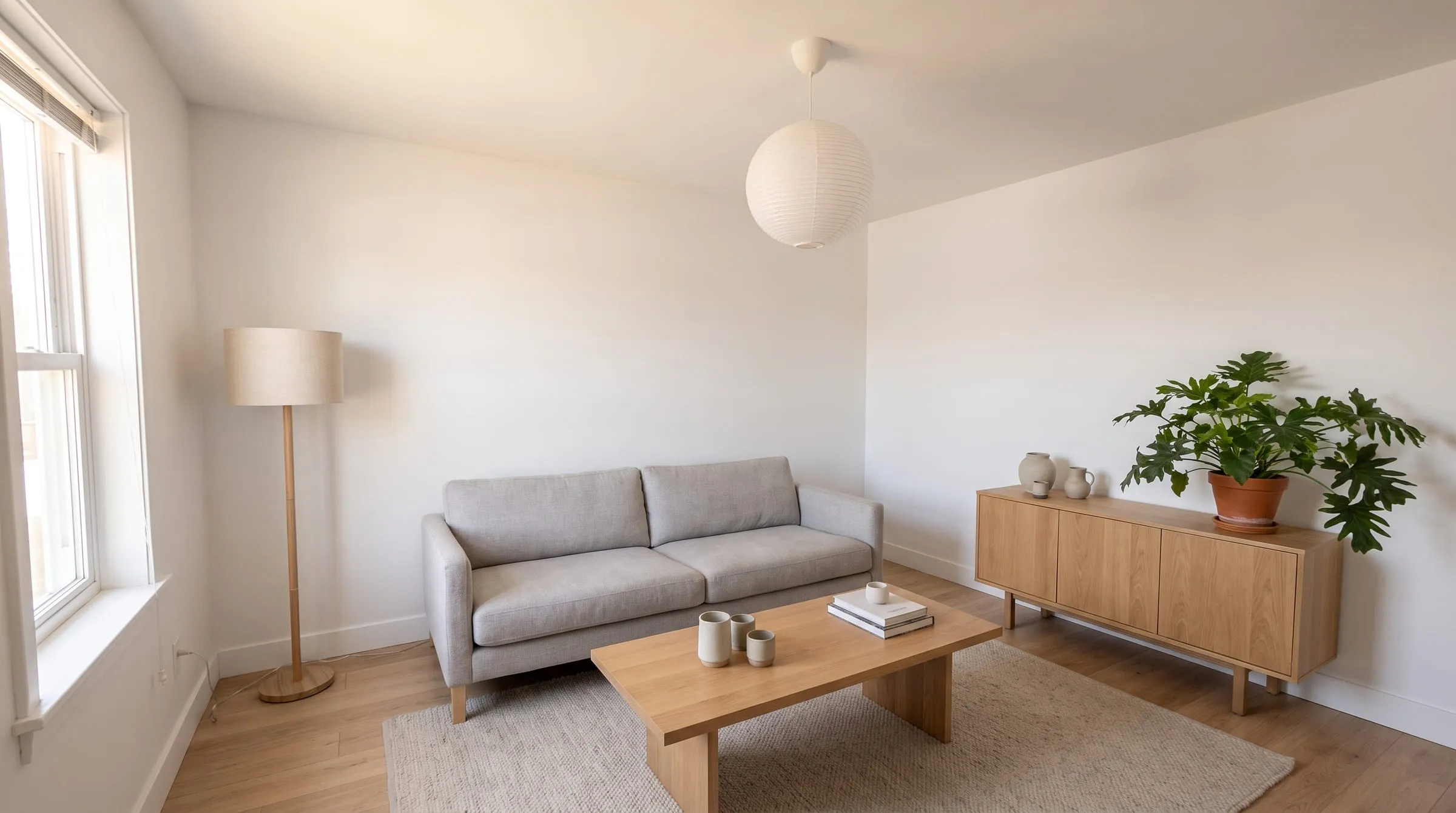 The same room restyled with remyhomeai’s AI model, from the photo above.
A restyled listing photo is still an altered photo. Check your local MLS rules here too, and label it. The living room page shows what a restyle does to that room type. AI room design from your photo explains how the editing keeps the room’s geometry, and how to use AI to decorate a room covers the upload step by step.
Try it on your own room. You get 3 free designs at signup, no card required. After that, credits start at $0.25 a design. Start free.