Paint is the better choice for most walls. It costs less per wall, it touches up easily and it survives kitchens and bathrooms. Peel and stick wallpaper is the better choice when you want pattern without paste, when you rent, or when you want to change one feature wall and undo it later. It needs a smooth, dry, well painted wall, and it is the weaker choice for a whole room or a humid one. When you want a pattern on a whole room for a decade, traditional wallpaper beats both.
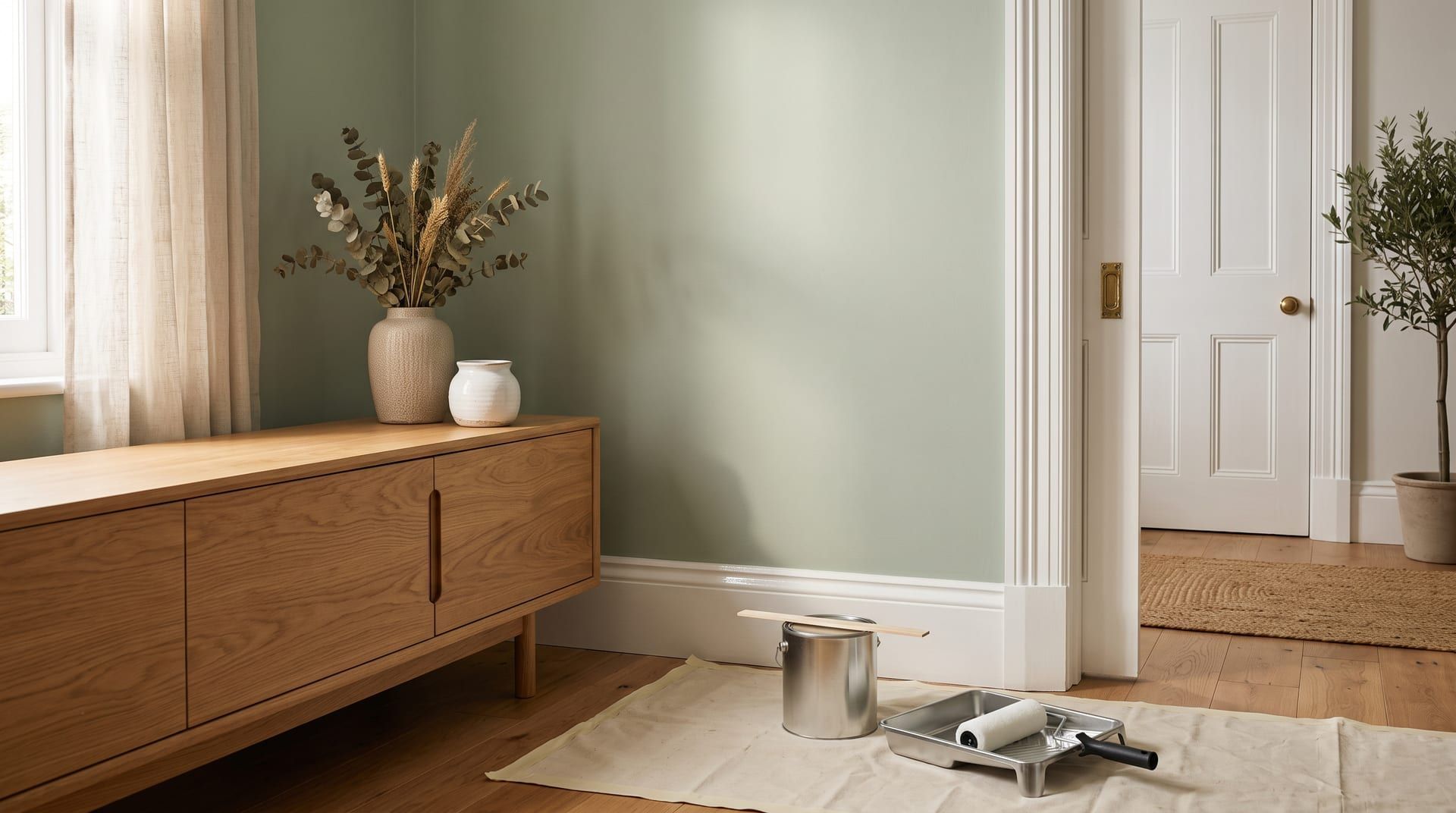
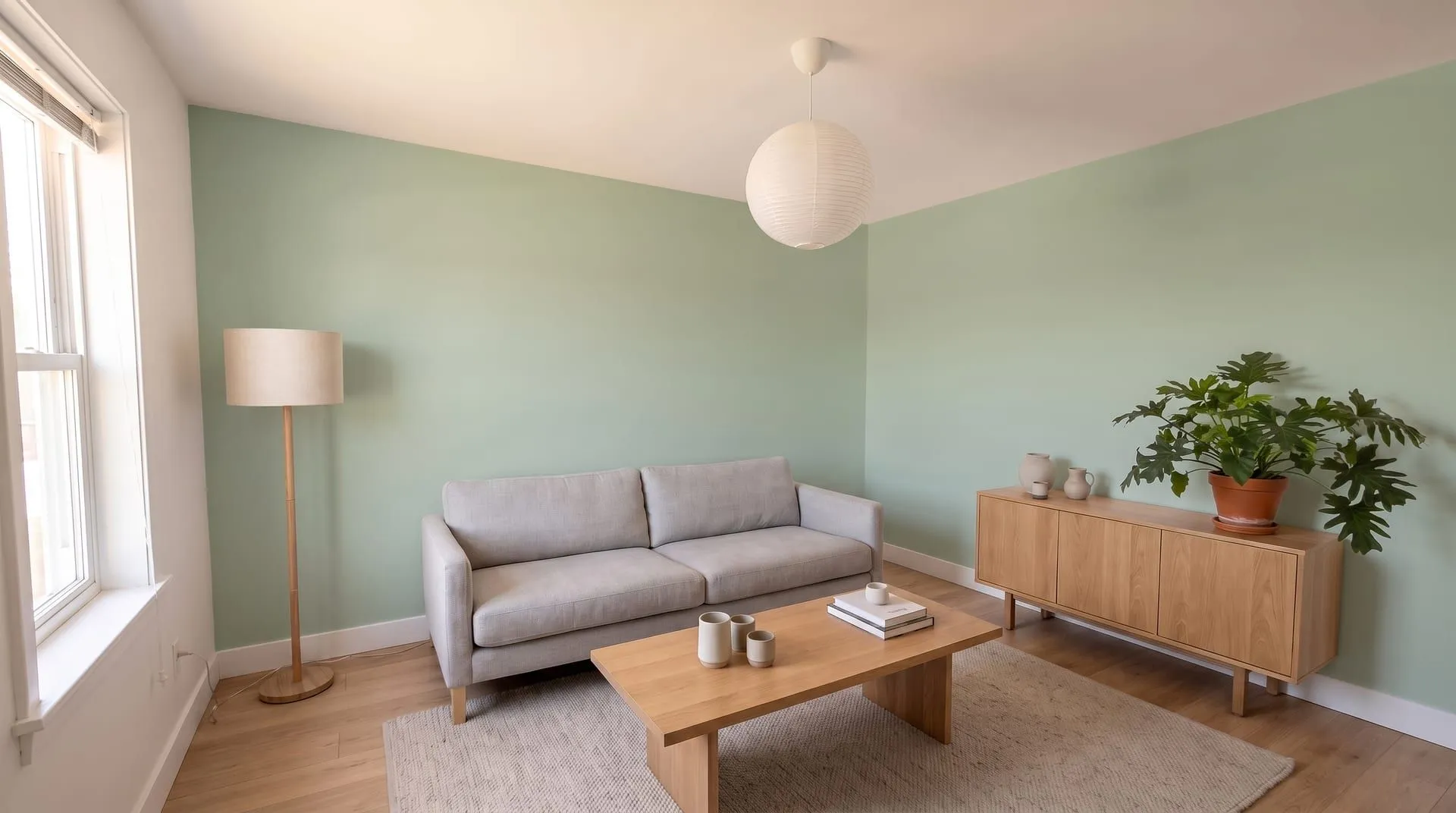 The living room painted sage green. Generated with remyhomeai’s AI model from one sample photo.
Peel and stick wallpaper vs paint at a glance
| Paint | Peel and stick wallpaper | Traditional wallpaper | |
|---|---|---|---|
| Look | Solid colour, any sheen | Pattern, texture prints | Pattern, widest choice, real textures |
| Cost per wall | Lowest | Higher than paint | Highest when hung by a pro |
| DIY | Easy | Easy on a small wall | Harder, paste and pattern matching |
| Wall prep | Fill, sand, prime | Smooth, clean, cured paint | Smooth, sized or primed |
| Lifespan | Repaint every few years in busy rooms | Shorter, edges can lift | Many years |
| Removal | Paint over it | Peels off, may lift paint | Steam or strip, some are dry strippable |
| Humid rooms | Yes, with the right paint | Poor | Vinyl types, yes |
| Touch-ups | Easy | Replace a strip | Hard, needs spare rolls |
How does the same room look painted vs papered?
The painted room at the top of this post and the three papered rooms below come from one living room photo. Only the walls change. The sofa, the floor, the window and the camera angle stay the same, so you compare the finish and nothing else.
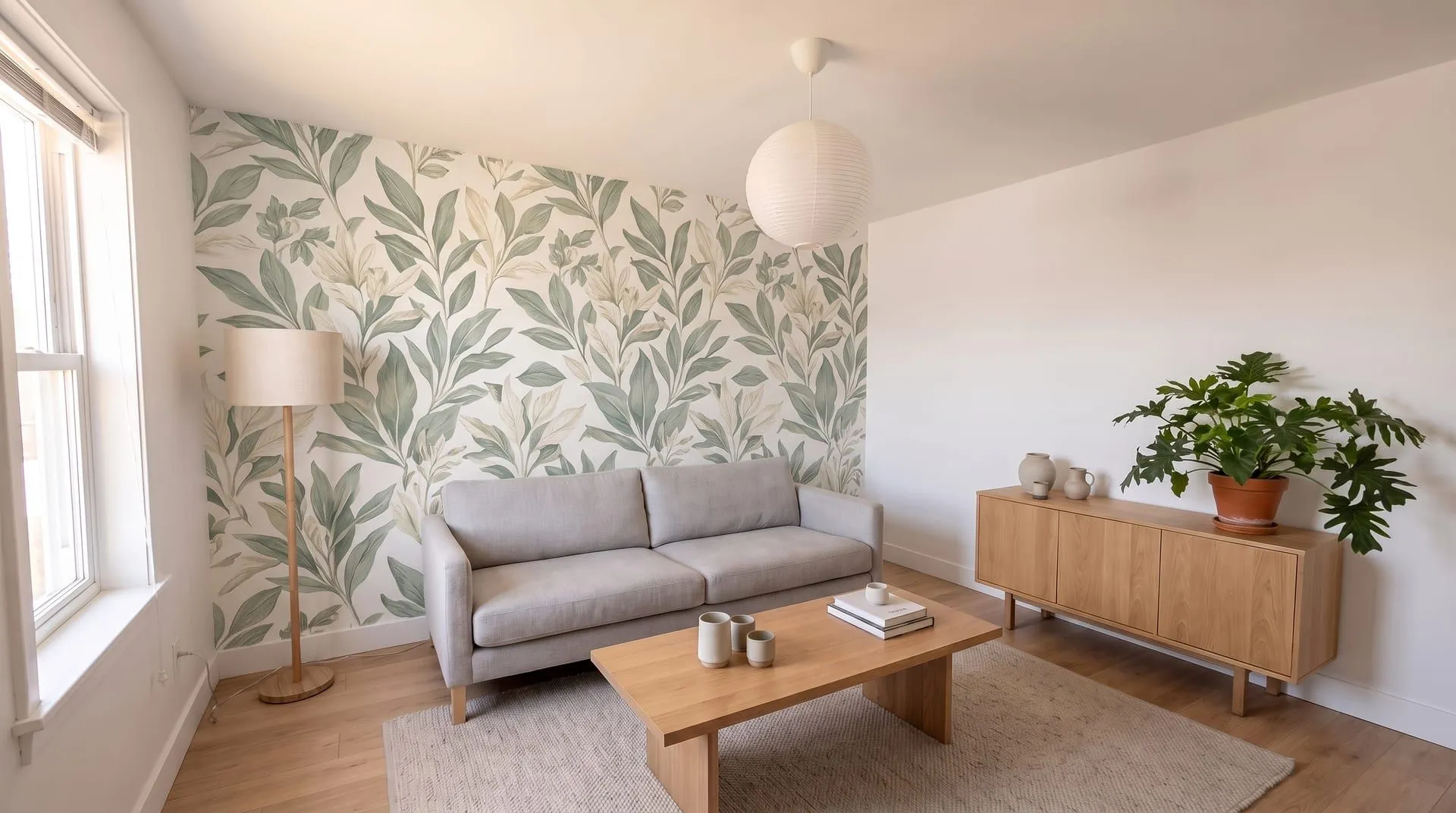 A botanical print on the sofa wall only. Generated with remyhomeai’s AI model from one sample photo.
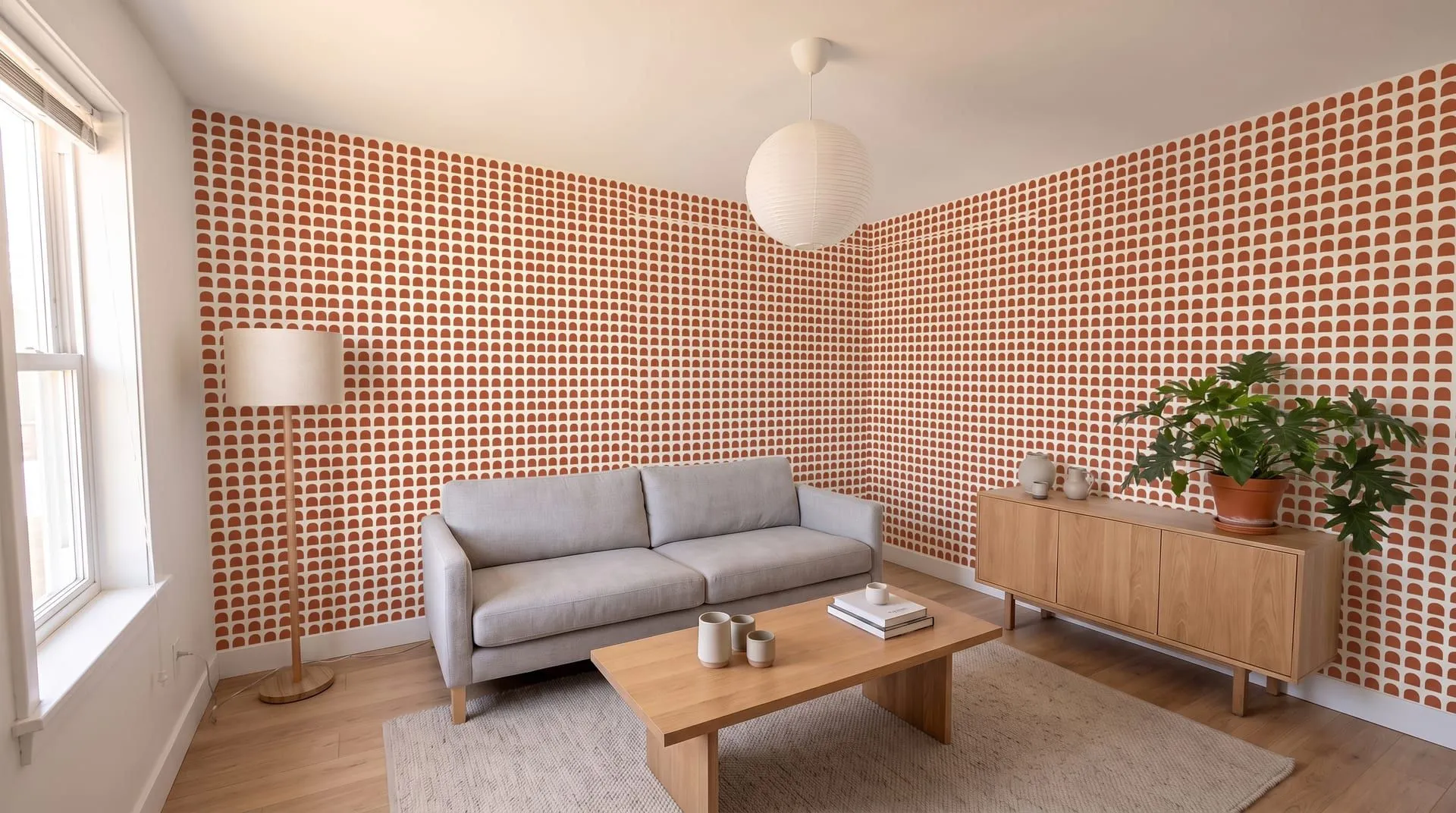 A small terracotta geometric on two walls. Generated with remyhomeai’s AI model from one sample photo.
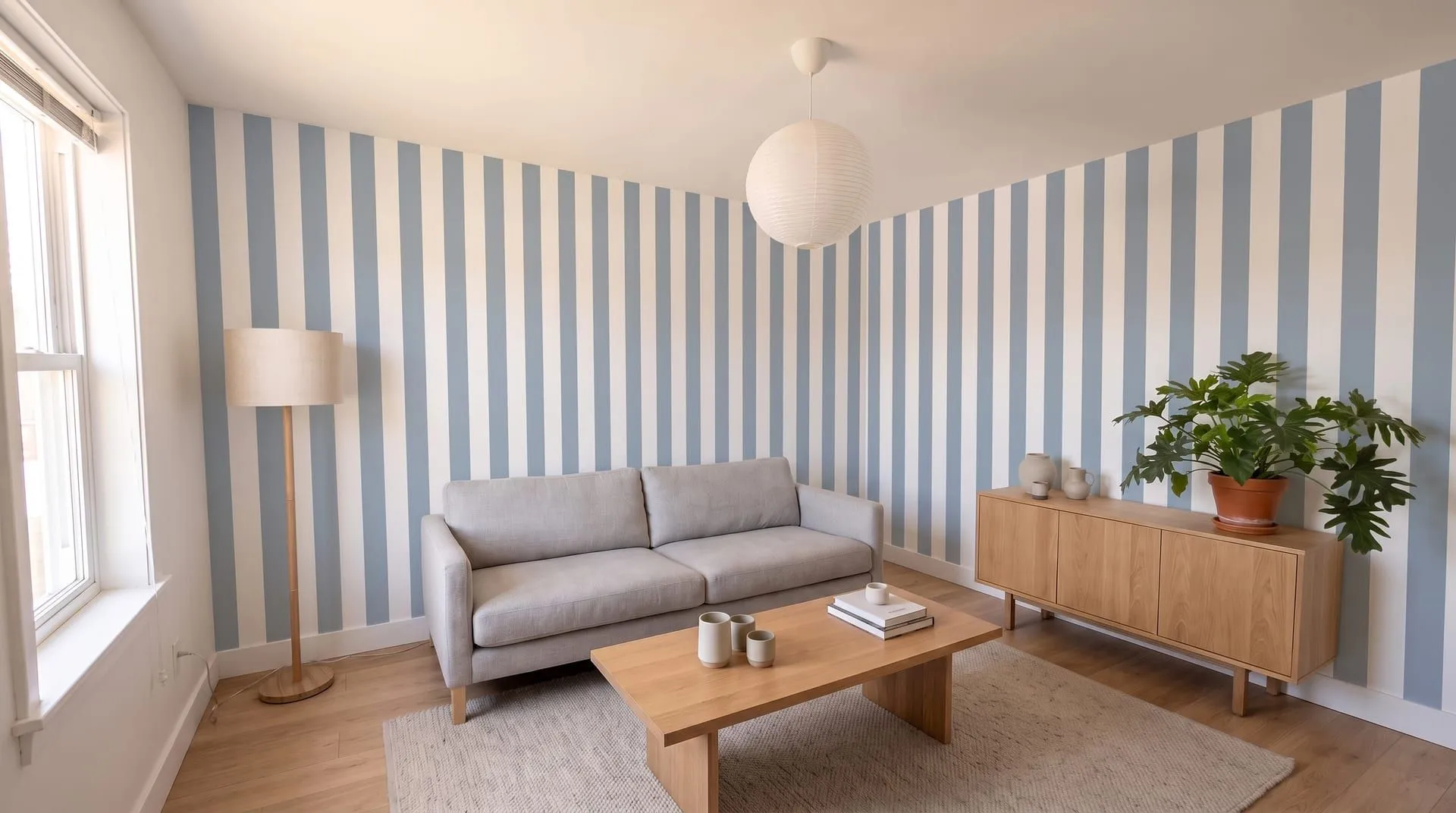 A wide blue grey stripe on two walls. Generated with remyhomeai’s AI model from one sample photo.
Paint makes the room calm and lets the furniture lead. The botanical print on one wall gives the room a focal point and leaves the rest quiet. The small geometric on two walls fills the room with pattern, which is lively but busy for a small space. The stripe reads as tall and tidy, and it shows every wall that is out of plumb. In general, a large, loose pattern on one wall is the safest first step with wallpaper.
Which costs less per wall?
Paint costs less. One gallon covers far more wall than one roll of peel and stick, and a coat of paint needs no pattern matching or waste. As of October 2026, Angi puts a gallon of paint at about $50 for around 400 square feet of wall, while wallpaper for the same area can cost $500 to $2,000 in materials alone. Peel and stick usually sits at the low end of wallpaper prices, and when you hang it yourself you pay nothing for labour. It still costs more per wall than paint.
The real saving with peel and stick is time and mess. There is no paste, no soaking and no drying time. To price your own wall, measure it and use the free paint calculator and wallpaper calculator. They give you litres or gallons and the number of rolls, including the pattern repeat.
What wall does peel and stick need?
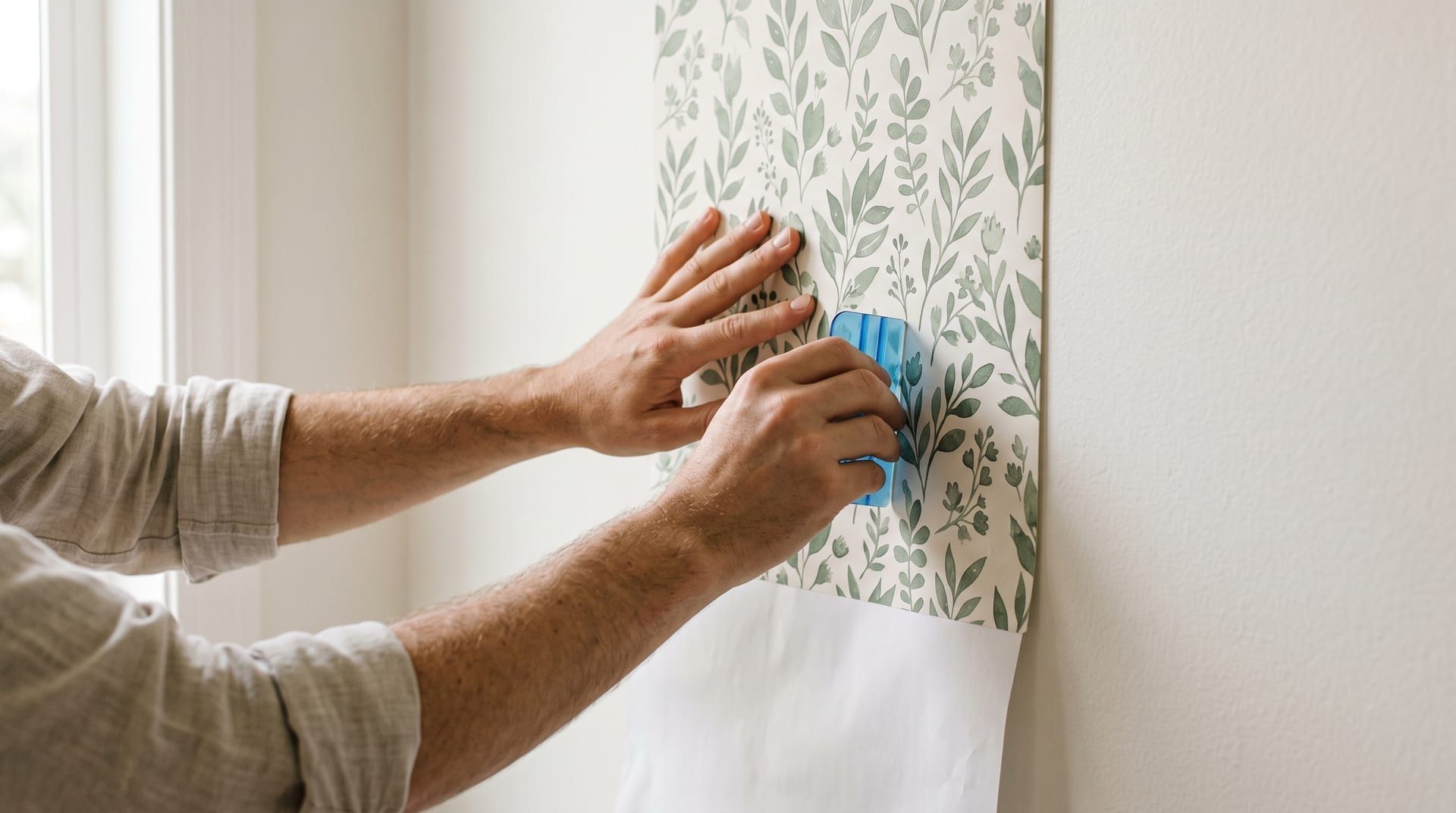
Peel and stick sticks to the top layer of the wall, so the wall decides how well it holds and how cleanly it comes off.
- Smooth. It does not grip orange peel or knockdown texture well. The edges lift and the texture shows through.
- Cured paint. Fresh paint releases solvents and is soft. Wait a few weeks after painting. The maker’s instructions give the exact time.
- Good paint. Cheap matt paint can come off with the wallpaper. Eggshell or satin paint gives a stronger bond and a cleaner release. The guide to flat vs eggshell vs satin paint explains the difference.
- Dry. Steam and damp weaken the adhesive. Avoid showers and the wall behind a kettle or hob.
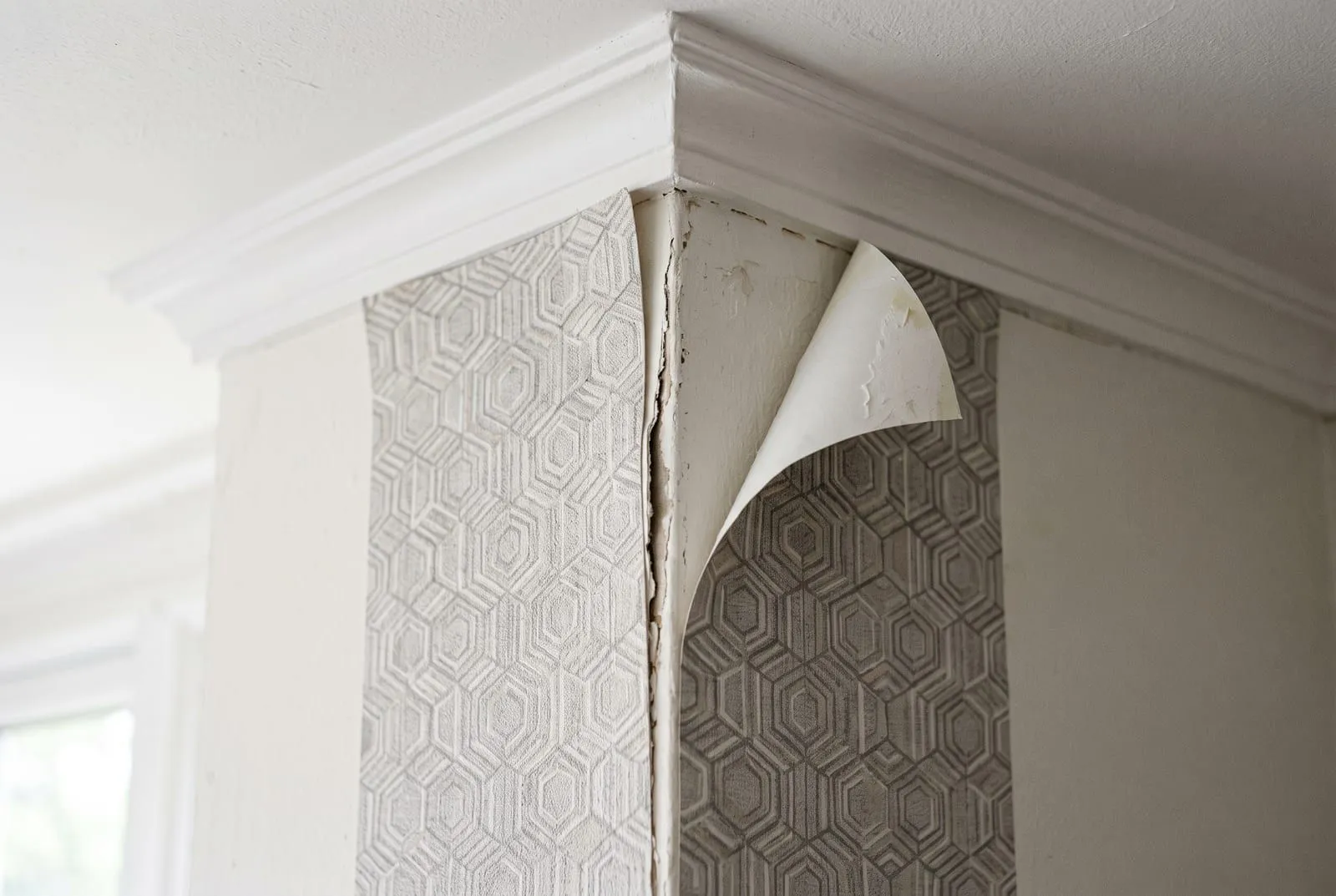 An open seam and a lifted corner: the typical failure on a poor wall. An illustration for this article.
How long does each one last?
Paint lasts until it gets scuffed. In a hallway or a child’s room, expect to touch it up every year or two and repaint every few years. A quick touch-up is easy, because you keep the tin.
Peel and stick lasts well on a smooth, dry wall that nobody leans on. Its weak points are the seams and the top edge, where it can lift with heat, sun or humidity. You can press a lifted edge back down, but a scuffed or torn strip needs replacing. Keep one spare roll from the same batch so the colour matches.
Traditional wallpaper, hung with paste, lasts the longest of the three. Vinyl and non-woven papers can be wiped clean and handle a family room for many years.
Which is better for renters?
Peel and stick is the main reason renters choose wallpaper at all. It gives a real change without breaking most leases, and it comes off when you move out. Check your lease first. Some landlords ask for permission even for removable products.
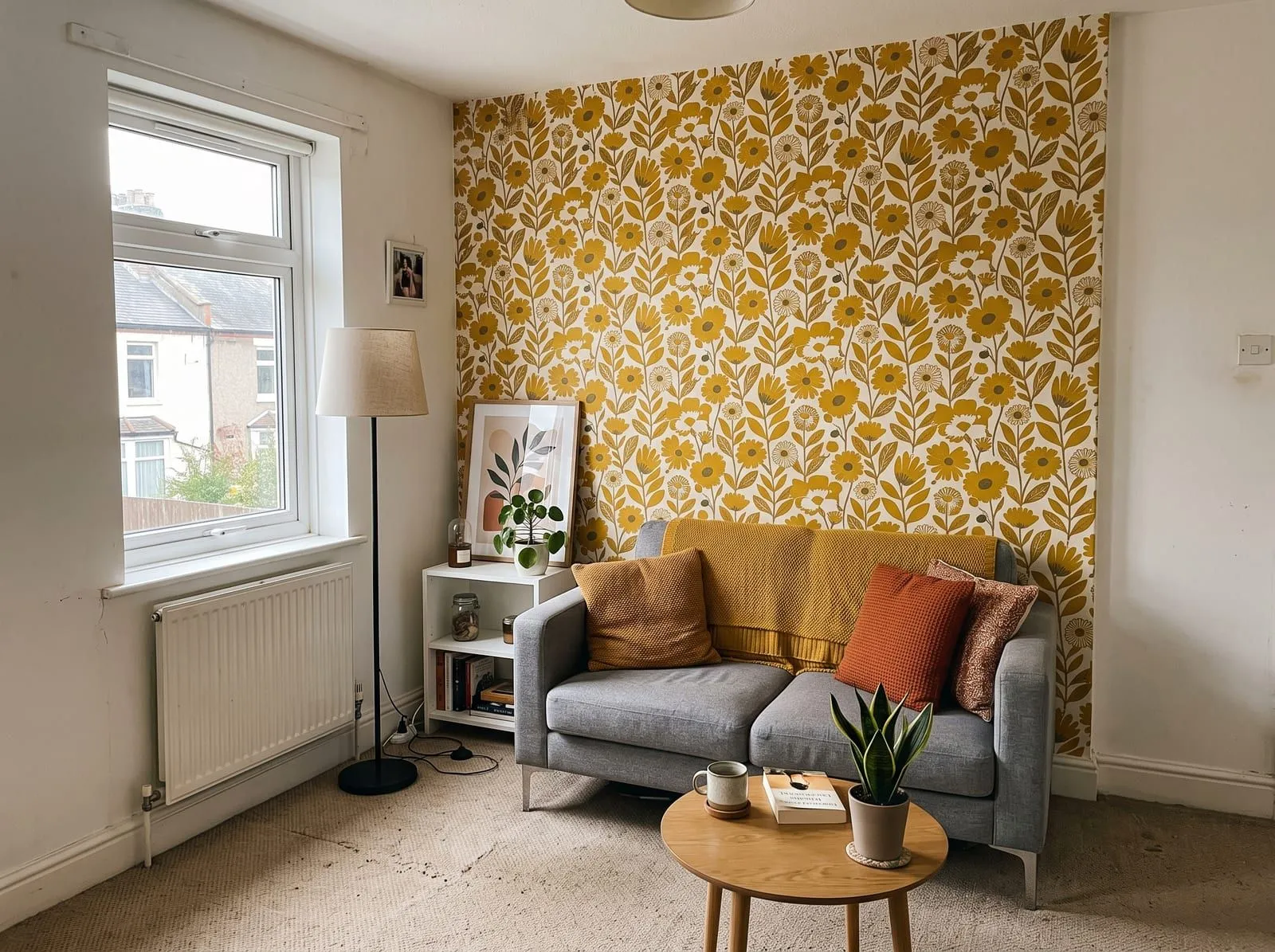 A renter’s living room with one papered wall. An illustration for this article.
Keep it to one wall. One accent wall behind the sofa or the bed changes the room for the cost of a few rolls, and it is quick to remove. Test a small piece in a hidden spot for a week, then peel it off slowly at a low angle. If paint comes away with it, do not paper that wall. Paint may also need the landlord’s approval, and you may have to paint the room back to the original colour before you leave.
When to choose paint
- You want to change a whole room, or several rooms.
- The room is humid: a kitchen, a bathroom, a laundry.
- The walls are textured or patched.
- You want to change your mind often. A new colour is one weekend.
Where paint falls short: it cannot give you pattern without a lot of skill and tape. A solid colour on four walls can feel flat in a plain, boxy room.
When to choose peel and stick wallpaper
- You rent, or you want an easy way back.
- You want pattern on one wall, a shelf back, a door or a small cloakroom.
- The wall is smooth and painted with good paint that has cured.
Where peel and stick falls short: it costs more per wall than paint, it lifts on textured walls and in humidity, and it can take paint off when you remove it. Thin, cheap products can show bubbles and seams. On a whole room, the cost and the seam work add up fast.
When traditional wallpaper beats both
Choose traditional, pasted wallpaper when you own the home, want pattern on every wall and plan to keep it for many years. It has the widest choice of patterns and real textures such as grasscloth. Paste-the-wall non-woven papers are easier to hang than old papers, and many strip off dry when you want a change. The cost is a professional installer for most people, and a longer job.
Where traditional wallpaper falls short: it is the most work to hang and to remove, and repairs need spare rolls from the same batch.
Try a pattern on your room before you buy rolls
A pattern looks very different on a sample than on a whole wall. remyhomeai redesigns a photo of your own furnished living room or bedroom. Tick Keep on the floor, doors and windows so the walls and decor carry the change, and pick one of the 39 palettes close to the colours you want. It shows a style and a palette, not a specific wallpaper or paint product, so use it to decide between colour and pattern, then order real samples.
Sources
Try it on your own room. See your room in a new style with 3 free designs at signup, no card required.